










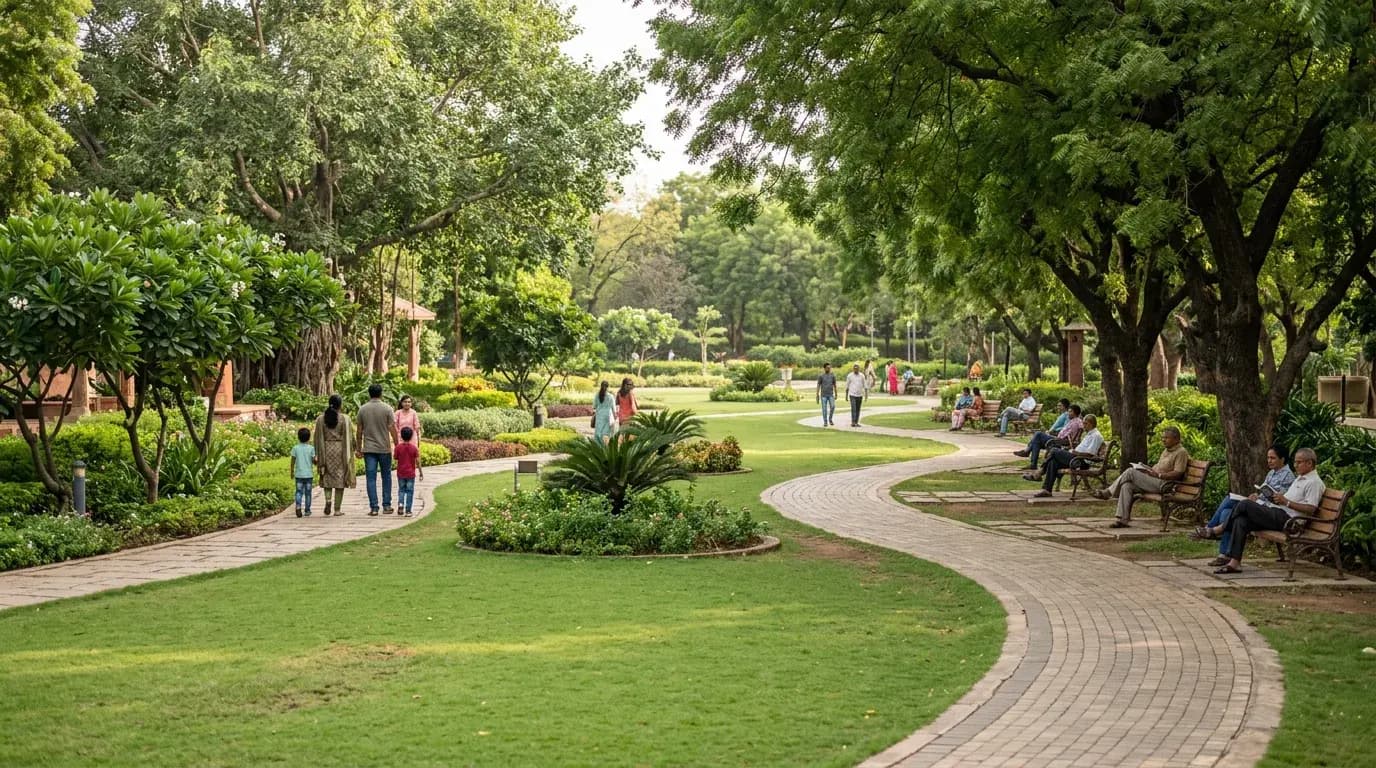
Public Gardens & Biodiversity Parks consultants in Uran.
Public Gardens & Biodiversity Parks in Uran, on the ground where the work actually is, the mangroves and wetlands around the port, and the salt pans and fishing villages of the Uran coast, with one team on it from the site survey until the survival data says it took.
Why Uran
The local ground public gardens & biodiversity parks sits on.
- Decided with
- Mangrove Cell (Maharashtra Forest Department) · MCZMA · Uran Municipal Council · CIDCO · JNPA · MPCB Raigad
- Local ground
- The mangrove creeks around Nhava Sheva, the Panje and Dongri wetlands, the salt pans and fishing villages of the coast, and the logistics yards around Dronagiri
- Typically for
- Municipal corporations, developers, townships, institutions
Uran is low, flat land between the harbour and the hills around Dronagiri, and much of it was once creek, mudflat and salt pan. Mangroves still line the creeks around the port, and wetlands such as Panje and Dongri fill with flamingos and other migratory birds each winter. The port, the logistics yards and the new roads have taken a large share of this ground. Green work here is about planting and protecting on saline, wind-blown land: for the villages, workers and birds that share it.
Uran town is old and closely built, and its open spaces are few: a handful of gardens, temple grounds and the beaches along the coast. The CIDCO nodes and JNPA's township add planned parks that need planting able to stand wind and salt. We design paths, shade and seating for families and walkers, choose trees that hold in coastal wind, lay out drainage for monsoon and tidal water, and set maintenance that a council or an estate office can keep up. The work is carried from our base in the region by named people, start to finish, not passed down a chain.
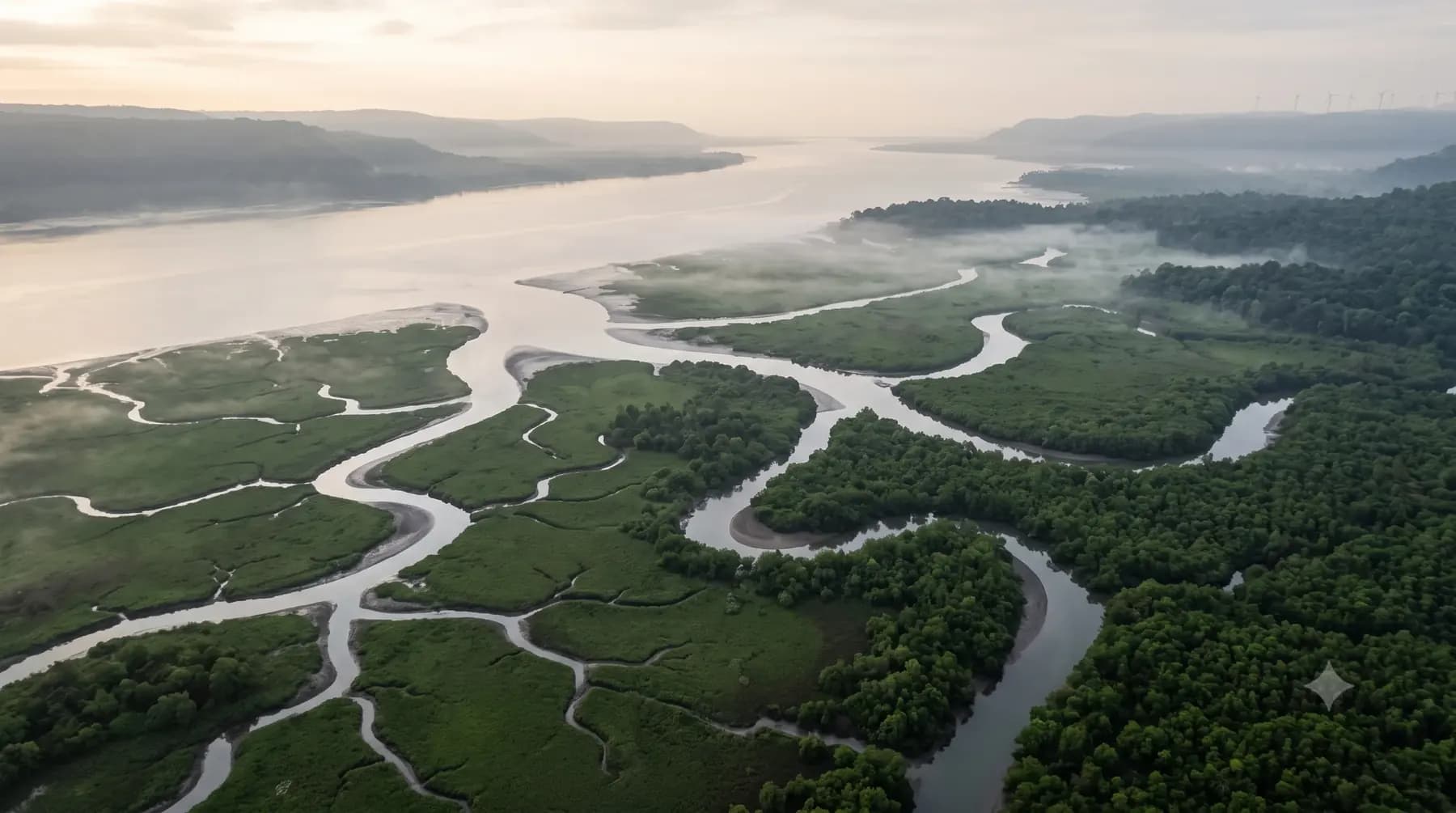
Public Gardens & Biodiversity Parks · Uran
The failure mode of a public garden isn't the opening. It's the second summer.
Local demand
What drives public gardens & biodiversity parks in Uran.
The second driver is the working landscape itself. Warehouses, container yards and tank farms stand on bare fill with little shade, and truck traffic keeps dust in the air through the dry season. Consents and clearances ask for green belts, and operators need planting that tolerates salt spray and poor soil. In the villages and in Uran town, open space is scarce, and the wetlands draw birders and residents who want them kept. The demand is for planting that suits a working coastline: and people ready to look after it.
Uran's population has grown with the port, and new housing in the CIDCO nodes, in Uran town and in the villages around them brings families who want somewhere to walk in the evening. Public land is scarce (much of it is held by the port, CIDCO or the state) so new gardens come from council reservations, CIDCO's planned open spaces and company townships. Each needs planting that stands up to coastal wind and salt, and upkeep that works on a small budget.
How it works
Public Gardens & Biodiversity Parks, from survey to survival.
- 01/03
Design & master planning
A plan that balances lawns, planting, pathways, shade and play for real, sustained use.
- 02/03
Execution & commissioning
Softscape and hardscape built and planted, then commissioned as a working space.
- 03/03
Maintenance contracts
Ongoing horticulture and upkeep so the garden is still healthy years after opening.
Proof
Comparable work we've delivered.
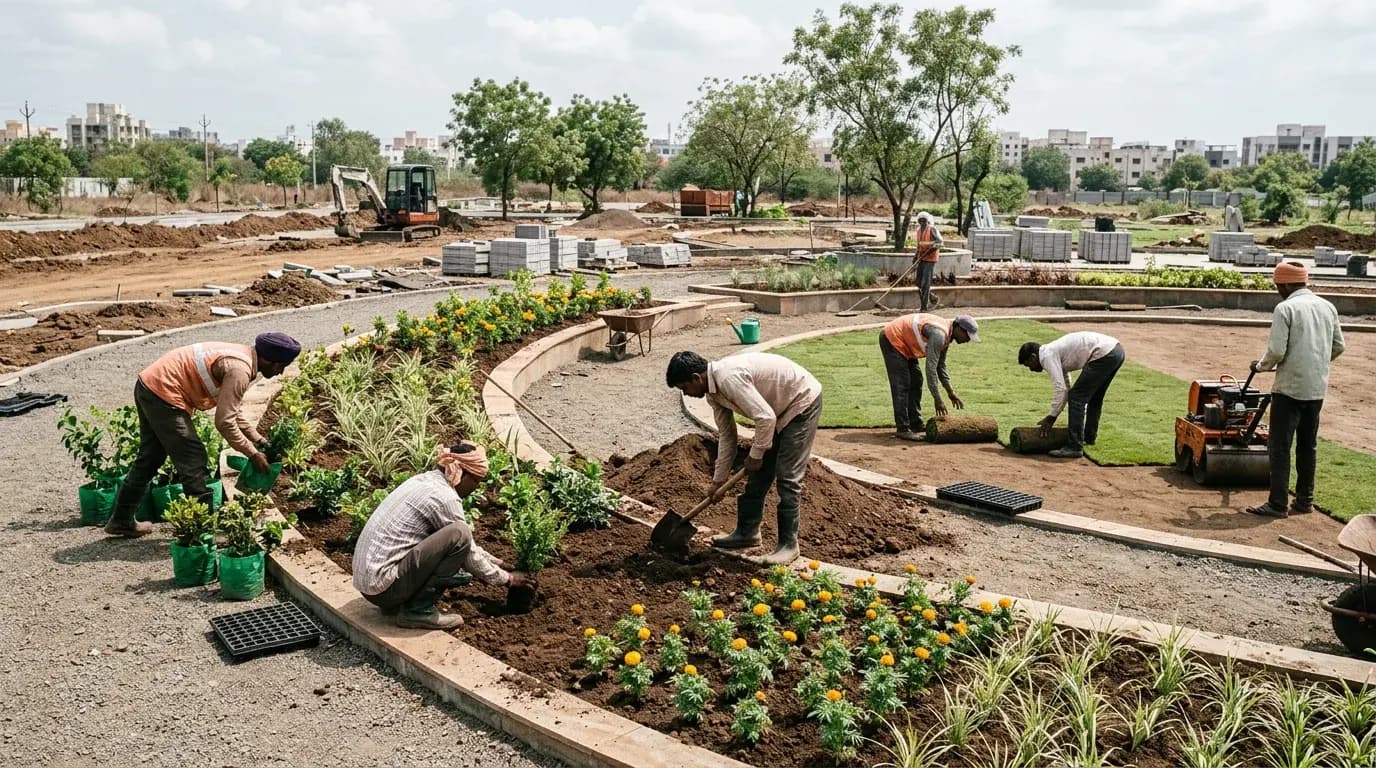
MCGM · Eastern Suburbs, Mumbai
MCGM GARDEN DEVELOPMENT- MIYAWAKI PLANTATION
Miyawaki dense forestation across 27 locations in 7 wards using native species, delivered under the municipal greening programme.
The record
The work, project by project.
Mandate, method and measured outcome, written end to end for every project on this list.
ESDD reports for Panvelkar and Tridhatu Group developments under the last-mile funding window for stalled affordable and mid-income projects.
Read the case studyOn the ground
Across Uran, and the belt around it.
Local means the node, not the pin on the map. We carry public gardens & biodiversity parks across the Uran nodes and the wider Mumbai Metropolitan Region: where the units, plots and projects actually sit.
Nodes we work across in Uran
Also across the Mumbai Metropolitan Region
Straight answers
Public Gardens & Biodiversity Parks in Uran: common questions.
01Our garden in Uran loses young trees in every monsoon storm. What are we doing wrong?
Usually the choice of species and the staking. Exotics such as gulmohar and rain tree grow wide, heavy crowns on shallow roots in wet fill, and come down in strong wind. We favour deep-rooted coastal natives, stake new trees properly for two monsoons, lighten crowns before June, and replace failures before the next season.
02What can we plant on salty, filled land near the creek?
Plants that already grow on this coast: karanj, undi, bhendi and kewda near the water, with native grasses to hold the soil. Filled land is often compacted and saline, so we test it first, break the crust, add organic matter and raise the beds where the water table is high. Ornamental species that need fresh water rarely last a season here.
03How long does public gardens & biodiversity parks take in Uran, and who is involved?
Mangrove Cell (Maharashtra Forest Department) · MCZMA · Uran Municipal Council · CIDCO · JNPA · MPCB Raigad are the bodies an Uran project works with. On timing: design to commissioning by scope; maintenance ongoing. KIPL sets out a realistic Uran schedule once the site and the scope have been read, and carries the work through to the outcome, with comparable work on the record such as MCGM GARDEN DEVELOPMENT- MIYAWAKI PLANTATION.
By industry
The same filing, read for your sector.
- 01
Municipal CorporationsCore
Garden design, execution and multi-year maintenance contracts are core civic procurement, audited on upkeep rather than on inauguration.
Public Gardens & Biodiversity Parks for Municipal Corporations - 02
Townships & Area Development
Recreational open space is both a planning-permission requirement and an EIA commitment; the parks have to be built, not just drawn.
Public Gardens & Biodiversity Parks for Townships & Area Development - 03
River & Water Missions
Riverfront parks are how a mission converts a cleaned stretch into public use that then protects it from being re-encroached.
Public Gardens & Biodiversity Parks for River & Water Missions
In the press
Covers, features and conversations: the work, talked through.



Keep exploring
Where this connects.
The service
01Public Gardens & Biodiversity Parks, in full: and the practices that run beside it.
- Public Gardens & Biodiversity Parks: the full service
- Miyawaki Urban Dense Forestation
- Green Belt Development for Industries
- Tree Management
- Sustainable Landscaping
Clients & partners
The work is trusted where the stakes are highest.
Two decades of clearances, treatment plants and green infrastructure delivered for India’s builders, industry and public bodies, and the global engineering firms beside them.





























































Sideways
Public Gardens & Biodiversity Parks beyond Uran, and what else we do there.
Also in Uran
CGWA Groundwater NOCCivil EPCCRZ ClearanceCSR / CER AdvisoryEffluent Treatment PlantsEnvironment ClearanceEnvironment Management & Mitigation PlanEnvironmental AuditsESG Advisory & ReportingExtended Producer ResponsibilityForest ClearanceGreen Belt Development for IndustriesGreen Building CertificationIntegrated Solid Waste Management
Public Gardens & Biodiversity Parks in Uran? Start with the ground you have.
One conversation to walk the site and plan for what survives: not just what gets planted.