









Public Gardens & Biodiversity Parks · River & Water Missions
Riverfront Parks & Public Gardens for Water Missions
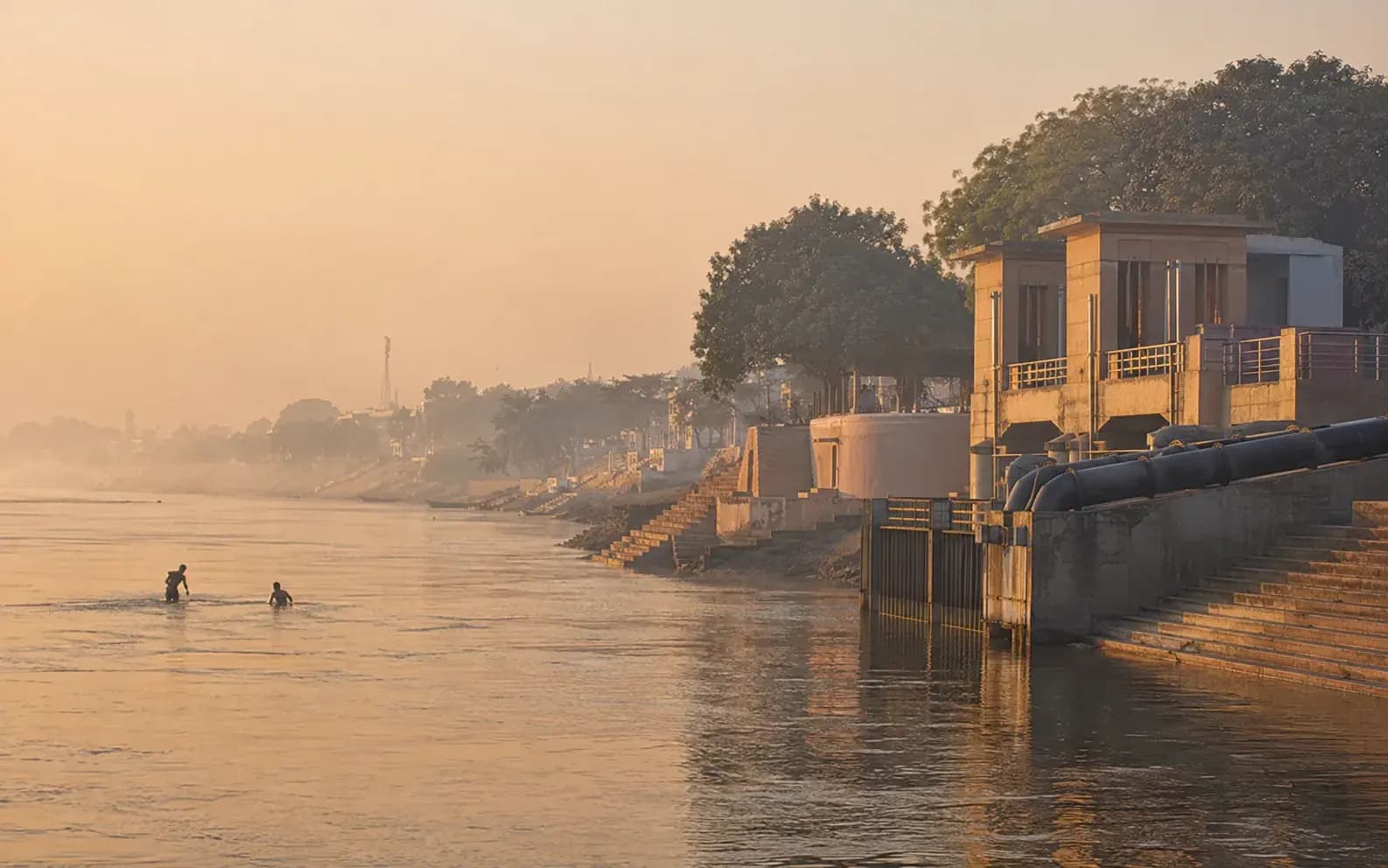
A riverfront park is how a mission converts a cleaned stretch into daily public use, and public use is what then protects the stretch from being re-encroached and re-dumped on.
Screening view on your project, with the category and route named. No obligation.
What this means for river & water missions
The durability problem on river programmes is well known: a reach is cleared, desilted and treated, and within a few years it has reacquired the dumping and the encroachment it started with, because nothing was put there to occupy it. Public open space changes that. A stretch with people walking, sitting and using it every evening has constituents who object when a truck reverses onto it. For the programme this is a deliberate outcome. The park is not amenity added after the environmental work but the mechanism that makes the environmental work hold.
How KIPL runs it
KIPL designs and delivers this kind of space for the conditions the riverfront actually imposes: a flood regime that will submerge parts of the site, silt deposition after every monsoon, and continuous unsupervised public use. That drives the choices: planting and surfaces that survive submergence, levels that let silt be cleared rather than trapped, minimal fragile infrastructure at low levels, and access that works for the existing users of the reach including those who come for ritual purposes. The characteristic failure is a riverfront park detailed like a city plaza, which looks complete at inauguration and is unusable after its second monsoon.
Occupation prevents re-encroachment
A cleaned stretch with no public use returns to dumping and encroachment; daily use creates the constituency that prevents it.
The site floods and silts by design
Riverfront open space is periodically submerged and receives silt each monsoon, which constrains levels, planting, surfaces and services.
Existing users have prior claims
Ghat users, ritual practitioners and riverside residents already use the reach, and a design that displaces them generates opposition to the programme as a whole.
What you receive
Written for river & water missions, not adapted from a template.
- 01Riverfront open space design set against the flood level and inundation frequency of the reach
- 02Planting palette and surfaces specified for periodic submergence and post-monsoon silt clearance
- 03Access and circulation that accommodates existing ghat, ritual and riverside users
- 04Waste collection and lighting provision sized for actual evening use of the stretch
- 05Construction delivery staged to keep part of the river frontage in use throughout
- 06Maintenance and post-monsoon restoration regime with the operating body identified
Questions from river & water missions
What river & water missions ask before appointing us.
Answered against the regulation as it stands, not as a sales pitch. If your situation is not here, ask us directly.
Ask a question →Why does a river mission build parks at all?
Because public use is the mechanism that keeps a cleaned stretch clean. Encroachment and dumping return to riverbanks that nobody occupies. Open space converts the environmental outcome into daily use, and daily use produces the local constituency that defends it.
How is a riverfront park different from a city park?
It is designed to be flooded. Levels, planting, surfaces, services and furniture all have to survive submergence and post-monsoon silt, and low-level infrastructure has to be either removable or expendable. A riverfront park detailed to city-plaza standards is unusable within two seasons.
What happens to existing users of the ghat?
They are designed for. Bathing, ritual and immersion use of a reach predates any park, and displacing it generates opposition to the entire mission. Access, timing and space for those uses is settled during design through consultation, not resolved afterwards.
Who maintains it after the programme ends?
Normally the urban local body or a body it appoints. Post-monsoon restoration is the specific obligation that has to be provided for, since silt clearance and replanting are annual rather than occasional. Handing over a riverfront park without that provision guarantees its decline.
Does the park need environmental clearance?
It is screened on its own facts under the EIA Notification 2006, and its location may bring in the Wetlands Rules 2017 or, on a tidal reach, the CRZ Notification 2019. Being a public amenity does not exempt a work on a floodplain from that screening.
Can the park be built while the water quality work is still under way?
It can, and sequencing matters: opening a riverfront park onto a reach that still receives untreated discharge invites the criticism that the programme built amenity before it built treatment. The usual sequence is interception and treatment first on that reach, with the public space following.
Stage by stage
How public gardens & biodiversity parks actually runs, step by step.
Also for river & water missions
The rest of the environmental brief for this sector.

Relevant proof
MCGM GARDEN DEVELOPMENT- MIYAWAKI PLANTATION
Miyawaki dense forestation across 27 locations in 7 wards using native species, delivered under the municipal greening programme.
- Area
- ~74,000 m²
- Trees
- ≈1,10,000
- CO₂ (est.)
- 2,052 t
Where we do this
Public Gardens & Biodiversity Parks for river & water missions, city by city.
Other sectors
Who else we run public gardens & biodiversity parks for.
Next step
Tell us the project, and we will tell you the category and the route.
Screening is the cheapest stage to get right and the most expensive to get wrong. We will say plainly what public gardens & biodiversity parks your river & water missions project needs, and what it does not.





























































Start the conversation