










Industry & Corporates
Chemical Industry
This is the one sector we hold at Category A, appraised centrally by the MoEF&CC. For a chemical promoter, that accreditation is not a detail; it is the difference between a file that stands and one that stalls.
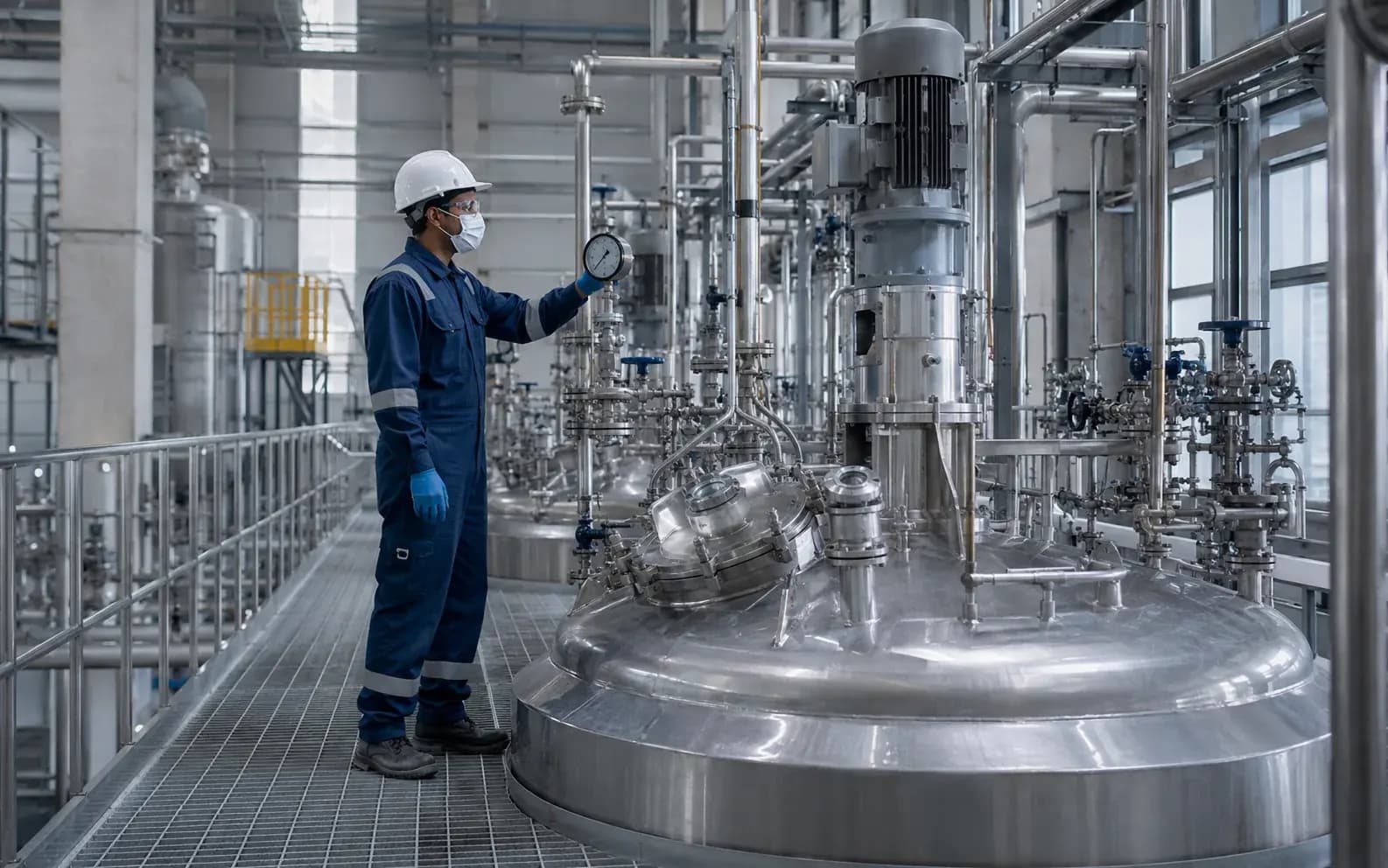

How we work this market
Category A, appraised where the hardest files are judged.
One accredited team carries the work from the first assessment to the compliance report years later, so responsibility never changes hands at the gate that matters.
- 01AssessScreen & scope
- 02ApproveFile & argue
- 03BuildDeliver & commission
- 04MonitorReport for years
The brief
What this market actually asks of an environmental partner.
Synthetic organic chemicals (dyes, bulk drugs, intermediates) fall under item 5(f) of the EIA Notification 2006 and sit among the most closely scrutinised categories in the country: complex effluent, air emissions, hazardous-waste handling and a public that reads every filing. The Environment Clearance is argued on hard science, and weak baseline work is where these cases are lost.
Chemicals is the single sector in which KIPL holds QCI-NABET Category A accreditation, meaning our EIA work here is appraised centrally by the MoEF&CC's Expert Appraisal Committee rather than at State level. We pair that standing with effluent treatment, consent and compliance delivery, which is why chemical promoters such as Kwalichem, GM Chemie, Nayachem and Riverside Azo bring the file to us. Our Kwalichem EIA is the worked example.
Why the file bites
The drivers that decide this market, layer by layer.
Synthetic organic chemicals
Dyes, bulk drugs and intermediates are a high-scrutiny category with central appraisal for many projects.
The accreditation that appraises centrally
KIPL's Category A standing here means the EIA is judged by the MoEF&CC's Expert Appraisal Committee.
Effluent and hazardous waste
The case turns on credible ETP design, hazardous-waste authorisation and defensible emission data.
What we handle here
The filings and works this market needs, under one team.
Straight answers
Chemical Industry, answered.
Why does Category A accreditation matter for a chemical project?
Category A EIA work is appraised centrally by the MoEF&CC's Expert Appraisal Committee, and the consultant must hold accreditation for the relevant sector. KIPL holds QCI-NABET Category A for the chemical sector (item 5(f)), so we can prepare and defend these cases at the level they are judged.
What approvals does a synthetic organic chemical unit need?
Environment Clearance under item 5(f), MPCB consent to establish and operate, hazardous-waste authorisation, and often EPR obligations, backed by a credible effluent treatment design. We handle the clearance and the treatment and compliance around it.
Can KIPL support an expansion or a stalled chemical EC?
Yes. Amendment, expansion and the regularisation of stalled files are standard work. We begin by auditing the existing baseline and the committee's queries, then rebuild the case where it is weak.
What this sector needs
The filings this sector actually runs on.
- 01
Environment ClearanceCore
Item 5(f) synthetic organic chemicals draw the highest appraisal scrutiny in Schedule I, and Category A cases are judged by the MoEF&CC's EAC.
Environment Clearance for Chemical Industry - 02
MPCB ConsentCore
A Red-category chemical unit's CTE and CTO conditions are written around effluent load, solvent handling and hazardous-waste storage.
MPCB Consent for Chemical Industry - 03
Effluent Treatment PlantsCore
High-TDS, high-COD streams make ZLD or a defensible CETP interface the spine of the case; a weak ETP design is where 5(f) files fail.
Effluent Treatment Plants for Chemical Industry - 04
Environmental AuditsCore
Contamination history and hazardous-waste records dominate any chemical acquisition or lender diligence, because liability follows the site.
Environmental Audits for Chemical Industry - 05
Extended Producer ResponsibilityCore
Packaging in rigid and multilayer plastic brings the unit inside Plastic Waste EPR under the 2022 amendment, with annual returns and compensation exposure.
Extended Producer Responsibility for Chemical Industry - 06
Post-EC ComplianceCore
Half-yearly reporting on a 5(f) clearance is read closely, and stack, effluent and hazardous-waste data has to reconcile with the EIA commitments.
Post-EC Compliance for Chemical Industry - 07
Environment Management & Mitigation PlanCore
Solvent recovery, emergency preparedness and risk mitigation are the operating core of a chemical EMP, not an appendix to it.
Environment Management & Mitigation Plan for Chemical Industry - 08
Green Belt Development for IndustriesCore
Clearance conditions typically bind a chemical unit to green belt across roughly a third of its plot area, as an odour and emission buffer.
Green Belt Development for Industries for Chemical Industry