










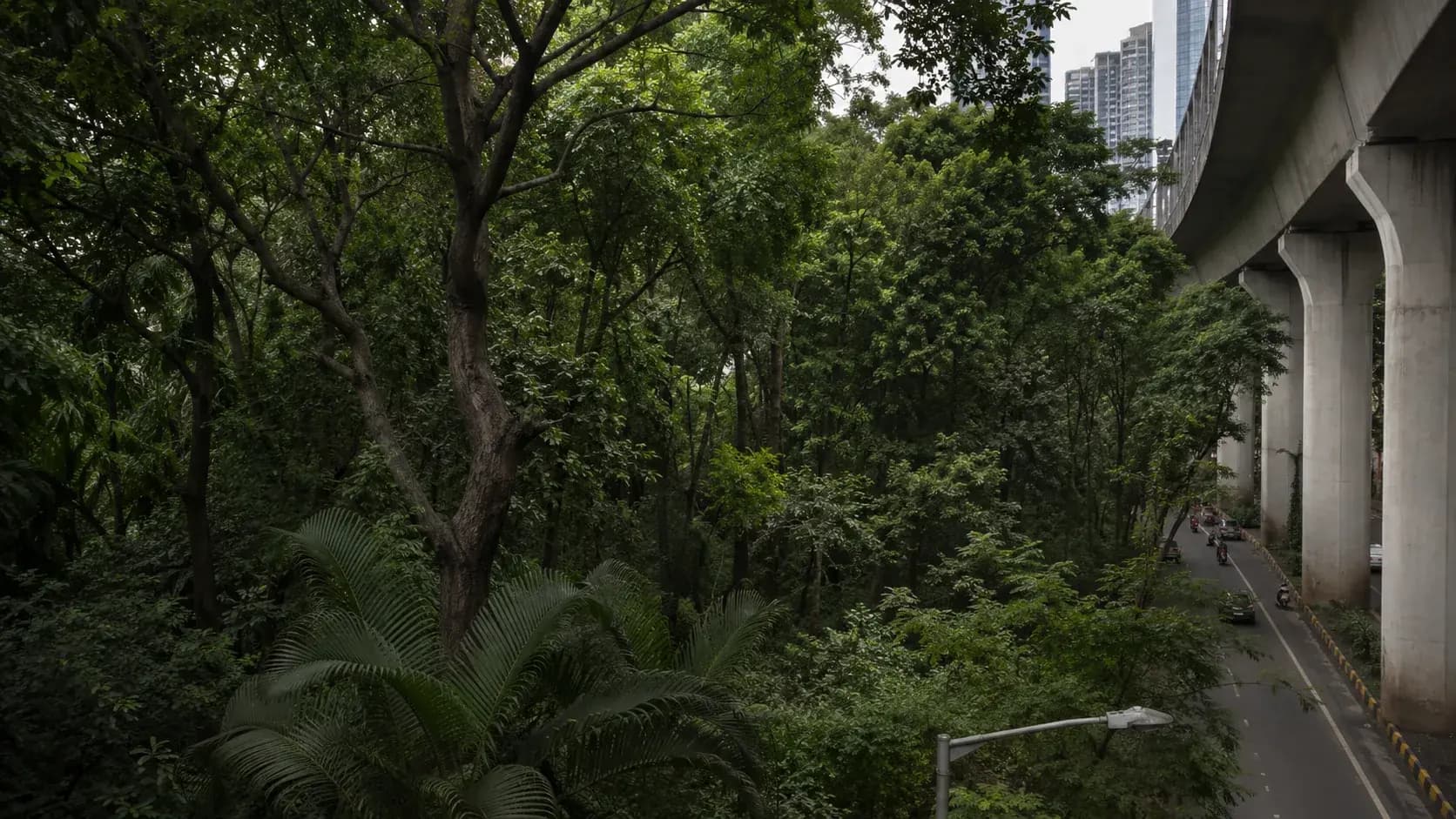
Miyawaki Urban Dense Forestation consultants in Uran.
Miyawaki Urban Dense Forestation in Uran, on the ground where the work actually is, the mangroves and wetlands around the port, and the salt pans and fishing villages of the Uran coast, with one team on it from the site survey until the survival data says it took.
Why Uran
The local ground miyawaki urban dense forestation sits on.
- Decided with
- Mangrove Cell (Maharashtra Forest Department) · MCZMA · Uran Municipal Council · CIDCO · JNPA · MPCB Raigad
- Local ground
- The mangrove creeks around Nhava Sheva, the Panje and Dongri wetlands, the salt pans and fishing villages of the coast, and the logistics yards around Dronagiri
- Typically for
- Municipal corporations, developers, industry, CER/CSR programmes
Uran is low, flat land between the harbour and the hills around Dronagiri, and much of it was once creek, mudflat and salt pan. Mangroves still line the creeks around the port, and wetlands such as Panje and Dongri fill with flamingos and other migratory birds each winter. The port, the logistics yards and the new roads have taken a large share of this ground. Green work here is about planting and protecting on saline, wind-blown land: for the villages, workers and birds that share it.
A Miyawaki plot at Uran has to be built for salt and wind. Sites are usually filled land (a CFS boundary, a logistics park corner, a village school ground by the port road) with compacted soil and brackish water near the surface. We test the soil, raise and improve the beds, and draw species from the Konkan's coastal forest. Survival is counted after the first dry season and losses replaced, so the plot becomes cover for the people working and living beside it. The work is carried from our base in the region by named people, start to finish, not passed down a chain.
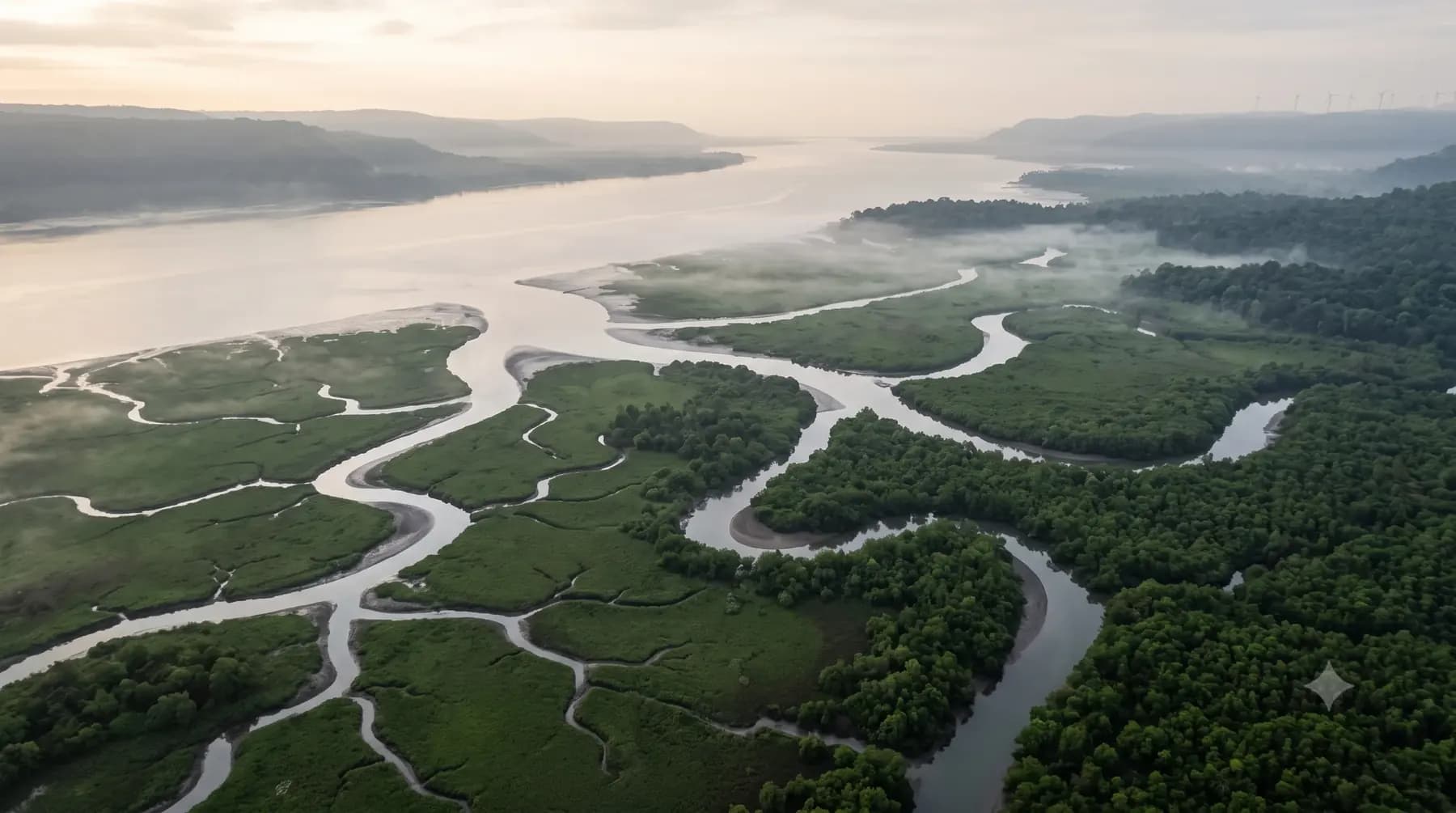
Miyawaki Urban Dense Forestation · Uran
A forest isn't delivered at handover. It's delivered when the survival data says it took.
Local demand
What drives miyawaki urban dense forestation in Uran.
Development is the first driver, and at Uran it meets mangroves more often than trees. The Bombay High Court's 2018 judgment protects mangroves wherever they grow and requires the court's leave before any are cut for a public project, usually with compensatory mangrove planting as a condition. Port expansion, road links and utility corridors all pass through that process. On dry land, projects meet trees and the green-cover conditions of their clearances. Either way, the planting that follows has to survive salt, wind and tide: not only an inspection.
Uran has lost much of its shade as farmland and village land turned into yards and roads, and the port's workforce (drivers, yard staff, security guards) spends long hours outdoors on bare ground. Companies here with CSR budgets, and projects with plantation conditions, look for planting that shows results on poor land within a few years. A dense native plot raises a small forest on a narrow strip, and its closely spaced trees shelter one another from the wind better than scattered saplings.
How it works
Miyawaki Urban Dense Forestation, from survey to survival.
- 01/05
Native species selection
A multi-layer palette of native species chosen to the soil, climate and the forest's intended structure.
- 02/05
Soil analysis & enhancement
Soil tested and amended with the biomass and nutrients dense planting needs to establish fast.
- 03/05
Dense plantation
Close, multi-layer planting on a marked grid, the density that makes a Miyawaki forest grow upward.
- 04/05
Maintenance & survival monitoring
Two to three years of watering, weeding and, crucially, measured survival, the number the whole method is judged on.
- 05/05
Carbon estimation
Where required, an estimate of the carbon sequestered, so the outcome is a figure, not a claim.
Proof
Comparable work we've delivered.
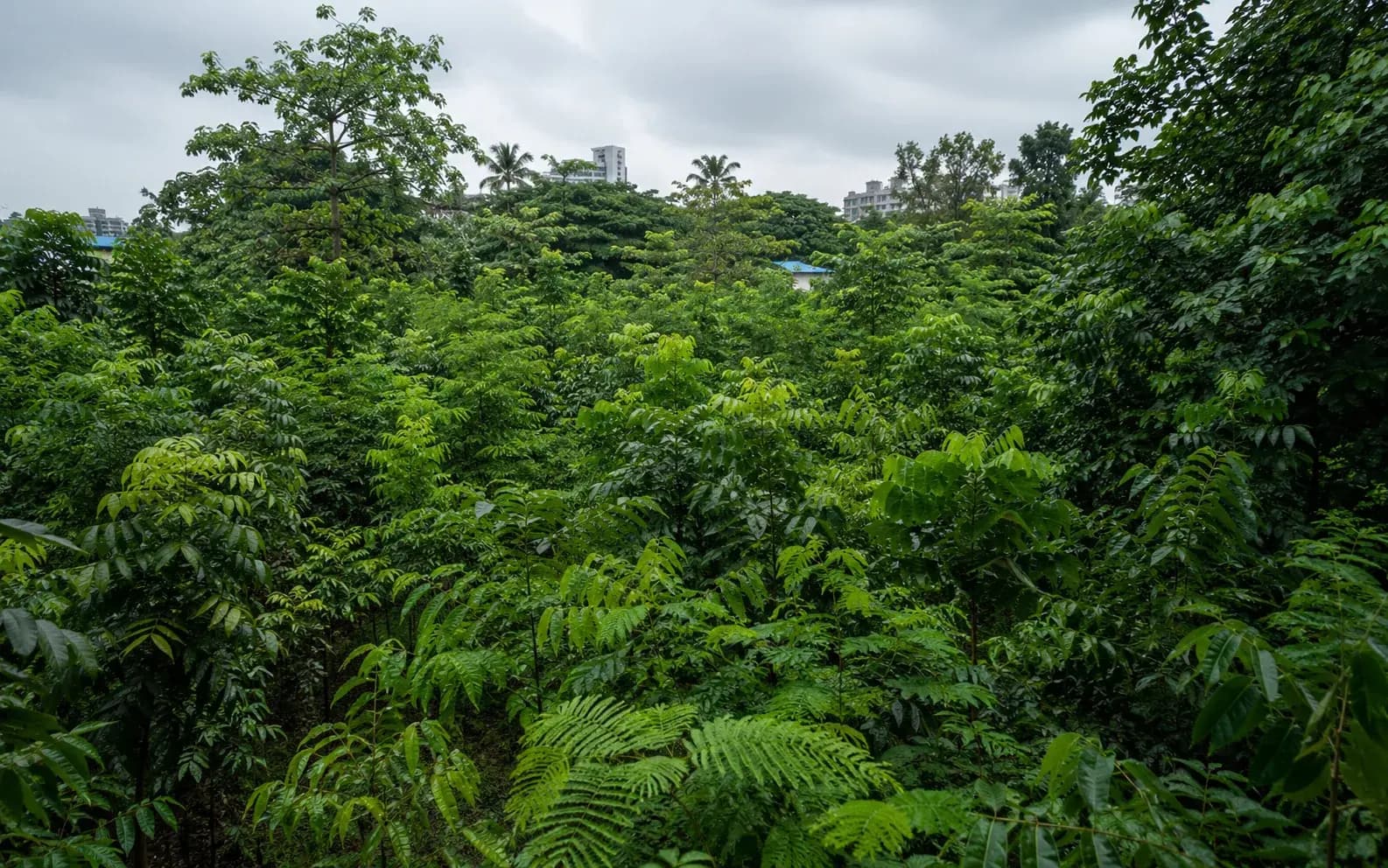
MCGM · Eastern Suburbs, Mumbai
MCGM GARDEN DEVELOPMENT- MIYAWAKI PLANTATION
Miyawaki dense forestation across 27 locations in 7 wards using native species, delivered under the municipal greening programme.
The record
The work, project by project.
Mandate, method and measured outcome, written end to end for every project on this list.
Green zone development and maintenance across multiple client sites at Jamnagar, covering 120 acres. The wider Jamnagar portfolio also included Miyawaki plantation and maintenance of approximately 80,000 plants across 24,000 sq m.
Read the case studyOn the ground
Across Uran, and the belt around it.
Local means the node, not the pin on the map. We carry miyawaki urban dense forestation across the Uran nodes and the wider Mumbai Metropolitan Region: where the units, plots and projects actually sit.
Nodes we work across in Uran
Also across the Mumbai Metropolitan Region
Straight answers
Miyawaki Urban Dense Forestation in Uran: common questions.
01Our plot floods at high tide during the monsoon. Can a Miyawaki forest grow there?
Not on the low ground as it stands, standing saline water kills most forest species quickly. We raise the planting mound above the monsoon high-water mark, add a drainage edge and choose species that tolerate brief waterlogging and salt. Where the ground is truly tidal, mangrove restoration with the Mangrove Cell is a better answer than a Miyawaki plot.
02What can we plant on salty, filled land near the creek?
Plants that already grow on this coast: karanj, undi, bhendi and kewda near the water, with native grasses to hold the soil. Filled land is often compacted and saline, so we test it first, break the crust, add organic matter and raise the beds where the water table is high. Ornamental species that need fresh water rarely last a season here.
03How long does miyawaki urban dense forestation take in Uran, and who is involved?
Mangrove Cell (Maharashtra Forest Department) · MCZMA · Uran Municipal Council · CIDCO · JNPA · MPCB Raigad are the bodies an Uran project works with. On timing: plantation seasonal; monitoring 2–3 years. KIPL sets out a realistic Uran schedule once the site and the scope have been read, and carries the work through to the outcome, with comparable work on the record such as MCGM GARDEN DEVELOPMENT- MIYAWAKI PLANTATION.
By industry
The same filing, read for your sector.
- 01
Municipal CorporationsCore
Urban forest programmes are commissioned at ward scale and answered for in public, which makes measured survival the deliverable.
Miyawaki Urban Dense Forestation for Municipal Corporations - 02
Corporate CampusesCore
A campus urban forest is the visible half of a net-zero commitment, and its survival and sequestration data feeds the parent's disclosure.
Miyawaki Urban Dense Forestation for Corporate Campuses - 03
Real Estate & Construction
Dense native planting meets the tree-count and green-cover conditions of an 8(a) clearance on plots that have no room for conventional avenue planting.
Miyawaki Urban Dense Forestation for Real Estate & Construction - 04
Townships & Area Development
Dense native forestation delivers the township's committed tree count and green cover far faster than avenue planting across phased land.
Miyawaki Urban Dense Forestation for Townships & Area Development - 05
Hospitality, Healthcare & Education
Dense native pockets deliver measurable green cover on a constrained campus and give an education client a living teaching asset.
Miyawaki Urban Dense Forestation for Hospitality, Healthcare & Education - 06
Chemical Industry
Dense native planting is how a plot-constrained MIDC unit reaches its committed green belt area and canopy density within a compliance horizon.
Miyawaki Urban Dense Forestation for Chemical Industry - 07
Distilleries & Ethanol
Dense native planting builds the odour-buffer canopy quickly, which matters when the public hearing objection was about smell.
Miyawaki Urban Dense Forestation for Distilleries & Ethanol - 08
Sugar Industry
Dense native planting closes the green belt gap on a mill campus quickly, ahead of the next compliance report rather than the next decade.
Miyawaki Urban Dense Forestation for Sugar Industry
In the press
Covers, features and conversations: the work, talked through.



Keep exploring
Where this connects.
The service
01Miyawaki Urban Dense Forestation, in full: and the practices that run beside it.
- Miyawaki Urban Dense Forestation: the full service
- Green Belt Development for Industries
- Tree Management
- Public Gardens & Biodiversity Parks
- Sustainable Landscaping
Clients & partners
The work is trusted where the stakes are highest.
Two decades of clearances, treatment plants and green infrastructure delivered for India’s builders, industry and public bodies, and the global engineering firms beside them.





























































Sideways
Miyawaki Urban Dense Forestation beyond Uran, and what else we do there.
Also in Uran
CGWA Groundwater NOCCivil EPCCRZ ClearanceCSR / CER AdvisoryEffluent Treatment PlantsEnvironment ClearanceEnvironment Management & Mitigation PlanEnvironmental AuditsESG Advisory & ReportingExtended Producer ResponsibilityForest ClearanceGreen Belt Development for IndustriesGreen Building CertificationIntegrated Solid Waste Management
Miyawaki Urban Dense Forestation in Uran? Start with the ground you have.
One conversation to walk the site and plan for what survives: not just what gets planted.