










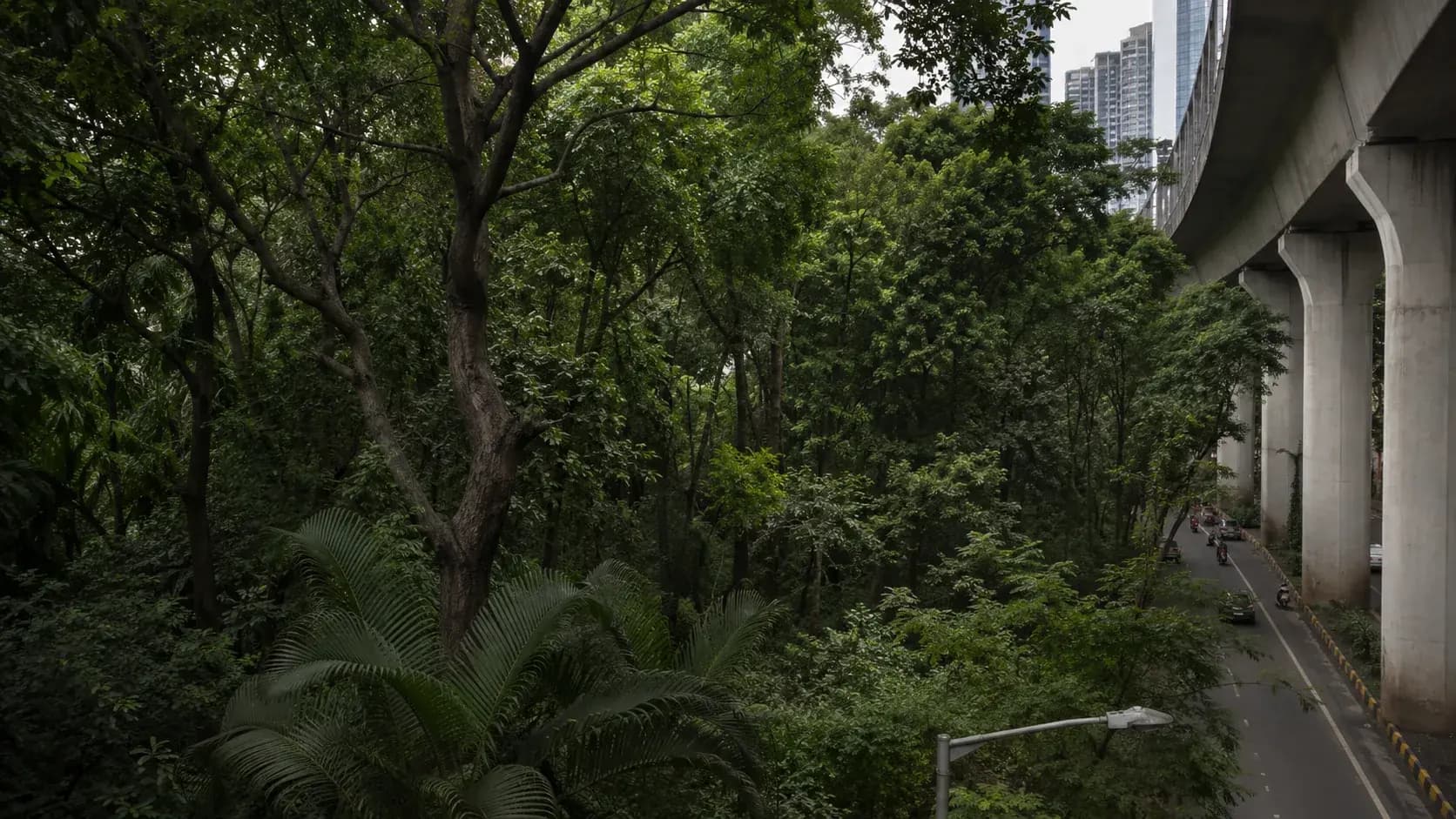
Miyawaki Urban Dense Forestation consultants in Taloja.
Miyawaki Urban Dense Forestation in Taloja, on the ground where the work actually is, the green belts of the Taloja MIDC estate, the Kasadi river and the housing nodes along its edge, with one team on it from the site survey until the survival data says it took.
Why Taloja
The local ground miyawaki urban dense forestation sits on.
- Decided with
- MIDC Taloja · Panvel Municipal Corporation Tree Authority · CIDCO · MPCB Raigad (Taloja) · Maharashtra Forest Department
- Local ground
- The Taloja MIDC plots and boundaries, the Kasadi riverbanks, Taloja Phase I and II, and the villages of Pendhar and Navade
- Typically for
- Municipal corporations, developers, industry, CER/CSR programmes
Taloja's green work starts at the fence line. The MIDC estate holds hundreds of plots with green-belt conditions of varying age and health. The Kasadi river runs through it, carrying the estate's story along its banks. On the other side sit CIDCO's housing nodes, the Pendhar end of the metro and villages whose trees predate the estate. The hills towards Kharghar rise behind. Green here has a working job (to screen, to shade and to hold the river's edges) for the families who live closest to industry.
Miyawaki work in Taloja fills the gaps an estate leaves: corners of industrial plots, the setback between a unit and its neighbours, school grounds in the villages and open plots in the housing nodes. A dense native forest here screens as well as shades. Soil is often compacted, filled or mixed with debris, so it is tested, opened and amended before planting. Species are drawn from the native forest of the surrounding hills. Survival through the first dry season is counted, and gaps are replanted. The work is carried from our base in the region by named people, start to finish, not passed down a chain.
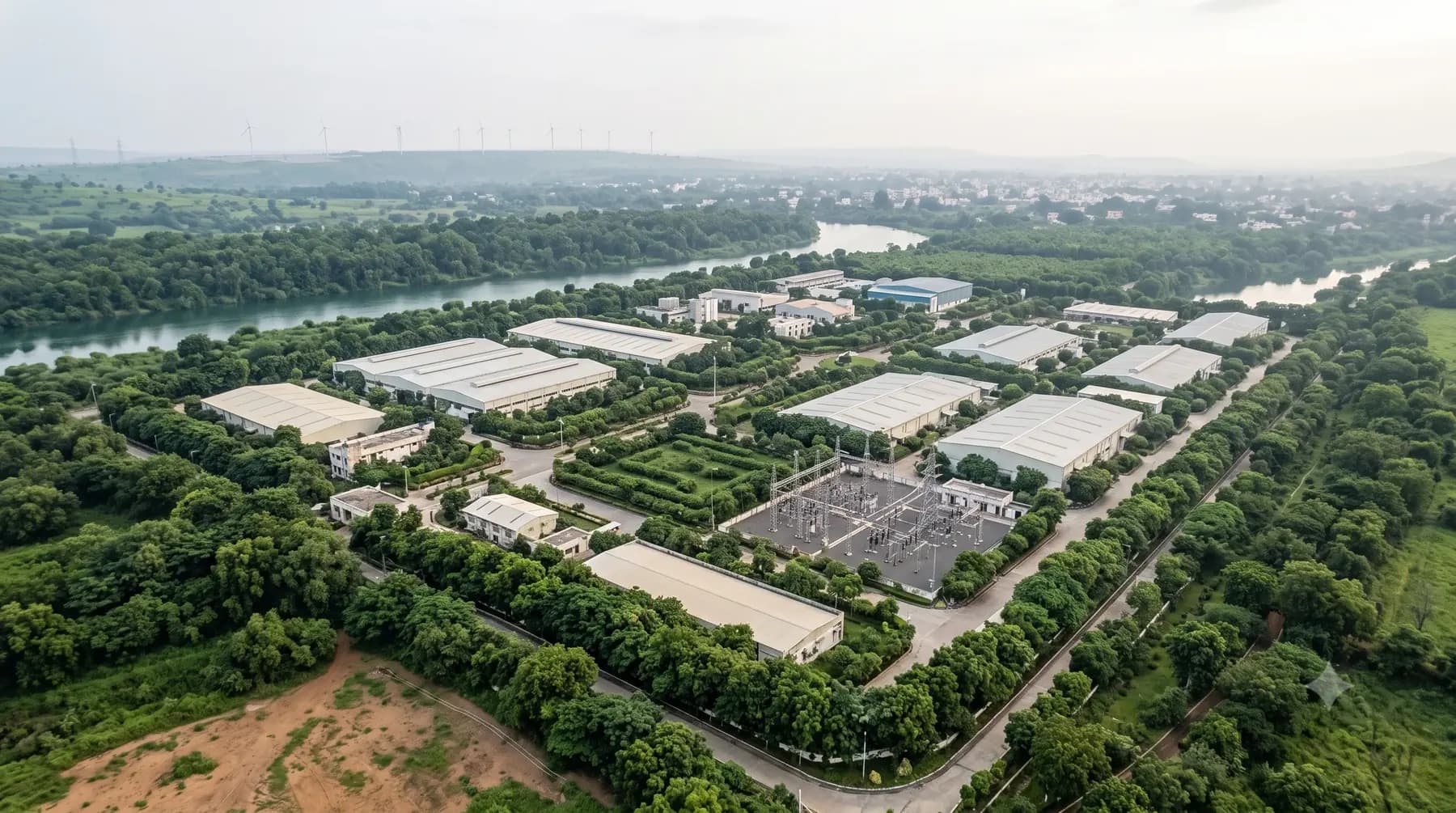
Miyawaki Urban Dense Forestation · Taloja
A forest isn't delivered at handover. It's delivered when the survival data says it took.
Local demand
What drives miyawaki urban dense forestation in Taloja.
The second driver is the neighbourhood. Taloja's housing has grown quickly, the metro line to Pendhar has brought more of it, and many residents now live within sight of the estate. They want green screens between homes and industry, shade on the roads and gardens in their nodes. The riverbanks along the Kasadi need planting that holds soil and gives the river space. Companies spending CSR and CER look for work near their own gate. In each case, the green has to be looked after long after it is planted.
Taloja's units need planting that grows fast into a visible screen, and dense native forest does that in a few years. Compensatory planting from road and expansion projects needs a method that survives on hard ground. Companies spending CSR near the estate want work their neighbours can see from the housing nodes. Schools in the villages around the estate have space and children who notice a forest growing at the gate. Each of these needs a small forest that someone will look after.
How it works
Miyawaki Urban Dense Forestation, from survey to survival.
- 01/05
Native species selection
A multi-layer palette of native species chosen to the soil, climate and the forest's intended structure.
- 02/05
Soil analysis & enhancement
Soil tested and amended with the biomass and nutrients dense planting needs to establish fast.
- 03/05
Dense plantation
Close, multi-layer planting on a marked grid, the density that makes a Miyawaki forest grow upward.
- 04/05
Maintenance & survival monitoring
Two to three years of watering, weeding and, crucially, measured survival, the number the whole method is judged on.
- 05/05
Carbon estimation
Where required, an estimate of the carbon sequestered, so the outcome is a figure, not a claim.
Proof
Comparable work we've delivered.
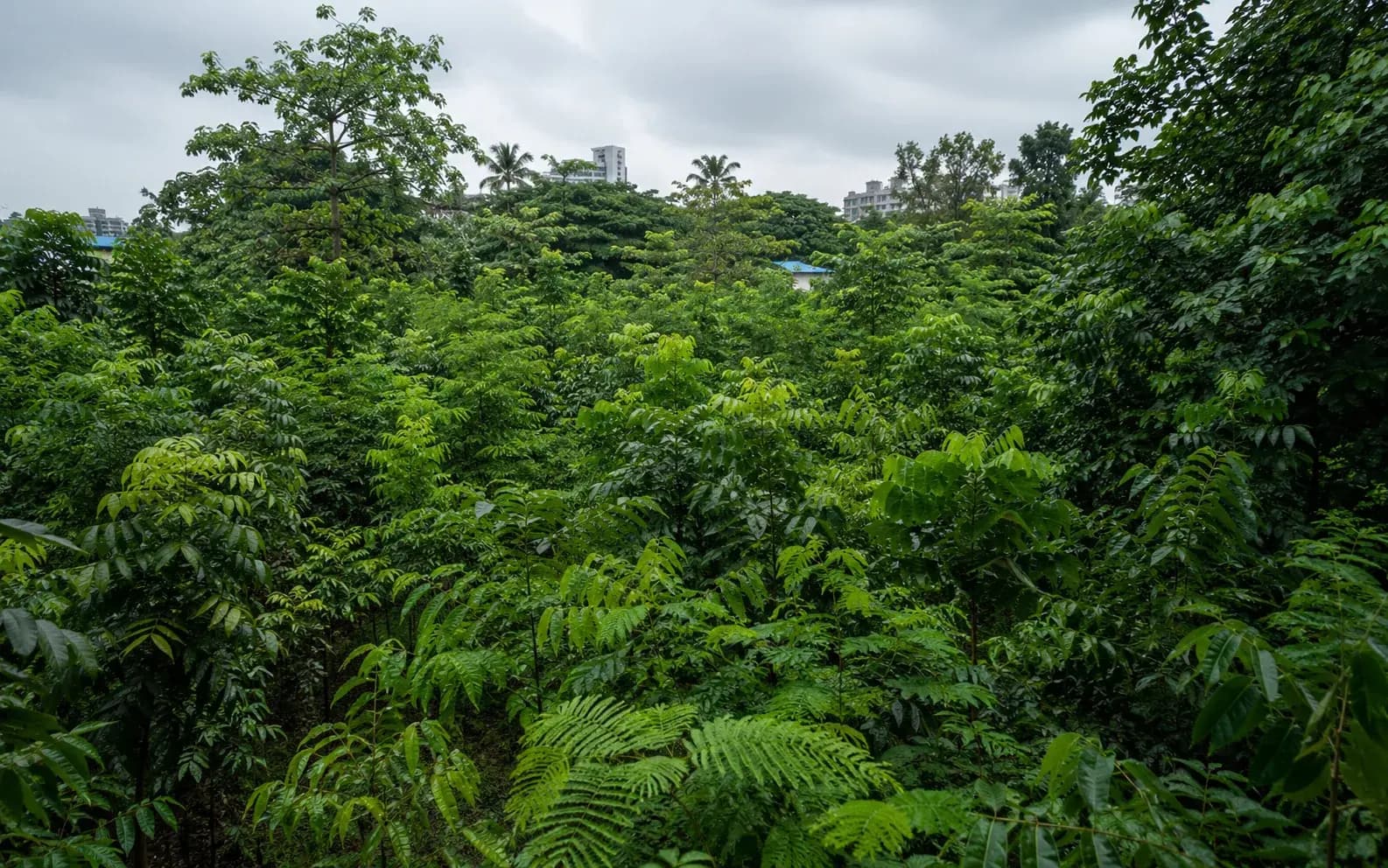
MCGM · Eastern Suburbs, Mumbai
MCGM GARDEN DEVELOPMENT- MIYAWAKI PLANTATION
Miyawaki dense forestation across 27 locations in 7 wards using native species, delivered under the municipal greening programme.
The record
The work, project by project.
Mandate, method and measured outcome, written end to end for every project on this list.
Environment Clearance for a greenfield residential-cum-commercial development under the Pradhan Mantri Awas Yojana, on a 27,612 sq m plot in a residential and commercial zone under PMC jurisdiction.
Read the case studyOn the ground
Across Taloja, and the belt around it.
Local means the node, not the pin on the map. We carry miyawaki urban dense forestation across the Taloja nodes and the wider Mumbai Metropolitan Region: where the units, plots and projects actually sit.
Nodes we work across in Taloja
Also across the Mumbai Metropolitan Region
Straight answers
Miyawaki Urban Dense Forestation in Taloja: common questions.
01Can a Miyawaki forest grow on an old industrial plot in Taloja?
Often, yes, once the soil is checked. Old plots may carry spills or fill that young trees cannot tolerate. We sample first, remove or cap the unsuitable layer, and bring in good soil and organic matter where needed. Native species that tolerate dust and emissions are chosen, and the forest is watered through the first dry seasons.
02Will trees grow in soil next to a chemical plant?
Most will, if the soil is tested first. Some plots carry fill, construction debris or old spills that stunt young trees. We sample the soil, remove or cap what cannot be planted into, and bring in good soil where needed. Hardy native species that tolerate dust and emissions are chosen, and survival is checked over the first dry seasons.
03How long does miyawaki urban dense forestation take in Taloja, and who is involved?
MIDC Taloja · Panvel Municipal Corporation Tree Authority · CIDCO · MPCB Raigad (Taloja) · Maharashtra Forest Department are the bodies a Taloja project works with. On timing: plantation seasonal; monitoring 2–3 years. KIPL sets out a realistic Taloja schedule once the site and the scope have been read, and carries the work through to the outcome, with comparable work on the record such as MCGM GARDEN DEVELOPMENT- MIYAWAKI PLANTATION.
By industry
The same filing, read for your sector.
- 01
Municipal CorporationsCore
Urban forest programmes are commissioned at ward scale and answered for in public, which makes measured survival the deliverable.
Miyawaki Urban Dense Forestation for Municipal Corporations - 02
Corporate CampusesCore
A campus urban forest is the visible half of a net-zero commitment, and its survival and sequestration data feeds the parent's disclosure.
Miyawaki Urban Dense Forestation for Corporate Campuses - 03
Real Estate & Construction
Dense native planting meets the tree-count and green-cover conditions of an 8(a) clearance on plots that have no room for conventional avenue planting.
Miyawaki Urban Dense Forestation for Real Estate & Construction - 04
Townships & Area Development
Dense native forestation delivers the township's committed tree count and green cover far faster than avenue planting across phased land.
Miyawaki Urban Dense Forestation for Townships & Area Development - 05
Hospitality, Healthcare & Education
Dense native pockets deliver measurable green cover on a constrained campus and give an education client a living teaching asset.
Miyawaki Urban Dense Forestation for Hospitality, Healthcare & Education - 06
Chemical Industry
Dense native planting is how a plot-constrained MIDC unit reaches its committed green belt area and canopy density within a compliance horizon.
Miyawaki Urban Dense Forestation for Chemical Industry - 07
Distilleries & Ethanol
Dense native planting builds the odour-buffer canopy quickly, which matters when the public hearing objection was about smell.
Miyawaki Urban Dense Forestation for Distilleries & Ethanol - 08
Sugar Industry
Dense native planting closes the green belt gap on a mill campus quickly, ahead of the next compliance report rather than the next decade.
Miyawaki Urban Dense Forestation for Sugar Industry
In the press
Covers, features and conversations: the work, talked through.



Keep exploring
Where this connects.
The service
01Miyawaki Urban Dense Forestation, in full: and the practices that run beside it.
- Miyawaki Urban Dense Forestation: the full service
- Green Belt Development for Industries
- Tree Management
- Public Gardens & Biodiversity Parks
- Sustainable Landscaping
Clients & partners
The work is trusted where the stakes are highest.
Two decades of clearances, treatment plants and green infrastructure delivered for India’s builders, industry and public bodies, and the global engineering firms beside them.





























































Sideways
Miyawaki Urban Dense Forestation beyond Taloja, and what else we do there.
Also in Taloja
CGWA Groundwater NOCCivil EPCCRZ ClearanceCSR / CER AdvisoryEffluent Treatment PlantsEnvironment ClearanceEnvironment Management & Mitigation PlanEnvironmental AuditsESG Advisory & ReportingExtended Producer ResponsibilityForest ClearanceGreen Belt Development for IndustriesGreen Building CertificationIntegrated Solid Waste Management
Miyawaki Urban Dense Forestation in Taloja? Start with the ground you have.
One conversation to walk the site and plan for what survives: not just what gets planted.