









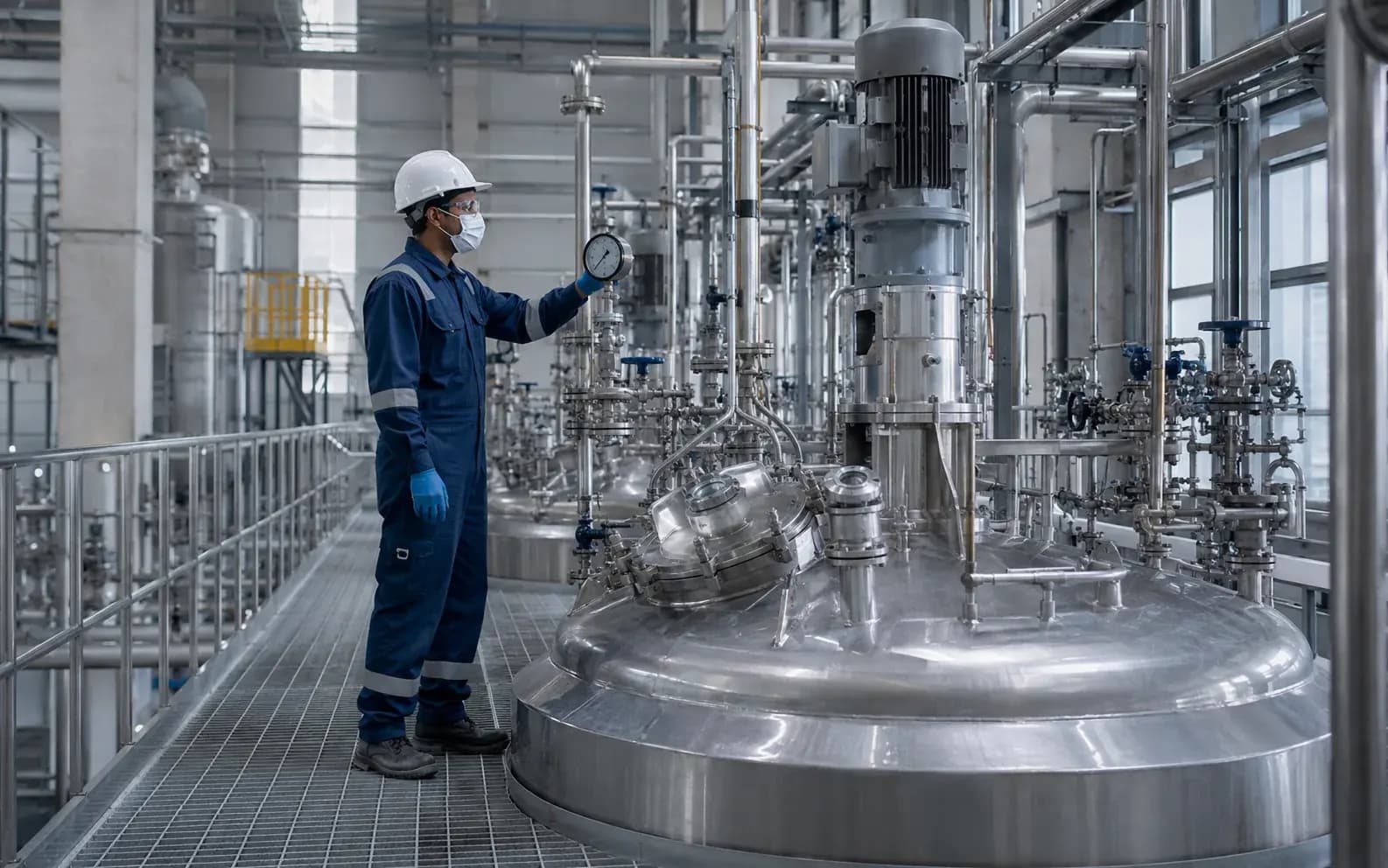
Miyawaki Urban Dense Forestation · Chemical Industry
Miyawaki Dense Forestation for Chemical Plants
For a chemical unit on a constrained MIDC plot, Miyawaki dense native planting is how the committed green belt area and canopy density are actually reached within the period the clearance allows.
Screening view on your project, with the category and route named. No obligation.
What this means for chemical industry
The green belt condition on a chemical clearance asks for a proportion of plot area and, in effect, for a functioning buffer. On an industrial plot where process blocks, tank farms, utilities, roads and statutory setbacks have already claimed the ground, conventional avenue planting cannot deliver either: the trees are too widely spaced to close a canopy, and the closure takes a decade the compliance calendar does not have. The Miyawaki method addresses exactly this constraint: dense multi-layer planting of native species at high stem density, on soil prepared to depth, producing a closed canopy in a few years rather than many. For a plant whose public hearing objections concerned odour and visual intrusion, that difference is the difference between a mitigation measure that works while it matters and one that works eventually.
How KIPL runs it
KIPL plans these plots as part of the plant, not as a landscape parcel. Location is chosen for buffering value (the boundary facing habitation, upwind of the nearest settlement) and cleared against tank-farm dykes, buried pipelines and cabling, vent and flare dispersion zones and fire-tender access. Species are native to the region and selected for tolerance of the site's ambient conditions and soil, and the soil itself is amended and mulched to the depth the method requires, since industrial ground is usually compacted and poor. Irrigation runs through the establishment period, often on treated sewage where the consent permits. What goes wrong otherwise is a dense plot placed where there was room instead of where it was needed, or planted into unamended industrial fill, where high stem density becomes high mortality.
- Plot constraint
Area is the binding limit
A chemical unit in a notified estate rarely has spare land, so the committed green belt has to be achieved through density rather than extent.
- Compliance horizon
Canopy is needed sooner than it grows
Green belt commitments are reported half-yearly and inspected, so a method that closes canopy in years rather than a decade is what makes the commitment demonstrable.
- Safety layout
Planting must respect the plant
Dense planting cannot sit over buried services, inside tank-farm dyke areas, under vent and flare dispersion paths or across emergency access routes.
What you receive
Written for chemical industry, not adapted from a template.
- 01Site assessment and plot selection based on buffering value, cleared against tank farms, buried services, dispersion zones and emergency access
- 02Soil investigation and amendment plan for compacted industrial ground, to the depth the method requires
- 03Native species matrix in multiple canopy layers, selected for the site's ambient conditions and soil
- 04Planting execution at the stem density the method specifies, with mulching and establishment irrigation
- 05Maintenance, replacement and survival monitoring through the establishment period
- 06Area, density and survival records mapped to the green belt condition for the half-yearly compliance report
Questions from chemical industry
What chemical industry ask before appointing us.
Answered against the regulation as it stands, not as a sales pitch. If your situation is not here, ask us directly.
Ask a question →Does a Miyawaki plot count towards our green belt condition?
It counts as the planted area it occupies, and its canopy density and survival are what make that area defensible on inspection. It is a way of meeting the condition on constrained land, not a way of reporting more area than exists: the figure reported is still the actual area planted.
Why not simply plant more trees in rows?
On a constrained industrial plot there is no room for the spacing rows require, and the canopy closure takes far longer. Dense multi-layer planting achieves in a few years, on a small footprint, what avenue planting achieves in a decade over a much larger one.
Will dense planting survive next to a chemical plant?
It survives where the species are chosen for the site's actual ambient conditions and where the soil is prepared properly. The two failure causes on industrial sites are a species list copied from elsewhere and planting into compacted, unamended fill: both avoidable, and both fatal at high stem density.
Where on the plot should it go?
Where it buffers: on the boundary facing the nearest habitation and aligned with the prevailing wind, rather than wherever land happens to be free. The layout then has to be cleared against buried services, tank-farm dykes, vent and flare dispersion paths and fire-tender access before planting begins.
Can treated water be used for irrigation?
Treated sewage is commonly used for green belt and plantation irrigation where the consent permits it, and it reduces fresh water demand at the same time. Treated process effluent should only be used where the consent expressly allows that use.
How long before it functions as a buffer?
Canopy closure under this method is measured in a small number of years rather than a decade, but the exact period depends on species, soil preparation, water availability and maintenance through establishment. The commitment worth making is to the maintenance regime, because that is what determines the outcome.
Stage by stage
How miyawaki urban dense forestation actually runs, step by step.
Also for chemical industry
The rest of the environmental brief for this sector.

Relevant proof
MCGM GARDEN DEVELOPMENT- MIYAWAKI PLANTATION
Miyawaki dense forestation across 27 locations in 7 wards using native species, delivered under the municipal greening programme.
- Area
- ~74,000 m²
- Trees
- ≈1,10,000
- CO₂ (est.)
- 2,052 t
Where we do this
Miyawaki Urban Dense Forestation for chemical industry, city by city.
Other sectors
Who else we run miyawaki urban dense forestation for.
Next step
Tell us the project, and we will tell you the category and the route.
Screening is the cheapest stage to get right and the most expensive to get wrong. We will say plainly what miyawaki urban dense forestation your chemical industry project needs, and what it does not.





























































Start the conversation