








Survival monitoring: the two to three years that decide whether a plot becomes a forest.
A Miyawaki plot needs active care for two to three years (watering, weeding and replacement of casualties) after which the closed canopy takes over and the plot is left alone.
What it is
The maintenance period is a defined phase of the method, not an afterthought. Through it, the plot is watered on a reducing schedule, weeded until the canopy closes, mulch is topped up, and casualties are replaced with the same species so the layer proportions hold. Growth and survival are recorded plot-wise so that the trajectory of the plantation is visible rather than assumed.
KIPL runs the monitoring as a documented cycle with periodic site visits and written records: counts by species, height and girth sampling, canopy closure observation, casualty replacement, pest and weed notes. The purpose is twofold: to intervene while intervention is still cheap, and to give the owner evidence of performance for CSR, ESG or clearance-condition reporting.

What you get
The deliverables, in hand.
- Authority
- Miyawaki method · 2-3 year maintenance to self-sustaining stage
- Typical timeline
- Two to three years of maintenance, then minimal intervention
- Scheduled watering and weeding through the maintenance period
- Periodic survival count by species and layer
- Height, girth and canopy-closure observations
- Casualty replacement with matching species
- Mulch replenishment and pest or disease notes
- Periodic monitoring report with photographs and records
Straight answers
Growth & Survival Monitoring: common questions.
01How long does a Miyawaki plot need maintenance?
Generally two to three years. Through that period the plot is watered, weeded and topped up with mulch while the canopy closes. Once closed, the plot shades out weeds and retains its own moisture, and routine care can be withdrawn. That self-sustaining stage is the objective of the method.
02What determines survival in a dense plantation?
Mainly the soil preparation, the match between species and site, the season of planting, and the discipline of watering and weeding through the first two summers. Sapling quality and correct planting depth matter as well. Where a plot underperforms, the cause is usually traceable to one of these rather than to the method.
03Is a survival percentage guaranteed?
No responsible practitioner guarantees a fixed survival percentage, and some natural thinning is expected in a dense plantation by design. What can be committed to is the maintenance regime, the replacement of casualties during the maintenance period, and honest recorded monitoring of what the plot is actually doing.
04How often is the plot visited during maintenance?
Watering is frequent in the first summer and reduces year on year; supervisory monitoring visits are typically periodic through the season, more often in the first year. The schedule is agreed in the maintenance contract, and the frequency should be higher in the dry months than the monsoon.
05What happens to casualties?
They are replaced with the same species, in the same layer, so the composition of the plot does not drift toward whatever survives easiest. Replacement is normally done in the following planting window rather than in peak summer, when a fresh sapling has little chance.
06What records come out of monitoring?
Species-wise counts, sample height and girth measurements, canopy-closure observation, replacement records, and dated photographs from fixed points. These make up the evidence base an owner needs for CSR or ESG disclosure and for any clearance or consent condition that references the plantation.
07What happens after the maintenance period ends?
The plot is handed over as a closed-canopy plantation that needs no routine watering, weeding or fertilising. Occasional inspection is sensible (for fire risk, invasive climbers, or encroachment), but active horticultural maintenance is deliberately withdrawn, and continuing it would work against the method.
Within Miyawaki Urban Dense Forestation
Part of the whole route, the other components.
Relevant proof
Where this stage has already been delivered.

MCGM · Eastern Suburbs, Mumbai
MCGM GARDEN DEVELOPMENT- MIYAWAKI PLANTATION
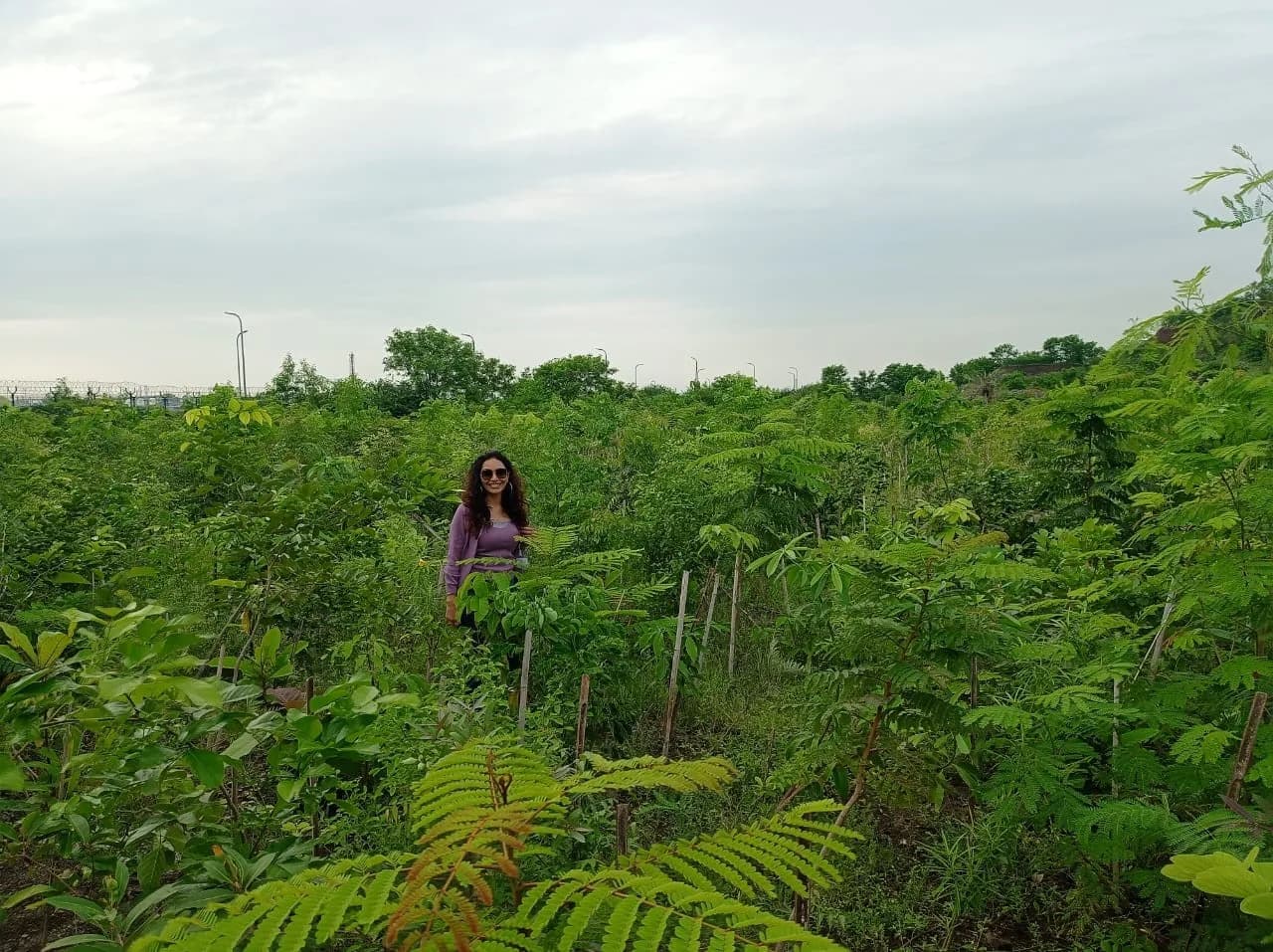
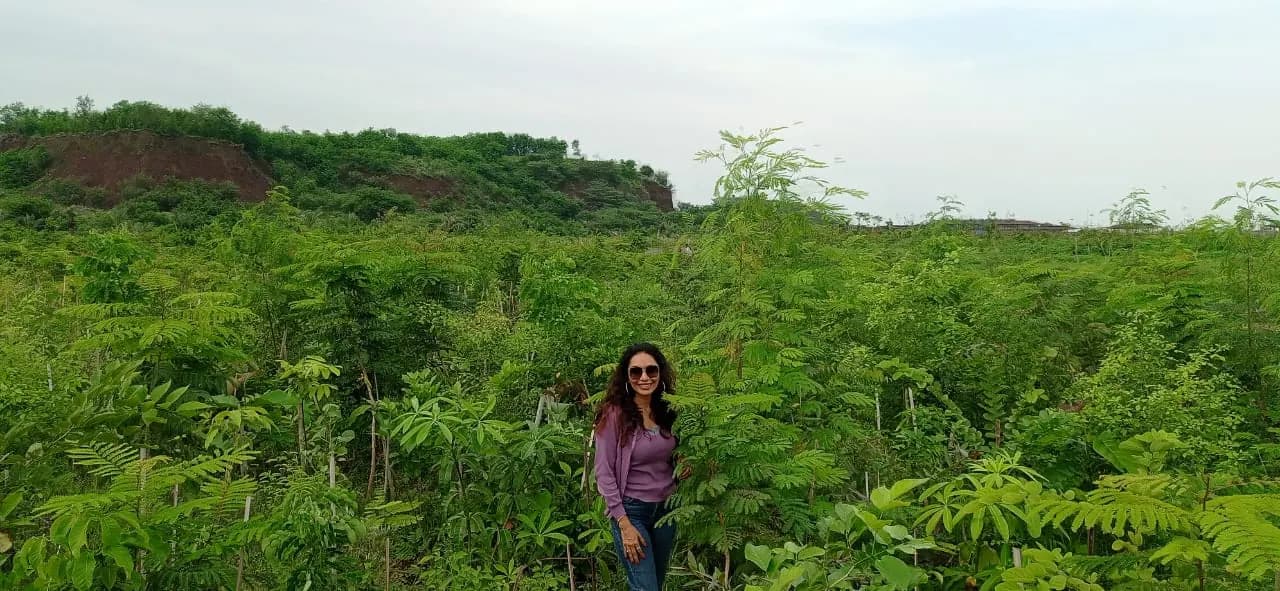
Miyawaki dense forestation across 27 locations in 7 wards using native species, delivered under the municipal greening programme.
Where we do this
Miyawaki Urban Dense Forestation on the ground.
The authority, the timeline and the local ground differ by city. These pages set out how miyawaki urban dense forestation actually runs in each.
Featured projects
Work that carries its own evidence.
Our expertise
One team across the whole environmental brief.
Growth & Survival Monitoring is one stage of one practice. Most projects need several, and the commitments made at clearance are the ones we build and maintain.
Who we do this for
Miyawaki Urban Dense Forestation reads differently by industry.
- 01
Municipal CorporationsCore
Urban forest programmes are commissioned at ward scale and answered for in public, which makes measured survival the deliverable.
Miyawaki Urban Dense Forestation for Municipal Corporations - 02
Corporate CampusesCore
A campus urban forest is the visible half of a net-zero commitment, and its survival and sequestration data feeds the parent's disclosure.
Miyawaki Urban Dense Forestation for Corporate Campuses - 03
Real Estate & Construction
Dense native planting meets the tree-count and green-cover conditions of an 8(a) clearance on plots that have no room for conventional avenue planting.
Miyawaki Urban Dense Forestation for Real Estate & Construction - 04
Townships & Area Development
Dense native forestation delivers the township's committed tree count and green cover far faster than avenue planting across phased land.
Miyawaki Urban Dense Forestation for Townships & Area Development - 05
Hospitality, Healthcare & Education
Dense native pockets deliver measurable green cover on a constrained campus and give an education client a living teaching asset.
Miyawaki Urban Dense Forestation for Hospitality, Healthcare & Education - 06
Chemical Industry
Dense native planting is how a plot-constrained MIDC unit reaches its committed green belt area and canopy density within a compliance horizon.
Miyawaki Urban Dense Forestation for Chemical Industry - 07
Distilleries & Ethanol
Dense native planting builds the odour-buffer canopy quickly, which matters when the public hearing objection was about smell.
Miyawaki Urban Dense Forestation for Distilleries & Ethanol - 08
Sugar Industry
Dense native planting closes the green belt gap on a mill campus quickly, ahead of the next compliance report rather than the next decade.
Miyawaki Urban Dense Forestation for Sugar Industry
Trusted by
The organisations this work is done for.





In the press