









Carbon sequestration estimation: quantifying what a plantation actually stores.
Carbon sequestration estimation converts a plantation into a number an ESG or CSR report can carry: biomass measured on site, converted to carbon stock through published allometric relationships.
What it is
Estimation begins with measurement, not assumption. Sample plots are laid within the plantation, tree height and girth are recorded species-wise, and above- and below-ground biomass is derived using published allometric equations for those species or forest types. Biomass is then converted to carbon stock and to a carbon-dioxide equivalent, with the growth trajectory over time treated as an estimate rather than a fact.
KIPL prepares the estimate with the method, the equations used and the sample design stated, so a reader can see how the number was arrived at. This matters because sequestration figures are easy to inflate and hard to defend; a disclosed, replicable estimate with stated uncertainty is far more useful in a sustainability report than a large round number with no basis.
What you get
The deliverables, in hand.
- Authority
- Allometric biomass estimation · IPCC carbon-stock conventions
- Typical timeline
- Weeks; repeatable annually to build a trend
- Sample plot design and field enumeration within the plantation
- Species-wise height and girth measurement records
- Above- and below-ground biomass estimation using published allometrics
- Carbon stock and carbon-dioxide equivalent estimate with assumptions stated
- Projected sequestration over a stated horizon, with limitations
- Estimation report suitable for CSR and ESG disclosure
Straight answers
Carbon Sequestration Assessment: common questions.
01How is carbon sequestration by trees estimated?
By measuring the trees rather than counting them. Sample plots are enumerated for species, height and girth; biomass is calculated using allometric equations published for those species or forest types; and biomass is converted to carbon and then to a carbon-dioxide equivalent using standard conversion factors. The sample design and equations should always be disclosed with the result.
02Can a sequestration figure be given at the time of planting?
Only as a projection, and it should be labelled as one. A freshly planted sapling stores very little carbon; the meaningful stock accumulates over years. Any figure quoted at planting is a modelled expectation based on assumed growth, and treating it as achieved sequestration is misleading.
03How accurate are these estimates?
They are estimates with real uncertainty, driven by the allometric equations chosen, the sample intensity and the growth assumptions. Reported honestly (with method, sample size and assumptions stated) they are perfectly adequate for corporate disclosure. Reported as a precise single number without basis, they invite challenge.
04Does this qualify a project for carbon credits?
Carbon credit issuance is a separate process under a specific standard, with its own eligibility, additionality, baseline, verification and registry requirements. A sequestration estimate is useful supporting work but is not the same as certification under a carbon standard, and should not be presented as such.
05How often should the estimate be repeated?
Annually or at defined intervals, using the same sample plots, so a trend is built from consistent measurement. A single point estimate says what is stored now; a repeated series shows the rate of accumulation, which is what a sustainability report can actually track against.
06Does soil carbon count?
Soil organic carbon is a genuine and often significant pool, particularly on a plot that has been amended with biomass and is accumulating litter. It requires its own soil sampling and analysis, and if it is to be included it should be measured and reported separately from the biomass estimate rather than folded in silently.
Within Miyawaki Urban Dense Forestation
Part of the whole route, the other components.
Relevant proof
Where this stage has already been delivered.

MCGM · Eastern Suburbs, Mumbai
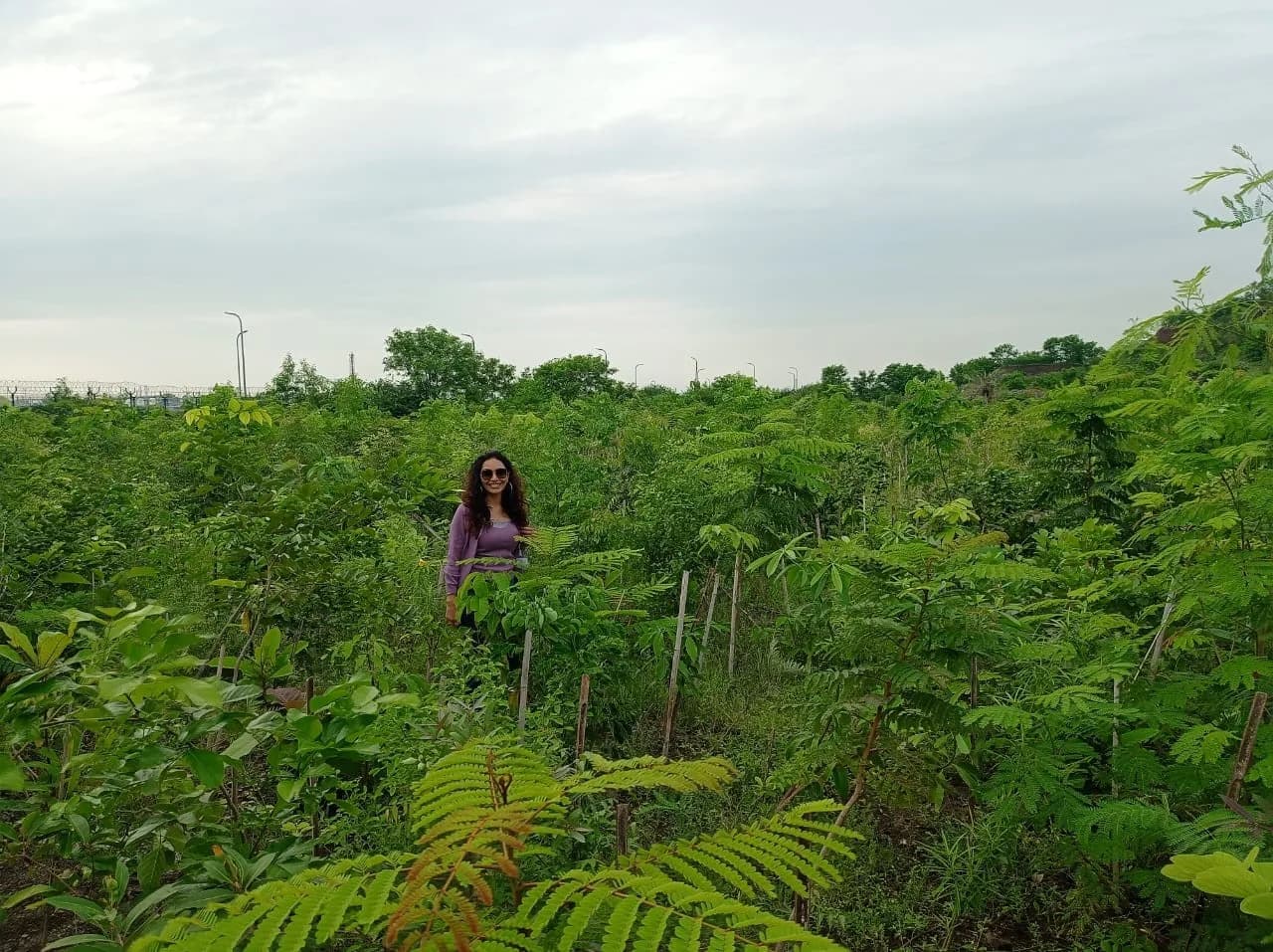
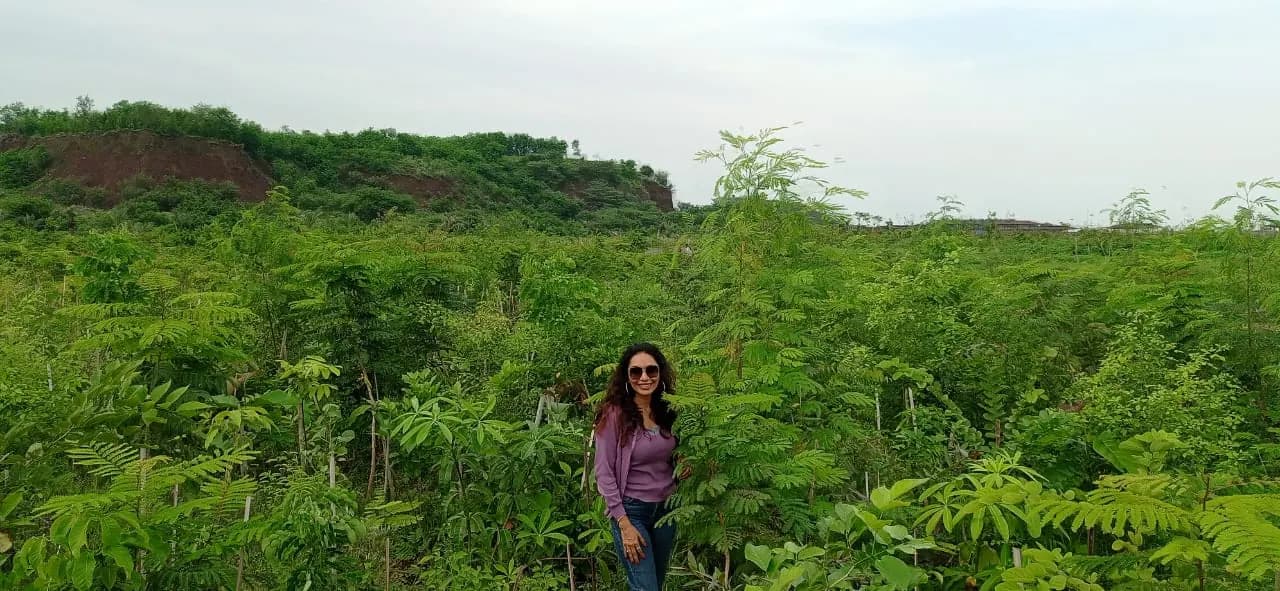
MCGM GARDEN DEVELOPMENT- MIYAWAKI PLANTATION
Miyawaki dense forestation across 27 locations in 7 wards using native species, delivered under the municipal greening programme.
Where we do this
Miyawaki Urban Dense Forestation on the ground.
The authority, the timeline and the local ground differ by city. These pages set out how miyawaki urban dense forestation actually runs in each.
Featured projects
Work that carries its own evidence.
Our expertise
One team across the whole environmental brief.
Carbon Sequestration Assessment is one stage of one practice. Most projects need several, and the commitments made at clearance are the ones we build and maintain.
Who we do this for
Miyawaki Urban Dense Forestation reads differently by industry.
- 01
Municipal CorporationsCore
Urban forest programmes are commissioned at ward scale and answered for in public, which makes measured survival the deliverable.
Miyawaki Urban Dense Forestation for Municipal Corporations - 02
Corporate CampusesCore
A campus urban forest is the visible half of a net-zero commitment, and its survival and sequestration data feeds the parent's disclosure.
Miyawaki Urban Dense Forestation for Corporate Campuses - 03
Real Estate & Construction
Dense native planting meets the tree-count and green-cover conditions of an 8(a) clearance on plots that have no room for conventional avenue planting.
Miyawaki Urban Dense Forestation for Real Estate & Construction - 04
Townships & Area Development
Dense native forestation delivers the township's committed tree count and green cover far faster than avenue planting across phased land.
Miyawaki Urban Dense Forestation for Townships & Area Development - 05
Hospitality, Healthcare & Education
Dense native pockets deliver measurable green cover on a constrained campus and give an education client a living teaching asset.
Miyawaki Urban Dense Forestation for Hospitality, Healthcare & Education - 06
Chemical Industry
Dense native planting is how a plot-constrained MIDC unit reaches its committed green belt area and canopy density within a compliance horizon.
Miyawaki Urban Dense Forestation for Chemical Industry - 07
Distilleries & Ethanol
Dense native planting builds the odour-buffer canopy quickly, which matters when the public hearing objection was about smell.
Miyawaki Urban Dense Forestation for Distilleries & Ethanol - 08
Sugar Industry
Dense native planting closes the green belt gap on a mill campus quickly, ahead of the next compliance report rather than the next decade.
Miyawaki Urban Dense Forestation for Sugar Industry
Trusted by
The organisations this work is done for.





In the press