








Soil analysis and enhancement: the buried half of a Miyawaki forest.
Before a single sapling goes in, a Miyawaki site is tested and rebuilt to a depth of about a metre: because the growth rate the method is known for comes from the soil, not the saplings.
What it is
Urban and industrial sites are usually compacted, low in organic carbon and often filled with construction debris. The Miyawaki method therefore begins with soil work: testing for texture, pH, organic carbon and drainage, then loosening the profile to roughly a metre and blending in perforator, water retainer and fertiliser material (commonly locally available biomass such as rice husk, coir pith, farmyard manure and compost) before mounding and mulching.
KIPL tests the soil first and prescribes amendment quantities against the measured deficiency, rather than applying a standard recipe. Where the site carries debris, high salinity, waterlogging or a hardpan, that is dealt with at this stage. It cannot be corrected once the plot is planted at three to five saplings per square metre.

What you get
The deliverables, in hand.
- Authority
- Miyawaki method · soil texture, pH and organic-carbon testing
- Typical timeline
- Two to four weeks of site work, after laboratory results
- Soil sampling and laboratory analysis: texture, pH, EC, organic carbon, NPK
- Debris, hardpan and drainage assessment of the plot
- Amendment prescription with quantities per square metre
- Perforator, water-retainer and organic-matter blending specification
- Excavation, mixing, mounding and mulching supervision
- Post-amendment soil verification before planting
Straight answers
Soil Analysis & Enhancement: common questions.
01Why is soil work so central to the Miyawaki method?
Because the method's growth rate depends on roots being able to travel freely through a loose, biologically active, moisture-holding profile. Planting into compacted urban soil at Miyawaki density produces competition without growth. The soil is the single largest determinant of how the plot performs in its first three years.
02How deep is the soil worked?
The method generally calls for loosening and amending to about a metre, so the root zone is not sitting on compaction. The workable depth on a real site depends on what is below (rock, hardpan, utilities or fill) and is confirmed by trial pits before excavation is priced.
03What materials are used to amend the soil?
Three functions are needed: a perforator to keep the soil open, a water retainer to hold moisture, and organic fertiliser material. In Indian conditions these are usually met with locally available biomass: rice husk, sugarcane bagasse, coir pith, farmyard manure and compost. Using local material is deliberate; it keeps the plot low-cost and appropriate to the region.
04What does the soil test actually measure?
Texture, pH, electrical conductivity, organic carbon and the major nutrients, along with an assessment of drainage and infiltration. Those readings decide the amendment quantities. Without them, amendment is guesswork and the plot may be over-dosed in one direction and deficient in another.
05Can a Miyawaki plot be made on filled or debris-laden land?
Often yes, but only after the debris is removed or the profile is replaced to the working depth, and after checking for contamination and drainage. Reclaimed and filled sites are among the most common Miyawaki locations in Indian cities; they simply need more soil work before planting, which should be priced honestly at the outset.
06Why is the plot mounded and mulched?
Mounding lifts the root zone above standing water and gives roots depth of loose soil; mulching with straw or biomass holds moisture, moderates soil temperature and suppresses weeds while the canopy is still open. Both are part of the method rather than optional finishing touches.
07Does the soil need re-treating in later years?
Normally no. Once the canopy closes, the plot begins generating its own litter and organic matter, which is the point of the method. Continued fertiliser application after establishment is a sign that the initial soil work or the species mix was wrong.
Within Miyawaki Urban Dense Forestation
Part of the whole route, the other components.
Relevant proof
Where this stage has already been delivered.

MCGM · Eastern Suburbs, Mumbai
MCGM GARDEN DEVELOPMENT- MIYAWAKI PLANTATION
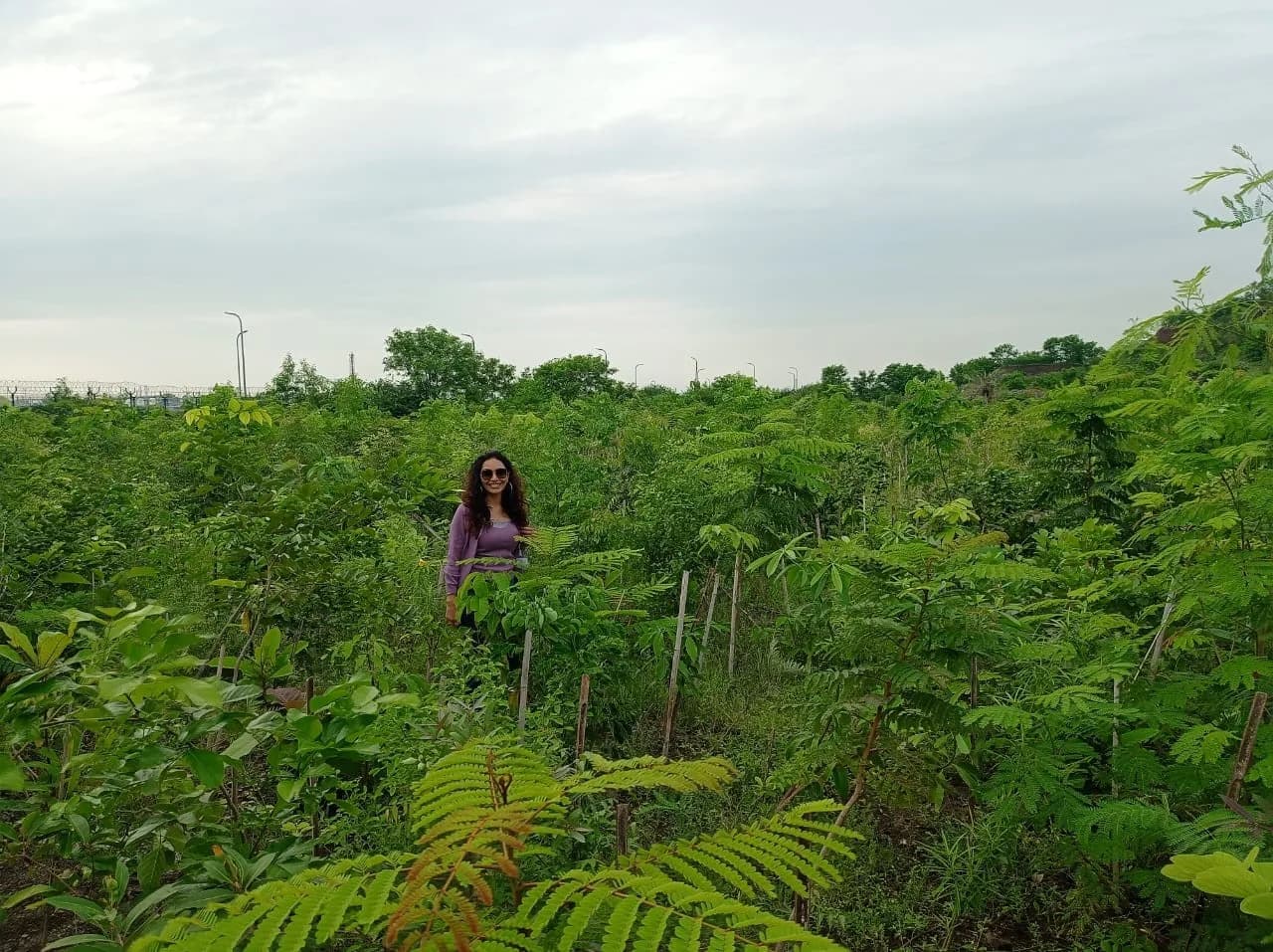
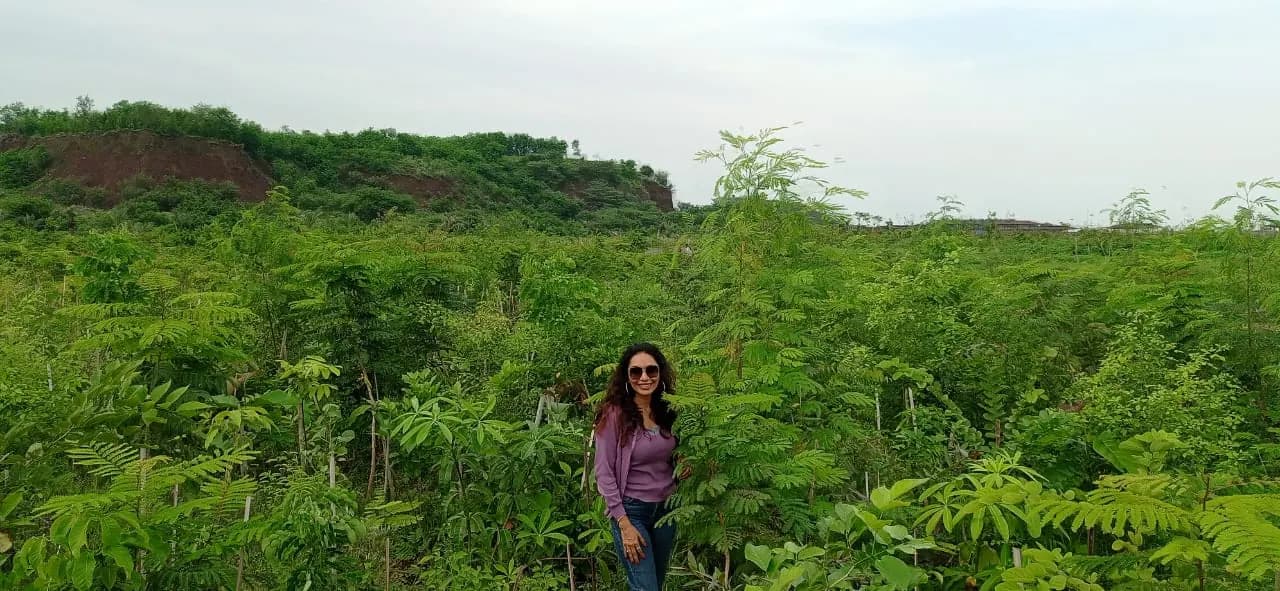
Miyawaki dense forestation across 27 locations in 7 wards using native species, delivered under the municipal greening programme.
Where we do this
Miyawaki Urban Dense Forestation on the ground.
The authority, the timeline and the local ground differ by city. These pages set out how miyawaki urban dense forestation actually runs in each.
Featured projects
Work that carries its own evidence.
Our expertise
One team across the whole environmental brief.
Soil Analysis & Enhancement is one stage of one practice. Most projects need several, and the commitments made at clearance are the ones we build and maintain.
Who we do this for
Miyawaki Urban Dense Forestation reads differently by industry.
- 01
Municipal CorporationsCore
Urban forest programmes are commissioned at ward scale and answered for in public, which makes measured survival the deliverable.
Miyawaki Urban Dense Forestation for Municipal Corporations - 02
Corporate CampusesCore
A campus urban forest is the visible half of a net-zero commitment, and its survival and sequestration data feeds the parent's disclosure.
Miyawaki Urban Dense Forestation for Corporate Campuses - 03
Real Estate & Construction
Dense native planting meets the tree-count and green-cover conditions of an 8(a) clearance on plots that have no room for conventional avenue planting.
Miyawaki Urban Dense Forestation for Real Estate & Construction - 04
Townships & Area Development
Dense native forestation delivers the township's committed tree count and green cover far faster than avenue planting across phased land.
Miyawaki Urban Dense Forestation for Townships & Area Development - 05
Hospitality, Healthcare & Education
Dense native pockets deliver measurable green cover on a constrained campus and give an education client a living teaching asset.
Miyawaki Urban Dense Forestation for Hospitality, Healthcare & Education - 06
Chemical Industry
Dense native planting is how a plot-constrained MIDC unit reaches its committed green belt area and canopy density within a compliance horizon.
Miyawaki Urban Dense Forestation for Chemical Industry - 07
Distilleries & Ethanol
Dense native planting builds the odour-buffer canopy quickly, which matters when the public hearing objection was about smell.
Miyawaki Urban Dense Forestation for Distilleries & Ethanol - 08
Sugar Industry
Dense native planting closes the green belt gap on a mill campus quickly, ahead of the next compliance report rather than the next decade.
Miyawaki Urban Dense Forestation for Sugar Industry
Trusted by
The organisations this work is done for.





In the press