









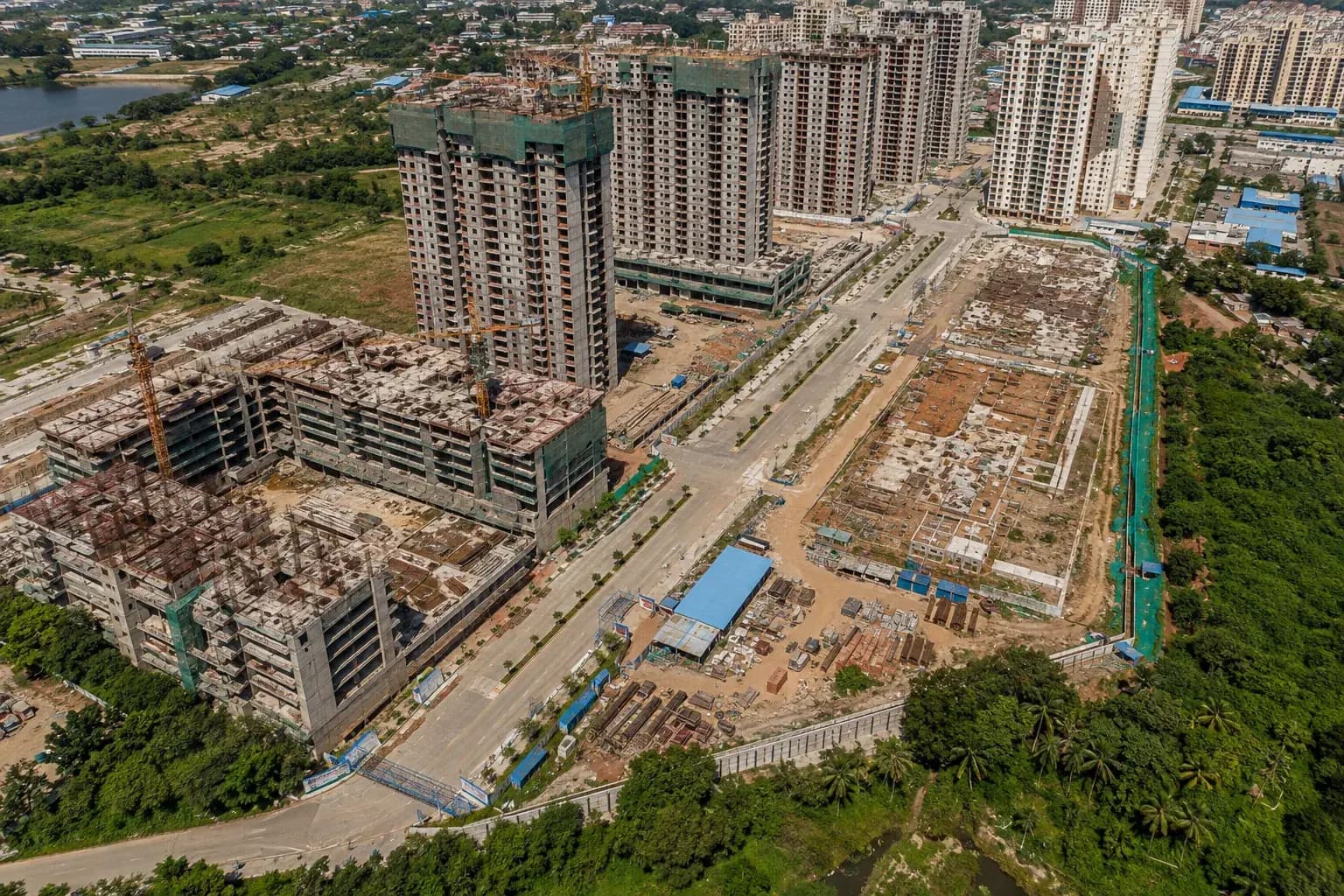
Miyawaki Urban Dense Forestation · Real Estate & Construction
Miyawaki Urban Dense Forestation for Real Estate & Construction: tree-count and green-cover conditions met on a plot with no room.
Miyawaki dense native forestation lets a building project deliver the tree count and green-cover conditions of its 8(a) clearance on plots where conventional spaced planting has nowhere to go.
Screening view on your project, with the category and route named. No obligation.
What this means for real estate & construction
An urban development typically commits to a number of trees and a proportion of green cover in its clearance, and then discovers that the plot after setbacks, driveway, fire tender path, podium edge and services has very little planting ground left at conventional spacing. The Miyawaki method (dense, multi-layered planting of native species in a prepared soil profile) puts a far higher stem count into a small footprint and establishes canopy in years rather than decades, which is why it has become the practical answer for developers with a tree obligation and a constrained site. It also reads well to the buyer and to the compliance reviewer for the same reason: a dense native stand is visibly a forest patch rather than a row of saplings in tree guards. The constraint is that it is a soil and species exercise, not a planting-density trick: without adequate depth, soil preparation and irrigation through establishment, a dense plot fails densely.
How KIPL runs it
KIPL plans the patch against the actual condition being satisfied (the tree count in the clearance, the compensatory plantation required by the Tree Authority, or both, kept distinguishable) and against the site's real soil depth, sunlight and water availability, with irrigation drawn from the STP reuse line where the layout allows. We prepare the soil profile properly, select a native species mix with the layer structure the method depends on, plant at the density the site can carry, and maintain through the establishment period with survival records dated and photographed. The failure mode is a patch planted for a photograph, unwatered through the first summer, and quietly replaced with lawn before the second compliance report.
- 8(a)
The tree count is a condition, and the plot is small
Clearance conditions commit a building project to a tree number and a green-cover proportion. On a constrained urban plot, dense native planting is often the only way to deliver that count within the available ground.
- Trees Act 1975
Compensatory plantation needs somewhere to go
Replacement planting required by the Tree Authority has to be physically located. A dense patch can absorb a compensatory obligation that spaced planting on the same plot could not.
Canopy within the sales horizon
Dense native planting establishes canopy far faster than avenue planting, which matters both for the amenity the project is selling and for the green cover a compliance reviewer can see.
What you receive
Written for real estate & construction, not adapted from a template.
- 01Site assessment for soil depth, sunlight, drainage and water availability, including podium and at-grade options
- 02Native species mix designed in shrub, sub-tree, tree and canopy layers for the local ecology
- 03Soil profile preparation specification and planting density against the committed tree count
- 04Irrigation arrangement through establishment, drawn from the STP treated-water line where the layout allows
- 05Planting execution with a numbered record separating EC-committed plantation from compensatory plantation
- 06Establishment-period maintenance and dated survival evidence for the half-yearly compliance report
Questions from real estate & construction
What real estate & construction ask before appointing us.
Answered against the regulation as it stands, not as a sales pitch. If your situation is not here, ask us directly.
Ask a question →Will a Miyawaki patch satisfy our EC tree-count condition?
It can, where the condition is expressed in tree numbers and native species and the patch is documented as delivering them. What matters is that the planting is recorded, numbered and surviving, and that the same trees are not also being counted against a separate compensatory plantation obligation.
How much space does it need?
Considerably less than spaced avenue planting for the same stem count, which is why it suits constrained urban plots, but it needs adequate soil depth and a properly prepared profile. A shallow podium pocket with no depth will not carry the method regardless of how densely it is planted.
Can it be done on a podium?
Only where the structural load allowance and soil depth support it, and usually with a modified species selection and a lighter growing medium. That has to be settled with the structural designer, because a soil profile deep enough for the method is a significant load on a slab.
How fast does it establish?
Dense native planting closes canopy substantially faster than conventional spaced planting because of the layered structure and competition for light, though the rate depends on species, soil preparation, irrigation and the site. It is faster, not instant, and the first two summers decide the outcome.
Does it need maintenance after the first year?
It needs disciplined irrigation and weeding through the establishment period, after which the intent is a self-sustaining stand. The failures we see are almost always first-summer failures (planted, photographed, and then not watered) so the maintenance contract has to cover establishment properly.
Can it also carry the Tree Authority's compensatory plantation?
Often, subject to what the corporation accepts in terms of species, sizes and location. The important discipline is to keep the records separate and numbered, so the compensatory plantation and the clearance-committed plantation are each independently evidenced rather than one stand being shown twice to two authorities.
Stage by stage
How miyawaki urban dense forestation actually runs, step by step.
Also for real estate & construction
The rest of the environmental brief for this sector.

Relevant proof
MCGM GARDEN DEVELOPMENT- MIYAWAKI PLANTATION
Miyawaki dense forestation across 27 locations in 7 wards using native species, delivered under the municipal greening programme.
- Area
- ~74,000 m²
- Trees
- ≈1,10,000
- CO₂ (est.)
- 2,052 t
Where we do this
Miyawaki Urban Dense Forestation for real estate & construction, city by city.
Other sectors
Who else we run miyawaki urban dense forestation for.
Next step
Tell us the project, and we will tell you the category and the route.
Screening is the cheapest stage to get right and the most expensive to get wrong. We will say plainly what miyawaki urban dense forestation your real estate & construction project needs, and what it does not.





























































Start the conversation