








Native species selection: the botanical decision a Miyawaki forest stands or fails on.
A Miyawaki forest is only as good as its species list: the set of native trees and shrubs that would grow on that site naturally, arranged across four canopy layers.
What it is
The Miyawaki method builds a dense, multi-layered plantation out of species that belong to the site's potential natural vegetation. The forest type that would establish there without human interference. Selection therefore starts from the local reference forest, sacred grove or remnant patch rather than from a nursery catalogue, and sorts the chosen species into four layers: shrub, sub-tree, tree and canopy. Ornamental exotics and fast-growing avenue species, however familiar, do not belong in the matrix.
KIPL builds the species list from a walk of the surrounding vegetation, the soil and rainfall regime of the site, and what nurseries in the region can actually supply as healthy, hardened saplings of the right age. The output is a proportioned matrix (how many of each species, in which layer) because the method depends on mixture and density, not on any single species performing well.

What you get
The deliverables, in hand.
- Authority
- Miyawaki method · potential natural vegetation survey
- Typical timeline
- Two to four weeks, including field and nursery survey
- Reference-forest and remnant-vegetation survey around the site
- Native species matrix across shrub, sub-tree, tree and canopy layers
- Species-wise proportion and count against the planting area
- Nursery sourcing note: availability, sapling age and hardening status
- Exclusion list: invasive and unsuitable exotic species
- Planting plan drawing with layer distribution
Straight answers
Native Species Selection: common questions.
01Why does a Miyawaki plantation insist on native species?
Because the method reproduces the forest that the site would have carried naturally. Native species are already matched to the local soil, rainfall and pest regime, so they establish without long-term irrigation or chemical support, and they support local birds and insects. Exotic ornamentals may look established sooner but do not build the same self-sustaining system.
02How is the species list actually decided?
By surveying the natural vegetation that survives around the site (remnant forest patches, sacred groves, hill slopes, riverbanks) and reading the soil and rainfall regime. Those species are then sorted into four layers and proportioned so no single species dominates. Local nursery availability then decides what is practically plantable in the coming season.
03How many species go into one Miyawaki plot?
The method calls for a wide mixture rather than a fixed number, typically several dozen species across the four layers on a reasonably sized plot. Diversity is the point: it spreads risk, fills the canopy at different heights and gives the plot the structure of a forest rather than an orchard.
04What are the four layers in the Miyawaki method?
Shrub, sub-tree, tree and canopy. Each layer occupies a different height band, so the plot closes its canopy from top to bottom, suppresses weeds and creates the shaded, humid microclimate that drives fast establishment. A list without layer proportions is not a Miyawaki species list.
05Can fruit trees or flowering ornamentals be included?
Native fruit-bearing and flowering species that occur in the local vegetation are legitimate and often desirable, because they draw birds and pollinators. What is avoided is grafted horticultural varieties and exotic ornamentals, which need continued care and do not contribute to a self-sustaining forest structure.
06How does this differ from conventional avenue or compensatory planting?
Conventional planting places widely spaced saplings, often of a few fast-growing species, with permanent maintenance. Miyawaki plants a dense mixture of native species at close spacing so that they compete upward and close canopy quickly, after which the plot needs no routine care. The species logic behind the two is entirely different.
07What if the required native species are not available in nurseries?
That is a common constraint and it has to be solved before the season, not during planting. Options are advance indent with a regional nursery, seed collection and raising for the following cycle, or substituting a botanically comparable native species from the same layer. Substituting an exotic because it is on the shelf defeats the method.
Within Miyawaki Urban Dense Forestation
Part of the whole route, the other components.
Relevant proof
Where this stage has already been delivered.

MCGM · Eastern Suburbs, Mumbai
MCGM GARDEN DEVELOPMENT- MIYAWAKI PLANTATION
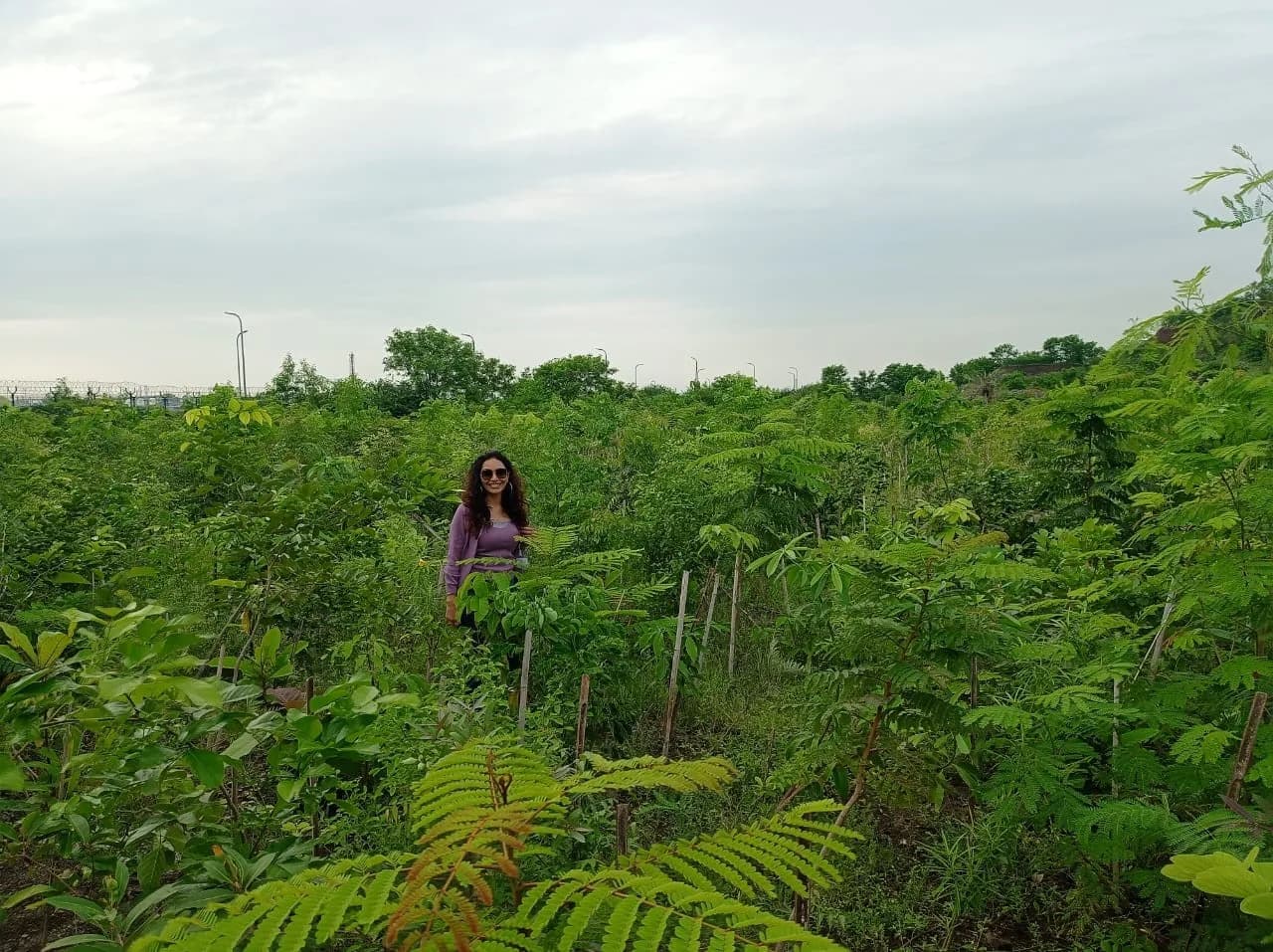
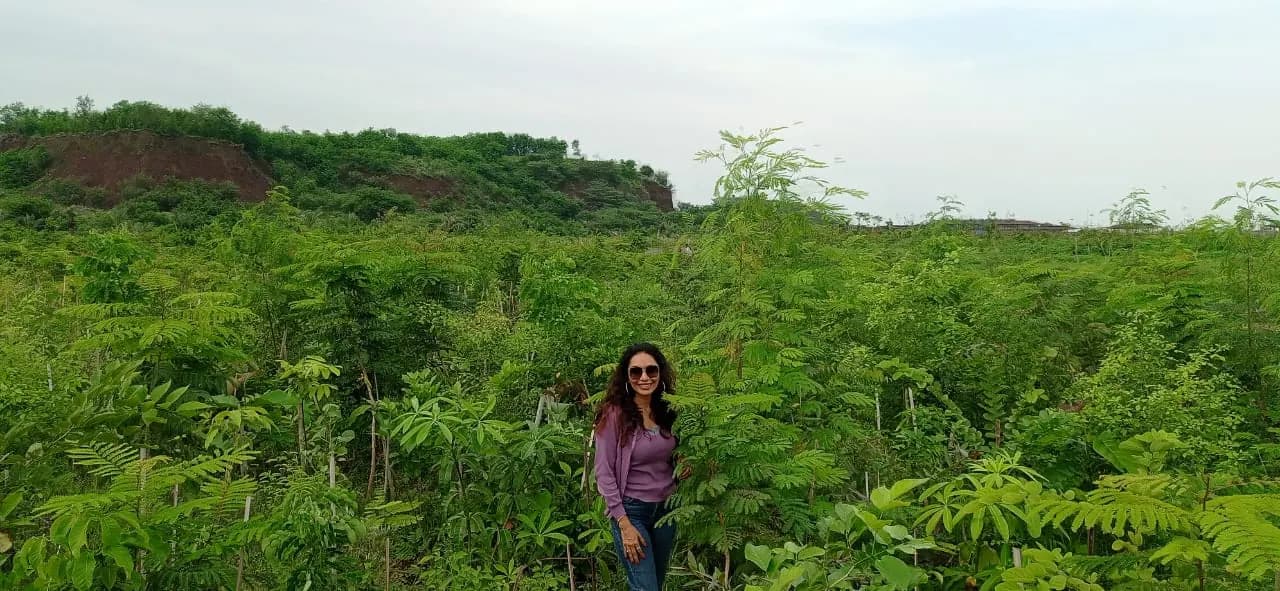
Miyawaki dense forestation across 27 locations in 7 wards using native species, delivered under the municipal greening programme.
Where we do this
Miyawaki Urban Dense Forestation on the ground.
The authority, the timeline and the local ground differ by city. These pages set out how miyawaki urban dense forestation actually runs in each.
Featured projects
Work that carries its own evidence.
Our expertise
One team across the whole environmental brief.
Native Species Selection is one stage of one practice. Most projects need several, and the commitments made at clearance are the ones we build and maintain.
Who we do this for
Miyawaki Urban Dense Forestation reads differently by industry.
- 01
Municipal CorporationsCore
Urban forest programmes are commissioned at ward scale and answered for in public, which makes measured survival the deliverable.
Miyawaki Urban Dense Forestation for Municipal Corporations - 02
Corporate CampusesCore
A campus urban forest is the visible half of a net-zero commitment, and its survival and sequestration data feeds the parent's disclosure.
Miyawaki Urban Dense Forestation for Corporate Campuses - 03
Real Estate & Construction
Dense native planting meets the tree-count and green-cover conditions of an 8(a) clearance on plots that have no room for conventional avenue planting.
Miyawaki Urban Dense Forestation for Real Estate & Construction - 04
Townships & Area Development
Dense native forestation delivers the township's committed tree count and green cover far faster than avenue planting across phased land.
Miyawaki Urban Dense Forestation for Townships & Area Development - 05
Hospitality, Healthcare & Education
Dense native pockets deliver measurable green cover on a constrained campus and give an education client a living teaching asset.
Miyawaki Urban Dense Forestation for Hospitality, Healthcare & Education - 06
Chemical Industry
Dense native planting is how a plot-constrained MIDC unit reaches its committed green belt area and canopy density within a compliance horizon.
Miyawaki Urban Dense Forestation for Chemical Industry - 07
Distilleries & Ethanol
Dense native planting builds the odour-buffer canopy quickly, which matters when the public hearing objection was about smell.
Miyawaki Urban Dense Forestation for Distilleries & Ethanol - 08
Sugar Industry
Dense native planting closes the green belt gap on a mill campus quickly, ahead of the next compliance report rather than the next decade.
Miyawaki Urban Dense Forestation for Sugar Industry
Trusted by
The organisations this work is done for.





In the press