










Green Belt Development for Industries · Industrial & Manufacturing
Green Belt Development for Manufacturing Units
For a manufacturing unit the green belt is a consent condition with an area attached, commonly around a third of the plot: and it is checked at renewal on what is standing, not on what was planted.
Screening view on your project, with the category and route named. No obligation.
What this means for industrial & manufacturing
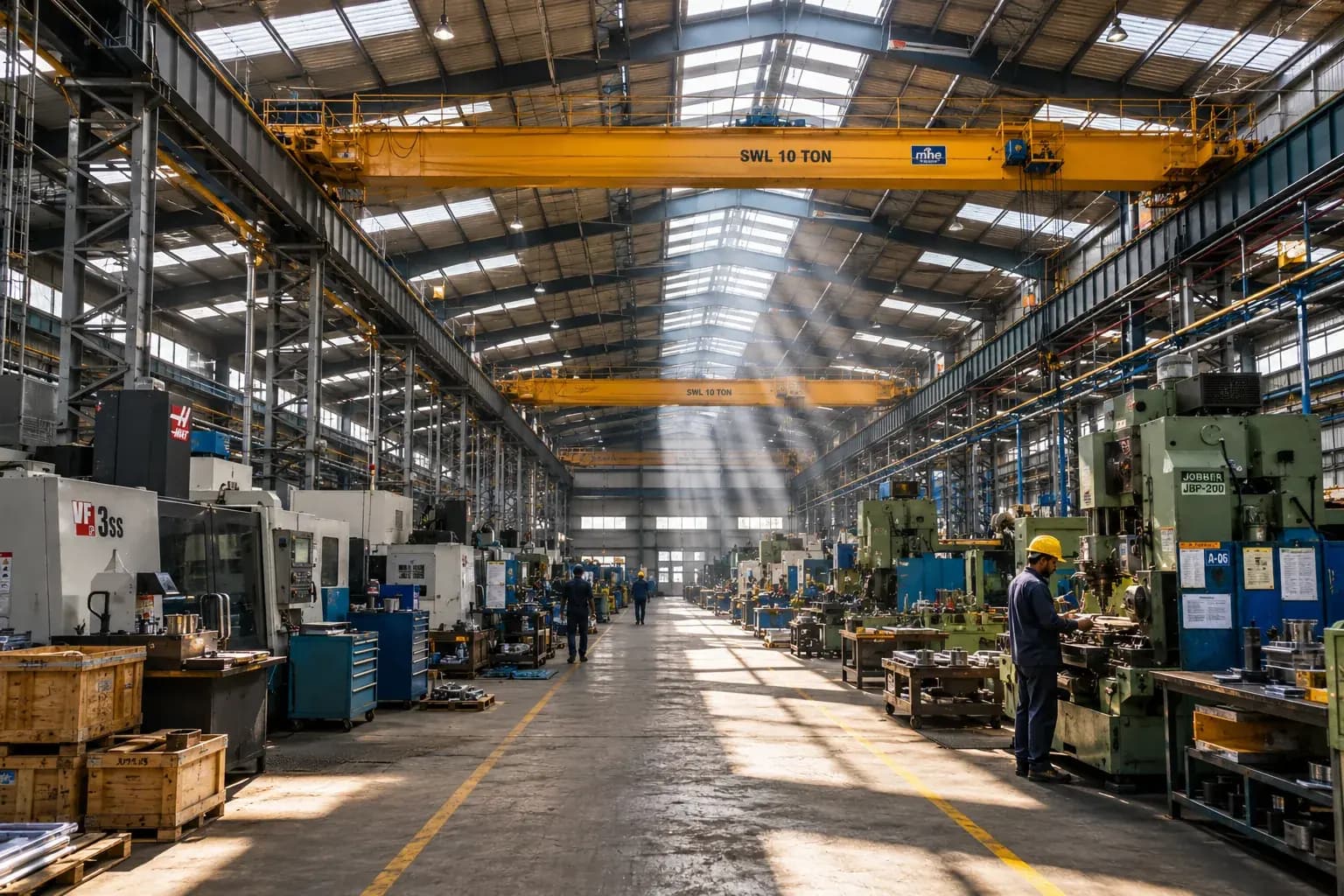
Consent conditions routinely bind an industrial plot to green belt over a defined share of its area, sited along the periphery and around the sources that matter, and clearance conditions where an EC exists say the same thing in more detail. On a manufacturing plot the relevant sources are specific: process stacks and fume extraction discharge points, DG set exhausts, material handling and loading bays, scrap and waste storage yards, and the boundary that faces a road or a neighbouring unit. The difficulty is that an MIDC plot is usually laid out for production first (built-up area, roads, parking, utilities and storage) and green belt is planned from what is left, which is often a narrow strip in the wrong place. The consequence appears at renewal, when the unit reports an area it cannot demonstrate, or reports a planting figure from four years ago with no survival count behind it.
How KIPL runs it
KIPL works the problem in the order that actually resolves it: measure what green cover genuinely exists, compute it against the plot area and against what the condition requires, and then site new planting where it does emission and boundary work rather than where there happens to be space: layered peripheral belt where width allows, dense blocks where it does not, and avenue planting along internal roads to catch handling dust at source. Species come from the district's own proven stock, planted in layers, and irrigated wherever possible from treated STP or ETP water so the belt does not compete with process supply and so treated water has a declared use on site. Survival is counted from planting and recorded in a format the renewal file can use. The failure we most often inherit is a plot that has planted three times and counted zero times, which leaves the unit with photographs when the Board asks for a number.
- CTO condition
An area written into the consent
Consent conditions bind the plot to green belt over a defined share of its area, commonly around a third, and the position is examined at renewal and at inspection.
- Air Act 1981
It is an emission control measure
The belt is one of the accepted controls for process, DG and fugitive handling emissions, which is why its siting relative to those sources matters more than its total length.
Estate plots leave little land
On an MIDC plot laid out for production, the land left for green belt is narrow and awkward, so the layout has to be designed rather than assumed.
What you receive
Written for industrial & manufacturing, not adapted from a template.
- 01Measured survey of existing tree cover and computation of green belt area against the plot and against the consent condition
- 02Layout keyed to process stacks, DG exhausts, loading bays, scrap and waste yards and the boundary facing habitation or the estate road
- 03District-native species matrix layered as canopy, sub-canopy and shrub, selected for particulate interception and local survival
- 04Irrigation plan drawing on treated STP or ETP water, with the route consistent with the consented reuse position
- 05Planting, establishment and replacement programme with maintenance responsibility named inside the plant
- 06Survival and area record (species, count, location, survival percentage) in the format the consent renewal and Form-V will use
Questions from industrial & manufacturing
What industrial & manufacturing ask before appointing us.
Answered against the regulation as it stands, not as a sales pitch. If your situation is not here, ask us directly.
Ask a question →Is the one-third green belt figure a legal requirement?
It is the commonly applied benchmark and it typically reaches a unit as a condition in its consent or clearance rather than as a free-standing statute. The number that binds you is the one written into your own consent conditions, so the first step is to read them rather than to assume the general figure. Where the condition specifies both an area and a peripheral width, both are checked.
Our plot is small and fully built. How do we meet the area?
By designing rather than defaulting: full-depth peripheral strips where the boundary allows, dense multi-layer blocks where width is short, avenue planting along internal roads, and planting around the scrap and waste yards where it also does dust work. Where the plot genuinely cannot reach the required area, the shortfall and the approach taken are stated in the compliance position rather than left for the inspector to find.
What is checked at consent renewal?
Area under green belt, what is actually standing, and whether it matches what the unit has been reporting. A renewal file that carries a measured survival count with species and locations is straightforward; one that carries a planting figure from several years ago and photographs of saplings invites a site visit. The record has to be maintained from planting, because it cannot be reconstructed.
Can we use treated sewage or effluent to irrigate?
It is usually the right source and it strengthens the water position in the consent by giving treated water a declared use. The treated quality has to be suitable for land application and the route has to be the one stated in the consent. It also removes the excuse that most often kills a belt in its second summer, which is that irrigation was competing with process water.
Who should own the green belt inside the plant?
The estate, civil or administration function with a budget line, not the EHS filing role. Green belt fails on maintenance rather than on planting, and maintenance means watering through summer, weeding, replacement and counting. Assigning it to whoever writes the compliance report guarantees that it is remembered only when the report is due.
Does an expansion change the green belt obligation?
It can, in both directions. New built-up area reduces the open land available while the required percentage stays tied to the plot, and a fresh consent or clearance may attach a revised condition. The time to resolve it is when the expansion layout is being drawn, because retrofitting a belt onto a plot that has just been fully built is the hardest version of this problem.
Stage by stage
How green belt development for industries actually runs, step by step.
Also for industrial & manufacturing
The rest of the environmental brief for this sector.
Primary sources
Verify any of this at the source.
Relevant proof
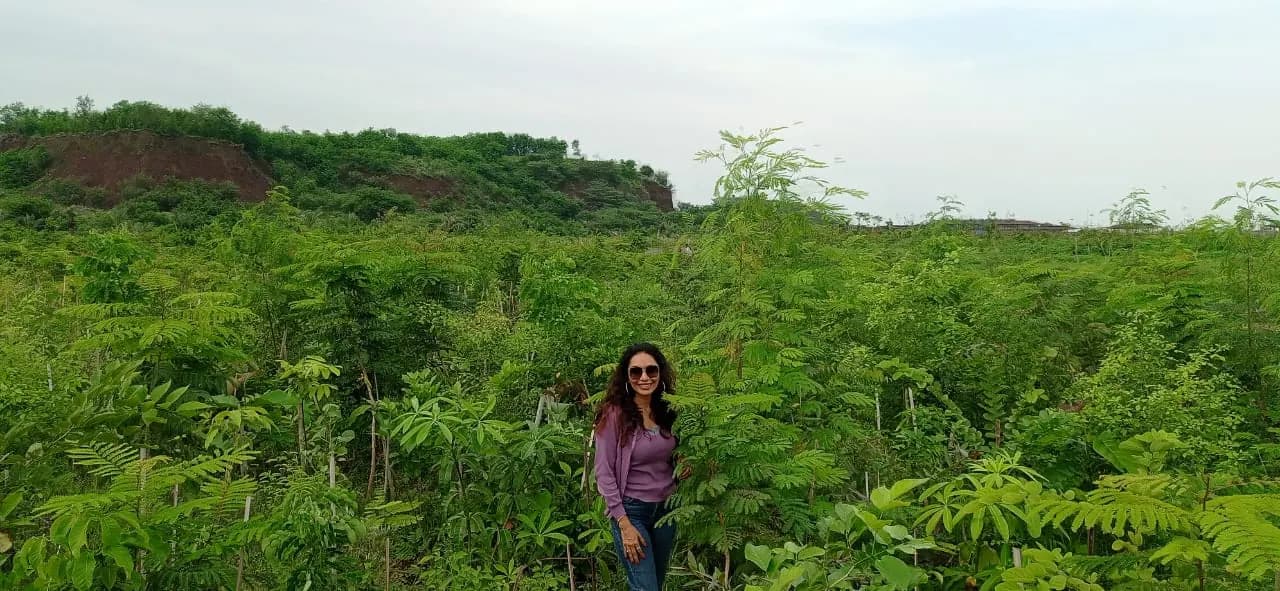
Miyawaki Plantations at Jamnagar and Junagadh
Land preparation, soil treatment, plantation and irrigation delivered phase-wise in four months.
- Area
- 24,000 m²
- Native plants
- 82,000
Where we do this
Green Belt Development for Industries for industrial & manufacturing, city by city.
Other sectors
Who else we run green belt development for industries for.
Next step
Tell us the project, and we will tell you the category and the route.
Screening is the cheapest stage to get right and the most expensive to get wrong. We will say plainly what green belt development for industries your industrial & manufacturing project needs, and what it does not.





























































Start the conversation