










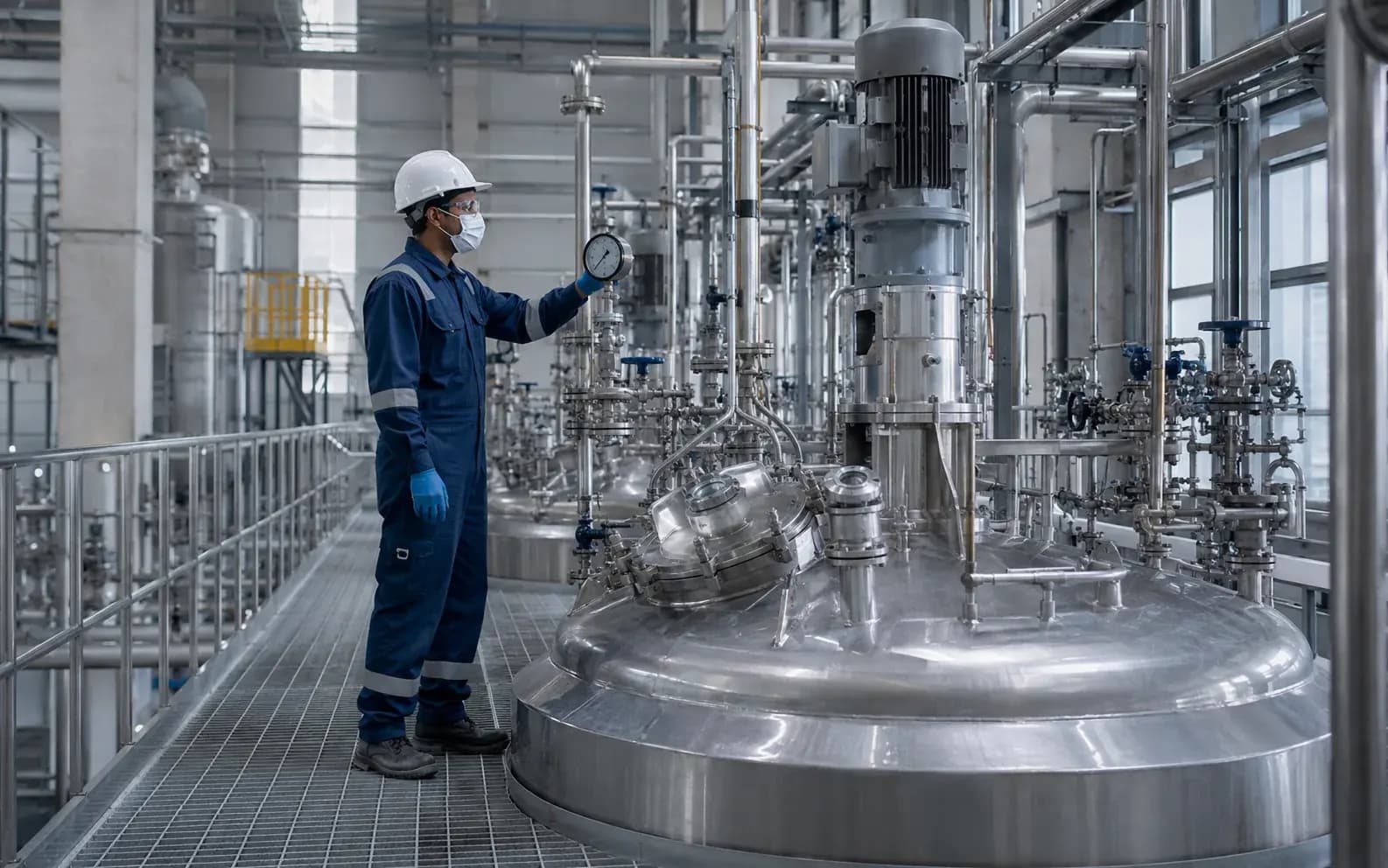
Green Belt Development for Industries · Chemical Industry
Green Belt Development for Chemical Plants
A chemical unit's clearance typically binds it to green belt across roughly a third of its plot area, and that belt has to function as an odour and emission buffer rather than as landscaping.
Screening view on your project, with the category and route named. No obligation.
What this means for chemical industry
The green belt condition on a chemical clearance is one of the few commitments that is visible from outside the fence, which is why it is checked. It is normally expressed as a proportion of plot area, around a third in most cases, with a stated width along the boundary facing habitation and a multi-tier structure of shrubs, mid-canopy and tall species. Its purpose in a chemical setting is specific: intercepting dust and particulates, attenuating odour drifting towards neighbouring settlements, and providing a visual and acoustic screen between the plant and the community that raised objections at the public hearing. A row of ornamental trees along the entrance road satisfies none of that, and satisfies no inspector either.
How KIPL runs it
KIPL plans the belt against the site rather than against a generic species list. That means selecting species that tolerate the specific ambient conditions of a solvent-handling or acid-handling plant, aligning the widest tiers with the prevailing wind direction towards the nearest habitation, and keeping planting clear of buried pipelines, tank-farm dyke areas, flare and vent dispersion zones and fire-tender access routes, constraints a landscape contractor will not know about. Soil in an industrial plot is usually the limiting factor, so amendment and irrigation are designed in from the start. What goes wrong otherwise is the pattern seen on half-yearly compliance reports across the sector: planting done to hit a number, survival not maintained, and an area figure reported that a site visit does not support.
- EC condition
Roughly a third of the plot
Chemical clearances typically require green belt across about 33 percent of plot area with a stated peripheral width, and the area achieved is reported half-yearly.
- Odour buffer
It answers the public hearing
Odour and visual intrusion are standard objections at a chemical hearing, and the green belt is the physical commitment made in response to them.
- Safety layout
Planting cannot compromise the plant
Green belt on a chemical site has to respect tank-farm dykes, buried services, vent and flare dispersion and emergency access, so the layout is a plant-engineering question as much as a horticultural one.
What you receive
Written for chemical industry, not adapted from a template.
- 01Green belt area computation against the plot and the clearance condition, with a plan showing achieved and committed area
- 02Species selection suited to the site's ambient conditions and soil, in a multi-tier peripheral structure
- 03Layout aligned to prevailing wind and the nearest habitation, and cleared against tank farms, buried services and emergency access
- 04Soil amendment, drainage and irrigation design for industrial ground, including reuse of treated sewage where the consent permits
- 05Planting execution and a maintenance and replacement regime through the establishment period
- 06Survival and area records in the form the half-yearly compliance report and site inspections require
Questions from chemical industry
What chemical industry ask before appointing us.
Answered against the regulation as it stands, not as a sales pitch. If your situation is not here, ask us directly.
Ask a question →How much green belt does a chemical plant have to develop?
It is set by the clearance and the consent rather than by a single national number, but around a third of the plot area with a defined width along the boundary is the common condition for chemical units. The precise figure and width should be read from the clearance letter, because that is what compliance will be measured against.
Our plot is small and fully built: how do we meet the condition?
By making the available area work harder: dense multi-tier planting on the periphery, higher stem density than avenue planting, and in constrained MIDC plots the Miyawaki method to achieve canopy density in less area. Where the physical area genuinely cannot be met, that has to be raised with the authority rather than reported as achieved.
Does the green belt actually reduce odour?
A well-structured multi-tier belt of adequate width disrupts and dilutes ground-level plumes and intercepts particulates, which reduces perceived odour at the boundary. It is a mitigation measure, not a substitute for source control: the EMP still has to address the emission itself.
Can treated effluent be used to irrigate the belt?
Treated sewage commonly is, where the consent permits it and the quality is fit for the purpose, and it is one of the standard reuse routes named in consent conditions. Treated process effluent from a chemical plant is a different matter and should only be used where the consent expressly allows it for that purpose.
Who checks whether the green belt was actually developed?
Regional office and Board inspections, and the half-yearly compliance report, which asks for area achieved. Because it is visible from outside the boundary it is among the easiest conditions to verify, and a reported area that a visit does not support damages the credibility of the rest of the report.
What species suit a chemical plant boundary?
Hardy native species with dense foliage and tolerance for industrial ambient conditions and poor soil, planted in tiers so that the canopy closes rather than stands as isolated trees. The selection should be made against the site's own soil, water availability and emission profile: a list copied from another plant is where survival failures start.
Stage by stage
How green belt development for industries actually runs, step by step.
Also for chemical industry
The rest of the environmental brief for this sector.
Primary sources
Verify any of this at the source.
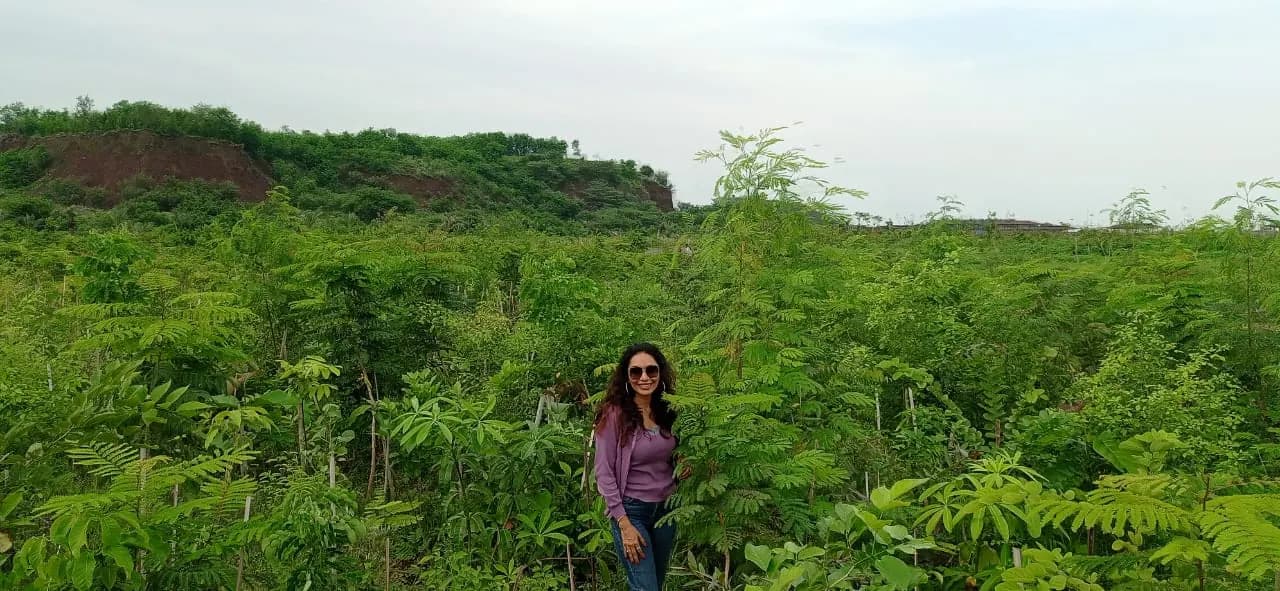
Relevant proof
Miyawaki Plantations at Jamnagar and Junagadh
Land preparation, soil treatment, plantation and irrigation delivered phase-wise in four months.
- Area
- 24,000 m²
- Native plants
- 82,000
Where we do this
Green Belt Development for Industries for chemical industry, city by city.
Other sectors
Who else we run green belt development for industries for.
Next step
Tell us the project, and we will tell you the category and the route.
Screening is the cheapest stage to get right and the most expensive to get wrong. We will say plainly what green belt development for industries your chemical industry project needs, and what it does not.





























































Start the conversation