









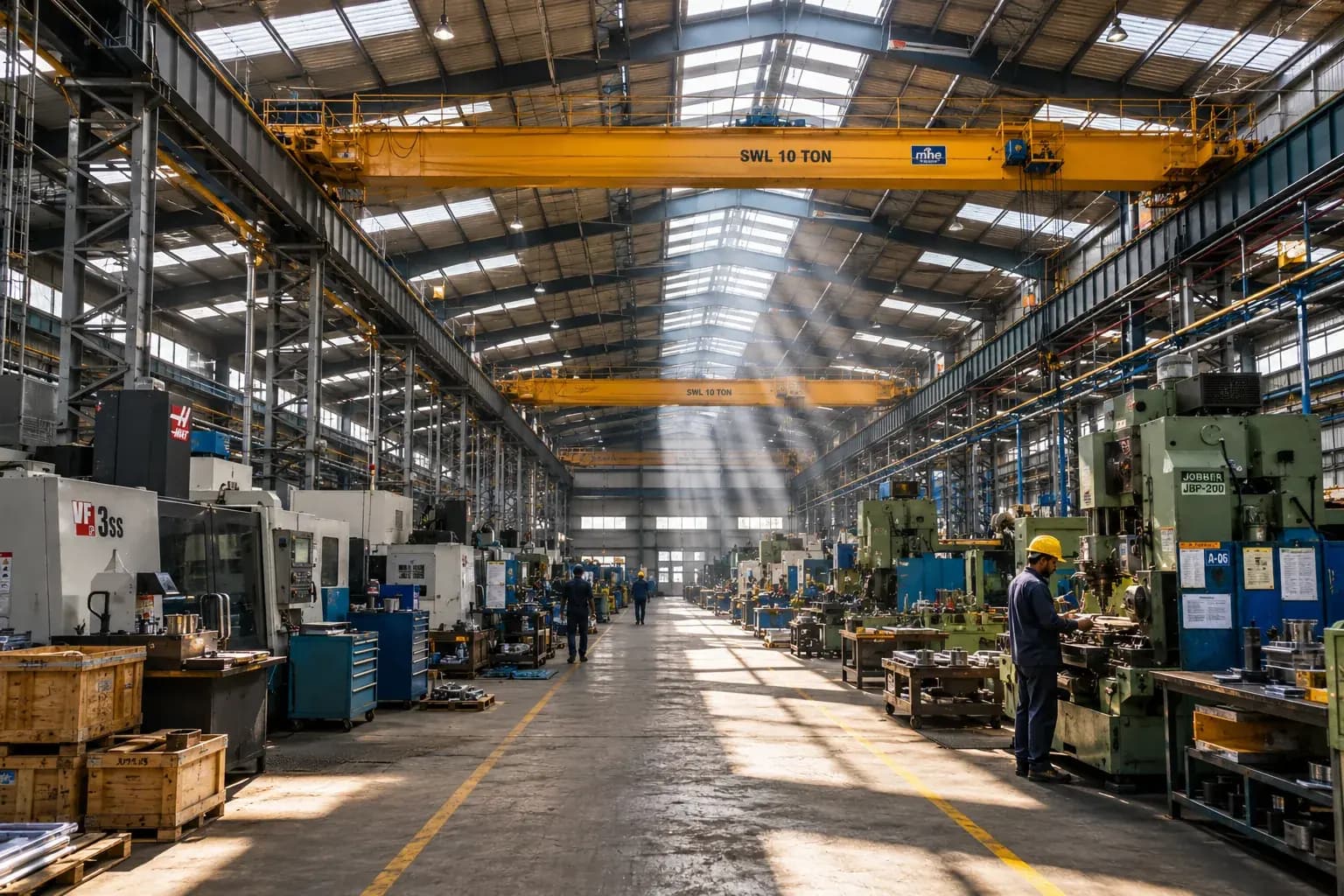
Statutory Compliance Management · Industrial & Manufacturing
Statutory Compliance Management for Manufacturing Units
For a running manufacturing unit the failure is almost never a wrong technical answer: it is a consent renewal, a Form-V or a hazardous waste return whose date passed, found by an inspector rather than by the plant.
Screening view on your project, with the category and route named. No obligation.
What this means for industrial & manufacturing
An operating unit does not live on a single approval. It lives on a set of recurring obligations with fixed dates: Consent to Operate under the Water Act 1974 and the Air Act 1981, renewed on a cycle set by the unit's Red, Orange or Green category; authorisation under the Hazardous and Other Wastes (Management and Transboundary Movement) Rules 2016 with its records and its annual return in Form 4 by 30 June; the annual environmental statement in Form-V by 30 September for the year ending 31 March under rule 14 of the Environment (Protection) Rules 1986; EPR registration and annual filings on the CPCB portal where the unit is a producer, importer or brand owner; bulk generator duties under the Solid Waste Management Rules 2016; and, where an EC exists, half-yearly compliance reports on 1 June and 1 December. Each is simple in isolation. Together, across a plant where the EHS role is one person with other duties, they are a calendar that will drift.
How KIPL runs it
KIPL runs that calendar as an owned service: a legal register built from the unit's actual activities, products, waste streams and consent conditions, not a generic checklist: with each obligation mapped to its authority, its provision, its due date, its evidence and a named owner. Filings are prepared from one reconciled dataset so the consent returns, Form-V, the hazardous waste return and the EPR filing do not contradict each other, because inconsistency between a unit's own filings is the easiest finding an inspector can make. Changes to the plant are the other half of the job: an expansion, a new product, a modernisation or a change of category alters what applies, and the register is updated when the plant changes rather than at the next audit. What this prevents is the ordinary sequence: a date slipped while a line was being commissioned, a show-cause notice, and then a renewal negotiated from a weak position.
- Rule 14
Form-V, 30 September, every year
The annual environmental statement under the Environment (Protection) Rules 1986 covers the year ending 31 March and is filed by 30 September. It is a dated, filed record that everything else is checked against.
- Form 4
The hazardous waste return
Units authorised under the Hazardous and Other Wastes Rules 2016 file an annual return by 30 June, supported by manifests and records that must reconcile to what was actually shipped.
- CTO
Renewal is category-driven
Consent validity follows the Red, Orange or Green classification, so the renewal date is not the same for every unit and a change in activity can change the cycle itself.
What you receive
Written for industrial & manufacturing, not adapted from a template.
- 01Legal register built from the unit's activities, products, emissions and waste streams: each obligation with provision, authority, frequency and evidence
- 02Compliance calendar with named owners and lead times for consent renewal, Form-V, hazardous waste return, EPR filings and EC reports
- 03Single reconciled dataset feeding consent returns, Form-V, the hazardous waste return and EPR filings so they cannot contradict each other
- 04Hazardous waste record discipline: storage duration, manifests, authorised recycler or TSDF trail and reconciliation to the annual return
- 05Register update on plant change (expansion, new product, modernisation, category change), rather than at the next audit
- 06Inspection readiness pack and a documented position on any open notice, direction or condition
Questions from industrial & manufacturing
What industrial & manufacturing ask before appointing us.
Answered against the regulation as it stands, not as a sales pitch. If your situation is not here, ask us directly.
Ask a question →What are the fixed annual dates for a manufacturing unit?
The recurring ones are the hazardous waste annual return by 30 June, the Form-V environmental statement by 30 September for the year ending 31 March, and half-yearly EC compliance reports on 1 June and 1 December where a clearance exists. Consent renewal runs on its own cycle set by the unit's category, and EPR returns follow the CPCB portal's schedule for the applicable waste stream.
How is a legal register different from a checklist?
A checklist lists what usually applies. A register records what applies to this unit and why: the specific provision, the condition in your consent, the waste stream you actually generate, the product that brings you into an EPR regime. That distinction matters when the unit adds a line or a product, because the register changes and a generic checklist does not.
Can this run alongside our own EHS manager?
It usually should. The site team owns operations and generates the data; the register, the calendar and the specialist filings sit with us. Most missed dates in manufacturing happen not because nobody was responsible but because the responsible person was commissioning a line that month, and an external calendar with lead times is what survives that.
What happens if a consent has already lapsed?
It is regularised with the Board rather than papered over, because operating without valid consent is a distinct offence and continuing to produce compounds it. The application has to carry the monitoring and compliance evidence for the lapsed period, so the immediate work is assembling what genuinely exists. Disclosing and correcting is a far better position than being found at inspection.
Do compliance obligations change when we expand?
Frequently, and in more places than expected. An expansion can change consent capacity and therefore the amendment position, change the pollution-index category and therefore the renewal cycle, cross a Schedule I threshold and bring in Environment Clearance, increase hazardous waste quantities beyond the authorised figure, and add product lines that trigger an EPR regime. That is why the register is updated at the plant change, not afterwards.
How do inconsistencies between filings get found?
By comparison. Form-V declares production, water, effluent, emissions and waste; the consent carries permitted quantities; the hazardous waste return carries what was shipped and the manifests support it; the EPR filing carries what was placed on the market. An inspector or auditor reads them together, and a unit whose own documents disagree has supplied the finding itself.
Stage by stage
How statutory compliance management actually runs, step by step.
Also for industrial & manufacturing
The rest of the environmental brief for this sector.
Primary sources
Verify any of this at the source.

Relevant proof
SHENDRA AND BIDKIN INDUSTRIAL AREA, AURANGABAD
Environmental compliance audits, Consent to Establish and green certification support across two industrial nodes of the Delhi-Mumbai Industrial Corridor.
- Shendra + Bidkin
- 4,024 ha
- City scale
- IGBC Gold
Where we do this
Statutory Compliance Management for industrial & manufacturing, city by city.
Other sectors
Who else we run statutory compliance management for.
Next step
Tell us the project, and we will tell you the category and the route.
Screening is the cheapest stage to get right and the most expensive to get wrong. We will say plainly what statutory compliance management your industrial & manufacturing project needs, and what it does not.





























































Start the conversation