









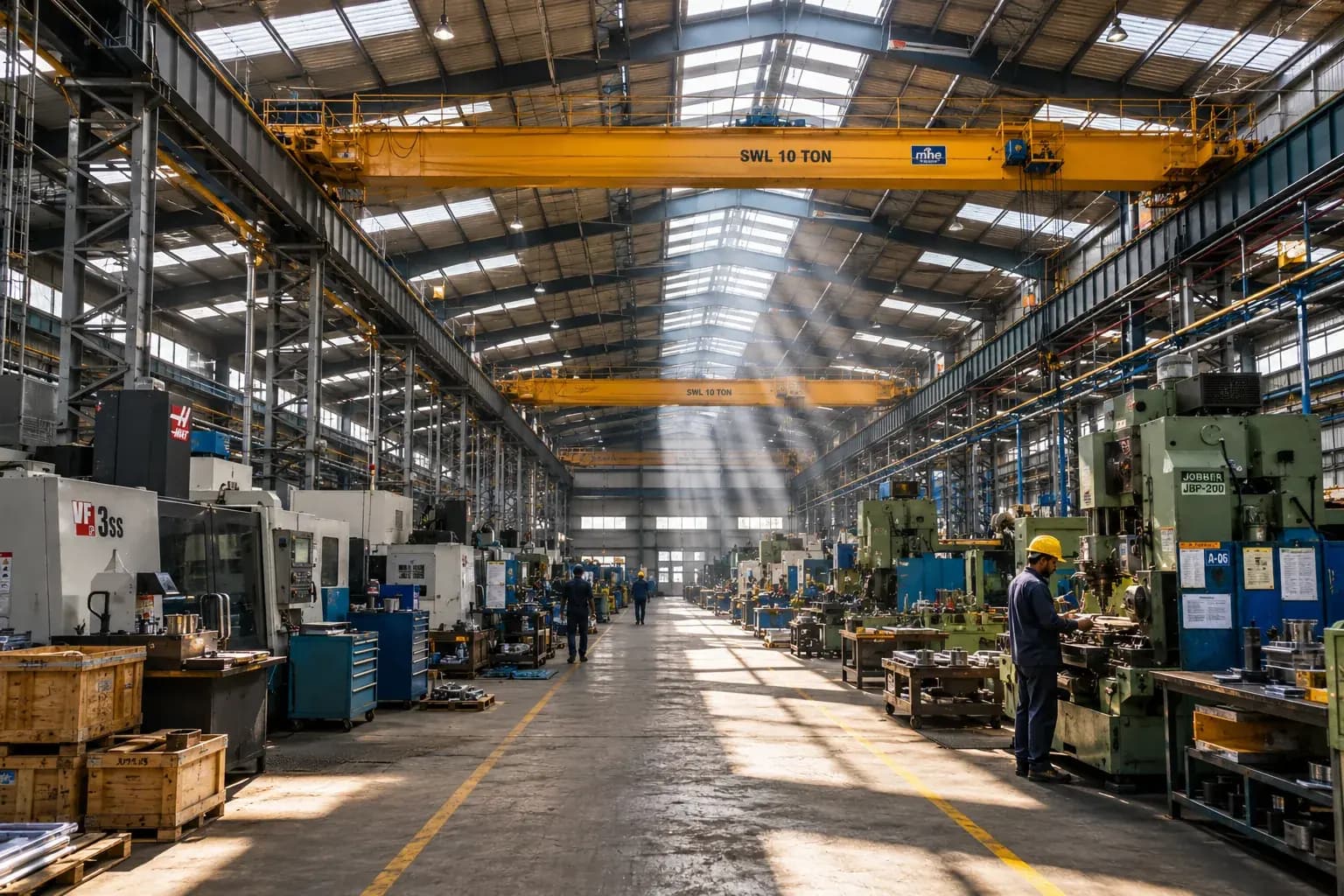
Environmental Audits · Industrial & Manufacturing
Environmental Audits for Manufacturing Plants
Whether it is triggered by an acquisition, a lender covenant or a group EHS review, an environmental audit of a manufacturing plant comes down to the same two questions: is this unit lawfully permitted to do what it is doing, and is there a liability sitting in its land or its waste trail.
Screening view on your project, with the category and route named. No obligation.
What this means for industrial & manufacturing
The audit reconstructs the plant's regulatory position from documents rather than from assurances. That means testing whether the Consent to Operate covers the products, the installed capacity and the emission and effluent streams actually present; whether the hazardous waste authorisation matches the streams generated and whether manifests, storage durations and authorised recycler or TSDF records reconcile to the annual return; whether Form-V, EPR filings and any EC compliance reports were filed, on time, and consistent with each other; whether green belt, monitoring and other consent conditions were actually done; and whether there is a history of notices, directions or bank guarantee forfeiture. In a plant that has run for years the recurring findings are unglamorous and expensive: production above consented capacity, a product line added without amendment, hazardous waste accumulated beyond the permitted storage period, and drums or transformer areas standing on unbunded, unpaved ground.
How KIPL runs it
KIPL runs the audit to a defined scope and reports findings ranked by exposure, each tied to the provision that creates it and to what closing it takes: because in a transaction the buyer needs a number and a timeline, not an adjective. Where the audit is for acquisition, we look specifically at what transfers: consents are site and occupier specific and a change of ownership or occupier has to be dealt with, EPR and hazardous waste registrations sit with the entity, and historic contamination does not leave with the seller. Where it is a group or lender review, the output is the same register in a form the plant can work through with dates. What the plant should expect is a report that separates what is a documentation gap from what is a genuine operating problem, because treating those two as equivalent produces an action list nobody executes.
Transactions force diligence
Plant acquisitions, share transfers and lender sanction conditions all require an independent view of environmental exposure before terms are set, and consent validity is the first thing tested.
- HOWM 2016
The waste trail is auditable
Authorisation, records, manifests and the annual return create a documentary chain. Where the chain does not reconcile, the gap is the finding, and storage beyond permitted periods is visible on site.
Contamination stays with the land
Unbunded storage, historic spillage and buried waste create liabilities attached to the site rather than to the operator, which is why soil and groundwater questions belong in an acquisition audit.
What you receive
Written for industrial & manufacturing, not adapted from a template.
- 01Consent reconstruction: products, installed capacity, emission and effluent streams as consented against as operated
- 02Hazardous waste chain review: authorisation, storage duration, manifests, recycler and TSDF trail, reconciled to the annual return
- 03Filing history and consistency check across Form-V, EPR returns, consent returns and any EC compliance reports
- 04Site walk findings on bunding, drum and chemical storage, transformer and DG areas, and evidence of historic spillage
- 05Notice, direction and bank guarantee history with the current status of each open item
- 06Findings register ranked by exposure, each with the regulatory basis, the closure action and an indicative effort, plus a transfer note where the audit supports an acquisition
Questions from industrial & manufacturing
What industrial & manufacturing ask before appointing us.
Answered against the regulation as it stands, not as a sales pitch. If your situation is not here, ask us directly.
Ask a question →What does an acquirer most often find in a manufacturing plant audit?
Production running above consented capacity, a product or process line added without a consent amendment, hazardous waste held beyond the permitted storage period with an incomplete manifest trail, and unbunded storage areas with visible historic staining. None of these is exotic, and all of them are usually fixable, but they need to be priced and scheduled before completion rather than discovered after.
Do consents transfer with the plant when it is acquired?
Not automatically as a matter of course. Consents and authorisations are granted to an occupier for a site, and a change in ownership, entity or occupier has to be taken up with the Board, with the position depending on how the transaction is structured. That is a specific diligence item because it affects whether the plant can lawfully produce the day after completion.
Should the audit include soil and groundwater?
For an acquisition or where the site has a long history of chemical or oil handling, it should at least be assessed for whether intrusive investigation is warranted. Contamination is a liability that attaches to the land and does not leave with the seller, and a site walk that finds unbunded drum storage on bare ground has already identified where to look. For a routine compliance audit it may be out of scope, which should be stated rather than left ambiguous.
How is this different from an ISO 14001 internal audit?
An ISO 14001 audit tests a management system against a standard the organisation has adopted. A statutory environmental audit tests the plant against the law and its own consent conditions. A unit can hold a clean certification and still be operating above consented capacity, because the certification audits the system, not the permit position.
How long does an audit of a plant take?
It depends on the plant's size, the number of waste streams and how well the records are kept. Document review is the variable: a plant with an organised consent file, complete manifests and filed returns is fast, and one where records have to be reconstructed from memory is not. Site work is usually short by comparison, and it is scheduled while production is running so the ETP, stacks and storage areas can be seen in use.
What does the plant get at the end?
A findings register in which each item states what was observed, the provision it engages, the exposure it creates and the action that closes it, ranked so that the plant can work top-down. Documentation gaps are separated from operating problems, because they need different people and different timelines, and an undifferentiated list of forty items tends to result in none of them being done.
Stage by stage
How environmental audits actually runs, step by step.
Also for industrial & manufacturing
The rest of the environmental brief for this sector.

Relevant proof
SHENDRA AND BIDKIN INDUSTRIAL AREA, AURANGABAD
Environmental compliance audits, Consent to Establish and green certification support across two industrial nodes of the Delhi-Mumbai Industrial Corridor.
- Shendra + Bidkin
- 4,024 ha
- City scale
- IGBC Gold
Where we do this
Environmental Audits for industrial & manufacturing, city by city.
Other sectors
Who else we run environmental audits for.
Next step
Tell us the project, and we will tell you the category and the route.
Screening is the cheapest stage to get right and the most expensive to get wrong. We will say plainly what environmental audits your industrial & manufacturing project needs, and what it does not.





























































Start the conversation