










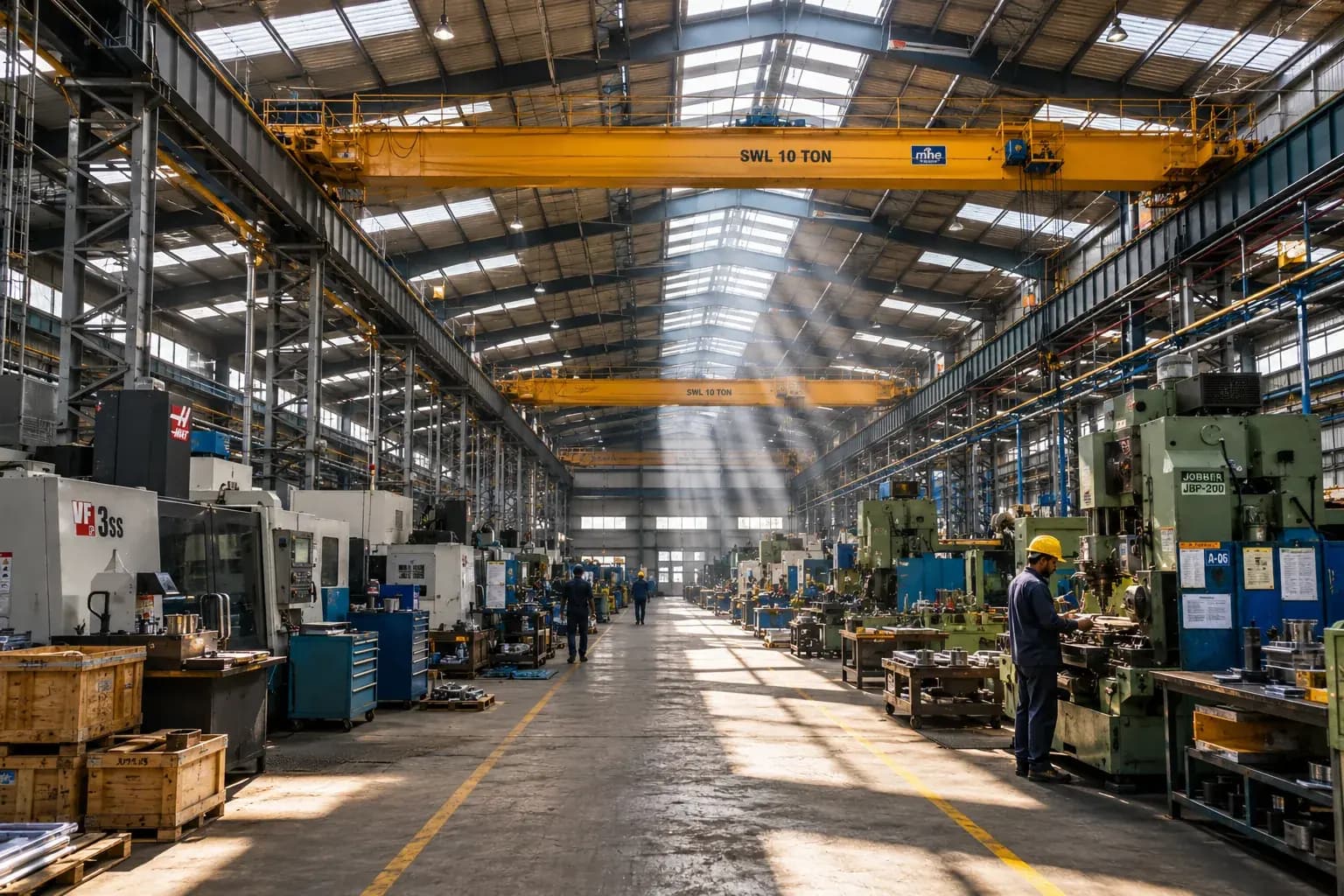
Environment Clearance · Industrial & Manufacturing
Environment Clearance for Manufacturing Expansion
Most manufacturing units run on consent alone: until an expansion, a modernisation or a change in product mix pushes the unit across a threshold in the schedule to the EIA Notification 2006, at which point a consent amendment is no longer enough.
Screening view on your project, with the category and route named. No obligation.
What this means for industrial & manufacturing
The schedule to the EIA Notification 2006 is activity-based, and a manufacturing unit's exposure depends entirely on what it actually makes. A general engineering or fabrication unit may sit outside the schedule altogether and live on MPCB consent; the same unit adding a surface treatment line, a foundry, a chemical intermediate, or capacity above a listed threshold can find itself squarely inside it, in a category with a defined appraisal authority. The trigger is frequently not tonnage but product: a change in product mix that introduces a scheduled activity brings the whole project into appraisal even where the plant footprint barely changes. Getting this screening right is the entire value of the exercise, because the two failure modes are equally expensive: commissioning an expansion that needed a clearance, which converts the project into a violation matter, or committing a year and a baseline season to an EIA the schedule never required.
How KIPL runs it
KIPL screens the proposed expansion against the schedule before anything is ordered or built, and states the position plainly: outside the schedule and therefore a consent amendment; inside it and therefore Form-1, category, and the appraisal track that follows. Where a clearance is required, we run the file, Form-1 and pre-feasibility, category screening, terms of reference, baseline, EIA and EMP, public consultation where applicable, and appraisal. One limit is stated openly here because it matters more than any claim: KIPL's QCI-NABET accreditation covers sectors 5(f), 5(g), 5(j), 8(a) and 8(b). Manufacturing is not a single NABET sector, and where a project falls under a schedule entry outside our accredited scope, the EIA has to be prepared by an organisation accredited for that specific sector. We establish that at screening and say so then, rather than after a baseline season has been spent.
- EIA 2006
The schedule is activity-based
Whether a manufacturing unit needs clearance depends on the specific activity and threshold in the schedule to the EIA Notification 2006, not on the size of the factory in general terms.
Product mix is a trigger
Introducing a scheduled activity (a surface treatment line, a foundry, a chemical intermediate) can bring a unit into appraisal even where the built footprint changes very little.
Building first is a violation, not a delay
Commencing an expansion that required prior clearance converts a routine approval into a violation proceeding with penal consequences and a materially slower path.
What you receive
Written for industrial & manufacturing, not adapted from a template.
- 01Screening opinion placing the proposed expansion or product change against the schedule to the EIA Notification 2006, with the category and authority identified
- 02A written statement of whether clearance is required at all, and of which accredited scope the EIA would need to be prepared under
- 03Form-1 and Pre-feasibility Report where clearance is required, filed on Parivesh
- 04Terms of Reference, baseline monitoring programme and the EIA and EMP for the expanded configuration
- 05Public consultation support where the category requires it, and appraisal representation through to the clearance
- 06Alignment of the clearance position with the consent amendment, hazardous waste authorisation and water source so the filings do not contradict each other
Questions from industrial & manufacturing
What industrial & manufacturing ask before appointing us.
Answered against the regulation as it stands, not as a sales pitch. If your situation is not here, ask us directly.
Ask a question →How do we know whether our expansion needs Environment Clearance?
By screening the activity against the schedule to the EIA Notification 2006 rather than by the size of the investment. The schedule lists activities and thresholds, and the question is whether the expanded plant will carry a listed activity at or above its threshold. This is done before equipment is ordered, because the answer determines whether you are filing a consent amendment or opening a clearance file with a baseline season in it.
Can a change in product mix alone trigger clearance?
Yes. If the new product introduces an activity that appears in the schedule, the project comes into appraisal even where capacity and built area are largely unchanged. This is the trigger units miss most often, because the plant looks the same and the commercial team is thinking about a product decision rather than a regulatory one.
Is KIPL accredited to prepare our EIA?
That depends on which schedule entry your project falls under. Our QCI-NABET accreditation covers 5(f) synthetic organic chemicals, 5(g) distilleries, 5(j) sugar industry, 8(a) building and construction and 8(b) townships and area development. Manufacturing is not a single NABET sector, so we establish the applicable entry at screening and tell you plainly whether it sits inside our accredited scope. Accreditation is public and per-sector on the NABET register, and it is worth verifying for any consultant before a file is opened.
We have already started civil work. What are our options?
The position has to be disclosed and dealt with as a violation matter rather than concealed inside a fresh application. That route carries penal consequences and takes longer, and it is still far better than proceeding to commissioning without clearance, which puts the operation itself at risk. The immediate step is to stop work on the affected scope and establish the exact regulatory position before anything further is filed.
Does an EC replace the need for MPCB consent?
No. They are separate instruments under different statutes. The clearance is granted under the EIA Notification 2006 with conditions and half-yearly reporting; consent under the Water and Air Acts is what permits discharge and emission and must be obtained and renewed independently. An expansion that needs both has to sequence them, with the clearance normally settled before the consent for the expanded capacity.
How long does the process take?
It is driven by the category and by baseline data. A project needing a full EIA study requires a season of baseline monitoring before the report can even be written, plus scoping and appraisal on the committee's own meeting calendar. Where no EIA study is required the path is considerably shorter. The honest answer for any specific project comes after screening, because the category is what sets the timeline.
Stage by stage
How environment clearance actually runs, step by step.
Also for industrial & manufacturing
The rest of the environmental brief for this sector.
Primary sources
Verify any of this at the source.

Relevant proof
Cyber Square IT Park, Nerul
Category B1 under Schedule 8(b): EIA and EMP prepared and carried through SEIAA appraisal for the expansion at Nerul.
- Built-up
- 2,85,592.45 m²
- EC granted
- 07.10.2026
Where we do this
Environment Clearance for industrial & manufacturing, city by city.
Other sectors
Who else we run environment clearance for.
Next step
Tell us the project, and we will tell you the category and the route.
Screening is the cheapest stage to get right and the most expensive to get wrong. We will say plainly what environment clearance your industrial & manufacturing project needs, and what it does not.





























































Start the conversation