










Green Belt Development for Industries · Industrial Corridors & MIDC
Green Belt Development for Industrial Corridors and MIDC Estates
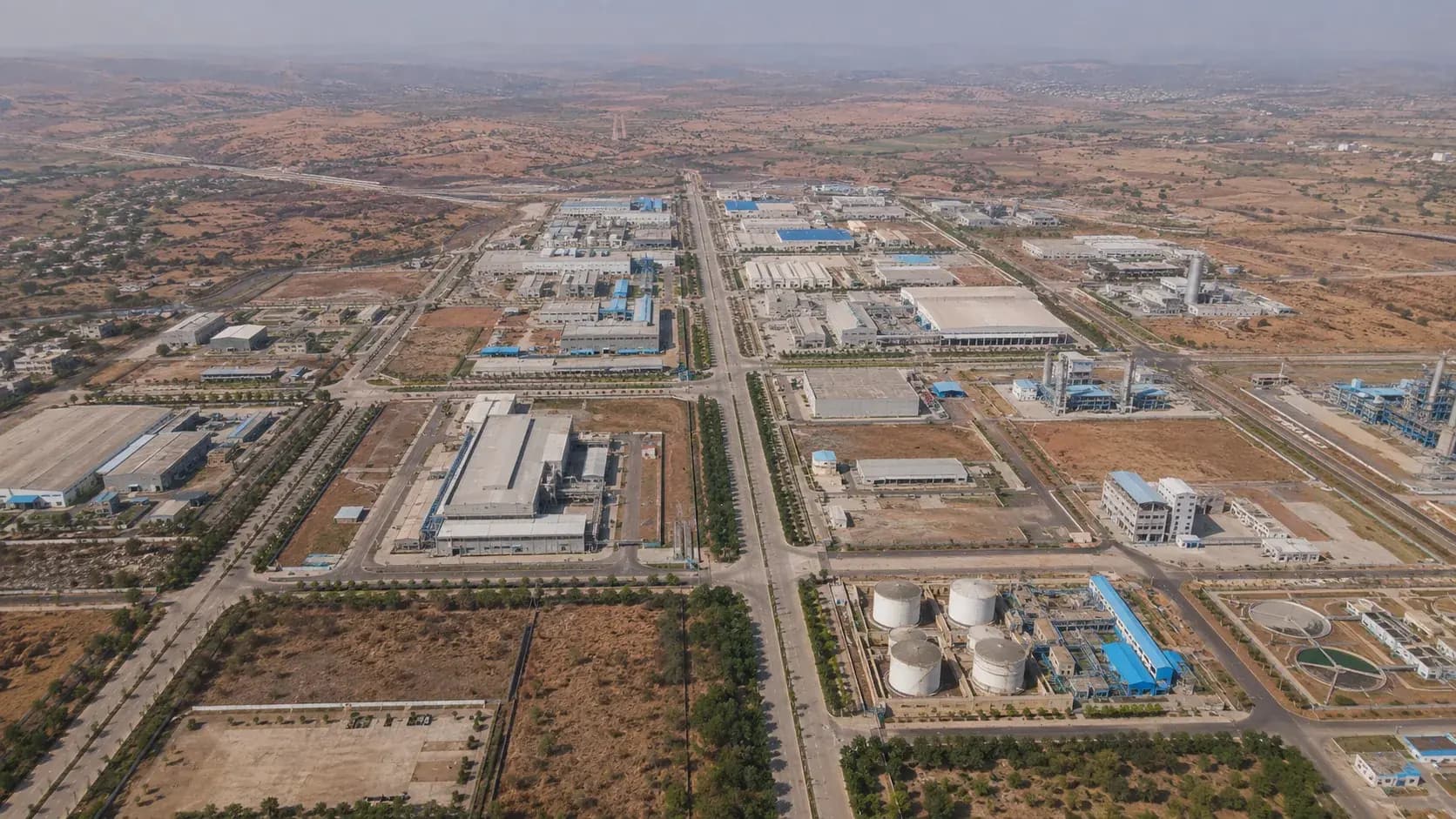
In a corridor node the green belt is fixed as a percentage in the master plan and as a commitment in the clearance, which makes it a land-use obligation of the authority long before it is a planting exercise.
Screening view on your project, with the category and route named. No obligation.
What this means for industrial corridors & midc
At node scale the green belt does two things a factory-boundary plantation does not. It occupies a defined share of the master-planned area, which means it competes with saleable plot area and has to be located when the layout is drawn rather than found afterwards. And it forms the buffer between the node and the villages around it, which is where the community reads whether the authority kept its word. The hearing record will be quoted back. Both make green belt a planning decision with commercial and social consequences, not a landscape item at the end of the project.
How KIPL runs it
KIPL plans and delivers corridor green belt as a staged programme aligned to the node's build-out, so buffer canopy exists where development is active rather than as a uniform thin band planted everywhere at once. We specify species by function (dust and noise attenuation on the road and industrial edge, native structure on the village buffer) with soil, water and maintenance costed for the establishment period. The recurring failure is a green belt shown in the master plan, planted once for a photograph without assured water, and found dead when the first compliance audit walks the boundary.
The master plan reserves it as land
The green belt share is fixed in the node layout and competes directly with allottable area. If it is not located at layout stage it will be pushed to residual land that is unplantable or encroached.
- EIA Notification 2006
It is a clearance commitment reported on
Green belt area and progress form part of the node's clearance conditions and appear in the half-yearly compliance reports for the life of the node.
The buffer is what the neighbouring villages measure
The band between the estate and the surrounding settlements is where commitments made at public consultation are visibly kept or not kept, and it is the first thing raised at the next hearing.
What you receive
Written for industrial corridors & midc, not adapted from a template.
- 01Green belt location plan integrated with the node layout at master-plan stage, with area statement
- 02Function-based species selection: dust and noise attenuation on industrial edges, native structure on village buffers
- 03Staged planting programme aligned to node build-out and to where development is actually active
- 04Soil assessment and amendment specification for made-up ground and excavated corridor land
- 05Assured irrigation plan, including treated-water reuse from the node's common infrastructure
- 06Survival monitoring by segment with area and count records for the compliance report
Questions from industrial corridors & midc
What industrial corridors & midc ask before appointing us.
Answered against the regulation as it stands, not as a sales pitch. If your situation is not here, ask us directly.
Ask a question →When should the green belt be located in a node's development?
At layout stage, with the master plan. Green belt located after plots are laid out ends up on residual land (narrow strips, drainage reservations, awkward corners) which is difficult to plant, difficult to irrigate and easy to encroach. Locating it early also lets the buffer to surrounding villages be genuine rather than nominal.
What species should a corridor green belt use?
It depends on the function of each segment. The industrial and road edges need species selected for dust interception, noise attenuation and tolerance of pollution and heat; the village buffer benefits from native structure with layered canopy. A single uniform palette applied around the whole node performs poorly on both counts.
Can treated water from the node's own infrastructure irrigate the green belt?
Yes, and it is usually the most reliable source at a greenfield node where potable supply is scarce and expensive. It needs the treated water to consistently meet quality for irrigation use, a distribution network run to the planted segments, and a monitoring record. Designing it into the trunk infrastructure is far cheaper than laying it later.
Is the green belt maintained by the authority or by allottees?
Usually both, on different land, the authority maintains the node-level belt and buffer while allottees maintain the green area within their own plots. Both should be written down: the plot-level green area obligation belongs in the allotment terms, and the node-level belt needs a budgeted maintenance contract, since it is the authority that answers for it in the compliance report.
What does a compliance audit look at on green belt?
Area actually planted against area committed, location against the approved layout, survival, and whether the belt is intact or encroached. Photographs from the planting season prove nothing on their own. Segment-wise records of area, count and survival, kept over time, are what allow the authority to state a defensible position.
How is a green belt established on excavated or made-up corridor land?
By treating soil as the first item of work. Greenfield corridor development strips topsoil and compacts the ground, so planting into it without profile restoration, amendment and drainage produces uniform failure regardless of species. Stripped topsoil should be stockpiled during earthwork and reused, which is a decision that has to be taken before the earthwork contract is issued.
Stage by stage
How green belt development for industries actually runs, step by step.
Also for industrial corridors & midc
The rest of the environmental brief for this sector.
Primary sources
Verify any of this at the source.
Relevant proof
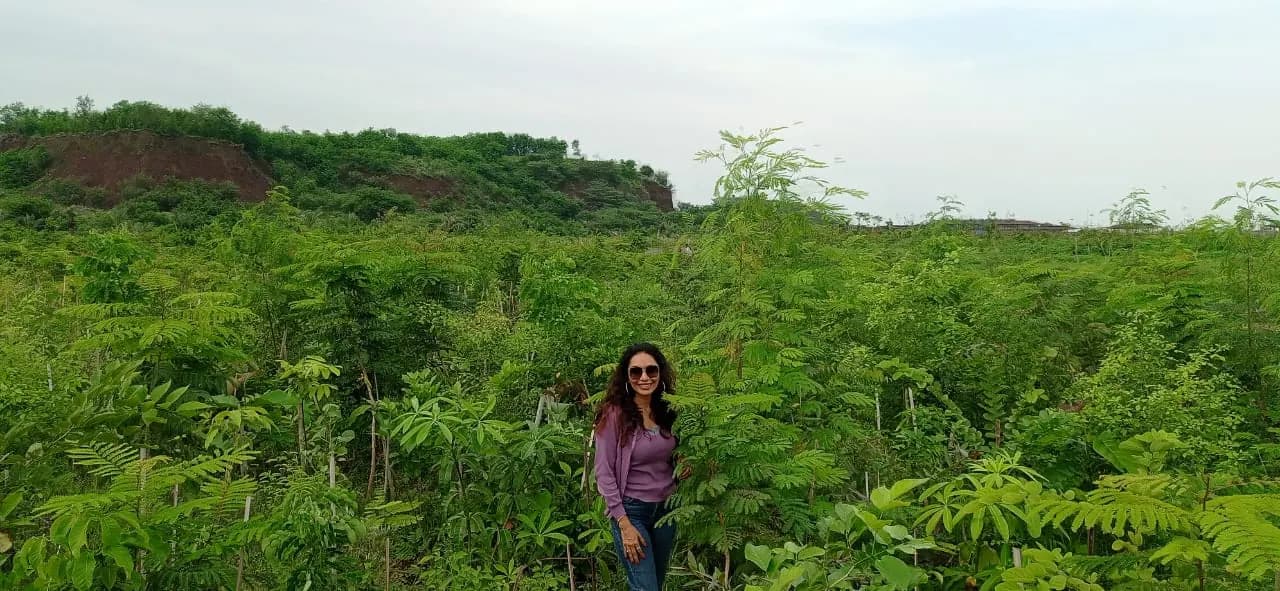
Miyawaki Plantations at Jamnagar and Junagadh
Land preparation, soil treatment, plantation and irrigation delivered phase-wise in four months.
- Area
- 24,000 m²
- Native plants
- 82,000
Where we do this
Green Belt Development for Industries for industrial corridors & midc, city by city.
Other sectors
Who else we run green belt development for industries for.
Next step
Tell us the project, and we will tell you the category and the route.
Screening is the cheapest stage to get right and the most expensive to get wrong. We will say plainly what green belt development for industries your industrial corridors & midc project needs, and what it does not.





























































Start the conversation