










EC condition compliance for green belt: proving the plantation the clearance required.
Most Environment Clearances and consents carry a green belt condition (an area, a width, a density or a number of trees) and compliance is judged on documented evidence, not on intent.
What it is
Green belt conditions appear in the Environment Clearance letter, in the consent to operate, and sometimes in both, and they are checked at half-yearly compliance reporting and during regional office inspections. The condition may fix a percentage of plot area, a boundary width, a species mix or a tree count, and it is enforced as written, which is why the first step is reading the exact wording rather than assuming a standard.
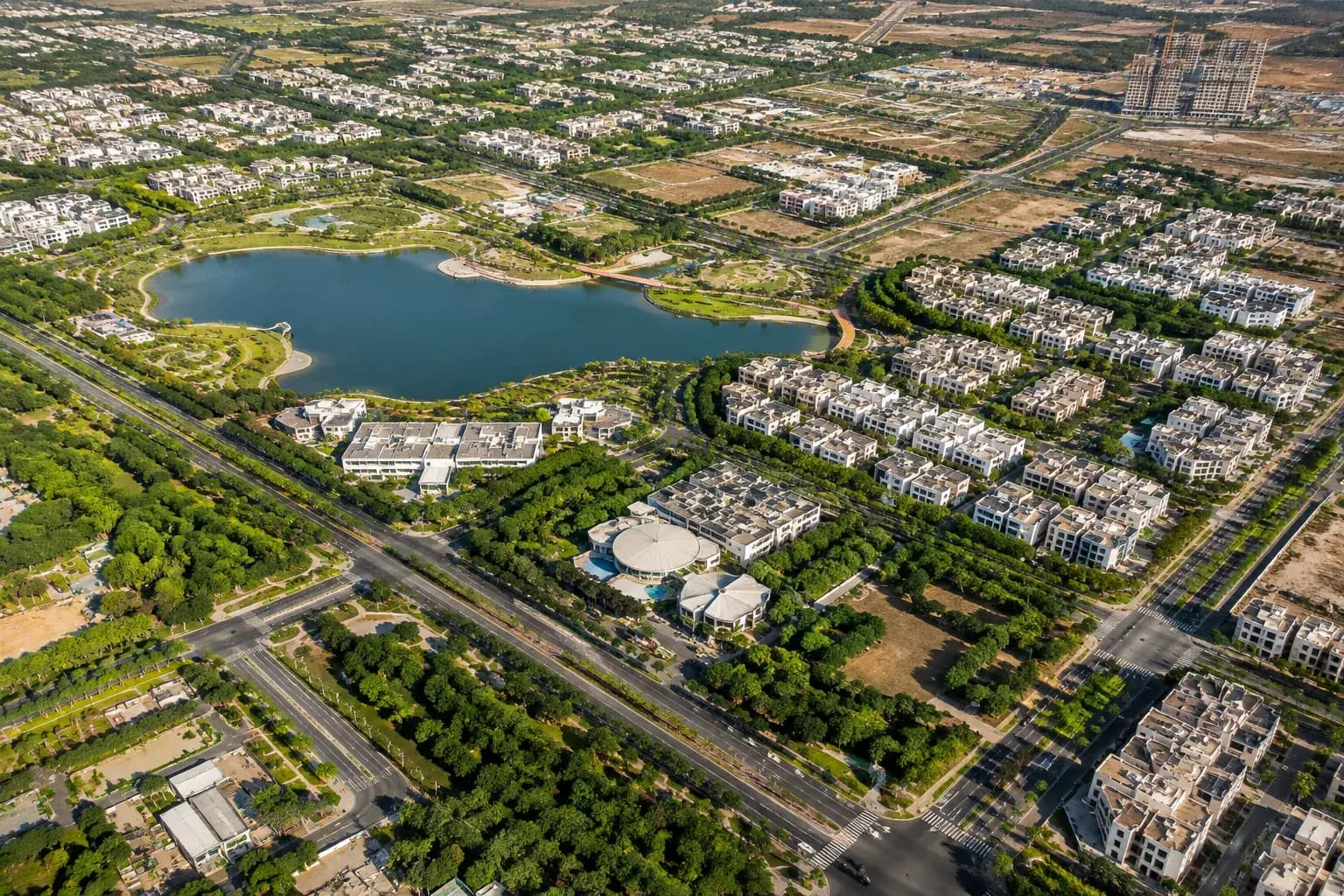
KIPL assesses what exists against what was committed, identifies the shortfall in area, density or survival, plans remedial planting where needed, and assembles the evidence (drawings, area statements, species-wise counts, photographs and monitoring records) in the form that compliance reporting expects. Where the condition as written is not achievable on the site, that is raised through the proper route rather than papered over.
What you get
The deliverables, in hand.
- Authority
- EC conditions · consent conditions · half-yearly compliance reporting
- Typical timeline
- Assessment in weeks; remedial planting to the season
- Extraction of green belt conditions from the EC and consent
- Gap assessment: committed versus existing area, density and species
- Remedial planting plan to close the gap
- Area statement and green belt drawing for the compliance file
- Species-wise plantation register with survival records
- Photographic and documentary evidence pack for half-yearly reporting
Straight answers
EC Condition Compliance: common questions.
01What does a typical green belt condition in an EC say?
It commonly fixes green belt or green cover as a percentage of the plot area, sometimes with a boundary width, a minimum tree count or a requirement to use native and pollution-tolerant species. Wording varies between clearances and sectors, so the specific condition in your own EC letter is what governs, not a general norm.
02Who checks green belt compliance?
The regulator that imposed the condition: the MoEF&CC regional office or the State authority for an Environment Clearance, and the State Pollution Control Board for consent conditions. It is reviewed through half-yearly compliance reports and verified during site inspections, when the belt on the ground is compared with the claim on paper.
03What happens if the committed green belt is not achieved?
It is recorded as a non-compliance and can affect consent renewal, expansion proposals and any future amendment. The practical response is to establish the shortfall honestly, plant to close it in the coming season, and report the remedial action, rather than to leave the gap to be found at inspection.
04What if there is genuinely no land for the committed area?
That happens where a condition was accepted without checking the layout. The route is to document the constraint, propose an equivalent measure (off-site plantation, higher density on available land, or vertical greening) and seek the authority's view through the proper channel. Silently under-delivering is the option that creates the real risk.
05Does existing vegetation count toward the green belt?
Retained natural vegetation and earlier plantation within the site generally count, provided the area is mapped, the trees are enumerated and the position is stated in the compliance report. What does not carry is claiming area that is actually roads, lawn, open ground or built cover.
06What evidence is expected in the compliance report?
A green belt drawing with the area statement, species-wise counts and planting dates, survival status, the irrigation arrangement, and dated photographs. Consistency across successive half-yearly reports matters as much as the content, numbers that move without explanation attract more scrutiny than a modest but stable record.
Within Green Belt Development for Industries
Part of the whole route, the other components.
Relevant proof
Where this stage has already been delivered.
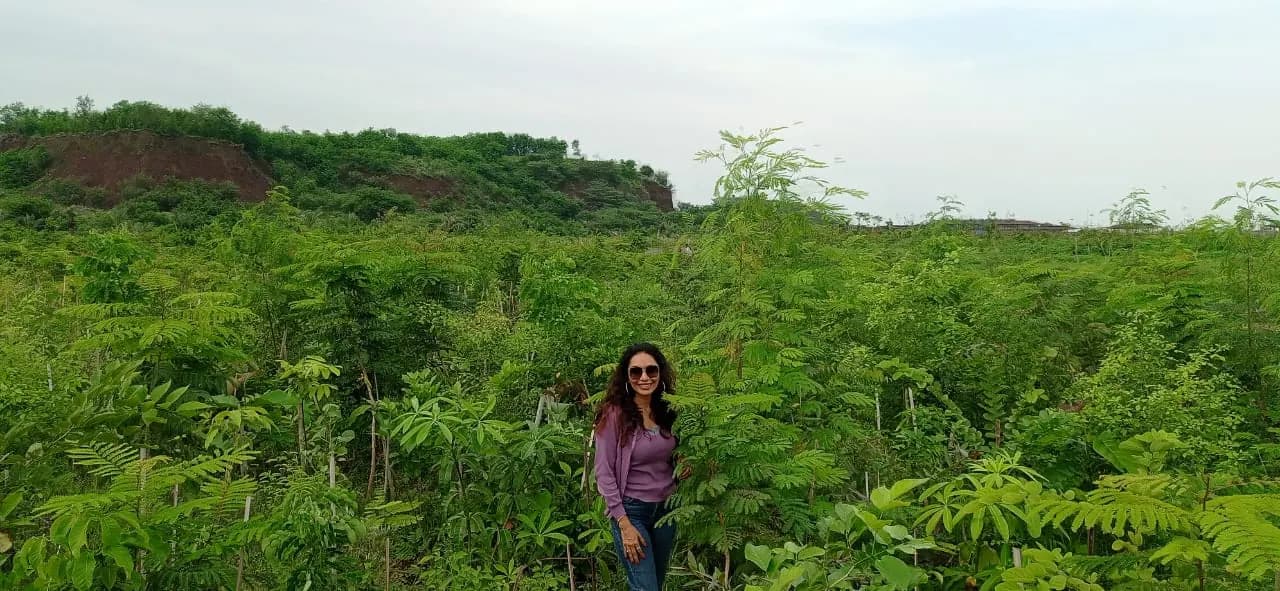
Jamnagar, Gujarat
Miyawaki Plantations at Jamnagar and Junagadh
Land preparation, soil treatment, plantation and irrigation delivered phase-wise in four months.
Where we do this
Green Belt Development for Industries on the ground.
The authority, the timeline and the local ground differ by city. These pages set out how green belt development for industries actually runs in each.
Featured projects
Work that carries its own evidence.
Our expertise
One team across the whole environmental brief.
EC Condition Compliance is one stage of one practice. Most projects need several, and the commitments made at clearance are the ones we build and maintain.
Who we do this for
Green Belt Development for Industries reads differently by industry.
- 01
Townships & Area DevelopmentCore
The layout-level green network committed in the 8(b) EIA is a mapped, measurable obligation carried across a decade of build-out.
Green Belt Development for Industries for Townships & Area Development - 02
Chemical IndustryCore
Clearance conditions typically bind a chemical unit to green belt across roughly a third of its plot area, as an odour and emission buffer.
Green Belt Development for Industries for Chemical Industry - 03
Distilleries & EthanolCore
Odour from spent wash storage makes the green belt a functional buffer with a stated width and species mix, not a landscaping line item.
Green Belt Development for Industries for Distilleries & Ethanol - 04
Sugar IndustryCore
Bagasse handling and boiler particulates make the mandated green belt an actual dust barrier, monitored as an EC condition.
Green Belt Development for Industries for Sugar Industry - 05
Industrial & ManufacturingCore
Consent conditions bind an industrial plot to green belt around roughly a third of its area, with survival evidence expected at renewal.
Green Belt Development for Industries for Industrial & Manufacturing - 06
Industrial Corridors & MIDCCore
Corridor master plans reserve a green belt percentage at node level, and the buffer to surrounding villages is a planning-stage commitment.
Green Belt Development for Industries for Industrial Corridors & MIDC - 07
Data Centres & IT Parks
Green belt is the standard EC answer to DG noise and thermal load at the campus boundary, and its area is a stated condition.
Green Belt Development for Industries for Data Centres & IT Parks - 08
Mining & Minerals
Safety-zone and dump-face plantation is a mine-closure obligation, measured by survival rather than by saplings supplied.
Green Belt Development for Industries for Mining & Minerals
Trusted by
The organisations this work is done for.





In the press