










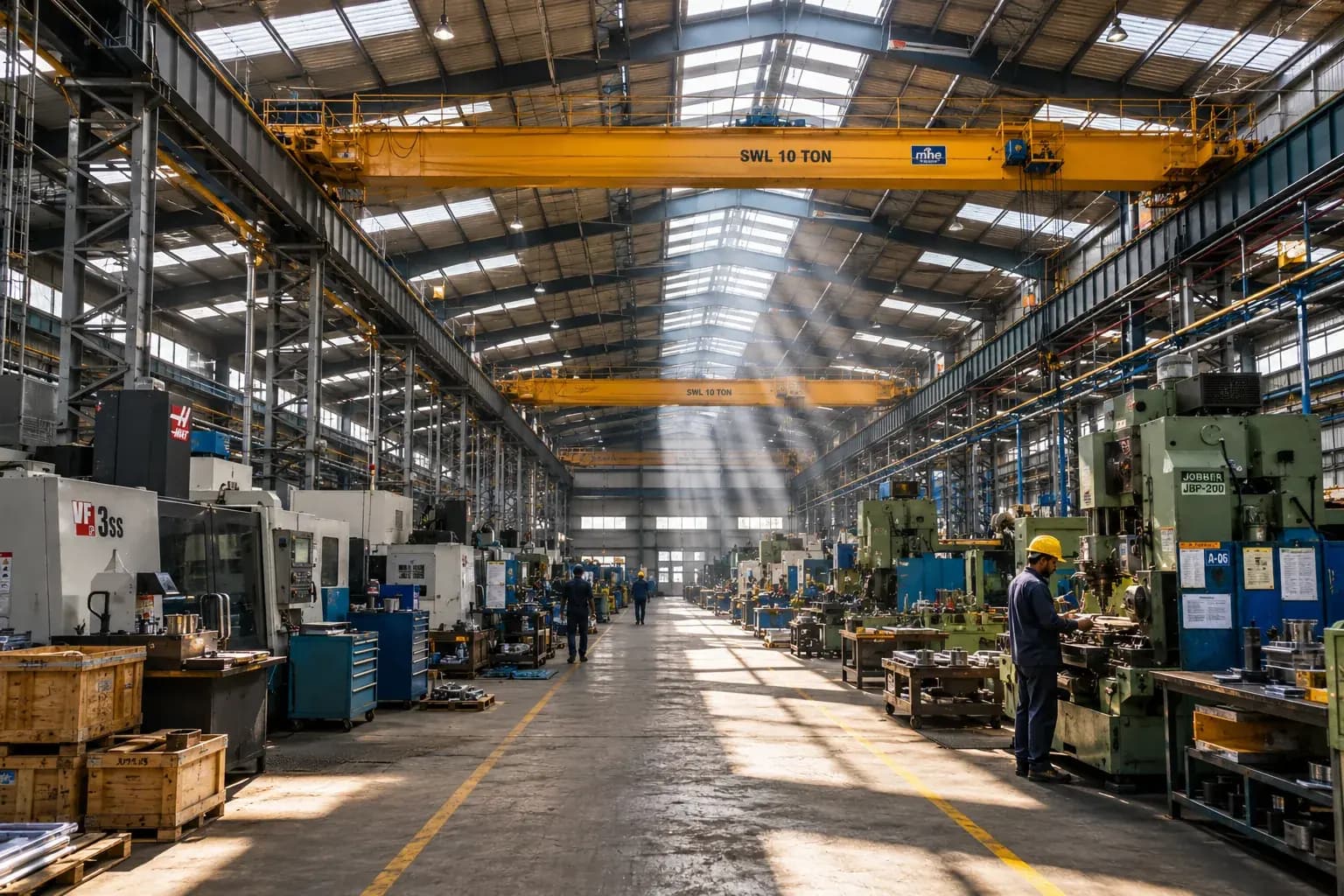
Effluent Treatment Plants · Industrial & Manufacturing
Effluent Treatment Plants for Manufacturing Units
A manufacturing unit's effluent has to meet a number at a defined point (the consent limit at its own outlet, or the CETP inlet norm at the estate boundary) and the treatment scheme is chosen by which of those two applies and by what the process actually puts in the water.
Screening view on your project, with the category and route named. No obligation.
What this means for industrial & manufacturing
Engineering and fabrication effluent is not one stream. Pickling and phosphating lines produce acidic, metal-bearing rinse; machining and pressing produce oily and emulsified coolant waste; plating and surface treatment produce their own metal load; boiler and cooling systems produce blowdown; and floor washing carries a bit of everything. Each behaves differently and some are actively hostile to the others, dumping spent coolant emulsion into a chemical treatment stream defeats it. Where the unit sits in an MIDC estate with a common effluent treatment plant, the target is the CETP inlet norm written into the consent and the estate's own metering at the boundary, which means the unit's plant is doing primary and often secondary duty rather than polishing to discharge standard. Where the unit is outside an estate, the full consent limit applies at the outlet and reuse or zero liquid discharge may be the more sensible answer than a discharge route at all.
How KIPL runs it
KIPL starts from a stream-wise inventory rather than from a total flow figure, because that is what decides whether segregation, oil separation, chemical precipitation, membrane treatment or evaporation is the right answer, and in what order. From there the design or review covers hydraulic and load sizing against consented capacity, segregation at source so incompatible streams never meet, sludge quantity and its classification (precipitation sludge from a metal-bearing stream is hazardous waste under the Hazardous and Other Wastes Rules 2016 and needs an authorised disposal route, not a corner of the yard) and the metering and logging that the consent and the estate will both ask for. The recurring failure in this sector is a plant sized for the flow but not for the load, or sized correctly and then defeated by a single unsegregated stream, with the evidence showing up as outlet values the unit cannot explain at renewal.
- CETP inlet
The estate meters the boundary
In an MIDC estate the consent binds the unit to CETP inlet norms and to metered discharge, so quantity and strength leaving the premises are independently visible to the estate.
- HOWM 2016
The sludge is a regulated waste
Chemical and metal-bearing treatment sludge falls under the Hazardous and Other Wastes Rules 2016, requiring authorisation, records and disposal to an authorised facility.
Consent limits apply at the outlet
Outside an estate the unit meets its consent discharge standard at its own outlet, which usually makes reuse or near-zero discharge the more practical objective than a compliant discharge.
What you receive
Written for industrial & manufacturing, not adapted from a template.
- 01Stream-wise effluent inventory: process rinse, pickling and plating, oily and coolant waste, blowdown, floor wash, with flow and load for each
- 02Segregation scheme at source so incompatible streams are never combined upstream of treatment
- 03ETP process design or review sized on consented capacity, with the treatment train matched to the actual contaminants
- 04Compliance target defined explicitly, CETP inlet norms with metering, or the consent discharge standard at the outlet
- 05Sludge quantity estimate, hazardous classification and authorised disposal or co-processing route
- 06Flow metering, sampling points and log formats that support consent returns, Form-V and the estate's own reconciliation
Questions from industrial & manufacturing
What industrial & manufacturing ask before appointing us.
Answered against the regulation as it stands, not as a sales pitch. If your situation is not here, ask us directly.
Ask a question →If we discharge to a CETP, why do we need our own ETP at all?
Because the consent binds you to an inlet norm, not to unlimited discharge. A CETP is designed for a defined average strength across its members, and a unit sending untreated metal-bearing or oily effluent both breaches its own consent and damages the common plant's biology. In practice most member units need primary treatment as a minimum, and the estate meters what arrives.
How should oily and coolant waste be handled?
Segregated and treated separately, never mixed into the chemical or biological stream. Spent emulsions and oily water go through oil separation and, depending on volume and concentration, chemical splitting or evaporation, with the recovered oil and the residue managed under the Hazardous and Other Wastes Rules 2016. Waste oil is a listed waste with authorised recycler routes, so it is a recovery question as much as a treatment one.
Is ETP sludge hazardous waste?
Sludge from treating metal-bearing or chemical process effluent generally falls within the schedules of the Hazardous and Other Wastes Rules 2016, which means authorisation, quantified records, a manifest for each consignment and disposal at an authorised facility. Storing it on site beyond the permitted period, or sending it out as ordinary waste, is one of the most common findings at an inspection of an engineering unit.
Does an ETP upgrade need MPCB approval before we build it?
A change in treatment scheme, capacity or discharge route changes the consented position, so it is taken up with the Board rather than done as an internal project. Where the upgrade accompanies a capacity expansion, the consent amendment and the ETP design should be settled together so the plant is sized against the capacity that will actually be consented.
Is zero liquid discharge realistic for a manufacturing unit?
It depends on the streams and the volume. Where effluent is modest, largely inorganic and reuse points exist in the process or in cooling and green belt irrigation, near-zero discharge is achievable and removes the outlet compliance problem entirely. Where volumes are large or the load is difficult, an evaporation-based route carries a real energy and residue cost, and that residue is itself a regulated waste. It should be evaluated on the stream inventory, not adopted as a slogan.
What is checked at renewal on the ETP side?
Outlet or inlet analysis over the consent period, flow meter records, whether the ETP was running when production was running, sludge generation reconciled to the treatment chemistry and to the disposal manifests, and consistency between all of that and the Form-V figures. A well-built plant with poor records fails renewal scrutiny the same way an undersized one does.
Stage by stage
How effluent treatment plants actually runs, step by step.
Also for industrial & manufacturing
The rest of the environmental brief for this sector.
Primary sources
Verify any of this at the source.

Relevant proof
EIA for Synthetic Organic Chemical Industry
CTE/CTO application, ToR application, baseline data collection, EIA report and appraisal before the EAC: Category 5(f), the sector KIPL holds Category A accreditation in.
- Capacity
- 20 → 140 TPM
- 5(f) accredited
- Cat A
Where we do this
Effluent Treatment Plants for industrial & manufacturing, city by city.
Other sectors
Who else we run effluent treatment plants for.
Next step
Tell us the project, and we will tell you the category and the route.
Screening is the cheapest stage to get right and the most expensive to get wrong. We will say plainly what effluent treatment plants your industrial & manufacturing project needs, and what it does not.





























































Start the conversation