










Green Belt Development for Industries · Data Centres & IT Parks
Green Belt Development for Data Centre and IT Park Campuses
Green belt on a data centre or IT park campus is a stated clearance condition with an area and a species basis, and it is the standard answer the appraisal expects to DG noise, heat rejection and visual screening at the boundary.
Screening view on your project, with the category and route named. No obligation.
What this means for data centres & it parks
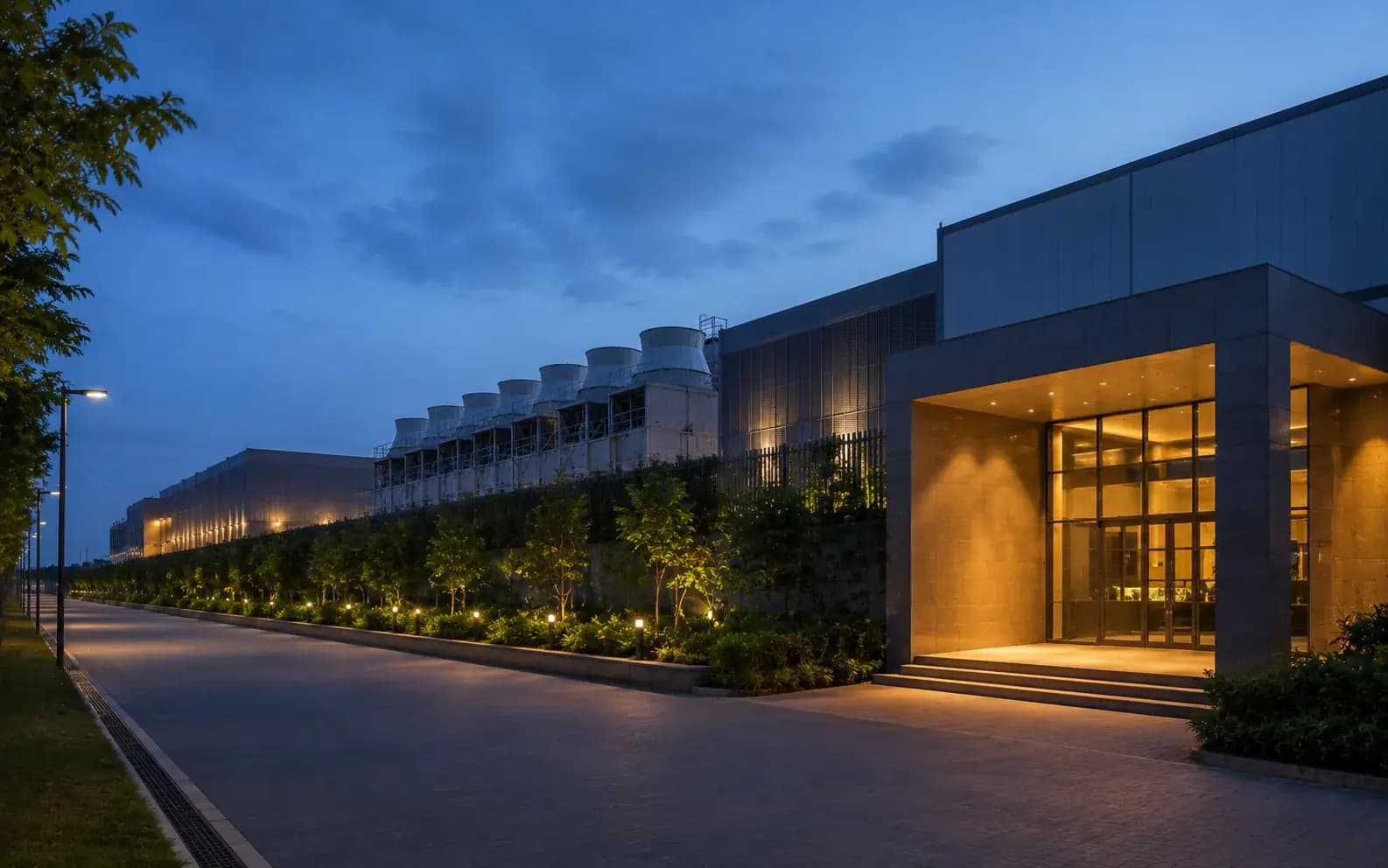
Clearances for item 8 projects routinely fix a green belt or landscape area as a proportion of the plot together with a plantation density, a defined number of trees per unit of plot area is a commonly stipulated form, and require native species and periodic reporting of survival. On a data centre campus that condition does real work: the perimeter is where DG exhaust stacks, cooling towers, transformer yards and fuel storage are concentrated, and the boundary is often shared with a residential zone, an industrial estate road or, on creek-side sites, habitat under wildlife-clearance conditions. A vegetated buffer of appropriate depth and structure attenuates noise, intercepts dust, screens the utility yard and moderates the thermal environment at the edge, which is why the condition is not treated as decorative by the appraising committee.
How KIPL runs it
KIPL designs the green belt for what the site has to absorb rather than to a plant list. Depth and layering are set against the noise and screening requirement at the boundary the DG bank faces; species are selected as natives suited to the soil, salinity and wind exposure of the location, which on a creek-side parcel is a genuine constraint rather than a preference; and irrigation is planned on treated sewage so the plantation does not compete with cooling make-up for freshwater. Establishment is contracted with a maintenance period, because survival, not planting, is what the compliance report has to show. The usual failure is a belt planted late in the build on compacted construction ground, irrigated by tanker, with a survival figure that the first monitoring visit exposes.
- EC condition
Area and density are stated, and reported
The clearance fixes the green belt area and typically a plantation density, and survival is reported in the half-yearly compliance report.
- Noise at the boundary
The belt faces the DG yard
Backup generation, transformers and cooling towers sit at the perimeter, so the belt is the mitigation between the campus's noisiest plant and its neighbours.
Creek-side sites impose species constraints
Salinity, wind and habitat conditions attached by the wildlife boards narrow the species that will survive and that are acceptable at the boundary.
What you receive
Written for data centres & it parks, not adapted from a template.
- 01Green belt area and plantation density reconciled with the clearance condition and the site layout
- 02Belt depth and layered structure designed against DG noise and screening of the utility yard
- 03Native species palette matched to soil, salinity and wind exposure at the campus boundary
- 04Soil rehabilitation on compacted construction ground before planting
- 05Irrigation from treated sewage, sized so plantation does not draw on cooling make-up
- 06Establishment and maintenance period with survival counts and photographic records for compliance reporting
Questions from data centres & it parks
What data centres & it parks ask before appointing us.
Answered against the regulation as it stands, not as a sales pitch. If your situation is not here, ask us directly.
Ask a question →How much green belt does a data centre clearance require?
The figure is set in the clearance itself, generally as a proportion of the plot area together with a plantation density such as a stated number of trees per unit area. It varies with the category of the project and the appraising authority, so the condition in your own EC letter governs, and it should be checked against the site layout before construction rather than after.
Does a green belt actually reduce DG noise?
A vegetated buffer of sufficient depth and layered structure attenuates noise and, importantly, screens the source and disrupts line of sight, but it is not a substitute for acoustic enclosures and correct stack design. It is one element of the boundary noise strategy, and the compliance test is the measured ambient level at the boundary against the applicable zone limit.
What species work on a creek-side campus?
Natives tolerant of salinity and wind exposure, selected for the local soil rather than from a general list. Sites adjoining mangrove or creek habitat may also face conditions from the wildlife boards on what may be planted near the boundary, and ornamental or invasive species chosen for appearance tend to fail in the first two seasons on such ground.
Can the plantation be irrigated with treated sewage?
Yes, and it is usually the expected answer, because the clearance takes a reuse position and the campus is otherwise consuming water for cooling. The treated water must meet the quality suited to irrigation, and the landscape demand should be included in the campus water balance filed with the EC and the groundwater NOC.
When should the green belt be planted?
Early enough to establish before the campus is commissioned, which usually means planting the perimeter while internal works continue rather than at handover. Planting into compacted construction ground without soil rehabilitation is the main reason survival figures disappoint, and survival is what the compliance report records.
What has to be reported about the green belt?
Typically the area established, the number of saplings planted, species and survival rate, supported by photographs, in the half-yearly compliance report. Because survival is counted, maintaining the belt through the establishment years is part of the obligation, not an optional extra after planting.
Stage by stage
How green belt development for industries actually runs, step by step.
Also for data centres & it parks
The rest of the environmental brief for this sector.
Primary sources
Verify any of this at the source.
Relevant proof
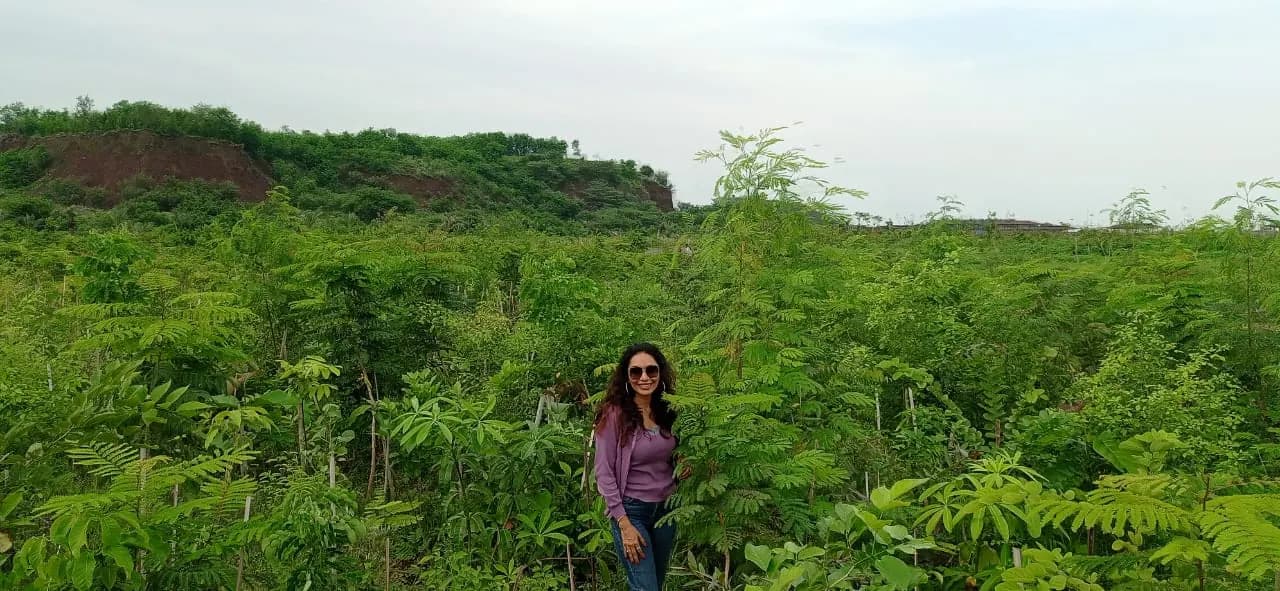
Miyawaki Plantations at Jamnagar and Junagadh
Land preparation, soil treatment, plantation and irrigation delivered phase-wise in four months.
- Area
- 24,000 m²
- Native plants
- 82,000
Where we do this
Green Belt Development for Industries for data centres & it parks, city by city.
Other sectors
Who else we run green belt development for industries for.
Next step
Tell us the project, and we will tell you the category and the route.
Screening is the cheapest stage to get right and the most expensive to get wrong. We will say plainly what green belt development for industries your data centres & it parks project needs, and what it does not.





























































Start the conversation