










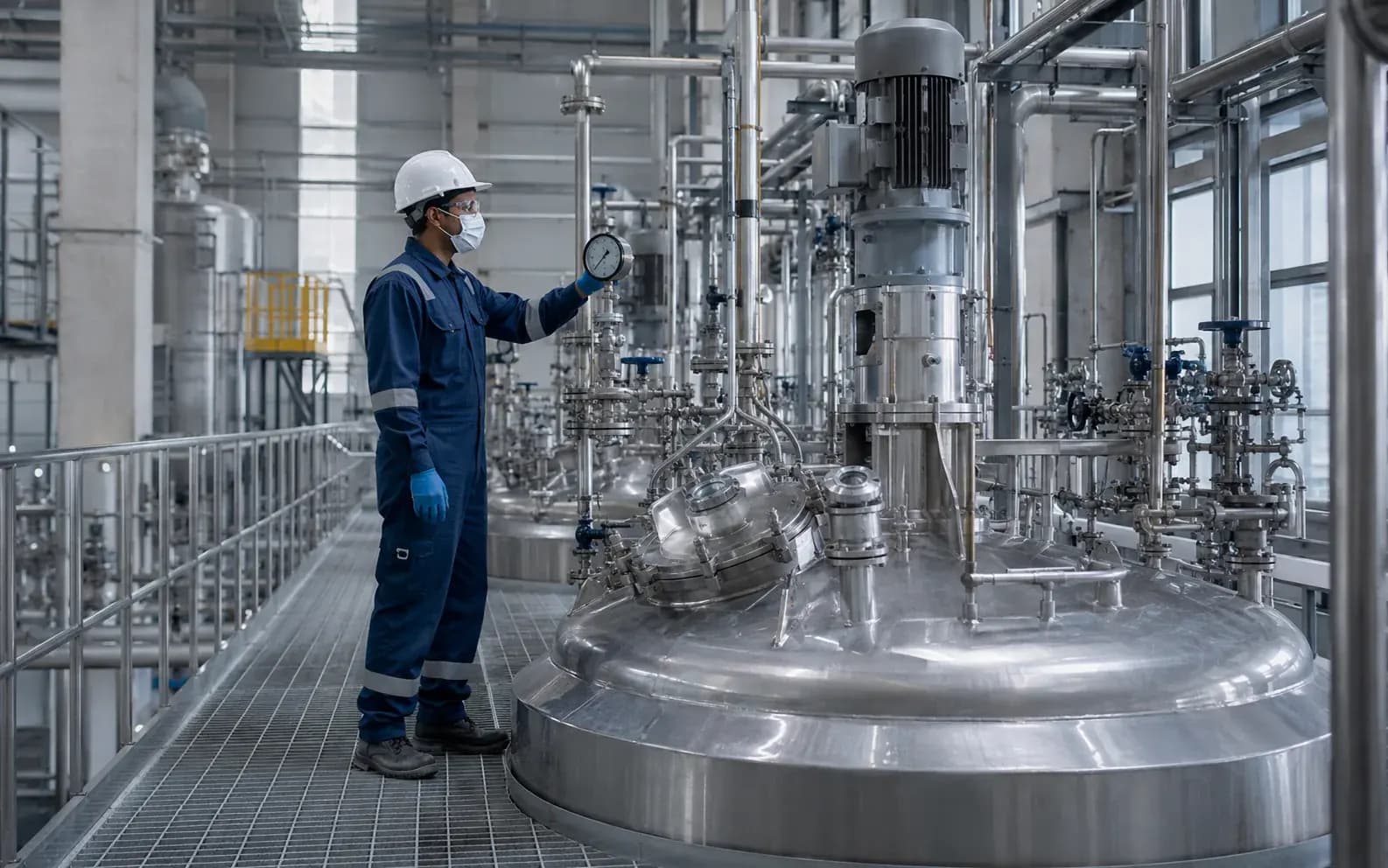
Green Belt Development for Industries · Sugar Industry
Green Belt Development for Sugar Mills
On a sugar mill campus the green belt is not landscaping: it is the barrier between the cane yard, the bagasse stacks and the boiler house on one side and the village on the other, and it is an EC and consent condition measured on survival, not on saplings planted.
Screening view on your project, with the category and route named. No obligation.
What this means for sugar industry
Clearance conditions and consent conditions typically bind an industrial site to a green belt around roughly a third of its area, sited along the periphery and around the sources that matter. In sugar those sources are specific and dusty: an open cane yard with trucks and carts moving through the season, bagasse stored in the open in large volumes and prone to wind-borne loss, a boiler house venting particulates from bagasse firing, and press mud and ash yards. A green belt drawn as a decorative line along the front gate does none of the work the condition intends. The belt has to sit where the dust travels, be deep enough and multi-layered enough to intercept it, and be planted with species that will survive on a site where soil is often compacted and where irrigation is only convenient near the ETP outfall.
How KIPL runs it
KIPL plans the belt from the site's own dust and emission geometry: prevailing wind direction across the crushing months, the position of the yard, stacks and boiler house, the plot boundary that faces habitation, and the land actually available inside the gate after the yards are laid out. Species are chosen for particulate interception and local survivability, planted in layers rather than a single row, and irrigated where possible from treated effluent or STP outflow so the belt does not compete with process water. Because the condition is judged at compliance reporting and renewal, we set up the record at planting (species, count, location, girth and survival) so the mill can answer with a measured figure rather than a photograph. The common failure is planting once, in the monsoon before an inspection, on the side of the plot where there is space rather than where the dust is.
A condition with an area attached
EC and consent conditions bind an industrial plot to a green belt over a defined share of its area, commonly around a third, and it is reported on for the life of the clearance.
- Air Act 1981
Fugitive dust is a regulated emission
Cane yard traffic, open bagasse storage and ash handling are fugitive sources. The belt is one of the accepted controls and is written into consent conditions as such.
Habitation is close and it supplies the cane
Mills sit inside their own cane catchment, so the village downwind of the yard is also the supplier base and the public hearing constituency. A working barrier is a local relationship, not just a filing.
What you receive
Written for sugar industry, not adapted from a template.
- 01Green belt layout keyed to prevailing wind across the crushing months and to the cane yard, bagasse stacks, boiler house and ash yard
- 02Area computation against the plot and against the percentage the EC or consent condition requires
- 03Native and locally proven species list selected for particulate interception, layered as canopy, sub-canopy and shrub
- 04Irrigation plan drawing on treated ETP or STP water rather than on process or borewell supply
- 05Planting, establishment and replacement-planting programme with a maintenance schedule through the off-season
- 06Baseline and periodic survival record (species, count, location, girth, survival percentage) formatted for the half-yearly compliance report
Questions from sugar industry
What sugar industry ask before appointing us.
Answered against the regulation as it stands, not as a sales pitch. If your situation is not here, ask us directly.
Ask a question →How much of a sugar mill site has to be under green belt?
It is set by the conditions in your clearance and consent rather than by a single national number, and the commonly applied figure is around a third of the plot area. What matters more in practice is that the area computation in the compliance report matches the layout on the ground and that the belt is where the emissions are, because a belt that meets the percentage on paper but sits away from the yard will still be questioned.
Which species work on a mill campus?
Locally proven native species with rough or hairy foliage that intercept particulates, planted in layers so the belt has structure rather than a single row of tall trees. Species selection follows the district's own vegetation and soil rather than a generic list, because survival is what gets reported. Fast-growing exotics that die in the third summer produce a worse compliance position than slower native stock.
Can treated effluent be used to irrigate the green belt?
It is usually the sensible source, and it strengthens the water balance in the clearance file by giving treated water a use on site. The treated quality has to be suitable for land application under the applicable standards and the route has to be the one declared in the consent. Using it also means the belt is not competing with process water during a campaign, which is when irrigation is otherwise most likely to be skipped.
When is the green belt actually checked?
At half-yearly compliance reporting, at consent renewal, and during any Board inspection or appraisal of a subsequent expansion. The question asked is not how many saplings were planted but how many are standing and how much area is covered, which is why the survival record has to be maintained from the year of planting rather than reconstructed later.
We have very little open land left after the cane yard and bagasse storage. What then?
The belt is planned around what the site can actually give: peripheral strips at full depth where habitation faces the plot, dense multi-layer blocks where width is short, and avenue planting along internal roads to catch yard dust at source. Where the conventional layout genuinely cannot reach the required area, dense native block planting achieves far more canopy per square metre, and the shortfall and the approach are stated in the compliance report rather than left unexplained.
Does the green belt have to be planted before the mill commissions?
The clearance usually ties plantation to a phased schedule, and the practical discipline is to plant in the first monsoon after the condition attaches rather than to wait. Trees need years, and a mill that begins planting in the year it applies for its next expansion will be reporting saplings when the committee expects an established belt.
Stage by stage
How green belt development for industries actually runs, step by step.
Also for sugar industry
The rest of the environmental brief for this sector.
Primary sources
Verify any of this at the source.
Relevant proof
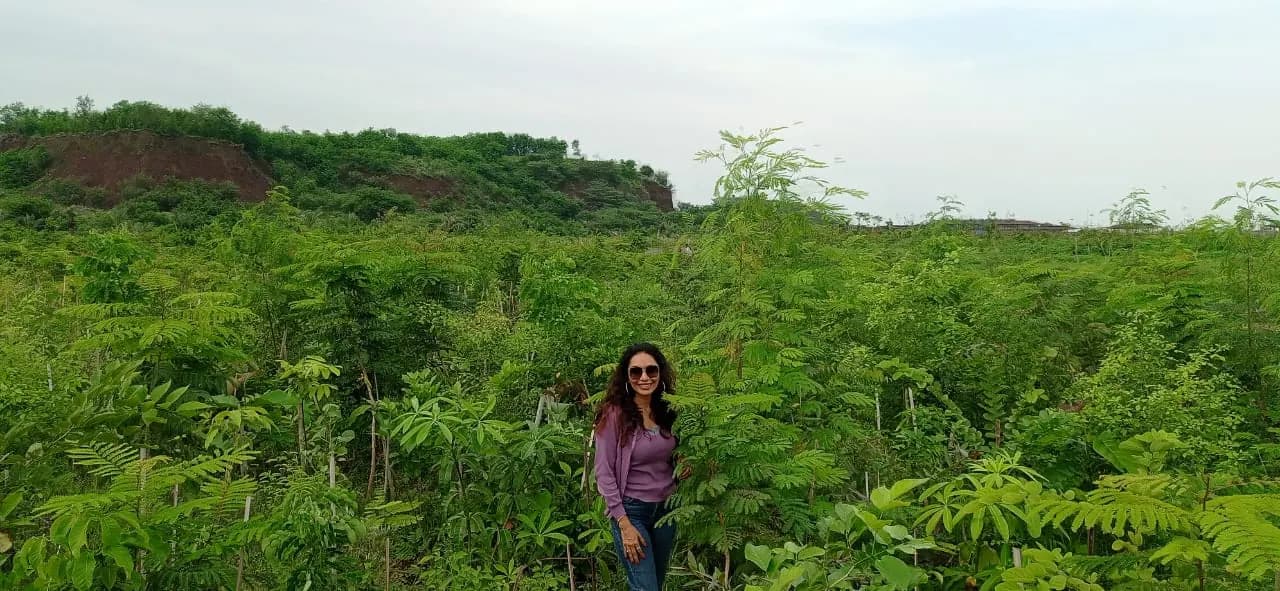
Miyawaki Plantations at Jamnagar and Junagadh
Land preparation, soil treatment, plantation and irrigation delivered phase-wise in four months.
- Area
- 24,000 m²
- Native plants
- 82,000
Where we do this
Green Belt Development for Industries for sugar industry, city by city.
Other sectors
Who else we run green belt development for industries for.
Next step
Tell us the project, and we will tell you the category and the route.
Screening is the cheapest stage to get right and the most expensive to get wrong. We will say plainly what green belt development for industries your sugar industry project needs, and what it does not.





























































Start the conversation