










Industrial green belt development: building and establishing the belt around a plant.
Industrial green belt development is the execution end of the buffer: soil prepared, tolerant species planted in tiers at committed density, irrigated and maintained until the belt is established.
What it is
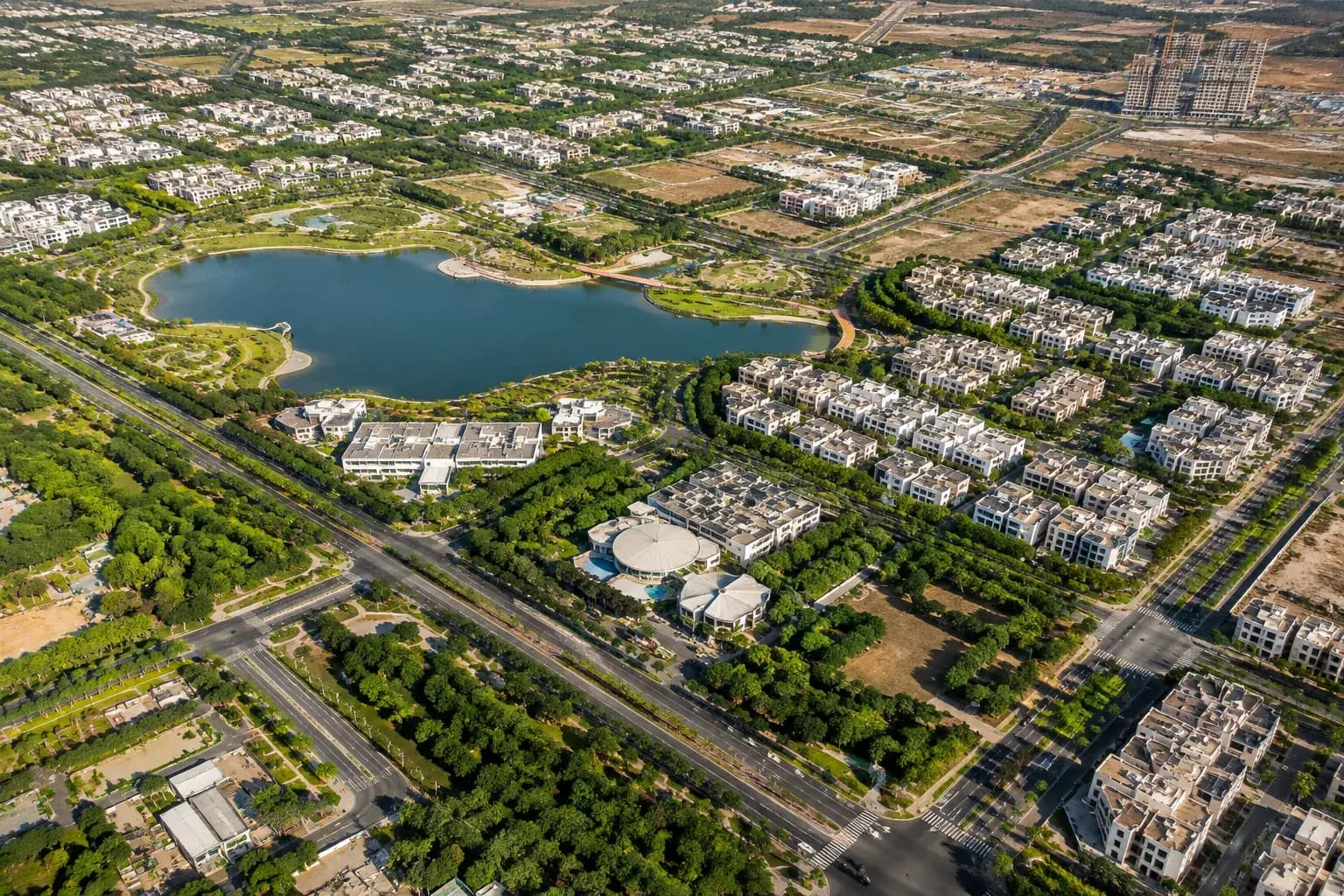
On an operating industrial site the belt has to be built around real conditions: compacted or made-up ground, saline or alkaline soil, limited water, construction traffic and security requirements. Execution therefore covers soil improvement, pit preparation, sourcing of the specified pollution-tolerant species, planting in ground, shrub and tree tiers, staking and guarding, and an irrigation system the plant can actually run.
KIPL executes and then maintains the belt through its establishment period, because a green belt is judged on what is standing at inspection, not on what was planted. Records are kept species-wise and area-wise so the plant can demonstrate the committed area, density and survival when a regulator or an auditor asks.
What you get
The deliverables, in hand.
- Authority
- CPCB green belt guidelines · EC and consent conditions
- Typical timeline
- Planting to the season; establishment maintenance over years
- Site preparation: clearing, soil improvement and pit excavation
- Supply of specified pollution-tolerant species at agreed sapling grade
- Multi-tier planting to the approved density and alignment
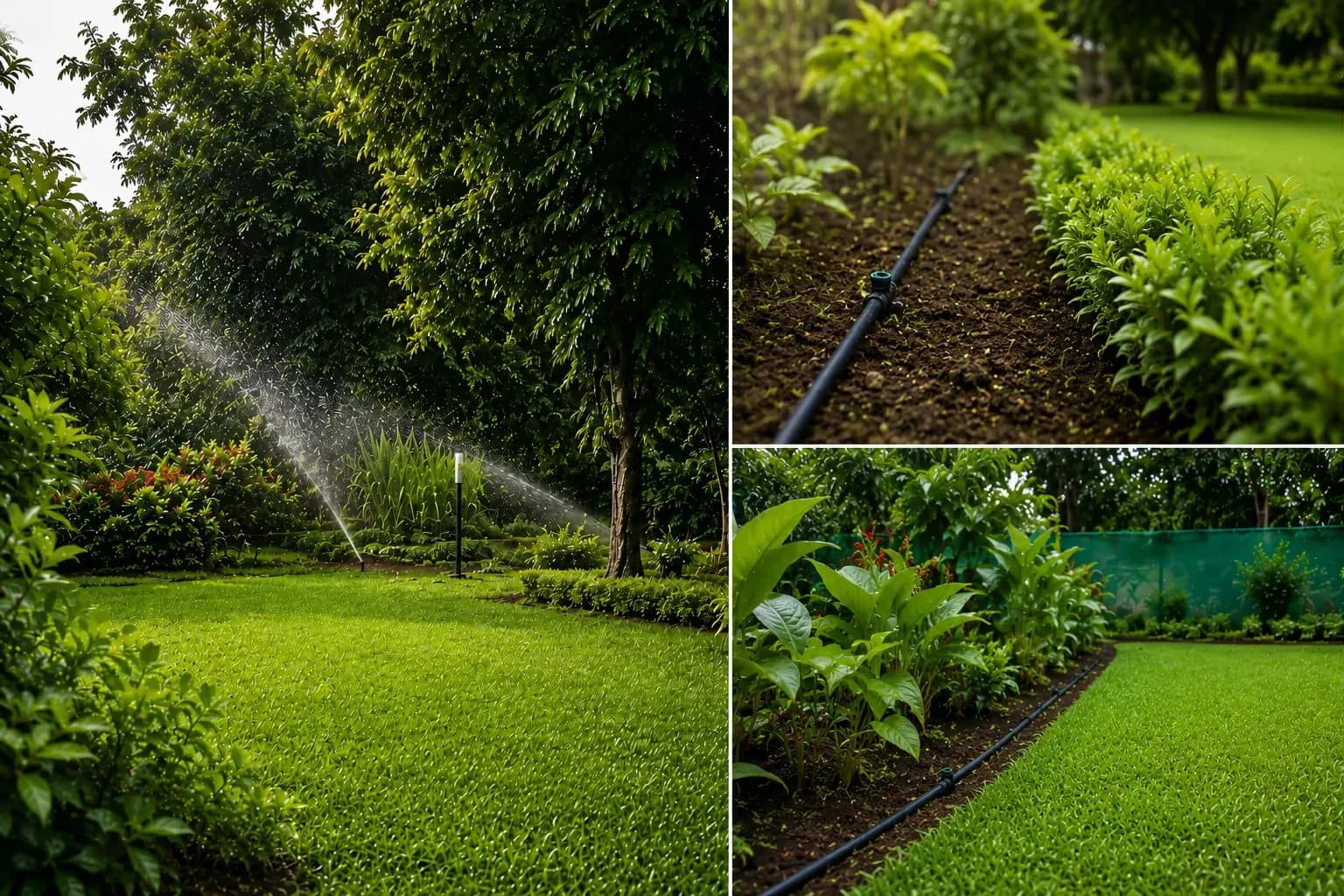
- Irrigation system, commonly on treated water, with commissioning
- Staking, guarding and mulching
- Establishment maintenance with species-wise survival records
Straight answers
Industrial Green Belt: common questions.
01How is green belt area calculated?
Usually as a percentage of the total plant area or as a specified width along the boundary, depending on what the clearance or consent condition states. The calculation should be made on net plantable area (excluding roads, drains, utility corridors and built cover) and documented, because that is the figure a regulator will check against.
02How many trees per hectare are expected in a green belt?
Density is normally set by the clearance condition or by the guidance applicable to the sector, expressed as trees per hectare or as spacing. A multi-tier belt counts shrubs and ground cover separately from trees. The applicable condition governs; where none is specified, the density is proposed from the buffer's function and defended in the plan.
03What are the common causes of green belt failure?
Poor soil on made-up ground, no assured irrigation through summer, planting outside the season, species chosen for looks rather than tolerance, and no maintenance responsibility after handover. Nearly every failed belt traces back to one of these, and all five are addressable at the planning and contracting stage.
04Can treated effluent be used to irrigate the belt?
Commonly yes, and it is often the intended reuse route for treated water on an industrial site. The treated water quality has to be suitable for irrigation, particularly for salinity and sodium: and monitored, since sustained irrigation with unsuitable water degrades the soil and the belt with it.
05How long before the belt looks established?
With correct species and reliable irrigation, a belt begins to read as a screen within a few years, and matures over longer. Growth rate depends on species, soil, water and climate, so an honest programme states the establishment maintenance period rather than promising a canopy by a fixed date.
06Who maintains the belt after planting?
Either the plant's own horticulture team or a contracted maintenance agency, but it must be assigned explicitly. Establishment maintenance for the first years is where survival is decided, and unassigned maintenance is the most common reason a properly planted belt is thin at the first compliance inspection.
07What records should a plant keep on its green belt?
Area planted with drawings, species and counts, planting dates, irrigation arrangement, survival counts by period, and dated photographs. These feed directly into half-yearly compliance reporting and are what turns a green belt from a claim into demonstrable compliance.
Within Green Belt Development for Industries
Part of the whole route, the other components.
Primary sources
Check it at source.
This page describes CPCB green belt guidelines · EC and consent conditions. The regulation and the filing portal are public, these are the official endpoints, not our summary of them.
Relevant proof
Where this stage has already been delivered.
Jamnagar, Gujarat
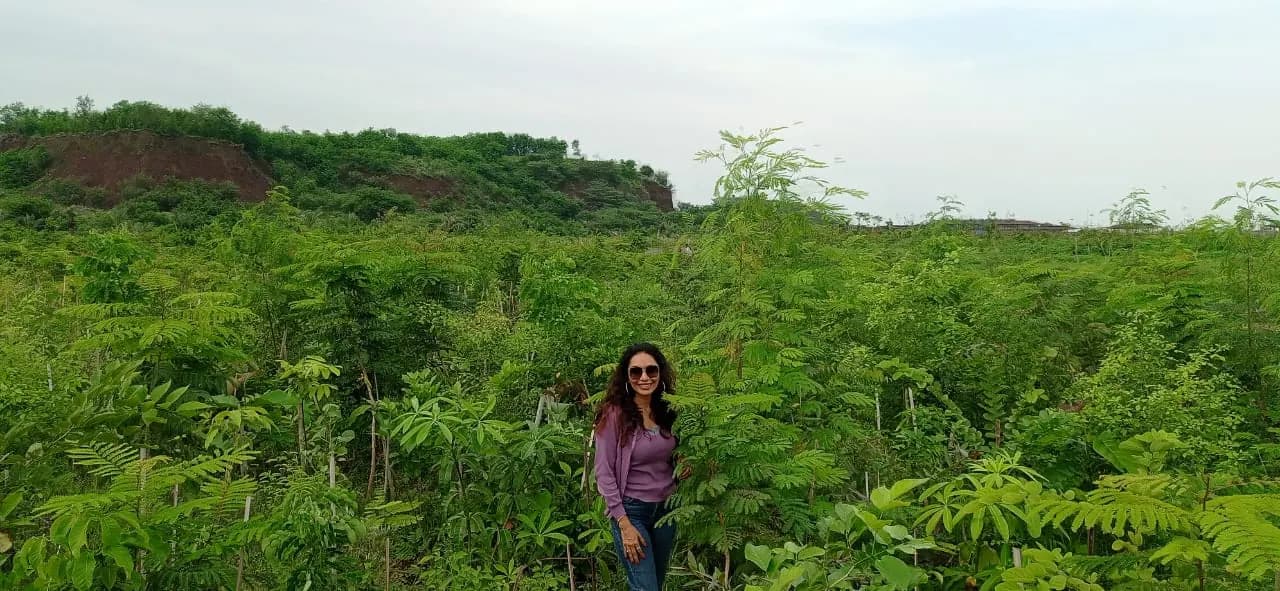
Miyawaki Plantations at Jamnagar and Junagadh
Land preparation, soil treatment, plantation and irrigation delivered phase-wise in four months.
Where we do this
Green Belt Development for Industries on the ground.
The authority, the timeline and the local ground differ by city. These pages set out how green belt development for industries actually runs in each.
Featured projects
Work that carries its own evidence.
Our expertise
One team across the whole environmental brief.
Industrial Green Belt is one stage of one practice. Most projects need several, and the commitments made at clearance are the ones we build and maintain.
Who we do this for
Green Belt Development for Industries reads differently by industry.
- 01
Townships & Area DevelopmentCore
The layout-level green network committed in the 8(b) EIA is a mapped, measurable obligation carried across a decade of build-out.
Green Belt Development for Industries for Townships & Area Development - 02
Chemical IndustryCore
Clearance conditions typically bind a chemical unit to green belt across roughly a third of its plot area, as an odour and emission buffer.
Green Belt Development for Industries for Chemical Industry - 03
Distilleries & EthanolCore
Odour from spent wash storage makes the green belt a functional buffer with a stated width and species mix, not a landscaping line item.
Green Belt Development for Industries for Distilleries & Ethanol - 04
Sugar IndustryCore
Bagasse handling and boiler particulates make the mandated green belt an actual dust barrier, monitored as an EC condition.
Green Belt Development for Industries for Sugar Industry - 05
Industrial & ManufacturingCore
Consent conditions bind an industrial plot to green belt around roughly a third of its area, with survival evidence expected at renewal.
Green Belt Development for Industries for Industrial & Manufacturing - 06
Industrial Corridors & MIDCCore
Corridor master plans reserve a green belt percentage at node level, and the buffer to surrounding villages is a planning-stage commitment.
Green Belt Development for Industries for Industrial Corridors & MIDC - 07
Data Centres & IT Parks
Green belt is the standard EC answer to DG noise and thermal load at the campus boundary, and its area is a stated condition.
Green Belt Development for Industries for Data Centres & IT Parks - 08
Mining & Minerals
Safety-zone and dump-face plantation is a mine-closure obligation, measured by survival rather than by saplings supplied.
Green Belt Development for Industries for Mining & Minerals
Trusted by
The organisations this work is done for.





In the press