









Tree Management · Industrial Corridors & MIDC
Tree Management for Industrial Corridor Land Development
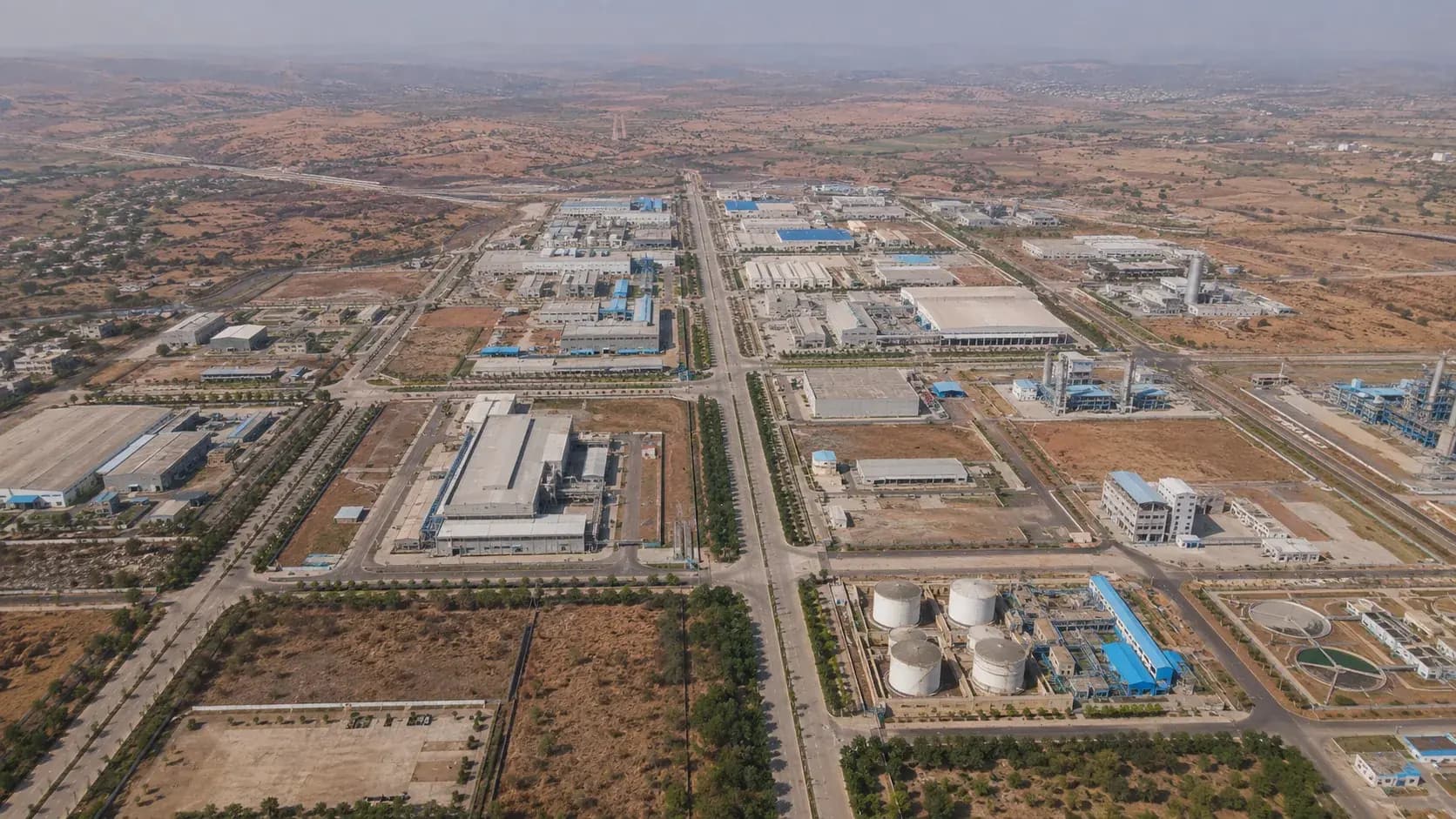
Greenfield corridor development means enumerating, valuing and where possible transplanting standing trees across thousands of hectares before the first trunk road is cut, and the permission route outside municipal limits is not the Tree Authority route.
Screening view on your project, with the category and route named. No obligation.
What this means for industrial corridors & midc
Land assembled for a node is usually agricultural and revenue land with substantial standing tree stock (field boundaries, orchards, roadside rows) belonging until acquisition to the people the authority has just acquired from. Clearing it is therefore both a permission question and a community question. Inside a municipal area the Maharashtra (Urban Areas) Protection and Preservation of Trees Act 1975 governs and the Tree Authority decides, but much greenfield node land lies outside urban limits, where felling is regulated under the Maharashtra Felling of Trees (Regulation) Act 1964 and the revenue and forest authorities are the reference point. Which regime applies to which parcel has to be established parcel by parcel, before contractors mobilise.
How KIPL runs it
KIPL carries out enumeration at development scale and prepares the case files that go with it: geo-referenced counts by species and girth, valuation, transplantation feasibility for the stock worth moving, and compensatory planting proposals tied to the node's own green belt land, which is one advantage a corridor has over a city. The failure sequence is familiar: earthwork contractors mobilised on a schedule, trees cleared ahead of permission, and the authority then dealing with a violation on land it acquired from people already aggrieved by the acquisition.
- Trees Act 1975 · Felling of Trees Act 1964
Two regimes across one node
Parcels inside urban limits fall under the Tree Authority regime; parcels outside are regulated under the Maharashtra Felling of Trees (Regulation) Act 1964 through the revenue and forest authorities. The route differs by parcel.
Clearing follows acquisition on land people lived off
The tree stock on acquired land belonged to those affected by the acquisition, and its removal is read alongside the compensation and resettlement position, particularly around orchards and fruit-bearing trees.
Earthwork schedules move faster than permissions
Trunk infrastructure contracts mobilise on their own programme. Enumeration and permission have to be complete before that, or the node acquires a violation on its own land.
What you receive
Written for industrial corridors & midc, not adapted from a template.
- 01Parcel-wise establishment of which felling regime and which authority applies
- 02Geo-referenced enumeration at development scale: species, girth, condition, ownership boundary
- 03Tree valuation, with separate treatment of fruit-bearing and orchard stock affected by acquisition
- 04Transplantation feasibility and a receiving site identified inside the node's green belt
- 05Permission case files to the applicable authority, sequenced ahead of earthwork mobilisation
- 06Compensatory planting plan located on the node's own reserved green belt land, with survival monitoring
Questions from industrial corridors & midc
What industrial corridors & midc ask before appointing us.
Answered against the regulation as it stands, not as a sales pitch. If your situation is not here, ask us directly.
Ask a question →Which law governs tree felling on greenfield corridor land?
It depends on where the parcel sits. Within urban areas the Maharashtra (Urban Areas) Protection and Preservation of Trees Act 1975 applies and the Tree Authority decides. Outside urban limits, felling is regulated under the Maharashtra Felling of Trees (Regulation) Act 1964 through the revenue and forest authorities. A large node can straddle both, so the position must be established parcel by parcel.
When should enumeration be done relative to acquisition?
Enumeration should precede clearing and should ideally be available at the valuation stage, since standing trees, particularly orchards and fruit-bearing stock, form part of what is compensated. Enumeration done after clearing has begun leaves both the compensation and the permission position unsupported by any record.
Is large-scale transplantation realistic at a node?
For part of the stock, yes, and a node has an advantage a city does not, receiving land inside its own green belt. Feasibility still has to be assessed by species, age and condition, with pre-transplant preparation and an irrigated receiving site. Directing transplantation without that assessment produces losses that show up in the survival record.
Where does compensatory planting go?
Onto the node's own reserved green belt and buffer land, which is the cleanest arrangement because it satisfies the compensatory obligation and the green belt commitment on the same ground. It has to be recorded that way deliberately, with the areas, counts and survival tracked, or the two obligations end up double-counted or neither properly evidenced.
What happens if the earthwork contractor clears ahead of permission?
It is an offence under the applicable felling legislation, and for an authority it is a particularly poor position: the violation is on land it acquired, in front of the community it acquired from. The practical control is contractual: no clearing on a parcel until the permission for that parcel is issued, with the parcel-wise position held by the authority rather than by the contractor.
How do fruit-bearing trees change the position?
They carry a livelihood value beyond timber value and are treated distinctly in valuation, and they are usually the most contested item with affected families. They should be enumerated and valued separately, and where transplantation is feasible it is worth attempting, because the community reading of how orchards were handled shapes the node's relationship with its neighbours for years.
Stage by stage
How tree management actually runs, step by step.
Also for industrial corridors & midc
The rest of the environmental brief for this sector.

Relevant proof
MCGM GARDEN DEVELOPMENT- MIYAWAKI PLANTATION
Miyawaki dense forestation across 27 locations in 7 wards using native species, delivered under the municipal greening programme.
- Area
- ~74,000 m²
- Trees
- ≈1,10,000
- CO₂ (est.)
- 2,052 t
Where we do this
Tree Management for industrial corridors & midc, city by city.
Other sectors
Who else we run tree management for.
Next step
Tell us the project, and we will tell you the category and the route.
Screening is the cheapest stage to get right and the most expensive to get wrong. We will say plainly what tree management your industrial corridors & midc project needs, and what it does not.





























































Start the conversation