










Environment Management & Mitigation Plan · Industrial Corridors & MIDC
Node-Level Environment Management Plan for Industrial Corridors
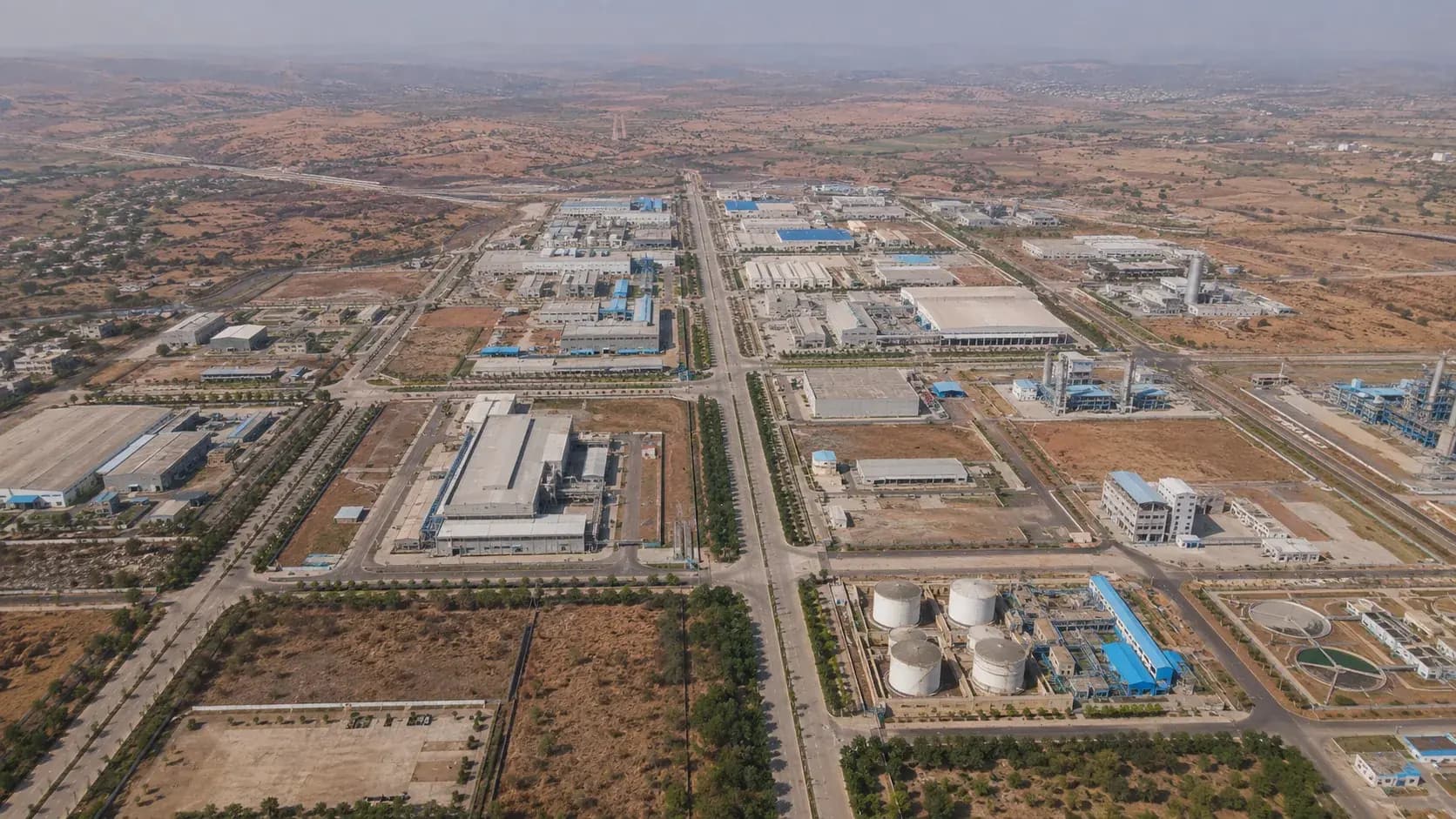
At node scale the Environment Management Plan is not a document appended to a clearance but the operating rulebook a development authority runs its estate by, and the constraint every allottee designs to.
Screening view on your project, with the category and route named. No obligation.
What this means for industrial corridors & midc
A single factory's EMP commits that factory. A node's EMP commits the authority to a set of allocations and limits that must then be divided among tenants who do not yet exist: how much water each category of plot can be promised, what effluent characteristics the common treatment system will accept, what emission load the airshed can carry, where the green belt sits and who maintains it, and how the monitoring network is run and reported. Every one of those becomes an allotment term, and getting the arithmetic wrong is discovered years later when the node is two-thirds allotted and the next tenant cannot be accommodated.
How KIPL runs it
KIPL prepares node-level environment management plans as allocation instruments rather than descriptive documents, with the load balance stated explicitly and headroom identified. Our corridor work includes environmental compliance audit and certification support across the Shendra and Bidkin AURIC nodes. The failure mode we correct most often is an EMP written to satisfy appraisal, full of commitments in the passive voice, which no department in the authority can actually operate: no named owner, no monitoring locations fixed, no threshold that triggers an action.
Allocation to tenants who do not yet exist
Water, effluent capacity, emission headroom and waste capacity must be divided among future allottees. The EMP is where that arithmetic is fixed, and it becomes binding on allotment policy.
- EIA Notification 2006
The EMP becomes enforceable clearance conditions
Commitments in the node EMP are carried into the Environment Clearance conditions and are what the authority reports against half-yearly for the life of the node.
Staged development over many years
A node is built in phases across years, with infrastructure ahead of demand. The EMP has to work at every intermediate stage, not only at full build-out.
What you receive
Written for industrial corridors & midc, not adapted from a template.
- 01Node-wide water balance with allocation logic by plot category and by phase
- 02Effluent load balance defining the characteristics the common treatment system will accept
- 03Ambient monitoring network: fixed locations, parameters, frequency and reporting route
- 04Green belt, buffer and open space commitments with area, ownership and maintenance responsibility
- 05Trigger thresholds and defined corrective actions, each with a named owner in the authority
- 06Plot-level environmental obligations drafted for insertion into allotment and lease terms
Questions from industrial corridors & midc
What industrial corridors & midc ask before appointing us.
Answered against the regulation as it stands, not as a sales pitch. If your situation is not here, ask us directly.
Ask a question →How is a node EMP different from a project EMP?
A project EMP commits one proponent to mitigation on one site. A node EMP allocates a finite environmental capacity (water, effluent, emissions, waste) among tenants who will arrive over many years, and sets the rules they must build to. It is therefore an instrument of allotment policy, and it has to be internally consistent as arithmetic, not only as intent.
What happens when the node runs out of allocated capacity?
Allotment stops or the clearance has to be amended, and both are disruptive when the node is commercially committed. This is why the EMP should state the load balance explicitly, identify the headroom, and define the point at which the authority must either expand common infrastructure or restrict the categories it allots to. An EMP that does not state the arithmetic simply defers the discovery.
How do node commitments reach individual allottees?
Through the allotment and lease terms. Unless the plot-level obligations (pre-treatment standards before discharge to the common system, plot-level green area, monitoring and reporting, waste handling) are drafted into the allotment documents, the authority has made a commitment in its clearance that it has no contractual means to enforce on the tenant.
Who operates the monitoring network?
The authority, since it holds the clearance, though the field work is usually contracted. What matters is that the locations are fixed and unchanged over time, the laboratory is appropriately accredited, and the results are compiled continuously rather than assembled before a compliance report is due. A monitoring network with shifting locations produces data that cannot demonstrate a trend.
Does the EMP need to be revised as the node develops?
It has to be reviewed at each phase, because the assumptions behind the balance (industry mix, occupancy, actual against projected consumption) will diverge from what was assessed. Where the divergence is material, the position has to be reflected in the compliance reporting and, if it exceeds what was cleared, taken back to the authority that granted the clearance rather than absorbed quietly.
What makes a node EMP actually operable?
Named ownership and numeric triggers. Every commitment should say which department of the authority is responsible, what is measured, at what value an action is triggered, and what that action is. Commitments written as intentions cannot be operated by anyone, and it is those that turn into adverse findings when the node is audited.
Stage by stage
How environment management & mitigation plan actually runs, step by step.
Also for industrial corridors & midc
The rest of the environmental brief for this sector.

Relevant proof
EIA for Synthetic Organic Chemical Industry
CTE/CTO application, ToR application, baseline data collection, EIA report and appraisal before the EAC: Category 5(f), the sector KIPL holds Category A accreditation in.
- Capacity
- 20 → 140 TPM
- 5(f) accredited
- Cat A
Where we do this
Environment Management & Mitigation Plan for industrial corridors & midc, city by city.
Other sectors
Who else we run environment management & mitigation plan for.
Next step
Tell us the project, and we will tell you the category and the route.
Screening is the cheapest stage to get right and the most expensive to get wrong. We will say plainly what environment management & mitigation plan your industrial corridors & midc project needs, and what it does not.





























































Start the conversation