









Tree enumeration and census: the counted, numbered record a site starts from.
A tree census is the numbered inventory of every tree on a site (species, girth, height, canopy and condition) and it is the document every subsequent tree permission is built on.
What it is
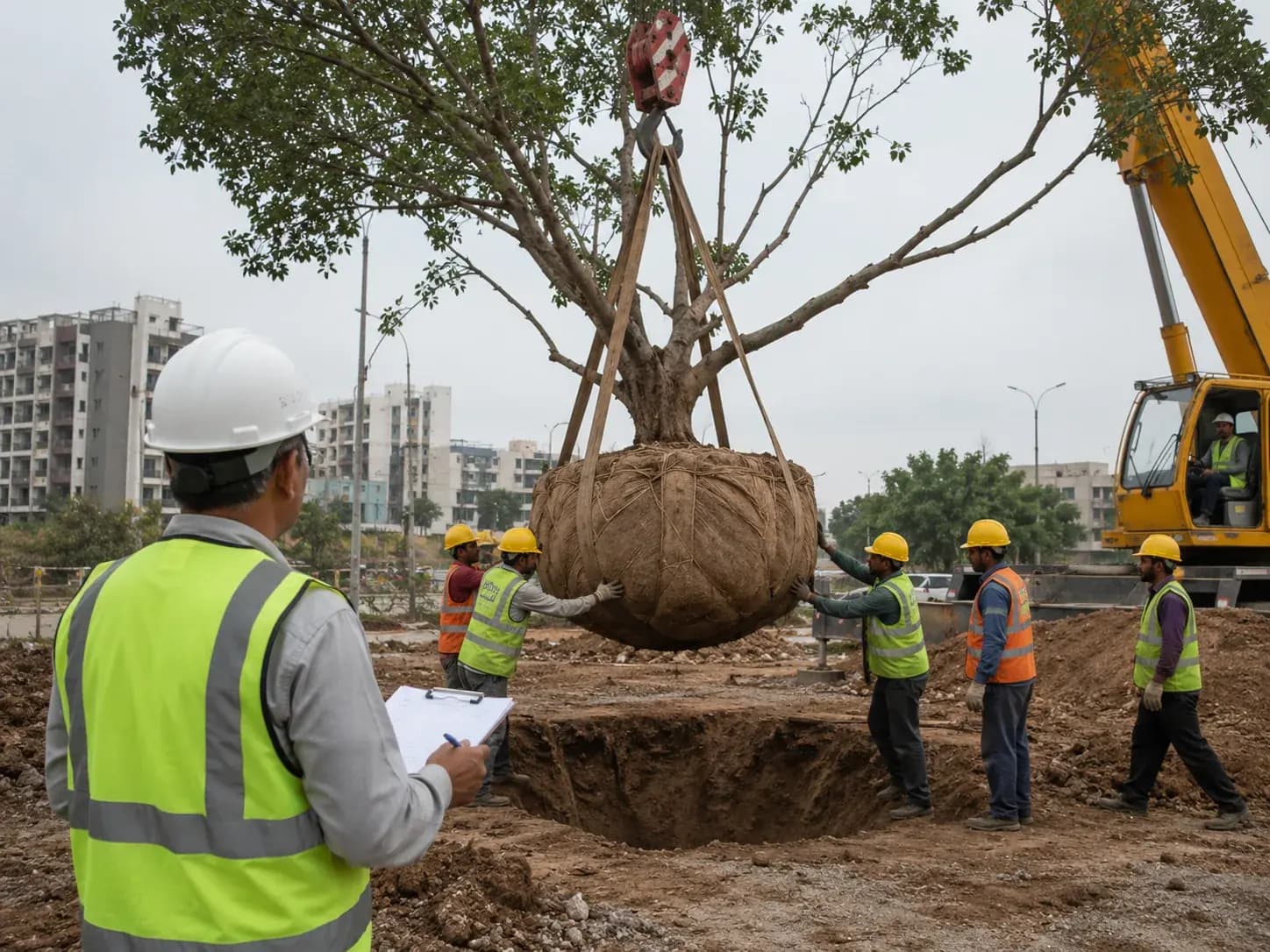
Enumeration means walking the site and recording each tree individually: species identification, girth at breast height, height, canopy spread, health and condition, and its location, usually geo-tagged and physically numbered. Where a municipal corporation requires it, the register is prepared in the format its Tree Authority accepts, since an application built on a non-conforming inventory is returned before it is considered.
KIPL carries out enumeration with botanical identification rather than local naming alone, marks trees durably, and produces both the register and a tree-position plan overlaid on the site layout. That overlay is what turns the census into a design tool: it shows immediately which trees conflict with the proposal, which can be retained, and which are candidates for transplantation.
What you get
The deliverables, in hand.
- Authority
- Maharashtra (Urban Areas) Protection and Preservation of Trees Act 1975 · Tree Authority
- Typical timeline
- Days to weeks, by site area and tree count
- Physical numbering and geo-tagging of every tree on site
- Species identification with botanical and common names
- Girth, height, canopy spread, age class and condition record
- Tree register in the format required by the Tree Authority
- Tree-position plan overlaid on the site layout
- Retention, transplantation and removal categorisation
Straight answers
Tree Enumeration & Census: common questions.
01Why is a tree census needed before development?
Because no permission to fell or transplant can be considered without one, and because it tells the design team what is actually on the ground. In municipal areas governed by tree legislation, the enumerated register is the factual basis of the entire application to the Tree Authority.
02What is recorded for each tree?
A unique number, species with botanical name, girth at breast height, height, canopy spread, condition and age class, and its geo-tagged position. Photographs are typically taken tree-wise. Together these establish both the value of the tree and the case for retaining, transplanting or removing it.
03How is girth measured?
Girth is measured as circumference at breast height, conventionally about 1.37 metres above ground, using a tape. Multi-stemmed trees are recorded stem-wise. Girth matters because compensatory plantation and fee calculations in many municipal systems are linked to the size of the tree affected.
04Who can carry out a tree census?
In practice it is done by consultancies with botanical capability, and municipal corporations may require enumeration by an agency they recognise or in a prescribed format. The essential requirement is correct species identification and a register the Tree Authority will accept; a list of local names is not an enumeration.
05Does a census apply to municipal areas too?
Yes. Under the Maharashtra tree legislation, urban local bodies are required to maintain a tree census for their area, and several corporations have carried out city-wide enumeration with geo-tagging. The method is the same as for a site; the scale and the data management are different.
06How long does enumeration take?
It is driven by area and tree density: a compact plot with a few dozen trees is a matter of days, while a large campus or a municipal ward runs to weeks. Terrain, access and the level of detail required, such as full geo-tagging and photography, are the other variables.
07What happens to the census after the permission?
It becomes the reference for everything that follows: the felling or transplantation permission, the compensatory plantation obligation, the transplant survival reporting, and any later query about what stood on the site. It is worth keeping as a live record rather than a one-time submission.
Within Tree Management
Part of the whole route, the other components.
Relevant proof
Where this stage has already been delivered.

MCGM · Eastern Suburbs, Mumbai
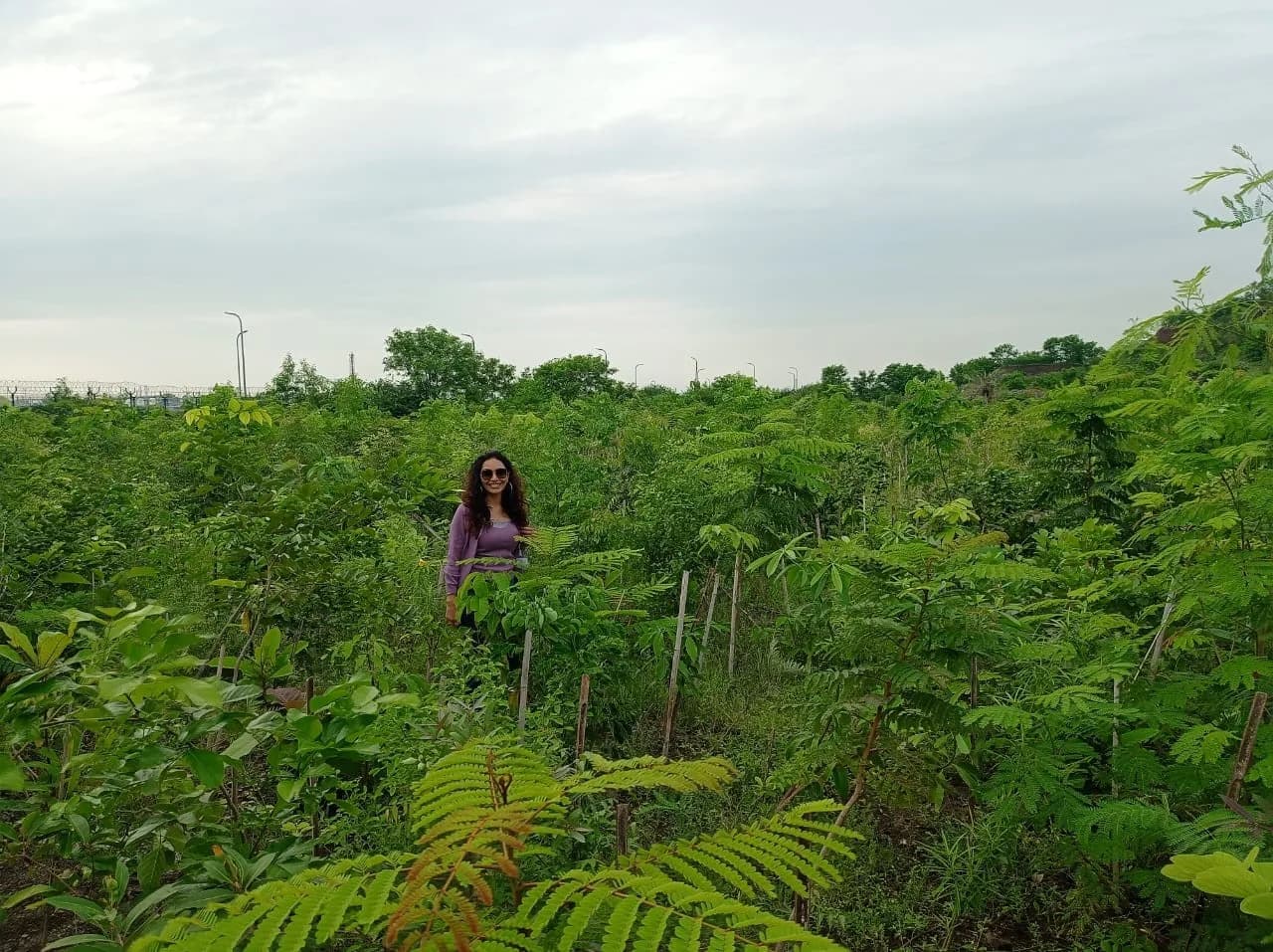
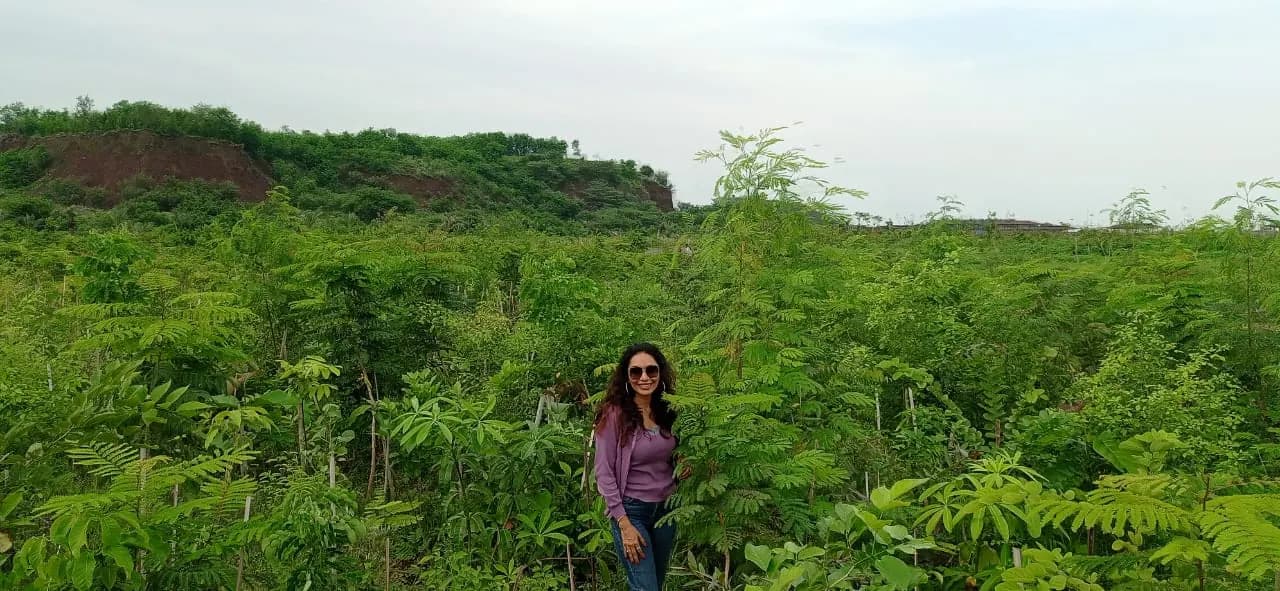
MCGM GARDEN DEVELOPMENT- MIYAWAKI PLANTATION
Miyawaki dense forestation across 27 locations in 7 wards using native species, delivered under the municipal greening programme.
Where we do this
Tree Management on the ground.
The authority, the timeline and the local ground differ by city. These pages set out how tree management actually runs in each.
Featured projects
Work that carries its own evidence.

Our expertise
One team across the whole environmental brief.
Tree Enumeration & Census is one stage of one practice. Most projects need several, and the commitments made at clearance are the ones we build and maintain.
Who we do this for
Tree Management reads differently by industry.
- 01
Real Estate & ConstructionCore
Nothing on site is felled or shifted until the Tree Authority issues its NOC under the Maharashtra Preservation of Trees Act 1975, and every corporation runs its own process.
Tree Management for Real Estate & Construction - 02
Municipal CorporationsCore
The Tree Authority under the Maharashtra Preservation of Trees Act 1975 needs census, valuation and transplant evidence to defend its decisions.
Tree Management for Municipal Corporations - 03
Townships & Area Development
Large land parcels carry existing tree stock; enumeration, transplant feasibility and Tree Authority NOC gate the earthworks programme.
Tree Management for Townships & Area Development - 04
Hospitality, Healthcare & Education
Mature institutional campuses expanding into their own grounds need enumeration, transplant feasibility and Tree Authority NOC before any block starts.
Tree Management for Hospitality, Healthcare & Education - 05
Logistics & Ports
Large land-side parcels carry standing tree stock, and enumeration plus Tree Authority NOC gates the platform and pavement works.
Tree Management for Logistics & Ports - 06
Industrial Corridors & MIDC
Greenfield land acquisition means large-scale enumeration, valuation and transplantation before the first trunk infrastructure is cut.
Tree Management for Industrial Corridors & MIDC - 07
Corporate Campuses
Campus expansion into its own grounds still needs enumeration, transplant feasibility and Tree Authority NOC before ground is broken.
Tree Management for Corporate Campuses
Trusted by
The organisations this work is done for.





In the press