










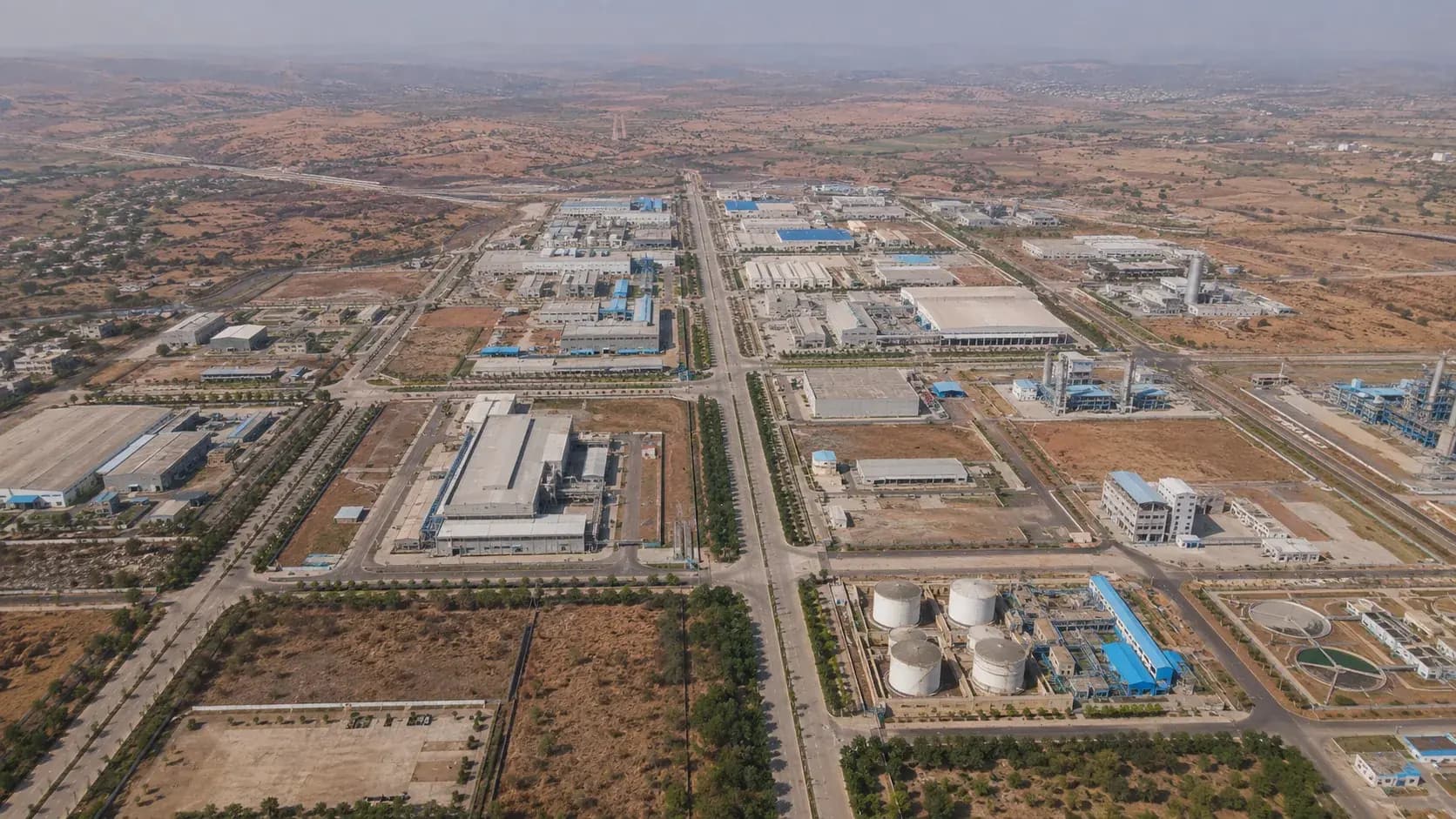
Effluent Treatment Plants · Industrial Corridors & MIDC
Common Effluent Treatment Plants for Industrial Corridors
The common effluent treatment plant and its conveyance network is the single decision that determines which industries a corridor node can host, and how many of them.
Screening view on your project, with the category and route named. No obligation.
What this means for industrial corridors & midc
A node's effluent system is defined before its tenants exist, and everything about the node's commercial proposition follows from it: the volume it can accept, the characteristics it is designed for, and therefore the categories of industry the authority can allot to. A common effluent treatment plant is itself a listed activity at item 7(h) of the Schedule to the EIA Notification 2006 and holds its own clearance and consents. Once built, it is difficult and expensive to change, which is why an optimistic design basis (assuming member units will pre-treat properly, assuming a mix that never materialises) is the most costly error available at a greenfield node.
How KIPL runs it
KIPL works on the design basis and the governance around it, which is where these systems actually fail. Member units are required to pre-treat to a defined inlet standard before discharging to the common system, and a CETP designed for those standards but receiving raw or slug loads will not meet its own outlet conditions, with the consequence falling on the authority that holds the consent. We define the inlet regime, the monitoring at each connection, and the contractual and physical means to act on a non-conforming discharge, because a common plant with no control over what enters it cannot be operated to a standard.
- EIA Notification 2006, item 7(h)
The CETP is a listed activity in its own right
A common effluent treatment plant requires its own Environment Clearance in addition to consent, with a declared design capacity and influent characteristics that then bind the node.
The design basis fixes the industry mix
Volume and characteristics designed for at the outset determine which categories of industry can be allotted plots. Attracting a tenant outside that envelope means either refusing the allotment or rebuilding capacity.
- Water Act 1974
Outlet conditions fall on the authority
Consent for the common plant is held by the estate or its CETP company, so an outlet exceedance caused by a member unit is a regulatory event for the operator, not for the unit alone.
What you receive
Written for industrial corridors & midc, not adapted from a template.
- 01Design basis established from the declared industry mix, with headroom and scenario testing
- 02Conveyance network layout kept separate from the domestic sewage and stormwater systems
- 03Member unit pre-treatment standards and inlet specification, drafted into connection agreements
- 04Connection-point monitoring regime, including provision for continuous monitoring at higher-load connections
- 05Environment Clearance and consent files for the common plant under item 7(h)
- 06Non-conformance response protocol: detection, isolation, charging and escalation for a bad discharge
Questions from industrial corridors & midc
What industrial corridors & midc ask before appointing us.
Answered against the regulation as it stands, not as a sales pitch. If your situation is not here, ask us directly.
Ask a question →Does a common effluent treatment plant need its own Environment Clearance?
Yes. Common effluent treatment plants are a listed activity at item 7(h) of the Schedule to the EIA Notification 2006, so the plant is a project in its own right with its own clearance, in addition to consent under the Water Act 1974 and the Air Act 1981. The declared capacity and influent characteristics in that clearance then constrain what the node can accept.
How does the CETP decide which industries the node can host?
Through its design basis. A plant designed for a given hydraulic load and a given effluent character can accept only industries whose discharges fall within it. A tenant with high dissolved solids, refractory organics or heavy metals outside the design envelope cannot be accommodated without dedicated pre-treatment or a change in the common system, which is why prospective allotments should be screened against the CETP design before commitments are made.
What pre-treatment should member units be required to do?
Whatever is needed to bring their discharge to the inlet standard the CETP was designed for, which typically means primary treatment and removal of the constituents the common plant cannot handle. This has to be specified numerically in the connection agreement, verified before connection, and monitored afterwards. A CETP whose inlet standards exist only on paper will not meet its outlet conditions.
What happens when a member unit discharges outside its permitted load?
The common plant is upset and the outlet exceeds consent conditions, and the regulatory consequence lands on whoever holds the consent for the CETP. The operator therefore needs the ability to detect the source, connection-point monitoring: and the contractual means to respond, from charging and load restriction through to isolating the connection. Without both, the only visible fact is the outlet failure.
Should the effluent network be separate from sewage and stormwater?
Entirely separate, and laid that way from the start. Combining industrial effluent with domestic sewage compromises both treatment systems; combining it with stormwater guarantees an unpermitted discharge during rain and is the most damaging finding a boundary sample can produce. Separating networks later in a developed node is prohibitively expensive.
Can treated effluent from the CETP be reused inside the node?
Depending on the treated quality and the intended use, and with zero liquid discharge or high recovery configurations this is increasingly how nodes close their water balance. It requires quality appropriate to the use, a separate distribution system, and clarity on who bears the cost of the additional treatment. It should be decided at design stage, since it changes the process configuration rather than adding to it.
Stage by stage
How effluent treatment plants actually runs, step by step.
Also for industrial corridors & midc
The rest of the environmental brief for this sector.
Primary sources
Verify any of this at the source.

Relevant proof
EIA for Synthetic Organic Chemical Industry
CTE/CTO application, ToR application, baseline data collection, EIA report and appraisal before the EAC: Category 5(f), the sector KIPL holds Category A accreditation in.
- Capacity
- 20 → 140 TPM
- 5(f) accredited
- Cat A
Where we do this
Effluent Treatment Plants for industrial corridors & midc, city by city.
Other sectors
Who else we run effluent treatment plants for.
Next step
Tell us the project, and we will tell you the category and the route.
Screening is the cheapest stage to get right and the most expensive to get wrong. We will say plainly what effluent treatment plants your industrial corridors & midc project needs, and what it does not.





























































Start the conversation