










Environment Clearance · Industrial Corridors & MIDC
Environment Clearance for Industrial Corridors and MIDC Nodes
An industrial estate or corridor node is cleared as a whole before plots are allotted, and that single clearance determines what industries the node can host and what each allottee inherits.
Screening view on your project, with the category and route named. No obligation.
What this means for industrial corridors & midc
The clearance for a node is granted to the development authority, not to a tenant, and it is granted on a declared mix of activities, a declared water and effluent balance, a declared solid and hazardous waste route and a declared green belt. Screening depends on how the node is constituted: an industrial estate, park or complex is a listed activity at item 7(c) of the Schedule to the EIA Notification 2006, where the category turns on the extent of the estate and on the categories of industry it proposes to accommodate, while a township or area development project is screened under item 8(b). The consequence for the authority is that the EC is not a one-time permission but the envelope inside which allotment policy has to operate for the life of the node.
How KIPL runs it
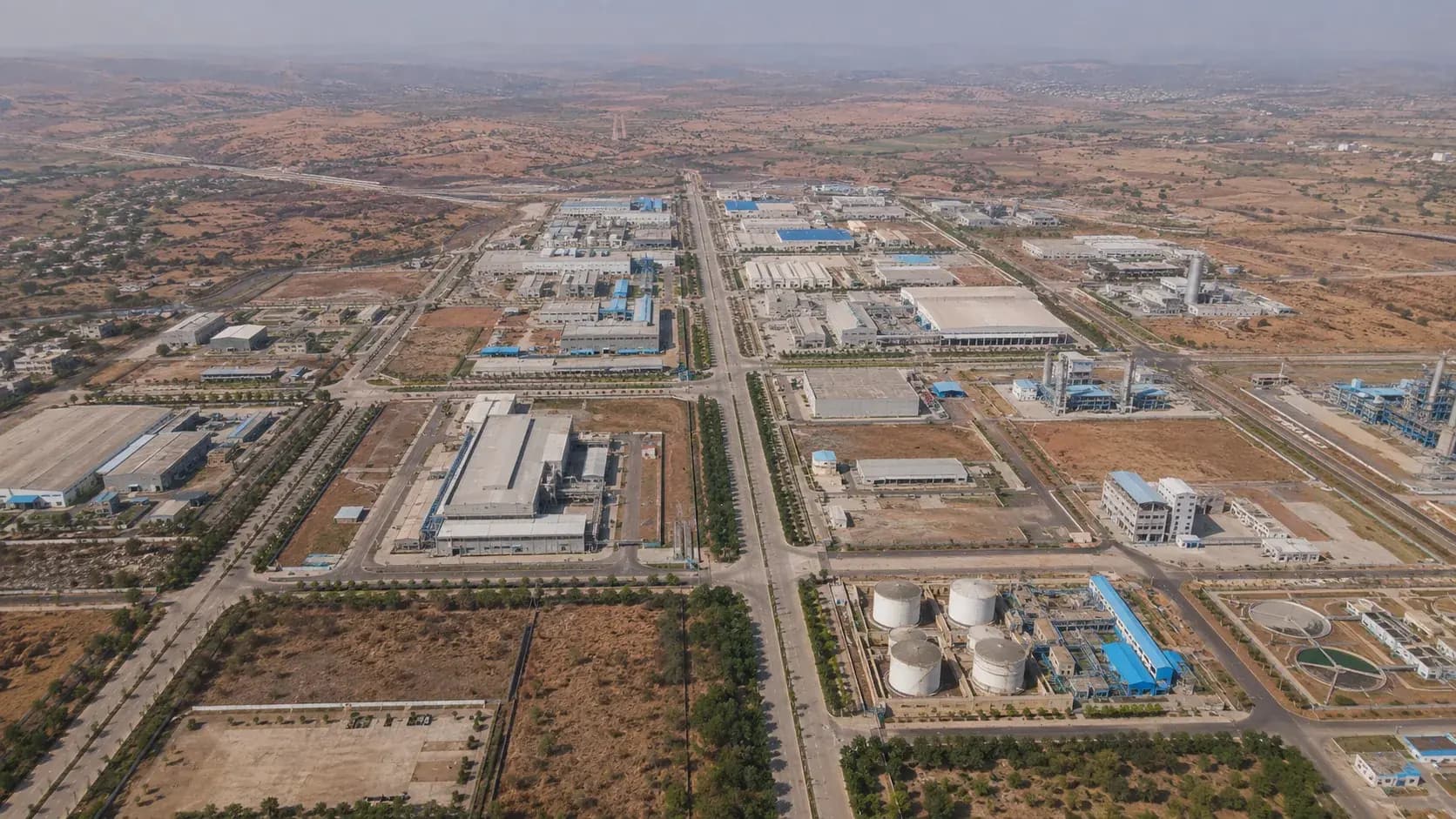
KIPL works at this altitude for estate and corridor authorities, and has carried out environmental compliance audit, Consent to Establish and green certification work across the Shendra and Bidkin nodes of the Delhi-Mumbai Industrial Corridor, covering 4,024 hectares and certified IGBC Gold at city scale. The failure we see is an estate cleared on an optimistic industry mix and then asked to accommodate a tenant outside it, at which point the authority is either refusing an allotment it has commercially committed to, or amending its clearance under time pressure. Getting the declared mix, the water balance and the effluent route right at the outset is what prevents that.
- EIA Notification 2006, item 7(c)
The estate itself is a listed activity
Industrial estates, parks, complexes and special economic zones are screened as projects in their own right, with the category driven by extent and by the categories of industry proposed to be accommodated.
- EIA Notification 2006, item 8(b)
Area development screened separately
Where the node is constituted as a township or area development project, item 8(b) governs, with its own thresholds on site extent and built-up area. Which item applies has to be settled before the file opens.
The clearance sets what tenants inherit
Public consultation exemption for units within an approved estate, the effluent route, the water allocation and the green belt are all inherited by allottees from the node clearance, which makes the clearance an allotment instrument as much as a permission.
What you receive
Written for industrial corridors & midc, not adapted from a template.
- 01Screening of the node against items 7(c) and 8(b), with the applicable item and category settled before filing
- 02Form-1 with the declared industry mix, water balance, effluent route and waste streams for the whole node
- 03Terms of Reference application and appraisal representation for the authority
- 04Area-wide EIA and Environment Management Plan covering trunk infrastructure, common utilities and green belt
- 05Public consultation coordination for the node, including the surrounding villages affected by acquisition
- 06Clearance conditions translated into allotment terms and plot-level obligations for tenants
Questions from industrial corridors & midc
What industrial corridors & midc ask before appointing us.
Answered against the regulation as it stands, not as a sales pitch. If your situation is not here, ask us directly.
Ask a question →Under which item is an industrial corridor node cleared?
Industrial estates, parks, complexes, export processing zones and special economic zones are listed at item 7(c) of the Schedule to the EIA Notification 2006, where the category depends on the extent of the estate and on the categories of industry proposed to be accommodated. Where the node is structured as a township or area development project, item 8(b) applies instead. Which one governs should be settled at screening, because it changes the appraisal route and the study required.
Do individual units inside a cleared estate need their own clearance?
A unit needs clearance in its own right if its activity is itself a listed activity above the applicable threshold. What it gains from being inside an approved industrial estate is that projects located in such estates are among those exempted from public consultation under the Notification, which removes the public hearing stage from the unit's timeline. The unit still needs its own consents and must operate within the estate's declared envelope.
What happens when a prospective tenant falls outside the declared industry mix?
The authority faces a choice between refusing the allotment and amending the node clearance. Neither is quick under commercial pressure. This is why the declared mix, the water balance and the effluent characteristics should be set with realistic headroom at the outset, and why allotment policy needs a screening step that checks a prospective tenant against the clearance before any commitment is given.
Is a public hearing required for the node clearance itself?
For an estate cleared under item 7(c), public consultation applies unless an exemption in the Notification covers it, so an authority should plan for a hearing in the villages affected. Item 8 building and area development projects are among the exempted categories. Where acquisition and resettlement are involved, the hearing is where those issues surface regardless of how the environmental case is presented, so the authority should come prepared on both.
How does the node clearance interact with land acquisition and resettlement?
They are separate processes but they converge in public. Acquisition follows the applicable land law, including the social impact assessment and rehabilitation requirements where the Right to Fair Compensation and Transparency in Land Acquisition, Rehabilitation and Resettlement Act 2013 route is used, or the development authority's own acquisition and direct purchase mechanisms. The environmental public consultation will nevertheless be dominated by acquisition grievances, and an authority that cannot state its position on both loses the room.
How long does an area-wide clearance take?
It is driven by the baseline study, which for a node of any size typically means a full season of monitoring across a large study area, and then by the appraisal calendar and the public consultation schedule. It is measured in seasons rather than weeks. The part that can be compressed is the quality of the initial submission, because incomplete files generate query cycles that add unpredictable months.
Stage by stage
How environment clearance actually runs, step by step.
Also for industrial corridors & midc
The rest of the environmental brief for this sector.
Primary sources
Verify any of this at the source.

Relevant proof
Cyber Square IT Park, Nerul
Category B1 under Schedule 8(b): EIA and EMP prepared and carried through SEIAA appraisal for the expansion at Nerul.
- Built-up
- 2,85,592.45 m²
- EC granted
- 07.10.2026
Where we do this
Environment Clearance for industrial corridors & midc, city by city.
Other sectors
Who else we run environment clearance for.
Next step
Tell us the project, and we will tell you the category and the route.
Screening is the cheapest stage to get right and the most expensive to get wrong. We will say plainly what environment clearance your industrial corridors & midc project needs, and what it does not.





























































Start the conversation