









Sewage Treatment Plants · Industrial Corridors & MIDC
Sewage Treatment Plants for Industrial Corridors and MIDC Nodes
A corridor node builds its sewage infrastructure before the tenants who will load it, which makes staging and reuse, not treatment technology: the decisions that matter.
Screening view on your project, with the category and route named. No obligation.
What this means for industrial corridors & midc
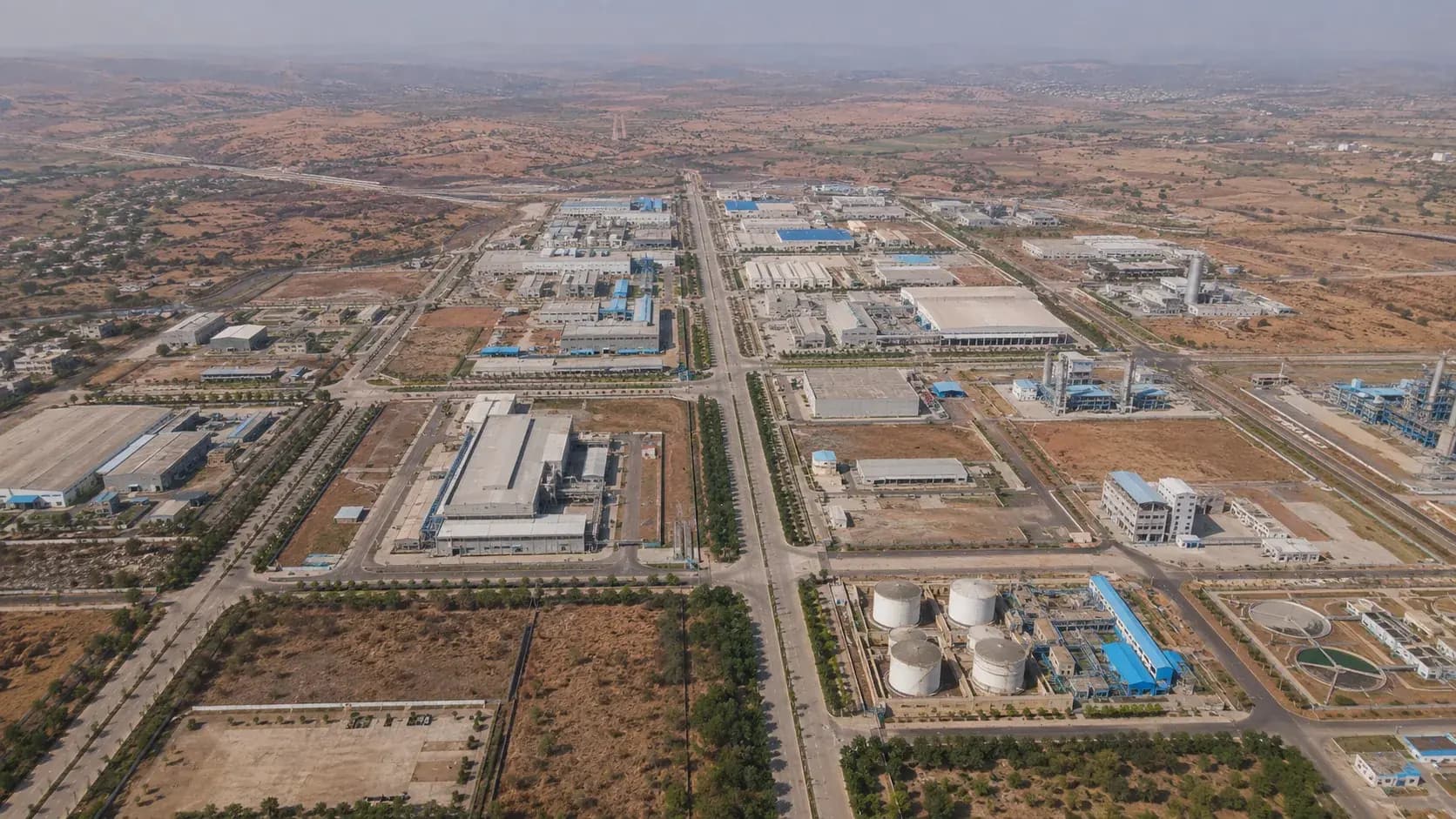
Trunk sewerage at a node is built against projected occupancy that arrives over years, and the practical problem is the opposite of the municipal one: a plant sized for full build-out runs at a fraction of design load for a long time, which is difficult for biological systems and expensive to operate. Meanwhile the treated water is a genuine asset at a greenfield location, because the node has real non-potable demand (green belt irrigation, dust suppression, construction water, and industrial process demand where quality permits) in a setting where fresh water allocation is usually the binding constraint on how many plots can be allotted.
How KIPL runs it
KIPL designs and supports this as part of the node's water balance rather than as an isolated plant, so that the treated volume is counted in the allocation that allottees are promised. The plant holds consent under the Water Act 1974 and the Air Act 1981 in the authority's name, and its performance is part of what the node reports in its clearance compliance. The failure we see is a plant commissioned before the collection network reaches occupied plots, running dry while allottees rely on septic arrangements, with the shortfall recorded against the authority.
Infrastructure precedes demand at a greenfield node
Trunk services are built ahead of allotment, so capacity has to be staged against a projected occupancy curve rather than a known load, and the intermediate years have to work.
Treated water is part of the node's water allocation
Fresh water availability is usually what limits how many plots a node can promise supply to. Reuse converts treated sewage into allocable non-potable capacity for green belt, construction and process demand.
- Water Act 1974 · Air Act 1981
Consent is held by the authority
The node's sewage treatment plant holds Consent to Establish and Consent to Operate in the development authority's name, with outlet conditions and monitoring obligations attached.
What you receive
Written for industrial corridors & midc, not adapted from a template.
- 01Staged capacity plan against the projected occupancy curve, with modular commissioning points
- 02Node water balance integrating treated water reuse into the allocation offered to allottees
- 03Consent to Establish and Consent to Operate applications for the plant in the authority's name
- 04Treated water distribution plan to green belt, construction and non-potable industrial demand
- 05Segregation strategy keeping domestic sewage separate from the industrial effluent stream
- 06Monitoring and reporting protocol feeding the node's half-yearly clearance compliance
Questions from industrial corridors & midc
What industrial corridors & midc ask before appointing us.
Answered against the regulation as it stands, not as a sales pitch. If your situation is not here, ask us directly.
Ask a question →How should node sewage capacity be staged?
In modules matched to a realistic occupancy curve, not to full build-out in one step. A single large plant commissioned early runs far below design load for years, which biological processes handle poorly and which is expensive to operate. Modular capacity with space and connections reserved for later modules is the usual answer.
Does the node's STP need Environment Clearance?
A standalone sewage treatment plant is not itself a listed activity in the Schedule to the EIA Notification 2006, and at a node it is normally assessed as part of the area-wide clearance for the estate. It does need consent under the Water Act 1974 and the Air Act 1981 in the authority's name, and its performance forms part of the node's clearance compliance reporting.
Can treated sewage be supplied to industrial allottees?
Yes, and at water-scarce greenfield locations it is often what makes the water allocation work. It requires treated quality appropriate to the end use, a separate marked distribution network, contractual terms in the allotment on quality and continuity, and monitoring records. Allottees will design their processes around what is contractually assured, so the assurance has to be one the authority can meet.
Should domestic sewage and industrial effluent share infrastructure?
No. They are different problems with different treatment requirements, different consent conditions and different failure consequences, and mixing them compromises both the sewage plant's biology and the common effluent plant's design basis. The separation has to be built into the trunk network layout from the start, because retrofitting a second conveyance network through a developed node is extremely costly.
What happens in the years before the network reaches allottees?
That gap has to be planned rather than discovered. Early allottees left without a connection resort to their own arrangements, which then persist. The workable approach is to sequence network extension with the allotment programme, and to make the connection obligation and its timing explicit in the allotment terms so that both sides know what is assured.
Who is accountable for the plant's compliance record?
The development authority, since it holds the consent as occupier. Operation is normally contracted, but the regulatory position does not move. The operations contract should therefore reproduce the consent conditions, specify sampling frequency and record retention, and give the authority direct access to the operating data rather than a monthly summary.
Stage by stage
How sewage treatment plants actually runs, step by step.
Also for industrial corridors & midc
The rest of the environmental brief for this sector.
Primary sources
Verify any of this at the source.

Relevant proof
NAMAMI GANGE PROGRAMME
Environmental & Social Impact Assessment and EHS reporting for existing and proposed sewage treatment plants on the Ganga.
- Largest existing STP
- 130 MLD
- Assessed
- 5 plants
Where we do this
Sewage Treatment Plants for industrial corridors & midc, city by city.
Other sectors
Who else we run sewage treatment plants for.
Next step
Tell us the project, and we will tell you the category and the route.
Screening is the cheapest stage to get right and the most expensive to get wrong. We will say plainly what sewage treatment plants your industrial corridors & midc project needs, and what it does not.





























































Start the conversation