









Tree Management · Hospitality, Healthcare & Education
Tree Management for Hospital, Hotel and Campus Expansion
Established hospitals, hotels and institutional campuses expand into their own grounds, which means building where mature trees already stand: and that requires enumeration, transplantation assessment and permission from the Tree Authority before any block can start.
Screening view on your project, with the category and route named. No obligation.
What this means for hospitality, healthcare & education
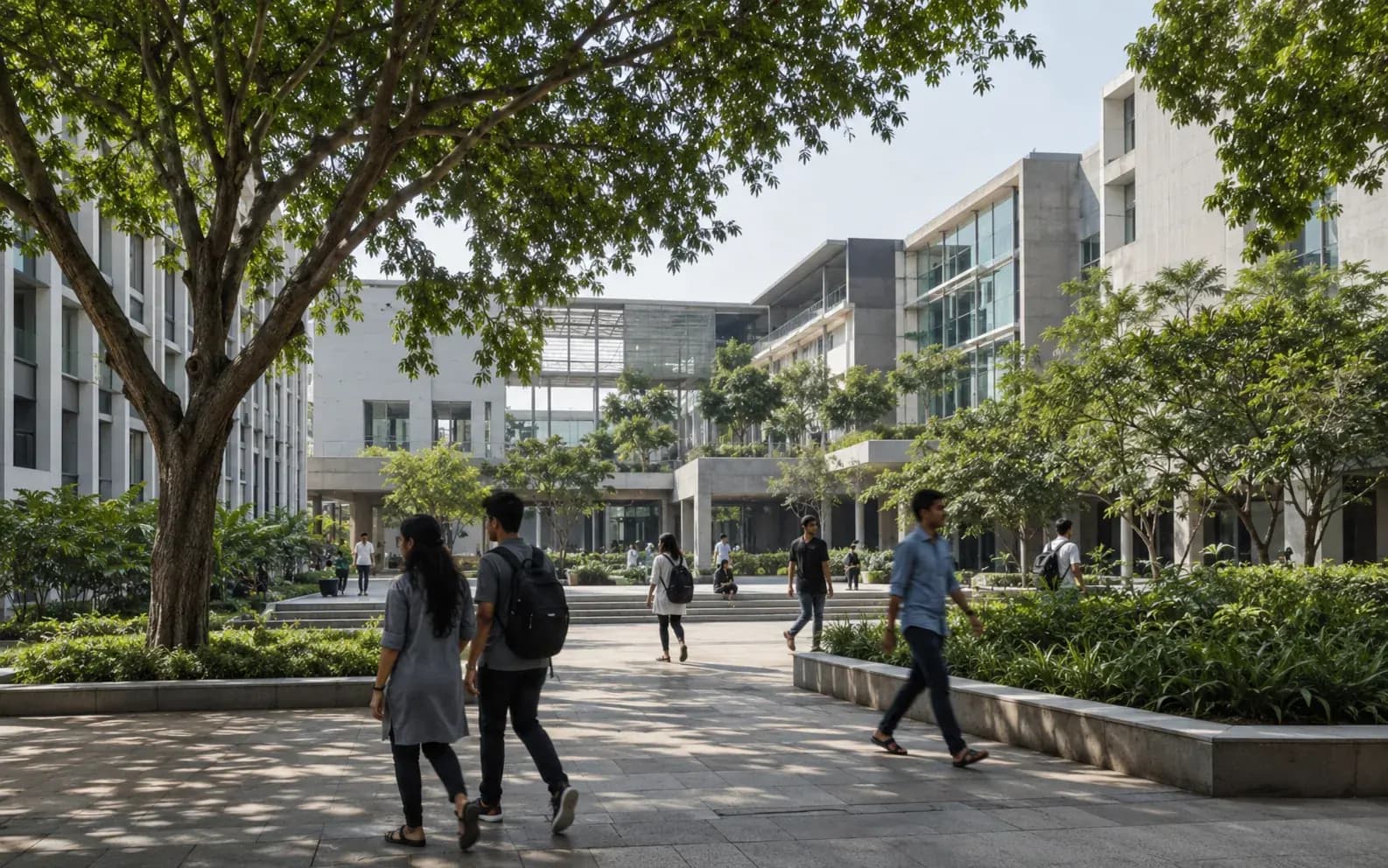
The Maharashtra (Urban Areas) Protection and Preservation of Trees Act 1975 vests control over felling and transplantation in the Tree Authority of the local body, requires permission before any tree is cut, and provides for compensatory plantation; the 2021 amendment added protection for heritage trees, generally trees of a specified age, with a stricter process for anything affecting them. Old institutional campuses are precisely where such trees are found: hospital compounds, school grounds and hotel gardens laid out decades ago and never disturbed. The expansion problem is therefore acute in this sector: the only available land is the campus's own mature grounds, the trees are visible to patients, guests, students and alumni, and the local body's process runs on its own calendar including, for significant applications, public objection procedures that a construction programme has to accommodate.
How KIPL runs it
KIPL enumerates the trees to the standard the Tree Authority expects (species, girth, height, condition and numbered tagging with the position surveyed) and then assesses honestly which can be retained through design adjustment, which are genuinely transplantable given species, age and root condition, and which will have to be felled. That assessment shapes the layout while it can still change, which is where most of the value lies: a block moved a few metres in the design stage often saves the tree that would otherwise generate the objection. We prepare and pursue the application, plan the transplantation with pre-treatment, lifting, receiving-pit preparation and aftercare rather than as a single-day exercise, and set out the compensatory plantation where it will survive. The characteristic failure is a transplantation permission obtained, trees lifted by a contractor with no aftercare obligation, and a survival figure at the next monitoring that satisfies nobody.
- Trees Act 1975
Permission before felling or transplanting
The Tree Authority of the local body must permit any felling or transplantation, with compensatory plantation prescribed and, for significant applications, an objection process.
- Heritage trees
Old campuses hold the oldest trees
The heritage tree provisions apply a stricter process to trees above a specified age, which is exactly what a decades-old hospital or school compound contains.
Expansion happens inside the existing grounds
These campuses grow by building on their own land, so the trees affected are mature, visible and valued by the people the institution serves.
What you receive
Written for hospitality, healthcare & education, not adapted from a template.
- 01Tree enumeration with species, girth, height, condition, numbered tagging and surveyed positions
- 02Retention analysis fed back into the layout while the design can still be adjusted
- 03Transplantation feasibility assessed by species, age and root condition rather than by count
- 04Tree Authority application, fees, objection process handling and the NOC
- 05Transplantation execution with pre-treatment, receiving pit preparation and a defined aftercare period
- 06Compensatory plantation plan, planting and survival records for the authority and for EC compliance
Questions from hospitality, healthcare & education
What hospitality, healthcare & education ask before appointing us.
Answered against the regulation as it stands, not as a sales pitch. If your situation is not here, ask us directly.
Ask a question →Do we need permission to cut trees on our own campus?
Yes. Under the Maharashtra (Urban Areas) Protection and Preservation of Trees Act 1975 the Tree Authority of the local body must permit felling or transplantation regardless of whether the land is privately owned, and cutting without permission attracts penalties. The permission also fixes the compensatory plantation the campus will owe.
What is a heritage tree and does it apply to our grounds?
The 2021 amendment to the Act introduced protection for heritage trees, broadly trees above a specified age, with a stricter approval process for anything affecting them. Old hospital, school and hotel compounds are among the most likely places to find such trees, so the enumeration should establish age and girth carefully rather than treating every tree as routine.
Can mature trees actually be transplanted successfully?
Some can. Success depends on the species, the age and girth, the root condition, the season, and above all on the process: pre-treatment and root pruning ahead of lifting, careful lifting, a properly prepared receiving pit, and irrigation and care through the establishment period. A transplantation carried out as a single day's contractor activity with no aftercare has poor odds, which is why survival, not relocation, is the measure.
How long does Tree Authority permission take?
It runs on the local body's process and meeting calendar, and where the application is significant or involves heritage trees an objection procedure applies, which adds time that cannot be compressed. The practical implication is that enumeration and the application should begin at the design stage, not when the contractor is ready to mobilise.
What compensatory plantation is required?
The Tree Authority prescribes it in the permission, typically as a multiple of the trees removed, with species and location conditions and a survival expectation. Where the campus has no room to plant, the authority may allow planting elsewhere or an alternative arrangement, but that has to be settled in the permission rather than assumed afterwards.
How does this interact with the Environment Clearance?
The clearance carries its own green area and plantation conditions, and the trees on site are part of the baseline the EC file describes. The tree permission, the compensatory plantation and the EC plantation condition should be reconciled into one plantation programme, so the campus is not reporting two different sets of numbers to two authorities.
Stage by stage
How tree management actually runs, step by step.
Also for hospitality, healthcare & education
The rest of the environmental brief for this sector.

Relevant proof
MCGM GARDEN DEVELOPMENT- MIYAWAKI PLANTATION
Miyawaki dense forestation across 27 locations in 7 wards using native species, delivered under the municipal greening programme.
- Area
- ~74,000 m²
- Trees
- ≈1,10,000
- CO₂ (est.)
- 2,052 t
Where we do this
Tree Management for hospitality, healthcare & education, city by city.
Other sectors
Who else we run tree management for.
Next step
Tell us the project, and we will tell you the category and the route.
Screening is the cheapest stage to get right and the most expensive to get wrong. We will say plainly what tree management your hospitality, healthcare & education project needs, and what it does not.





























































Start the conversation