










Green Belt Development for Industries · Mining & Minerals
Green Belt Development for Mines & Mineral Leases
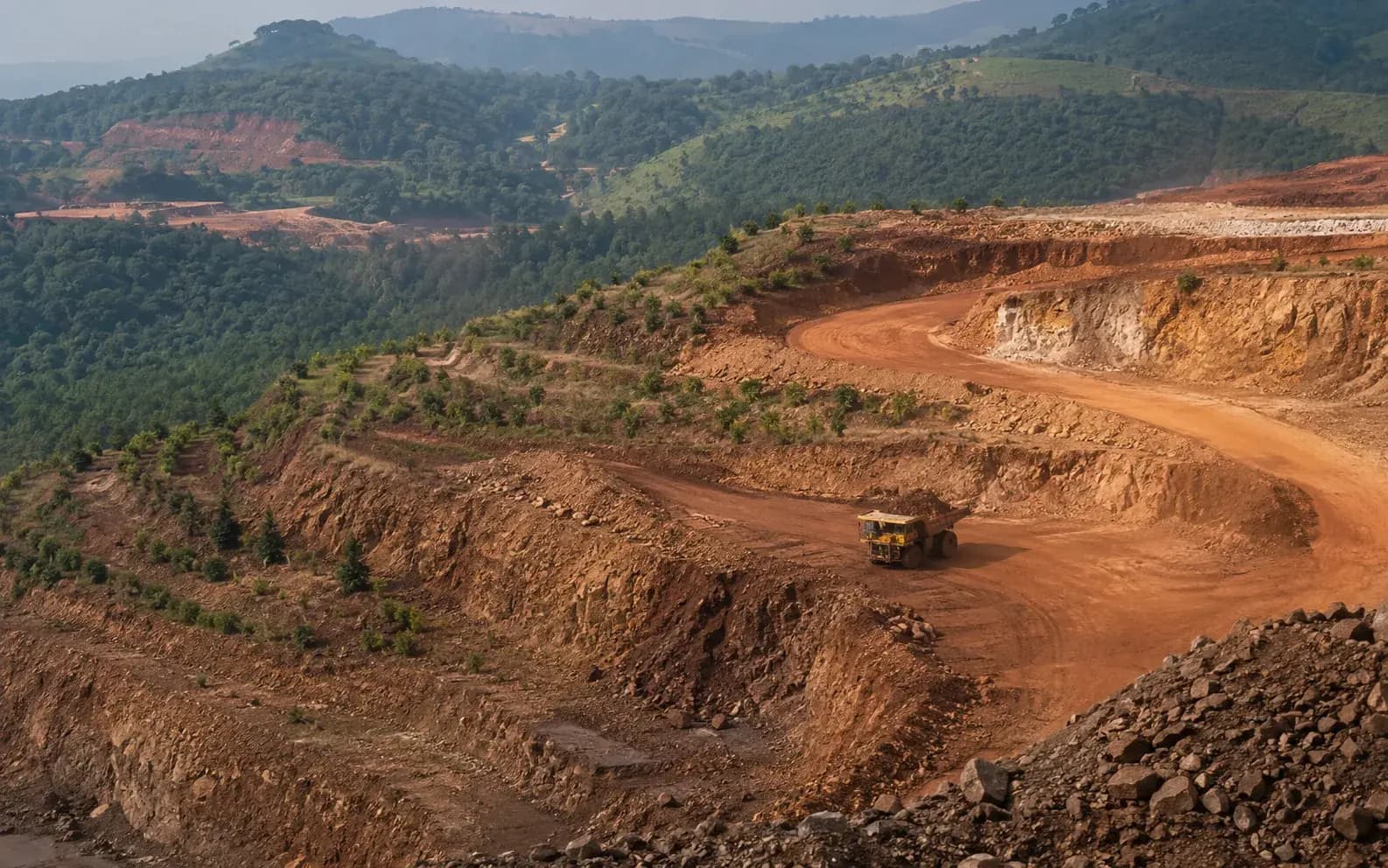
On a mining lease, green belt is not landscaping around a boundary wall: it is safety-zone, dump-face and haul-road plantation written into the mine closure plan, and it is assessed on measured survival because that is what releases the closure obligation.
Sector experience, not sector accreditation. KIPL has delivered work in this sector under an approved project coordinator. It is outside our QCI-NABET accredited scope, and we say so before any appointment.
Screening view on your project, with the category and route named. No obligation.
What this means for mining & minerals
Three separate obligations converge on plantation at a mine. The clearance conditions require a green belt and plantation targets; the progressive mine closure plan commits year-wise reclamation cover on worked-out benches and stabilised dumps; and the safety zone along the lease boundary has to be planted as a physical buffer between the working and everything outside it. The engineering reality makes all three harder than they look on paper. Overburden is not soil (it is coarse, low in organic matter, poor at holding water and often chemically hostile) so unless topsoil was stripped and stacked separately when the mine opened, there is no growing medium, and buying one in at closure is expensive. Dump slopes move until they stabilise, and planting an active face wastes the planting. Haul-road plantation, which is where the dust benefit actually lies, sits on compacted ground that has to be broken and amended before anything will establish. And the measure that counts in the half-yearly compliance report and in any closure assessment is survival after establishment, not the number of saplings a contractor delivered.
How KIPL runs it
KIPL plans mine plantation against the mine plan's own sequence: where a bench is worked out and available this year, where a dump is stabilised enough to plant, where the safety zone runs, and which species will actually establish on that substrate: hardy natives with root systems suited to disturbed, compacted, low-nutrient ground rather than the nursery list. Soil work comes first, because on overburden the amendment decides the outcome more than the species does. Then plantation is executed and monitored for survival with counts that can be reported into compliance and to the closure assessment, and replacement planting is scheduled rather than argued about. This is experience-led work: KIPL's QCI-NABET accreditation covers sectors 5(f), 5(g), 5(j), 8(a) and 8(b), not item 1(a) mining, and mining assignments are coordinated by a QCI-NABET approved mining Project Coordinator. The usual failure is a plantation contract measured in saplings supplied, executed in one monsoon on unprepared overburden, with a survival figure nobody counted and a closure obligation still open years later.
Plantation is a closure obligation, not a gesture
The progressive mine closure plan commits reclamation cover year by year, and that commitment is assessed on the ground before closure obligations and financial assurance are discharged.
The safety zone has to be planted
The zone along the lease boundary is a required buffer between the working and everything outside it, and planting it is the standard way that buffer is made real.
Substrate, not species, decides survival
Overburden and compacted haul-road ground will not support plantation without soil work. Where topsoil was not stacked at the start, that shortfall becomes a closure cost.
What you receive
Written for mining & minerals, not adapted from a template.
- 01Plantation plan sequenced to the mine plan: safety zone, stabilised dump faces, worked-out benches, haul roads
- 02Substrate assessment and soil amendment specification for overburden and compacted ground
- 03Native species selection matched to the substrate, rainfall and end land use
- 04Execution with spacing, pitting, amendment and establishment-phase watering defined
- 05Survival monitoring with counted figures for half-yearly compliance and closure reporting
- 06Replacement planting schedule and linkage to the progressive mine closure plan commitments
Questions from mining & minerals
What mining & minerals ask before appointing us.
Answered against the regulation as it stands, not as a sales pitch. If your situation is not here, ask us directly.
Ask a question →Is KIPL accredited for mining?
No. KIPL's QCI-NABET accreditation covers sectors 5(f), 5(g), 5(j), 8(a) and 8(b); item 1(a) mining is not on the certificate. Plantation and green belt execution is not an accredited activity in any event, NABET accreditation governs who may author an EIA report for appraisal. On mining KIPL works from delivered project experience, coordinated by Dr. Pramod Chaudhari, QCI-NABET approved as a Project Coordinator for mining projects.
Can you plant directly on an overburden dump?
Not successfully, in most cases. Overburden is coarse, low in organic matter and poor at retaining moisture, so plantation on it fails without soil work: spreading stacked topsoil where it exists, or amending the surface layer where it does not. The dump also has to be stable, because planting a face that is still moving wastes the planting and the season.
Why is survival reported rather than the number planted?
Because supply proves nothing about outcome, and on mine substrates the gap between the two is wide. Compliance reporting and closure assessment both look for area actually covered and plants actually established, so a counted survival figure, with replacement planting where it falls short: is the only number that closes the obligation.
Does green belt plantation count towards compensatory afforestation?
No, and conflating the two is a mistake worth avoiding. Compensatory afforestation under the Forest (Conservation) Act is carried out on identified non-forest or degraded forest land transferred to the forest department for the purpose. Plantation inside the lease (safety zone, dumps, haul roads) meets the clearance and closure obligations, and the two are reported to different authorities.
When should mine plantation begin?
As soon as any area becomes available, which for most leases is far earlier than proponents assume: the safety zone can be planted in the first year, haul-road margins as soon as the alignment is fixed, and dump faces as each lift stabilises. Deferring plantation to the closure phase concentrates the whole obligation into the years when the mine has the least revenue and the least equipment on site.
What species work on a mine site?
Hardy natives suited to the local rainfall and to disturbed, compacted, low-nutrient ground, chosen against the intended end land use rather than from a general list. Species selection is site-specific, what establishes on a bauxite plateau is not what establishes on a manganese dump or a river-terrace sand ghat: so the substrate assessment comes before the species list, not after it.
Stage by stage
How green belt development for industries actually runs, step by step.
Also for mining & minerals
The rest of the environmental brief for this sector.
Primary sources
Verify any of this at the source.
Relevant proof
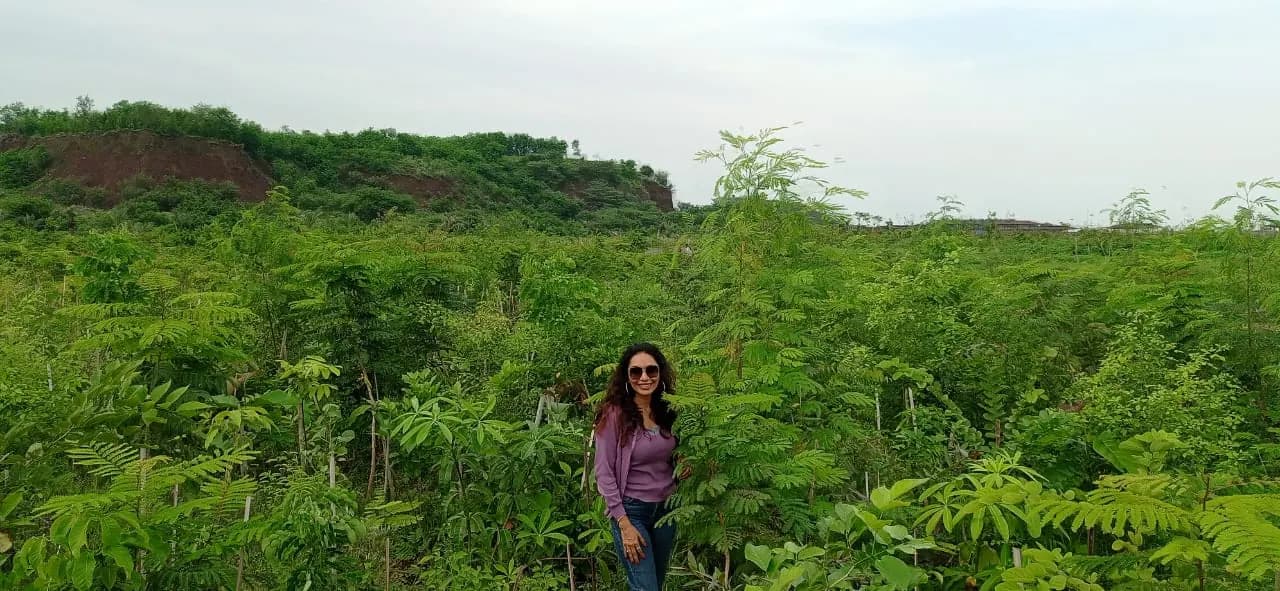
Miyawaki Plantations at Jamnagar and Junagadh
Land preparation, soil treatment, plantation and irrigation delivered phase-wise in four months.
- Area
- 24,000 m²
- Native plants
- 82,000
Where we do this
Green Belt Development for Industries for mining & minerals, city by city.
Other sectors
Who else we run green belt development for industries for.
Next step
Tell us the project, and we will tell you the category and the route.
Screening is the cheapest stage to get right and the most expensive to get wrong. We will say plainly what green belt development for industries your mining & minerals project needs, and what it does not.





























































Start the conversation