









Environmental Audits · Mining & Minerals
Environmental Audits & Due Diligence for Mining Assets
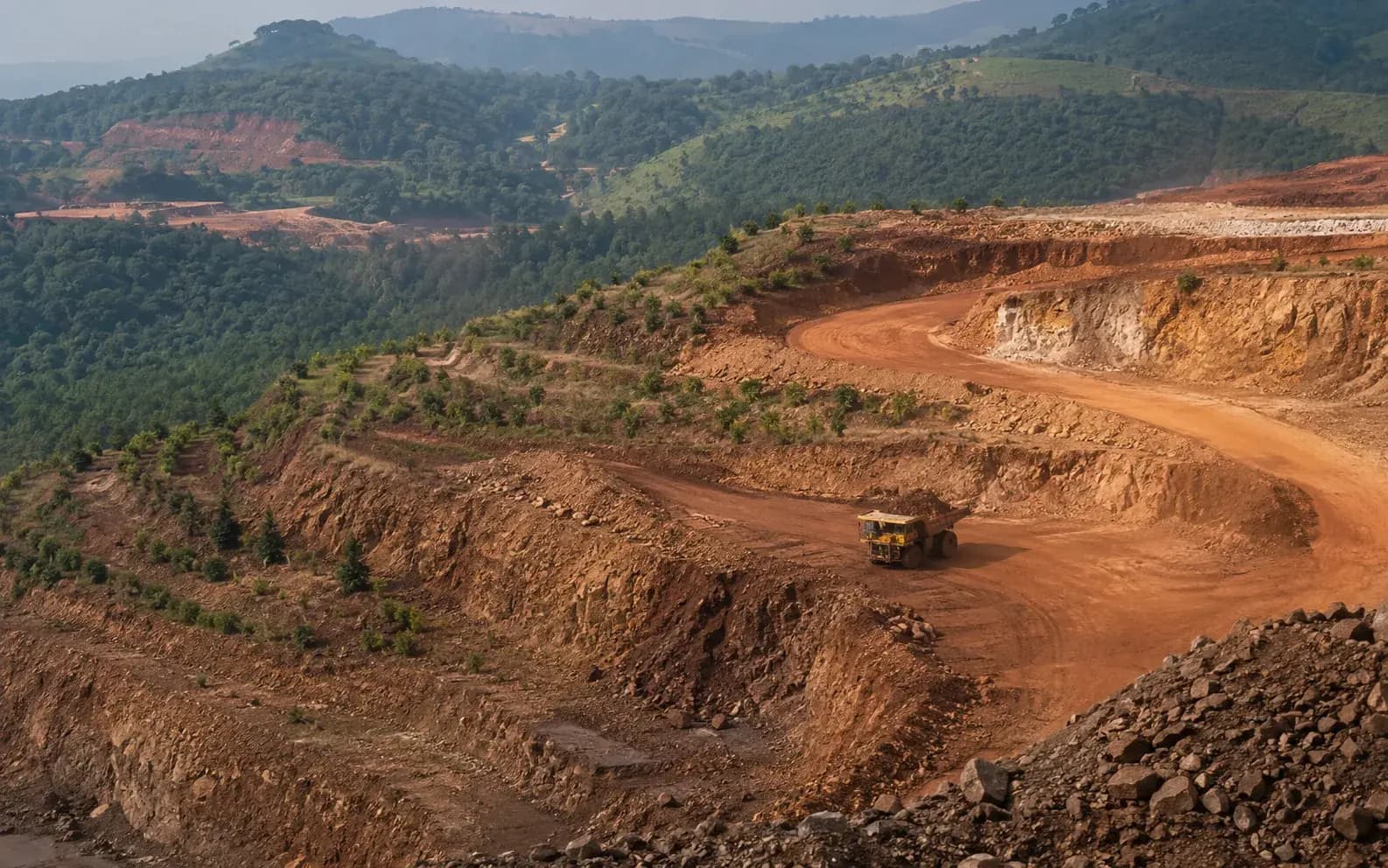
An environmental audit of a mining asset is not a site walk-through: it is a reconciliation of what was despatched against what the clearance, the consent and the approved mine plan permitted, and a valuation of everything left un-reclaimed.
Sector experience, not sector accreditation. KIPL has delivered work in this sector under an approved project coordinator. It is outside our QCI-NABET accredited scope, and we say so before any appointment.
Screening view on your project, with the category and route named. No obligation.
What this means for mining & minerals
Mining assets change hands through lease transfer, corporate acquisition and lender refinancing, and in every one of those the environmental question is quantitative. Production has to be reconciled across four independent records that rarely agree on their own: the capacity capped in the Environment Clearance, the quantity consented by the State Pollution Control Board, the returns filed with the Indian Bureau of Mines, and the royalty and despatch records. Excess over the sanctioned capacity is not a paperwork issue: following the Supreme Court's ruling in Common Cause, mineral won in excess of what the clearances permitted carries a recovery exposure that can exceed the value of the asset. Alongside that sit the standing liabilities a buyer inherits whole: the gap between the reclamation the progressive mine closure plan promised and what has actually been backfilled and vegetated, the financial assurance lodged under the closure rules and whether it is anywhere near the real cost, unremediated dumps and abandoned pits, forest diversion conditions left uncomplied, and pending show-cause notices, tribunal proceedings and environmental compensation demands.
How KIPL runs it
KIPL audits mining assets from the records outward, then tests the records against the ground: a year-by-year production reconciliation, excavated volume and dump volume against the approved mine plan, reclaimed area measured rather than reported, groundwater and ambient data checked for gaps as well as exceedances, and every clearance and consent condition tracked to evidence or marked unevidenced. The output is a red-flag register with each finding costed or, where it cannot honestly be costed, flagged as an open exposure with the information needed to close it. This is experience-led work, KIPL's QCI-NABET accreditation covers sectors 5(f), 5(g), 5(j), 8(a) and 8(b) and not item 1(a) mining, and mining assignments are coordinated by a QCI-NABET approved mining Project Coordinator. What goes wrong in mining diligence is a checklist audit that confirms every certificate exists and never asks whether the tonnage behind them adds up; the liability is almost never in the missing document, it is in the reconciliation nobody did.
Production against sanctioned capacity
EC capacity, consented quantity, IBM returns and royalty records must reconcile. Excess production carries a recovery exposure under the MMDR Act that a buyer inherits with the lease.
- MCDR 2017
Reclamation and closure liability
Progressive closure commitments and the financial assurance lodged against them are rarely aligned with the un-reclaimed area actually on the ground. That gap is the acquisition's real number.
Violation and litigation history
Show-cause notices, environmental compensation demands, tribunal proceedings and uncomplied forest conditions travel with the asset and are frequently absent from the vendor's data room.
What you receive
Written for mining & minerals, not adapted from a template.
- 01Year-wise production reconciliation across EC capacity, consent, IBM returns and despatch records
- 02Excavation and dump volume comparison against the approved mine plan
- 03Reclamation status: area committed in the closure plan against area measurably reclaimed
- 04Financial assurance adequacy against estimated closure cost
- 05Forest, wildlife and clearance condition compliance register with evidence status
- 06Red-flag register with costed liabilities and a condition-transfer list for the lease assignment
Questions from mining & minerals
What mining & minerals ask before appointing us.
Answered against the regulation as it stands, not as a sales pitch. If your situation is not here, ask us directly.
Ask a question →Does KIPL's accreditation cover mining, since this audit is on a mineral lease?
KIPL's QCI-NABET accreditation covers sectors 5(f), 5(g), 5(j), 8(a) and 8(b); item 1(a) mining is not on the certificate. Accreditation governs who may prepare an EIA report for appraisal and does not attach to an environmental audit or due diligence exercise, which has no accreditation requirement. On mining, KIPL works from delivered project experience (GMDC's bauxite leases, the Kawatha manganese mine and district sand ghats) coordinated by Dr. Pramod Chaudhari, QCI-NABET approved as a Project Coordinator for mining projects. We state the position rather than let a buyer assume otherwise.
Why is over-production the first thing you check on a mining asset?
Because it is the largest single environmental exposure a mining lease can carry. Following the Supreme Court's ruling in Common Cause, mineral extracted beyond what the environment and forest clearances permitted attracts recovery of its value, and the demand attaches to the lease. A buyer who has not reconciled tonnage against sanctioned capacity year by year has not priced the asset.
What does reclamation diligence actually involve?
Comparing the progressive mine closure plan's year-wise commitments against the reclaimed area on the ground (backfilled voids, stabilised and vegetated dumps, plantation with measured survival) using survey and imagery rather than the compliance report's own claims. The difference between committed and achieved reclamation, converted into cost, is the liability that transfers.
Is the financial assurance a reliable measure of closure liability?
No. The financial assurance lodged under the closure rules is a prescribed amount, not an estimate of what closing that particular mine will cost. On older leases with large un-reclaimed dumps and deep un-backfilled voids, the real cost can be a multiple of it. We estimate the closure cost independently and report both figures.
How is a lender's diligence different from a buyer's?
A lender is asking whether the asset can keep producing at the rate the cash-flow model assumes, so the focus falls on clearance capacity headroom, consent validity and renewal risk, and any direction that could suspend operations. A buyer is buying the liabilities as well, so reclamation, closure and violation history weigh more heavily. We scope the audit to whichever question is being asked.
Can an audit be done without site access?
A records-based reconciliation can be done from clearances, consents, mine plans, IBM returns and compliance reports, and it will surface most of the quantitative exposure. It cannot verify reclamation, dump stability or the state of the settling ponds and drainage, and it cannot sample. We state clearly in the report what was verified on site and what rests on documents alone.
Stage by stage
How environmental audits actually runs, step by step.
Also for mining & minerals
The rest of the environmental brief for this sector.

Relevant proof
SHENDRA AND BIDKIN INDUSTRIAL AREA, AURANGABAD
Environmental compliance audits, Consent to Establish and green certification support across two industrial nodes of the Delhi-Mumbai Industrial Corridor.
- Shendra + Bidkin
- 4,024 ha
- City scale
- IGBC Gold
Where we do this
Environmental Audits for mining & minerals, city by city.
Other sectors
Who else we run environmental audits for.
Next step
Tell us the project, and we will tell you the category and the route.
Screening is the cheapest stage to get right and the most expensive to get wrong. We will say plainly what environmental audits your mining & minerals project needs, and what it does not.





























































Start the conversation