










Environment Management & Mitigation Plan · Mining & Minerals
Environment Management Plan for Mining Operations
A mining Environment Management Plan is only useful if it runs on the same clock as the mine plan: the same year-wise pit development, the same dump build-up, the same production ramp, with mitigation attached to each stage rather than to the project as a whole.
Sector experience, not sector accreditation. KIPL has delivered work in this sector under an approved project coordinator. It is outside our QCI-NABET accredited scope, and we say so before any appointment.
Screening view on your project, with the category and route named. No obligation.
What this means for mining & minerals
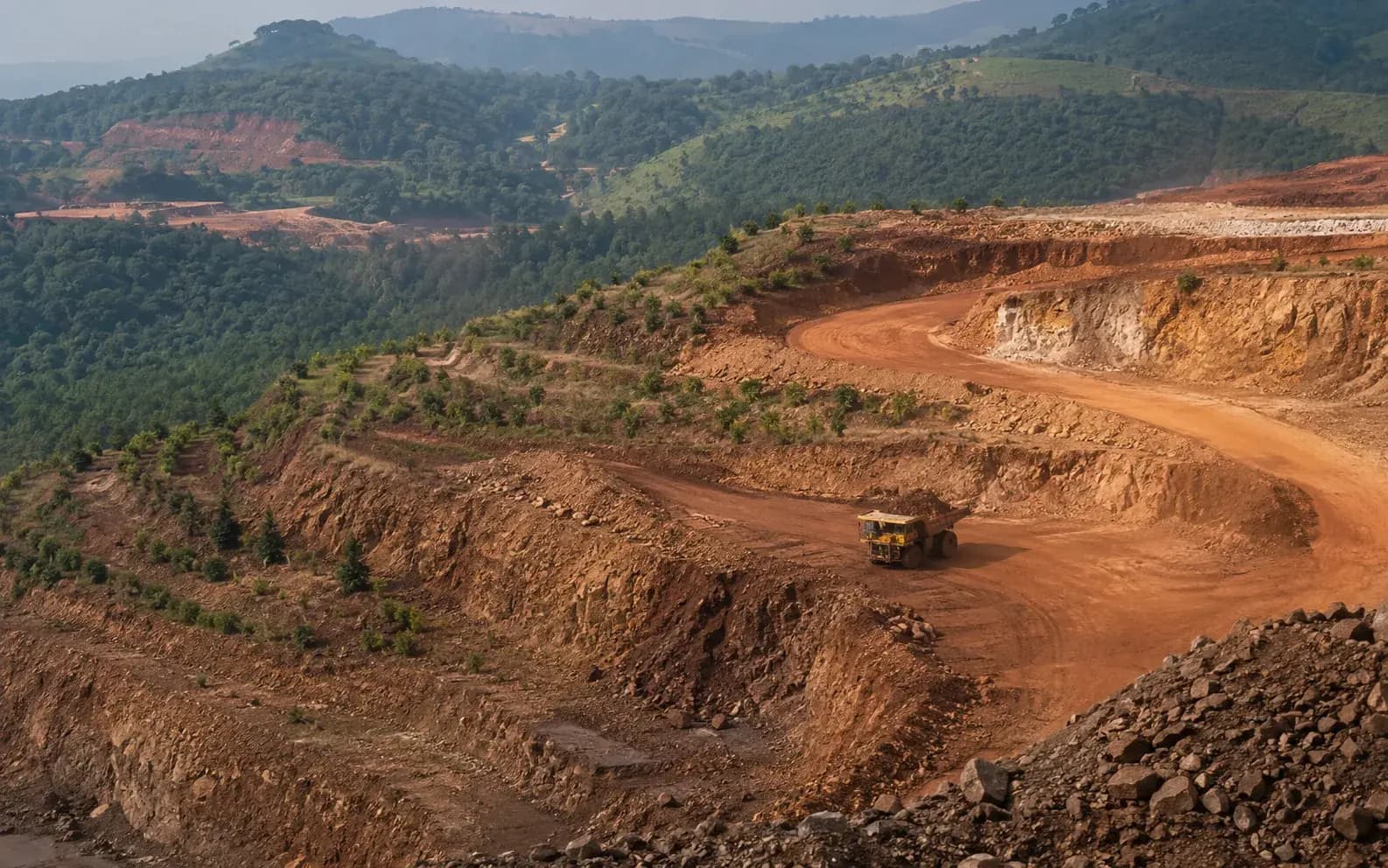
Mining is the one sector where the environmental footprint moves every year. The pit deepens, the working face advances, the overburden dump grows and then stops growing, benches are worked out and become available for reclamation, and the haul route changes as the mine develops. An EMP written as a static list of measures cannot manage any of that. What the appraisal committee and, later, the compliance monitor are looking for is a year-wise plan tied to the approved mine plan: topsoil stripped and stacked separately for reuse rather than buried under overburden; dump geometry (height, terrace width, slope angle) kept within stable limits with garland drains and settling ponds at the toe; progressive reclamation of worked-out benches and backfilling scheduled by year, not deferred to closure; blast design controlled to keep ground vibration within the peak particle velocity limits applicable at the nearest structures, with delay detonators and a fixed blasting window; haul roads watered and surfaced, with dust the single most complained-about impact in every mining village; and groundwater monitored in wells around the pit so the effect of dewatering is measured rather than argued.
How KIPL runs it
KIPL builds the EMP off the IBM-approved mine plan, so the reclamation schedule in the EMP, the year-wise development in the mine plan and the commitments in the progressive mine closure plan state the same thing, three documents that different agencies read and that are very often inconsistent. Each measure carries a location, a frequency, a responsible role and a cost line, because an EMP that cannot be budgeted will not be implemented and an EMP that cannot be audited will not be believed at the half-yearly compliance stage. This is experience-led work: KIPL's QCI-NABET accreditation covers sectors 5(f), 5(g), 5(j), 8(a) and 8(b), not item 1(a) mining, and mining assignments are coordinated by a QCI-NABET approved mining Project Coordinator. The failure mode is familiar: a generic EMP promising plantation and water sprinkling, no year-wise reclamation schedule, and a dump that has grown past its approved geometry because nobody was tracking it against a plan.
- MCDR 2017
The EMP has to agree with the mine plan
Year-wise pit development, dump siting and the progressive mine closure plan are approved by the Indian Bureau of Mines. An EMP that does not match them creates a contradiction on the record.
Dump stability and drainage
Dump height, terrace width and slope angle, with garland drains and settling ponds, are what prevent slope failure and the silt loading of downstream nallahs during the monsoon.
Blasting, vibration and dust
Ground vibration at the nearest structures, air overpressure, and haul-road and crusher dust are the impacts that generate complaints, inspections and stop-work directions.
What you receive
Written for mining & minerals, not adapted from a template.
- 01Year-wise EMP matrix keyed to the approved mine plan's pit and dump development
- 02Topsoil stripping, stacking and reuse plan with volumes
- 03Dump management: geometry, garland drains, settling ponds and stability monitoring
- 04Blast design and vibration control, with monitoring points at the nearest structures
- 05Haul road, crusher and screening dust suppression regime with locations and frequencies
- 06Progressive reclamation and plantation schedule aligned to the mine closure plan, with budgets
Questions from mining & minerals
What mining & minerals ask before appointing us.
Answered against the regulation as it stands, not as a sales pitch. If your situation is not here, ask us directly.
Ask a question →Is KIPL accredited for mining?
No. KIPL's QCI-NABET accreditation covers sectors 5(f), 5(g), 5(j), 8(a) and 8(b); item 1(a) mining is not on the certificate. KIPL has delivered mining experience (EIA work on GMDC's bauxite leases, the Kawatha manganese mine and district sand ghats) coordinated by Dr. Pramod Chaudhari, who is QCI-NABET approved as a Project Coordinator for mining projects. Mining assignments, including EMP work, are undertaken on that basis and are described as experience, not as sector accreditation.
What makes a mining EMP different from an industrial one?
The footprint moves. An industrial EMP manages a fixed plant with fixed emission points; a mining EMP manages a pit that deepens, a dump that grows, benches that become available for reclamation and a haul route that shifts. That is why it has to be written year by year against the approved mine plan rather than as a single list of measures.
How does the EMP relate to the progressive mine closure plan?
They should be two views of the same schedule. The progressive mine closure plan, approved by the Indian Bureau of Mines, commits to reclaiming specified areas in specified years; the EMP is where that reclamation is resourced, sequenced and monitored. When the two disagree, and they frequently do. The inconsistency is picked up at compliance monitoring and at any subsequent lease transfer.
How is blast vibration controlled and demonstrated?
Through blast design (charge per delay, delay detonators, stemming, burden and spacing) and through monitoring at the nearest inhabited structures so that peak particle velocity is recorded rather than asserted. A fixed daily blasting window and prior intimation to nearby villages does as much to reduce complaints as the design itself, and the vibration record is the only defence when a complaint about cracked walls is made.
What is the most under-planned part of a mining EMP?
Topsoil. It is stripped once, at the start, and if it is not stacked separately, protected from erosion and kept for reuse, there is no growing medium for reclamation later and the plantation targets in the closure plan cannot realistically be met. Overburden is not soil, and buying soil in at closure is expensive.
Does the EMP have to be costed?
Yes, and specifically. The environment management budget, capital and recurring, is examined at appraisal and forms part of the commitment the clearance enforces. An EMP whose measures have no cost line attached to them tends not to be implemented, and at the half-yearly compliance stage the absence of spend is easier to notice than the absence of a measure.
Stage by stage
How environment management & mitigation plan actually runs, step by step.
Also for mining & minerals
The rest of the environmental brief for this sector.

Relevant proof
EIA for Synthetic Organic Chemical Industry
CTE/CTO application, ToR application, baseline data collection, EIA report and appraisal before the EAC: Category 5(f), the sector KIPL holds Category A accreditation in.
- Capacity
- 20 → 140 TPM
- 5(f) accredited
- Cat A
Where we do this
Environment Management & Mitigation Plan for mining & minerals, city by city.
Other sectors
Who else we run environment management & mitigation plan for.
Next step
Tell us the project, and we will tell you the category and the route.
Screening is the cheapest stage to get right and the most expensive to get wrong. We will say plainly what environment management & mitigation plan your mining & minerals project needs, and what it does not.





























































Start the conversation