









Post-EC Compliance · Mining & Minerals
Post-EC Compliance for Mining Leases
A mining Environment Clearance caps production, and the half-yearly compliance report is where over-production, reclamation slippage and monitoring gaps become visible to the regulator: usually before they become visible to the board.
Sector experience, not sector accreditation. KIPL has delivered work in this sector under an approved project coordinator. It is outside our QCI-NABET accredited scope, and we say so before any appointment.
Screening view on your project, with the category and route named. No obligation.
What this means for mining & minerals
Every mining clearance carries a production ceiling expressed in tonnes per annum, and almost every condition attached to it is measured against that number. The half-yearly compliance report filed on the Parivesh portal is the instrument through which the Ministry's regional office, the State Pollution Control Board and, on transfer, any acquirer read the mine's behaviour. Four records have to agree: the capacity in the clearance, the quantity in the consent to operate, the returns filed with the Indian Bureau of Mines, and the despatch and royalty figures. When they do not, the divergence is the finding. Beyond tonnage the report has to demonstrate progressive reclamation actually achieved against what the closure plan committed for that period, ambient air and noise data from the stipulated core and buffer stations, groundwater levels in the monitoring wells around the pit, blast vibration records, plantation numbers with survival rather than saplings planted, and evidence of corporate environment responsibility spend against the commitments made at the public hearing. Reporting gaps are treated as adversely as exceedances, because a missing quarter of data cannot be reconstructed.
How KIPL runs it
KIPL runs mining compliance as a data discipline: a condition-by-condition register that names, for every condition in the clearance, the evidence that closes it and who produces that evidence; monitoring scheduled so that no reporting period has a hole in it; and a production reconciliation carried out every half-year rather than assembled the week the report is due. Where a condition cannot be complied with (a reclamation target missed because the pit development ran behind, for instance) the position is stated with the reason and the recovery plan, because a report that quietly omits a condition invites the inspection that a report which explains it does not. This is experience-led work: KIPL's QCI-NABET accreditation covers sectors 5(f), 5(g), 5(j), 8(a) and 8(b), not item 1(a) mining, and mining assignments are coordinated by a QCI-NABET approved mining Project Coordinator. The costly failure is drift: production creeping past the capped capacity across two or three good years, unnoticed until an inspection or a due diligence reconciles the tonnage, by which point the exposure is calculated on the excess mineral, not on the paperwork.
Production is capped, and capped in writing
The clearance fixes tonnes per annum. Extraction beyond it is a violation with recovery exposure attaching to the value of the excess mineral, not a reporting irregularity.
- Half-yearly
Two reports a year, on Parivesh
Compliance reports are filed half-yearly and are the regulator's continuous view of the mine. Missing data for a period cannot be recreated later, so gaps are permanent findings.
Reclamation is measured, not asserted
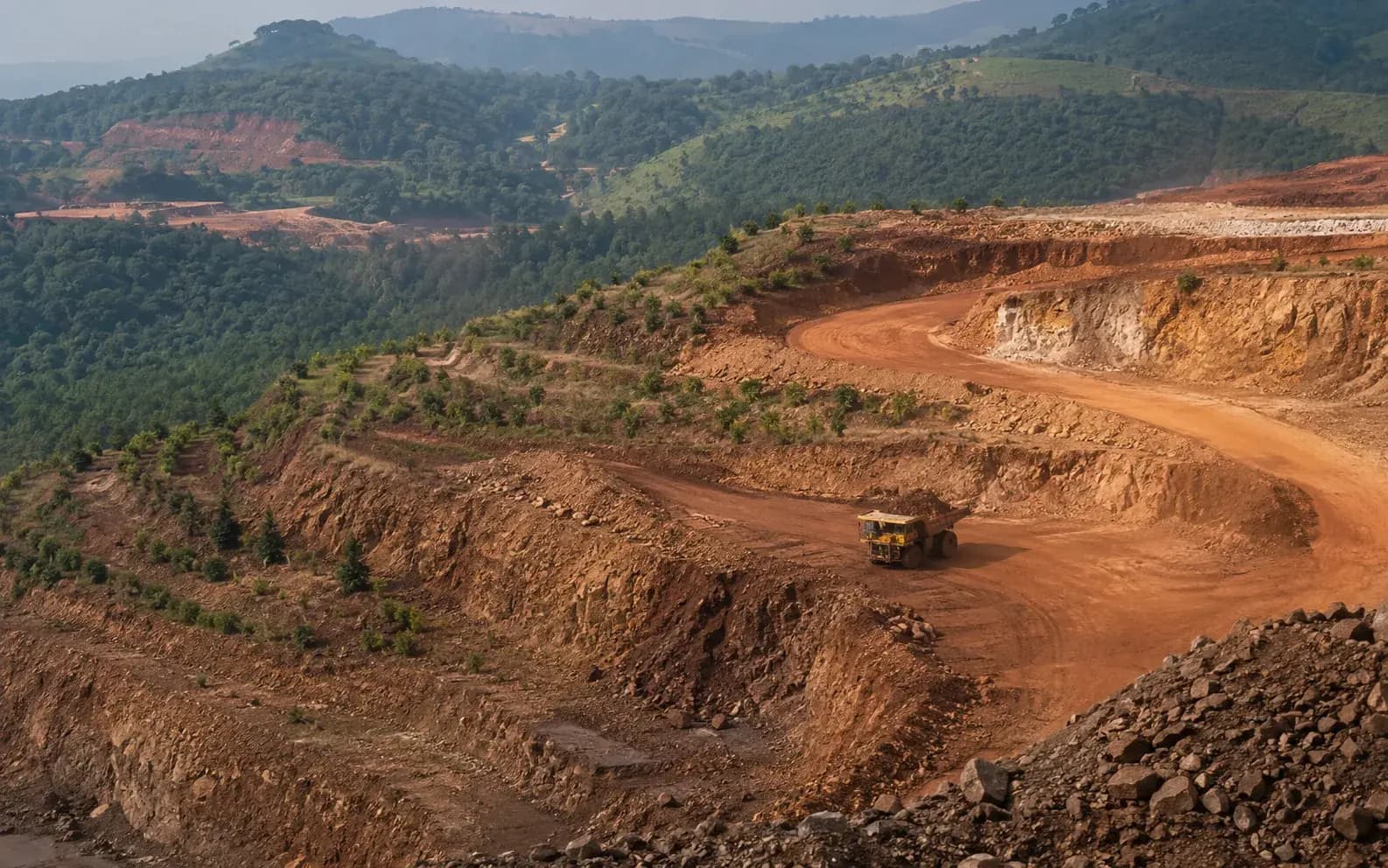
The area reclaimed each year against the progressive closure plan is checked on the ground and by imagery. Slippage compounds, because deferred reclamation is rarely caught up.
What you receive
Written for mining & minerals, not adapted from a template.
- 01Condition-by-condition compliance register mapped to evidence and owner
- 02Half-yearly compliance report filed on Parivesh and published as required
- 03Production reconciliation: EC capacity, consented quantity, IBM returns and despatch records
- 04Reclamation progress against the progressive mine closure plan, with measured areas
- 05Monitoring pack: ambient air, noise, blast vibration, groundwater levels, plantation survival
- 06CER and public-hearing commitment tracker with expenditure evidence
Questions from mining & minerals
What mining & minerals ask before appointing us.
Answered against the regulation as it stands, not as a sales pitch. If your situation is not here, ask us directly.
Ask a question →Does KIPL hold mining accreditation for this work?
No. KIPL's QCI-NABET accreditation covers sectors 5(f), 5(g), 5(j), 8(a) and 8(b), and item 1(a) mining is not on it. NABET accreditation governs who may author an EIA report for appraisal; post-clearance compliance reporting is not an accredited activity. On mining KIPL works from delivered project experience (GMDC's bauxite leases, the Kawatha manganese mine and district sand ghats) coordinated by Dr. Pramod Chaudhari, QCI-NABET approved as a Project Coordinator for mining projects.
What happens if production exceeds the EC capacity?
It is treated as mining without clearance for the excess. The exposure is calculated on the value of the mineral won beyond the permitted capacity, and it attaches to the lease, which is why acquirers reconcile tonnage before they price an asset. The practical answer is to apply for capacity expansion before the ramp, not to report the excess afterwards.
How often must a mining compliance report be filed?
Half-yearly, on the Parivesh portal, and displayed as the clearance requires. Each report covers the preceding six months, which means the monitoring behind it has to be scheduled continuously, a quarter with no ambient data leaves a gap in the record that cannot be filled retrospectively.
Which conditions are checked most closely on a mining clearance?
Production against capacity first, then reclamation against the closure plan, then groundwater, particularly where the mine works near or below the water table. Ambient air at the receptor villages and blast vibration records follow, because those are the conditions local complaints are made under and the regulator will ask for the data that answers a complaint.
Is plantation survival really reported separately from planting?
It should be, and the difference matters. A number of saplings supplied proves nothing; the reportable figure is survival counted after establishment, which on overburden and disturbed ground is far lower than on ordinary soil unless the planting was properly prepared. Reporting supply figures as if they were survival figures is a finding waiting to happen.
Can compliance be brought back on track after a lapse?
Usually, and the sooner it is disclosed the better the position. Where periods of data are missing, monitoring is restarted immediately and the gap is stated with its reason rather than papered over; where reclamation has slipped, a catch-up schedule is agreed and reported against. Regulators respond very differently to a disclosed lapse with a plan than to a discovered one.
Stage by stage
How post-ec compliance actually runs, step by step.
Also for mining & minerals
The rest of the environmental brief for this sector.

Relevant proof
SHENDRA AND BIDKIN INDUSTRIAL AREA, AURANGABAD
Environmental compliance audits, Consent to Establish and green certification support across two industrial nodes of the Delhi-Mumbai Industrial Corridor.
- Shendra + Bidkin
- 4,024 ha
- City scale
- IGBC Gold
Where we do this
Post-EC Compliance for mining & minerals, city by city.
Other sectors
Who else we run post-ec compliance for.
Next step
Tell us the project, and we will tell you the category and the route.
Screening is the cheapest stage to get right and the most expensive to get wrong. We will say plainly what post-ec compliance your mining & minerals project needs, and what it does not.





























































Start the conversation