










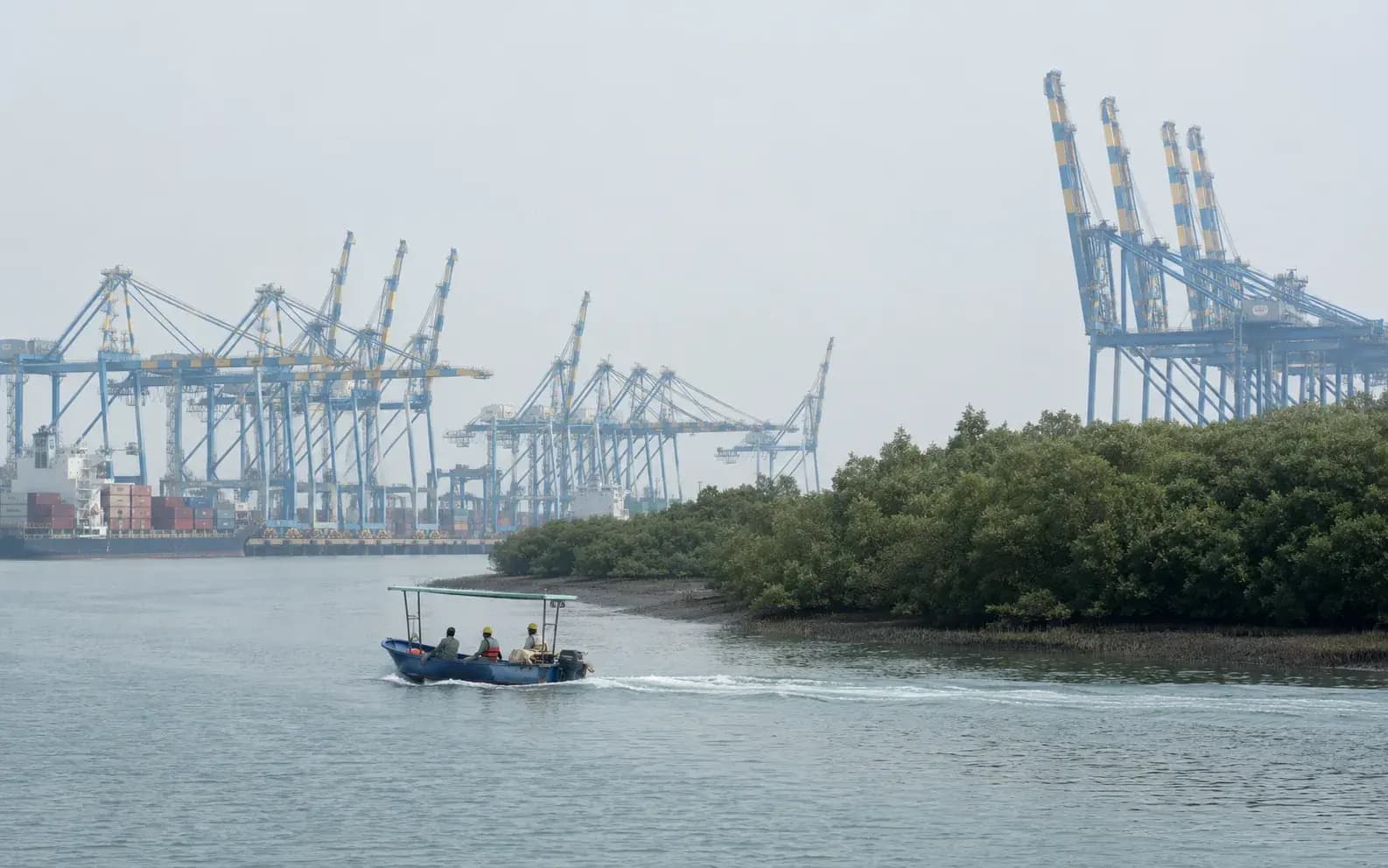
Green Belt Development for Industries · Logistics & Ports
Green Belt Development for Container Yards & Logistics Platforms
The green belt around a container yard or terminal is the clearance's answer to two problems at once: fugitive dust leaving the site, and the residential or gaothan edge on the other side of the boundary that will complain about it.
Screening view on your project, with the category and route named. No obligation.
What this means for logistics & ports
Every Environment Clearance and consent for a logistics or port facility carries a green belt condition, and on this asset type it is one of the few conditions with a physical job to do. A dense, multi-row boundary planting intercepts dust from container movements, from a dry bulk stockyard and from the internal road network before it reaches the plot boundary, breaks the wind that lifts it, and screens a working yard that runs under floodlights at night from the settlement next to it. The difficulty is that a logistics platform is one of the hardest places to establish planting. The ground is made-up fill or reclaimed material, compacted deliberately to carry container stacks and heavy vehicle loads, with negligible organic content and drainage engineered to shed water rather than hold it. On the coast, salt spray and saline groundwater eliminate a large part of the usual species list. And the boundary strip is under constant commercial pressure from pavement, drainage, gate infrastructure, cabling and the temptation to add another stacking row. A green belt that was not protected in the layout at design stage tends to exist as a line on the clearance drawing and a strip of gravel on the ground.
How KIPL runs it
KIPL treats the green belt as a design element rather than a landscaping afterthought: the strip located and dimensioned on the layout before it is frozen, soil replaced to a specified depth rather than planted into compacted fill, drainage provided so the trench does not become either a sump or a wick, and species chosen for salt tolerance and for tolerance of compacted, poor ground, with the multi-row structure that actually intercepts dust rather than a single ornamental avenue. Existing mature trees retained from the site's earlier life are used wherever they can be worked into the boundary, since they deliver screening immediately. Survival is then counted and reported into the half-yearly compliance record, because that is the number the condition is assessed on. On a home coast, the practical experience runs to both ends of this sector, from land-side logistics platforms to waterfront facilities. The failure to avoid is planting a single row of ornamentals into unamended fill after commissioning, losing most of it in the first hot season, and having nothing to report when the neighbouring settlement complains about dust.
The green belt is a clearance condition with a function
Clearance and consent conditions require it, and on a yard handling containers or dry bulk it is the physical barrier between fugitive dust and the plot boundary.
The residential and gaothan edge
Logistics platforms abut settlements that were there first. The belt is the visual and dust screen for a yard working under floodlights at night, and it is what complaints are answered with.
Made-up ground and salt defeat ordinary planting
Compacted fill, engineered drainage and coastal salt exposure kill conventional planting. Soil replacement and species selection decide survival more than maintenance does.
What you receive
Written for logistics & ports, not adapted from a template.
- 01Green belt strip located and dimensioned on the layout before design freeze, protected from pavement encroachment
- 02Soil replacement and drainage specification for planting into compacted fill or reclaimed ground
- 03Salt-tolerant native species matrix with a multi-row structure sized for dust interception
- 04Retention plan for existing mature trees that can be worked into the boundary
- 05Execution with establishment-phase watering and maintenance responsibility assigned
- 06Survival counts formatted for the half-yearly compliance record and consent conditions
Questions from logistics & ports
What logistics & ports ask before appointing us.
Answered against the regulation as it stands, not as a sales pitch. If your situation is not here, ask us directly.
Ask a question →How wide does a green belt have to be at a logistics facility?
The condition in the clearance or consent governs, and it is usually expressed as a proportion of the site area with a boundary belt of a stated width. What matters functionally is that the belt is multi-row and continuous rather than a single ornamental line, because dust interception depends on depth and density. Where the condition and the function differ, we design to the more demanding of the two.
Why does planting fail on container yard boundaries?
Because the ground is engineered to do the opposite of what plants need: compacted fill or reclaimed material with no organic content, drainage designed to shed water quickly, and on the coast salt in both the air and the groundwater. Planting into that without replacing the soil, providing drainage and selecting salt-tolerant species is planting that will not survive its first dry season.
Which species work on a coastal logistics site?
Salt-tolerant natives suited to poor, compacted ground and to the local rainfall, structured in layers so that the belt is dense at low level where dust travels as well as at canopy level. The specific list follows a site assessment rather than a standard palette, because a sheltered inland container depot and an exposed waterfront terminal boundary are different growing environments.
Should existing trees be retained instead of replanting?
Wherever the layout permits it, yes. Mature stock retained from the parcel's earlier life screens and intercepts dust immediately, counts towards the green belt obligation, and avoids both a felling permission and a compensatory planting liability. The retention review belongs in the layout stage, alongside the tree enumeration, not after the platform has been set out.
How is the green belt condition actually assessed?
On area planted and on survival, reported in the half-yearly compliance record and verified on site. A count of saplings supplied proves nothing; what closes the condition is a belt that exists, at the width and density committed, with counted survival and replacement planting where it has fallen short.
When should the green belt be planted?
As early as the layout allows, ideally during construction rather than after commissioning, so that it has a season or two to establish before the yard is operating and before the neighbours have anything to complain about. Planting after handover also means competing for the boundary strip with pavement, drainage and services that have already been built.
Stage by stage
How green belt development for industries actually runs, step by step.
Also for logistics & ports
The rest of the environmental brief for this sector.
Primary sources
Verify any of this at the source.
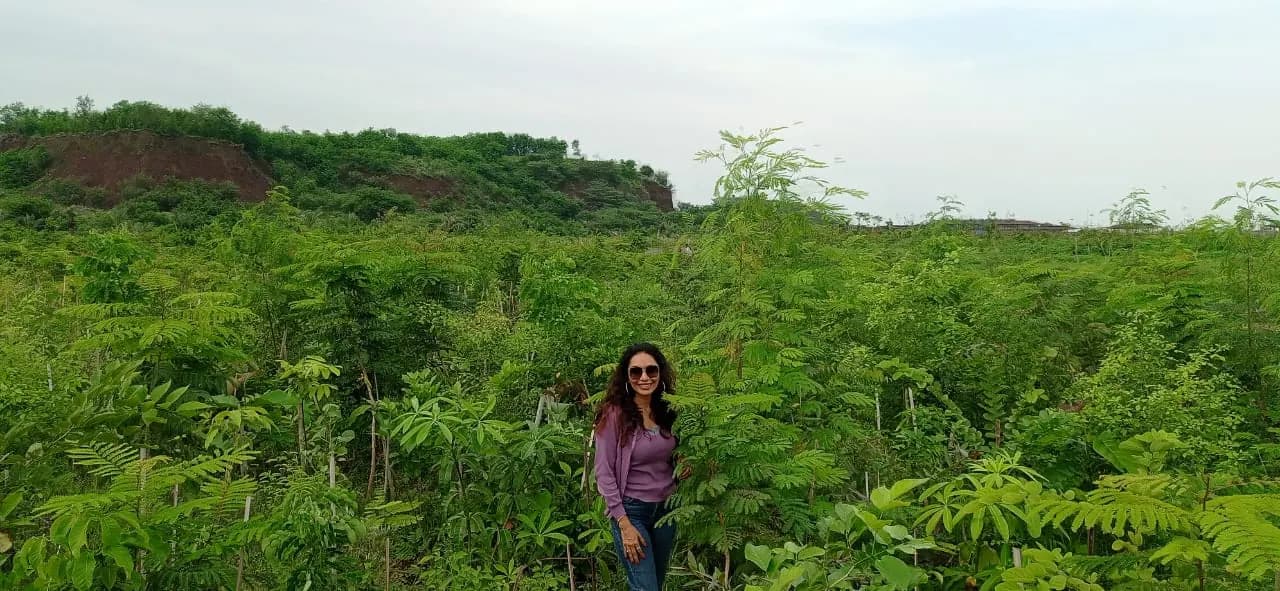
Relevant proof
Miyawaki Plantations at Jamnagar and Junagadh
Land preparation, soil treatment, plantation and irrigation delivered phase-wise in four months.
- Area
- 24,000 m²
- Native plants
- 82,000
Where we do this
Green Belt Development for Industries for logistics & ports, city by city.
Other sectors
Who else we run green belt development for industries for.
Next step
Tell us the project, and we will tell you the category and the route.
Screening is the cheapest stage to get right and the most expensive to get wrong. We will say plainly what green belt development for industries your logistics & ports project needs, and what it does not.





























































Start the conversation