










MPCB Consent · Logistics & Ports
MPCB Consent for Ports, ICDs & Logistics Facilities
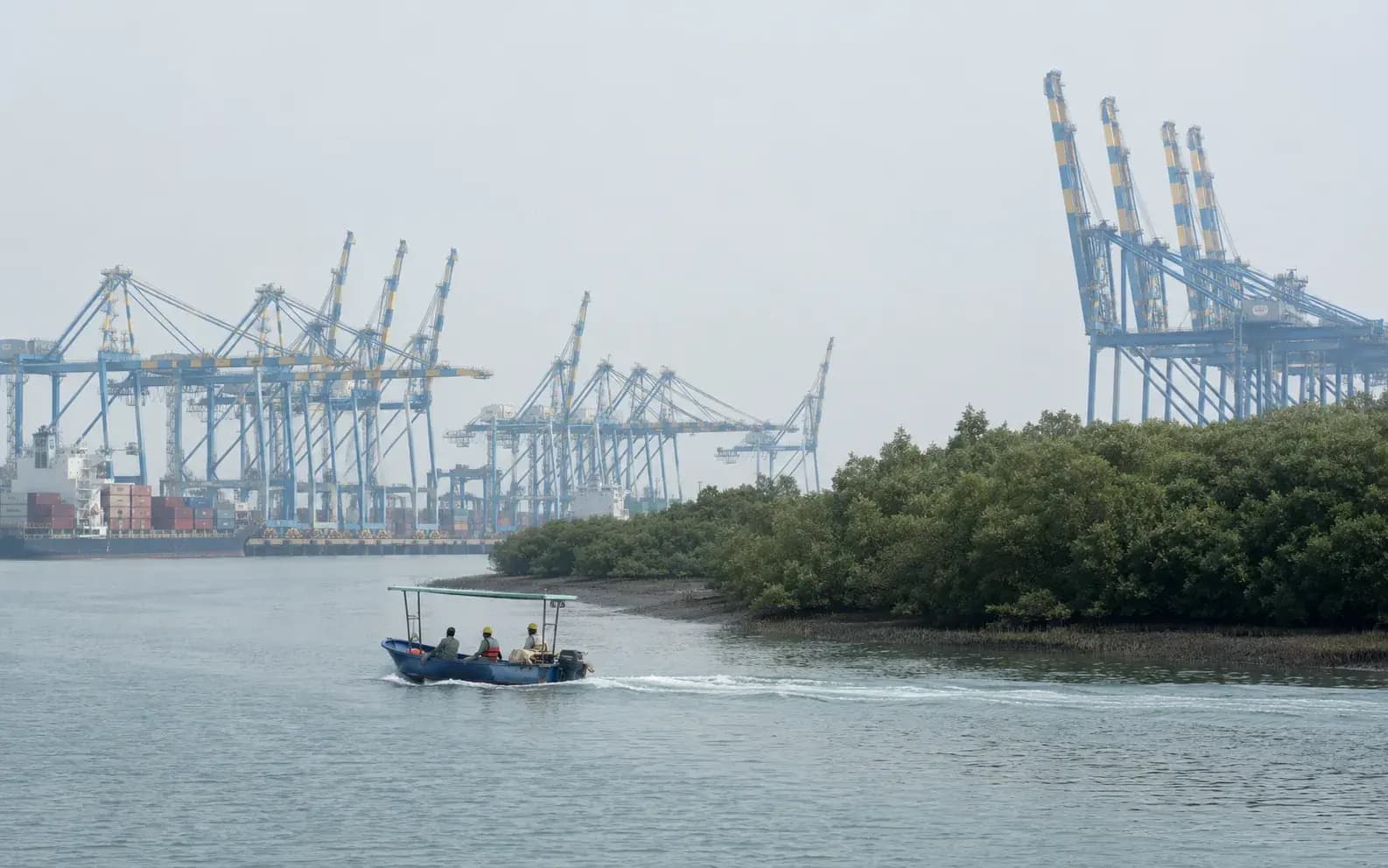
A logistics facility is consented on what actually happens inside the gate (the workshop, the fuel point, the DG sets and the wash bay) and on a waterfront site the bilge and oily washdown water is the stream that decides the application.
Screening view on your project, with the category and route named. No obligation.
What this means for logistics & ports
Consent categorisation for logistics is driven by activity, not by the word on the signboard. A plain distribution warehouse, a container freight station with a repair workshop and a fuel point, and a bulk terminal handling coal or minerals sit in quite different places in the consent regime, and the application has to describe the real operation rather than the property type. The recurring pinch points are all on the water side. Container and vehicle wash bays generate oily, detergent-laden effluent that cannot go to stormwater. Workshops generate used oil, oil filters, contaminated cloth and spill residues, all of which are hazardous wastes requiring an authorisation under the 2016 Rules and disposal through authorised handlers. Fuel dispensing and bulk HSD storage bring their own containment and interception requirements. On a waterfront facility, oily bilge and sludge received from vessels has to go through reception and handling arrangements rather than into the harbour. And across a very large paved and roofed platform, stormwater carries whatever the yard surface carries, which for a dry bulk terminal means cargo residue and for a container yard means oil and rubber.
How KIPL runs it
KIPL prepares logistics consent applications from an activity inventory built on site rather than from a template: every emission point, every effluent stream, every waste category, DG capacity, fuel storage, and the treatment or interception that handles each. Effluent from wash bays and workshops is designed to a treatment scheme and a discharge or reuse route before the application is filed, because the Board's questions on this are predictable and answering them at the query stage costs weeks. Hazardous waste authorisation is applied for with the consent rather than after it, since a facility operating with a consent and no authorisation is a standing finding. For a multi-site operator, consents are then held on a renewal calendar with the consented quantities tracked against actual throughput. The failures we see most often are a consent obtained for a warehouse that never mentions the workshop, a wash bay plumbed to the storm drain, and a consented capacity that no longer matches the throughput after an expansion nobody amended the consent for.
- Water Act 1974
Bilge, wash bay and workshop effluent
Oily washdown water, container and vehicle washing and workshop drainage are consented discharges needing interception and treatment. Routing them to stormwater is the standard violation.
- Air Act 1981
DG sets, cargo dust and fuel handling
Standby generation, dry bulk handling and stockpiles, and fuel dispensing put the facility in the air consent regime with stack, enclosure and suppression conditions.
- HOWM 2016
Hazardous waste authorisation runs with the consent
Used oil, oily sludge, filters and contaminated material from workshops require authorisation and disposal through authorised handlers. Operating without it is a standing finding.
What you receive
Written for logistics & ports, not adapted from a template.
- 01Activity inventory built on site: workshop, wash bay, fuel point, DG sets, cargo and waste streams
- 02Consent to Establish and Consent to Operate with the correct categorisation for the real operation
- 03Effluent scheme for wash bay and workshop drainage, with oil interception and reuse or discharge route
- 04Hazardous waste authorisation under the 2016 Rules, applied with the consent
- 05Stormwater management for the paved platform, with first-flush handling and cargo residue control
- 06Renewal calendar and amendment applications on throughput or activity change, across sites
Questions from logistics & ports
What logistics & ports ask before appointing us.
Answered against the regulation as it stands, not as a sales pitch. If your situation is not here, ask us directly.
Ask a question →Does a plain warehouse need MPCB consent?
It depends entirely on what happens inside it. Storage alone sits very differently in the consent regime to a facility with a repair workshop, a wash bay, bulk fuel storage or standby generation, and the categorisation follows the activity rather than the building type. The safe approach is to inventory the operations first and let that determine the application, because a consent that omits an activity gives no cover for it.
Why is wash bay effluent such a common problem?
Because it is oily, it is generated in volume, and the easiest place to send it is the nearest storm drain, which is a discharge without consent and a straightforward violation. A container or vehicle wash bay needs a bunded, collected drainage system through an oil-water separator to treatment, with the treated water reused for washing or dust suppression wherever possible. Designing it in is cheap; retrofitting it after a Board inspection is not.
Is hazardous waste authorisation separate from the consent?
Yes, it is a distinct authorisation under the Hazardous and Other Wastes (Management and Transboundary Movement) Rules 2016, covering the generation, storage and disposal of used oil, oily sludge, filters, contaminated material and similar streams. A workshop-equipped logistics facility generates these routinely, and holding a valid consent without the authorisation is one of the most frequent findings at inspection and at transaction diligence.
How is cargo dust handled in the consent conditions?
Through enclosure, suppression and containment of the stockpile: covered conveyors and transfer points, water fogging, wind screens, restricted stockpile heights, and paved and swept internal roads with wheel washing at the gate. For a dry bulk terminal these become explicit consent conditions with ambient monitoring at the boundary and at the nearest settlement, because dust is what neighbours complain about and what the Board comes to check.
Does the consent need amending when throughput increases?
Yes, if the increase takes the facility beyond the consented quantities or adds an activity. Consents are granted for stated capacities, and operating above them is a breach even where the physical infrastructure copes easily. This bites hardest on logistics assets, where throughput can rise sharply without any construction at all, and the consent quietly falls out of step with the operation.
How are consents managed across several sites?
On a single register with a renewal calendar, because the failure mode for multi-site operators is not a refused consent but an expired one. Different States, different Boards and different renewal cycles mean no site team keeps the whole picture, so the practical answer is a central calendar with named owners per site and renewal applications started well before expiry.
Stage by stage
How mpcb consent actually runs, step by step.
Also for logistics & ports
The rest of the environmental brief for this sector.
Primary sources
Verify any of this at the source.

Relevant proof
EIA for Synthetic Organic Chemical Industry
CTE/CTO application, ToR application, baseline data collection, EIA report and appraisal before the EAC: Category 5(f), the sector KIPL holds Category A accreditation in.
- Capacity
- 20 → 140 TPM
- 5(f) accredited
- Cat A
Where we do this
MPCB Consent for logistics & ports, city by city.
Other sectors
Who else we run mpcb consent for.
Next step
Tell us the project, and we will tell you the category and the route.
Screening is the cheapest stage to get right and the most expensive to get wrong. We will say plainly what mpcb consent your logistics & ports project needs, and what it does not.





























































Start the conversation