









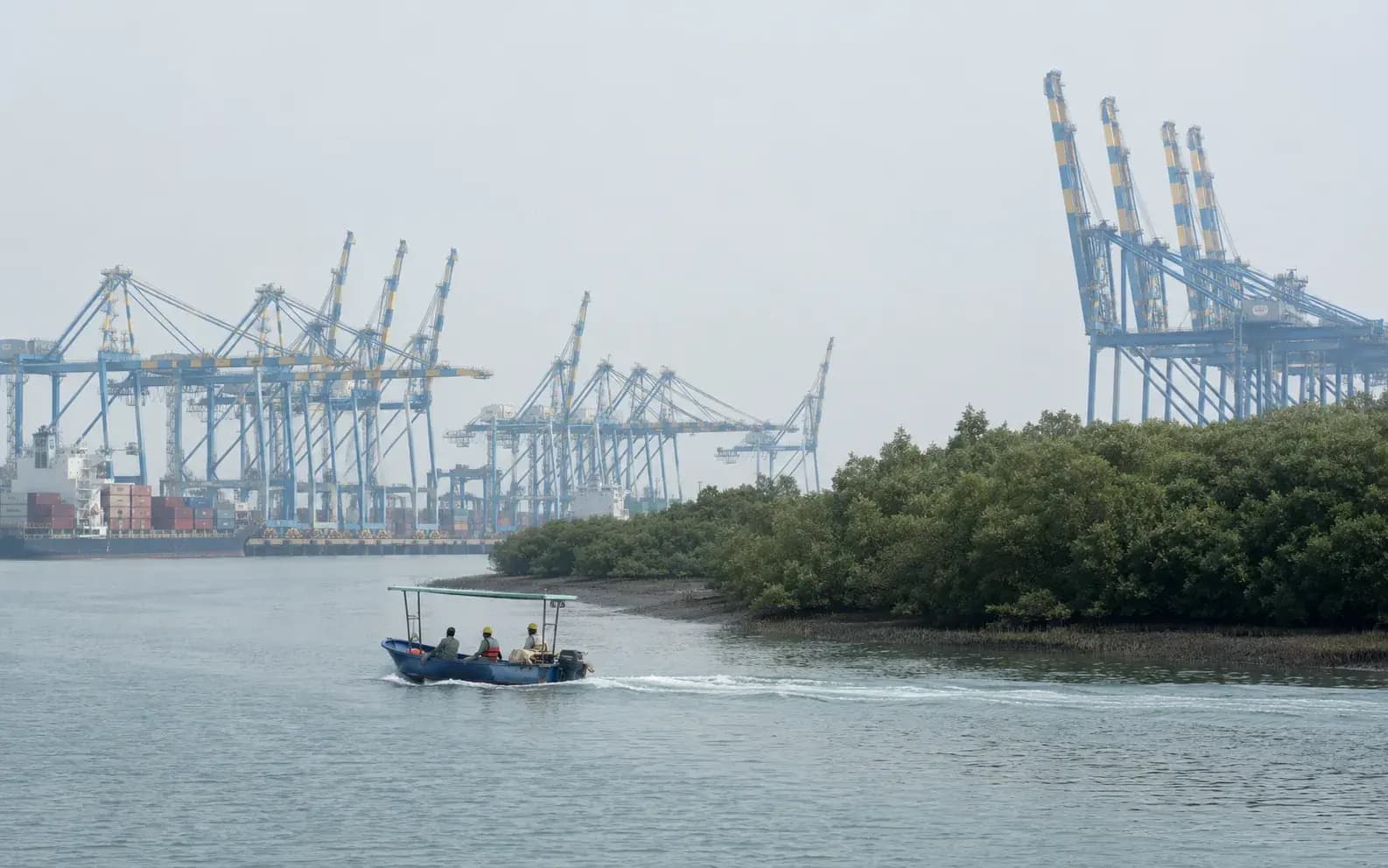
Environmental Audits · Logistics & Ports
Environmental Due Diligence for Warehousing & Port Assets
Warehousing platforms and port assets change hands constantly, and the environmental diligence that matters turns on three things: the CRZ status of every parcel, whether the clearances and consents actually cover what is operating, and what is in the ground under the fuel point and the workshop.
Screening view on your project, with the category and route named. No obligation.
What this means for logistics & ports
Logistics is a portfolio asset class, and portfolios are assembled from parcels with different histories. That makes the coastal question the first one: for each parcel, where does it sit against the approved Coastal Zone Management Plan and the demarcated tide lines, is any part of it inside the no-development zone, and has anything been built there. A shed constructed inside the CRZ without clearance is not a paperwork defect: it is a structure with a demolition risk attached, and it does not become lawful by being sold. Alongside that sits the ordinary compliance reconciliation: is the Environment Clearance valid, does it cover the built-up area actually constructed rather than the area applied for, has it been endorsed on any earlier change of proponent, are the consents current and do their consented quantities match the throughput, is there a hazardous waste authorisation where the workshop needs one, was any tree felled with a Tree Authority permission, and are the half-yearly compliance filings in place. Then the physical layer, which in this sector is specific and predictable: soil and groundwater contamination at fuel dispensing points, bulk HSD tanks, workshop floors, wash bays and oil storage areas, and encroachment or filling towards mangroves and mudflats, which carries both forest and tribunal exposure.
How KIPL runs it
KIPL runs logistics diligence parcel by parcel rather than asset by asset, because a platform assembled from six purchases has six histories and the risk is rarely evenly spread. The coastal overlay is mapped first and the built footprint tested against it; the clearance and consent set is reconciled against what is physically on site and what is being handled; and where the history warrants it, targeted soil and groundwater sampling is done at the fuel, workshop and storage areas rather than a token grid across the whole plot. The output is a red-flag register with each item costed where it can honestly be costed and flagged as an open exposure where it cannot, plus a condition-transfer list: the clearances and consents that need endorsement, amendment or fresh application in the buyer's name, which is the part that most often gets left until after completion and then delays operations.
- CRZ 2019
Coastal status is parcel-specific
Each parcel's position against the approved CZMP and the demarcated tide lines has to be established separately. A structure inside the CRZ without clearance carries demolition risk into the sale.
Clearances must match what is operating
Built-up area constructed against area cleared, consented quantities against actual throughput, and hazardous waste authorisation against the workshop that exists. Divergence is the finding.
Contamination sits where fuel and oil do
Fuel dispensing points, bulk HSD storage, workshop floors and wash bays are where soil and groundwater contamination is found in this sector, and remediation cost is a price adjustment.
What you receive
Written for logistics & ports, not adapted from a template.
- 01Parcel-by-parcel CRZ overlay against the approved CZMP, with the built footprint tested against it
- 02Clearance reconciliation: constructed built-up area against cleared area, and proponent-change endorsements
- 03Consent and hazardous waste authorisation validity against actual activities and throughput
- 04Targeted soil and groundwater sampling at fuel points, workshop, wash bay and storage areas
- 05Mangrove, mudflat and wetland proximity assessment with encroachment and filling exposure
- 06Red-flag register with costed liabilities and a condition-transfer list for completion
Questions from logistics & ports
What logistics & ports ask before appointing us.
Answered against the regulation as it stands, not as a sales pitch. If your situation is not here, ask us directly.
Ask a question →Why does CRZ status come first in logistics diligence?
Because it is the only finding that can render existing built structures unlawful rather than merely non-compliant. A shed, bund or yard constructed inside the Coastal Regulation Zone without clearance carries a regularisation problem and, in the worst case, a demolition risk, and it transfers with the property. Every other environmental defect on a logistics asset can usually be cured with time and money; this one may not be curable at all.
Does an Environment Clearance transfer with the asset?
A clearance attaches to the project, but a change of proponent has to be endorsed by the authority that granted it, and the new proponent takes on the conditions in full, including the compliance reporting history and any unmet commitments. Buyers frequently discover after completion that the endorsement was never applied for, which leaves the operating entity relying on a clearance issued to someone else.
Where is contamination actually found on a logistics site?
In a small number of predictable places: under and around fuel dispensing points and bulk HSD tanks, on and beneath workshop floors, at wash bays and oil interceptors, and where drums or waste oil have been stored on unpaved ground. A sampling programme concentrated on those locations tells a buyer far more than an evenly spaced grid over a large platform, and costs less.
What mangrove exposure can a port or warehousing asset carry?
Filling, bunding or encroachment towards mangroves and mudflats, historic or recent, which in Maharashtra engages both the forest route and the tribunal. The exposure is not limited to what the current owner did: the liability follows the land, and imagery going back several years will show what was there before. Comparing historic satellite imagery against the current boundary is a standard part of the exercise for coastal parcels.
How much can be established without site access?
A great deal: the coastal overlay, the clearance and consent set, the compliance filing history, tree and land-use permissions, and the imagery record. What cannot be established without access is the physical condition: contamination, effluent routing, waste storage, whether the interceptors exist and work. We state clearly in the report which findings rest on documents alone.
What is the condition-transfer list and why does it matter?
It is the list of approvals that need endorsement, amendment or fresh application in the buyer's name before or immediately after completion: clearance endorsement, consent transfer, hazardous waste authorisation, CRZ conditions and monitoring obligations. It is routinely left until after the deal closes, at which point the operating entity is running on approvals held by the seller, which is a weaker position than most buyers realise.
Stage by stage
How environmental audits actually runs, step by step.
Also for logistics & ports
The rest of the environmental brief for this sector.

Relevant proof
SHENDRA AND BIDKIN INDUSTRIAL AREA, AURANGABAD
Environmental compliance audits, Consent to Establish and green certification support across two industrial nodes of the Delhi-Mumbai Industrial Corridor.
- Shendra + Bidkin
- 4,024 ha
- City scale
- IGBC Gold
Where we do this
Environmental Audits for logistics & ports, city by city.
Other sectors
Who else we run environmental audits for.
Next step
Tell us the project, and we will tell you the category and the route.
Screening is the cheapest stage to get right and the most expensive to get wrong. We will say plainly what environmental audits your logistics & ports project needs, and what it does not.





























































Start the conversation