









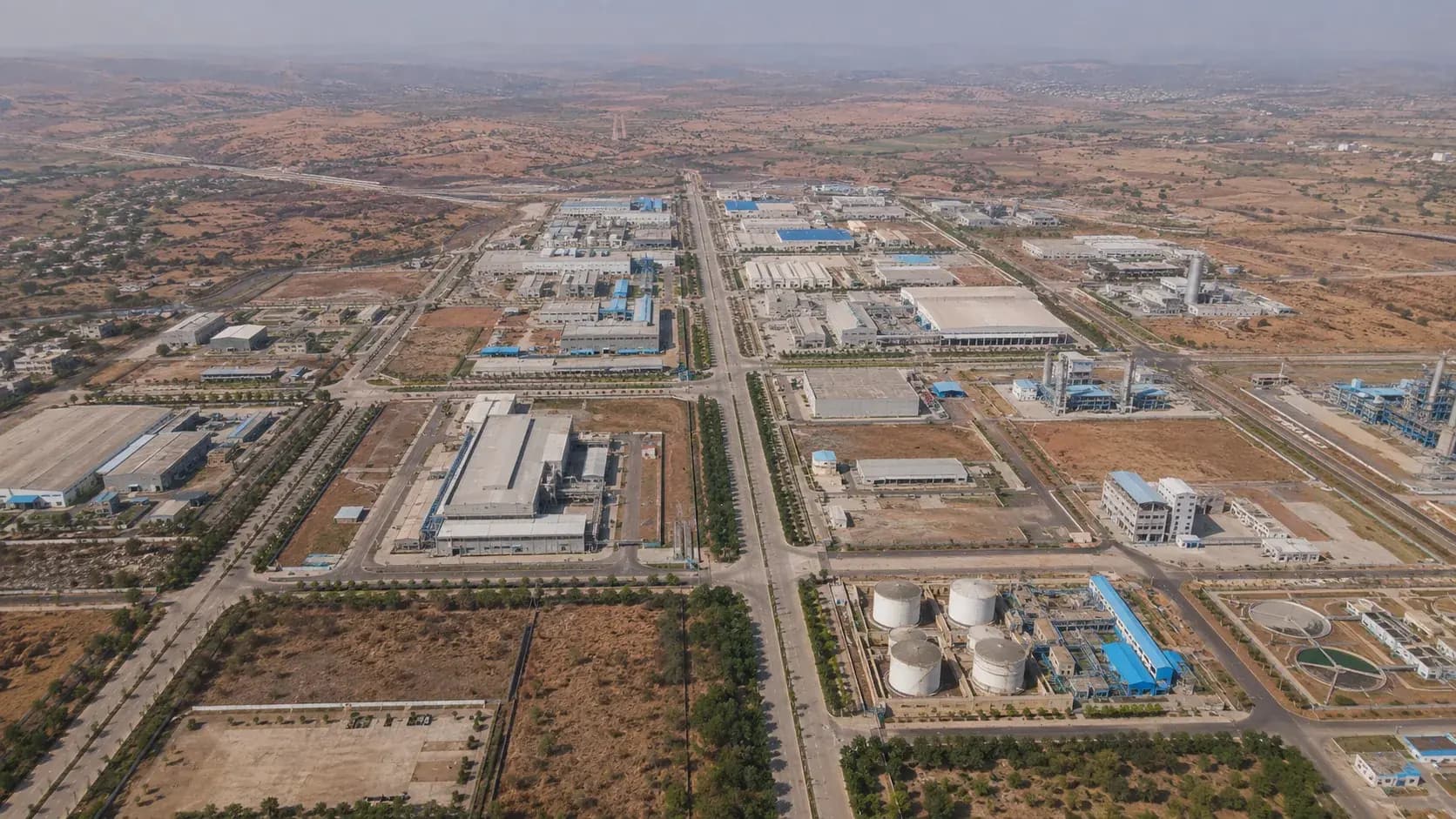
Integrated Solid Waste Management · Industrial Corridors & MIDC
Integrated Solid Waste Management for Industrial Corridors
A corridor node needs its waste infrastructure decided before allotment, because a node that improvises stream by stream ends up with unauthorised accumulation on plots and a boundary problem it cannot trace.
Screening view on your project, with the category and route named. No obligation.
What this means for industrial corridors & midc
A node generates several distinct waste streams under different regimes at once: municipal-type waste from canteens, offices and worker housing under the Solid Waste Management Rules 2016; industrial process waste from tenants; hazardous waste under its own rules routed to authorised treatment, storage and disposal facilities; and construction and demolition debris that is continuous for years while the node builds out. Each has a different legal route, and none of them can be improvised by an individual allottee on a plot without eventually producing accumulation, informal disposal and a boundary finding attributed to the estate.
How KIPL runs it
KIPL plans this at node level, so that the authority provides or contracts the shared elements (collection, segregation, storage, processing for the biodegradable and recyclable fractions, and verified authorised routes for the rest) and writes the corresponding obligations into allotment terms. The pattern at greenfield nodes is predictable: waste infrastructure is deferred as a later-phase item while allotment proceeds, tenants make their own arrangements, and by the time the shared system arrives the practices are established and difficult to displace.
- SWM Rules 2016
Municipal-type waste inside the node
Canteens, offices, worker accommodation and commercial areas generate waste governed by the Solid Waste Management Rules, including the bulk generator obligation on the larger establishments within the node.
Streams under different regimes at once
Industrial process waste, hazardous waste to authorised facilities, and construction and demolition debris each follow separate routes. A single node-level plan is what keeps them from being mixed at source.
Unmanaged waste becomes an estate-level finding
Accumulation on plots and informal disposal at the periphery are read as an estate failure at boundary inspection, whichever tenant caused them.
What you receive
Written for industrial corridors & midc, not adapted from a template.
- 01Node-wide waste stream characterisation across municipal, industrial, hazardous and construction fractions
- 02Shared collection, segregation and storage infrastructure plan sequenced with allotment, not deferred
- 03Processing capacity for the biodegradable and recyclable fractions generated inside the node
- 04Verified authorised routes for hazardous waste and for streams the node will not process itself
- 05Construction and demolition waste plan covering the full build-out period
- 06Allottee waste obligations and reporting drafted into allotment and lease terms
Questions from industrial corridors & midc
What industrial corridors & midc ask before appointing us.
Answered against the regulation as it stands, not as a sales pitch. If your situation is not here, ask us directly.
Ask a question →Do the Solid Waste Management Rules apply inside an industrial node?
Yes, to the municipal-type waste generated there: canteens, offices, commercial areas and worker accommodation. The Rules cover such areas and place duties on waste generators, including the bulk generator obligation to process biodegradable waste on premises where the applicable thresholds are met. Industrial process waste and hazardous waste are governed by their own regimes alongside.
Should the authority provide shared waste infrastructure or leave it to allottees?
Shared infrastructure for the common streams is almost always the better outcome, because it gives economies of scale, keeps segregation consistent and gives the authority visibility of what leaves the node. Leaving it entirely to allottees produces as many arrangements as there are plots, no aggregate record, and informal disposal wherever the arrangement is weakest.
How is hazardous waste handled at node level?
Hazardous waste follows its own regime, with generators required to store it properly, manifest its movement and send it to authorised treatment, storage and disposal facilities or authorised recyclers. The authority's role is to verify at connection that each allottee has those arrangements in place, and to make it an allotment obligation, rather than to handle the waste itself.
What about construction and demolition waste during build-out?
It runs continuously for years at a greenfield node and is usually the largest volume by weight, so it needs a plan of its own: designated storage, processing or authorised disposal, and reuse of inert material within the node where possible. Debris left to individual contractors becomes peripheral dumping, which is highly visible and is attributed to the estate.
When should waste infrastructure be commissioned relative to allotment?
Before or alongside the first occupancy, not as a later phase. Waste practices established in the first years persist, and the arrival of a shared system after tenants have made their own arrangements produces resistance and low utilisation. Sequencing it with the trunk services is what makes it usable.
How does this reach individual allottees?
Through the allotment terms: the obligation to segregate at source, to use the node's collection system for the covered streams, to hold the authorisations their own waste requires, and to report quantities. Without those terms the authority has a system and no way to require anyone to use it.
Stage by stage
How integrated solid waste management actually runs, step by step.
Also for industrial corridors & midc
The rest of the environmental brief for this sector.

Relevant proof
SHENDRA AND BIDKIN INDUSTRIAL AREA, AURANGABAD
Environmental compliance audits, Consent to Establish and green certification support across two industrial nodes of the Delhi-Mumbai Industrial Corridor.
- Shendra + Bidkin
- 4,024 ha
- City scale
- IGBC Gold
Where we do this
Integrated Solid Waste Management for industrial corridors & midc, city by city.
Other sectors
Who else we run integrated solid waste management for.
Next step
Tell us the project, and we will tell you the category and the route.
Screening is the cheapest stage to get right and the most expensive to get wrong. We will say plainly what integrated solid waste management your industrial corridors & midc project needs, and what it does not.





























































Start the conversation