










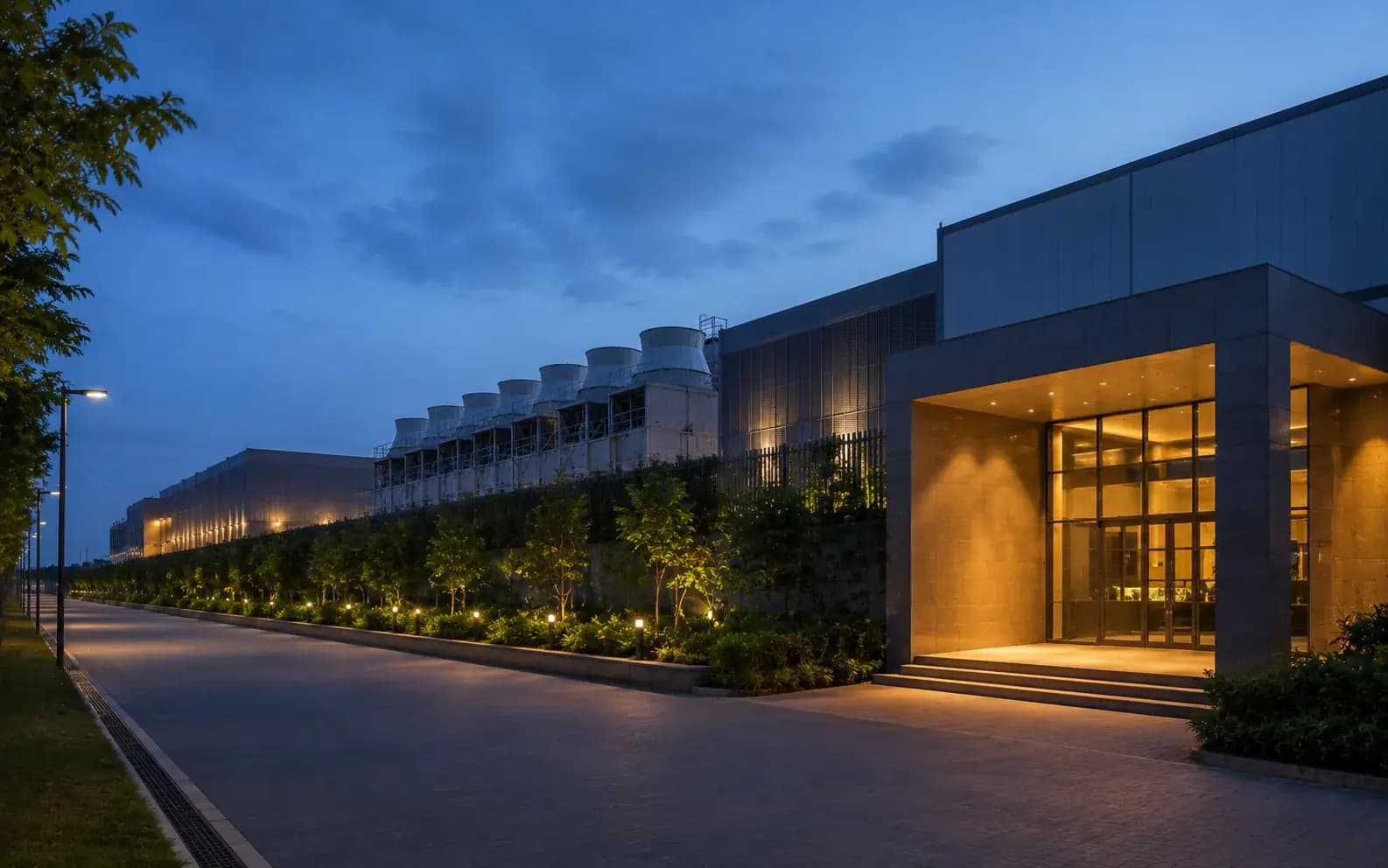
Environment Clearance · Data Centres & IT Parks
Environment Clearance for Data Centres and IT Parks
A hyperscale data hall or an IT park block crossing the item 8(a) built-up threshold requires prior Environment Clearance, and the appraisal turns on cooling water, DG capacity and fuel storage rather than on the number of floors.
Screening view on your project, with the category and route named. No obligation.
What this means for data centres & it parks
Item 8(a) of the Schedule to the EIA Notification 2006 covers building and construction projects at and above 20,000 sq m of built-up area; at and above 1,50,000 sq m the project falls to item 8(b), area development. A single hyperscale hall with its utility yard, and almost any multi-block IT park, crosses one of those lines, so the file goes to the State Environment Impact Assessment Authority on the recommendation of its SEAC. Item 8 projects are exempt from public consultation, which means the clearance is decided entirely on the documents: the water balance, the DG emission case, the fuel storage schedule and the waste plan. Where the parcel sits within an eco-sensitive area or close to a protected area, the General Condition in the Schedule can escalate the category, so siting has to be screened before Form-1 is opened.
How KIPL runs it
KIPL screens the parcel first (eco-sensitive zone, CRZ line, mapped wetland, mangrove buffer) because a data centre discovered to need wildlife or coastal clearance after the EC file is open loses a build season. We then build the file around what the committee actually questions in this sector: an evaporative cooling water balance that separates make-up, blowdown and domestic demand instead of applying IT-park per-capita norms; DG capacity declared at end-state rather than at Phase 1; HSD storage quantities reconciled with the PESO licence; and heat rejection and acoustic mitigation described at the campus boundary. The recurring failure here is a clearance won on a first-phase load, followed by an amendment application the moment the next DG bank and chiller train arrive: an avoidable delay if the end-state capacity is carried in the original file.
- 8(a)
Built-up area, not IT use
The Schedule counts square metres, not the occupancy type. A data hall with modest headcount and an IT park with thousands of seats both trigger at the same threshold.
- General Condition
Siting escalates the file
A parcel inside a notified eco-sensitive zone or close to a protected area can be pulled up in category and will in any case need the wildlife or CRZ route settled alongside.
Capacity arrives in phases
Halls, chillers and DG banks are commissioned in tranches. An EC written to Phase 1 loads has to be amended for every subsequent tranche unless the end-state is declared up front.
What you receive
Written for data centres & it parks, not adapted from a template.
- 01Category screening and siting pre-check against ESZ, CRZ, mangrove and wetland layers
- 02Form-1, Form-1A and Pre-feasibility Report filed on Parivesh
- 03Campus water balance separating cooling make-up, blowdown, domestic and reuse streams
- 04DG capacity schedule with stack height, acoustic enclosure and air dispersion basis
- 05HSD storage and handling plan reconciled with the PESO licence application
- 06EMP covering heat rejection, DG noise at the boundary, e-waste and green belt
Questions from data centres & it parks
What data centres & it parks ask before appointing us.
Answered against the regulation as it stands, not as a sales pitch. If your situation is not here, ask us directly.
Ask a question →Does every data centre need Environment Clearance in India?
Not every one: the trigger is built-up area under item 8(a) of the EIA Notification 2006, not the IT load. A single small edge facility may fall below the threshold, while a hyperscale hall with its utility block, admin and security buildings will usually cross it. The correct first step is a measured built-up area against the Schedule, because the answer decides whether construction can lawfully begin.
Is public consultation required for a data centre EC?
Building and construction projects under item 8 of the Schedule are exempt from public consultation. That removes a public hearing from the timeline but it also means the appraisal rests entirely on the written file, so weaknesses in the water balance or the DG emission case surface as committee queries rather than being argued out in person.
How is cooling water treated in the appraisal?
As the central question. An evaporative or hybrid cooling system consumes water continuously through evaporation and blowdown, and a committee will test whether the declared source can supply it and whether blowdown has a lawful destination. Applying residential or office per-capita norms to a data centre is the most common reason a file is returned for essential details.
Can the clearance cover future phases of the campus?
It can, if the phasing is declared in Form-1 and the impact assessment is built on end-state capacity: total built-up area, total DG kVA, total cooling load and total water demand. Adding capacity beyond what was appraised requires an amendment or a fresh clearance, which is why understating Phase 1 to move faster tends to cost more time overall.
What happens if the site turns out to be near a creek or sanctuary?
The EC is then only one of several approvals. Wildlife clearance through the State and National Boards, CRZ clearance through the coastal zone management authority, or a wetland confirmation may all sit ahead of or alongside it. These are sequential and cannot be compressed, so they are screened before the EC file is opened rather than after.
Who grants the clearance for a data centre in Maharashtra?
For a Category B item 8(a) project the State Environment Impact Assessment Authority grants it, appraising on the recommendation of the State Expert Appraisal Committee, with the file run on the Parivesh portal. Category A projects, or Category B projects escalated by the General Condition, go to the MoEF&CC and its Expert Appraisal Committee instead.
Stage by stage
How environment clearance actually runs, step by step.
Also for data centres & it parks
The rest of the environmental brief for this sector.
Primary sources
Verify any of this at the source.
Relevant proof
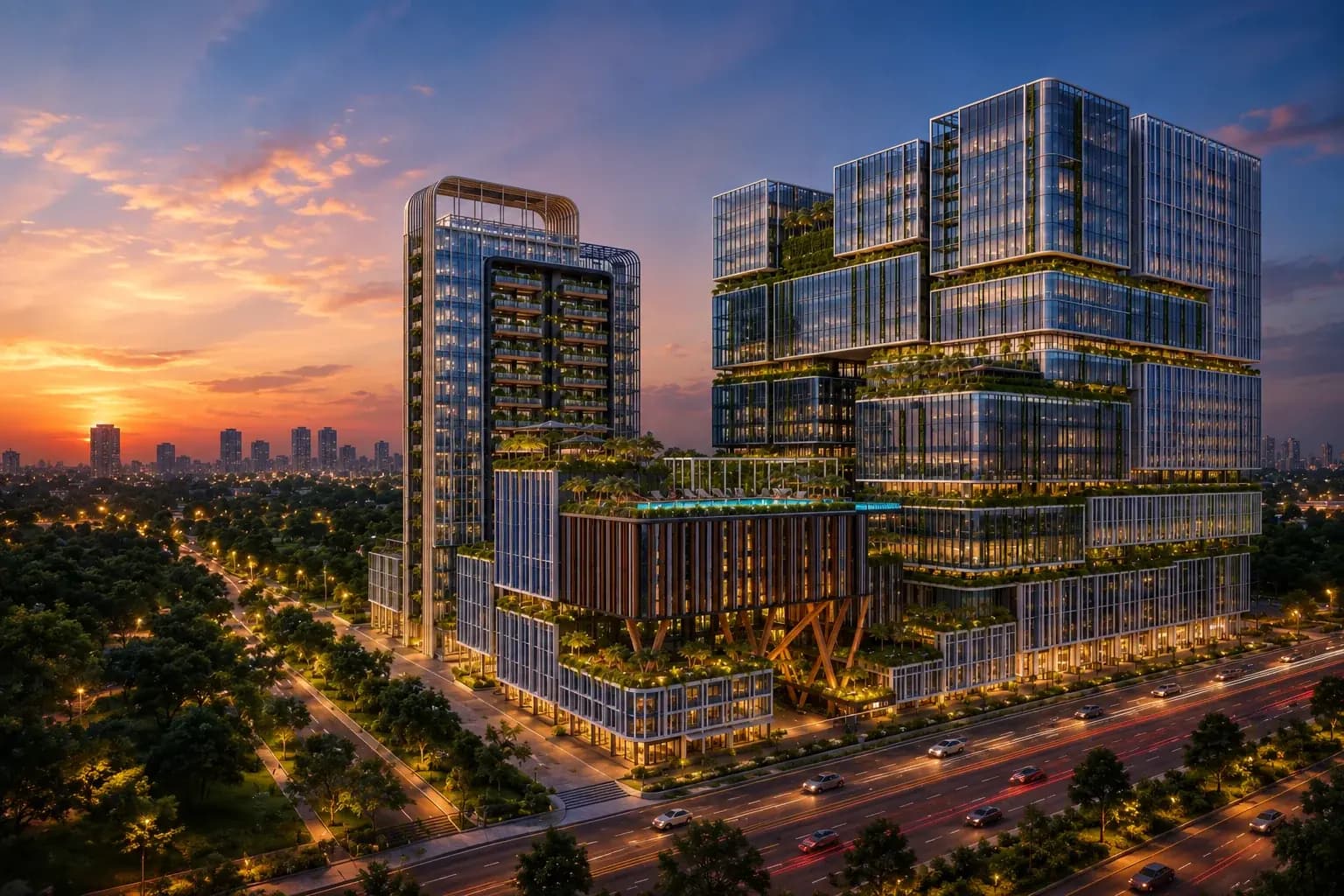
Cyber Square IT Park, Nerul
Category B1 under Schedule 8(b): EIA and EMP prepared and carried through SEIAA appraisal for the expansion at Nerul.
- Built-up
- 2,85,592.45 m²
- EC granted
- 07.10.2026
Where we do this
Environment Clearance for data centres & it parks, city by city.
Other sectors
Who else we run environment clearance for.
Next step
Tell us the project, and we will tell you the category and the route.
Screening is the cheapest stage to get right and the most expensive to get wrong. We will say plainly what environment clearance your data centres & it parks project needs, and what it does not.





























































Start the conversation