









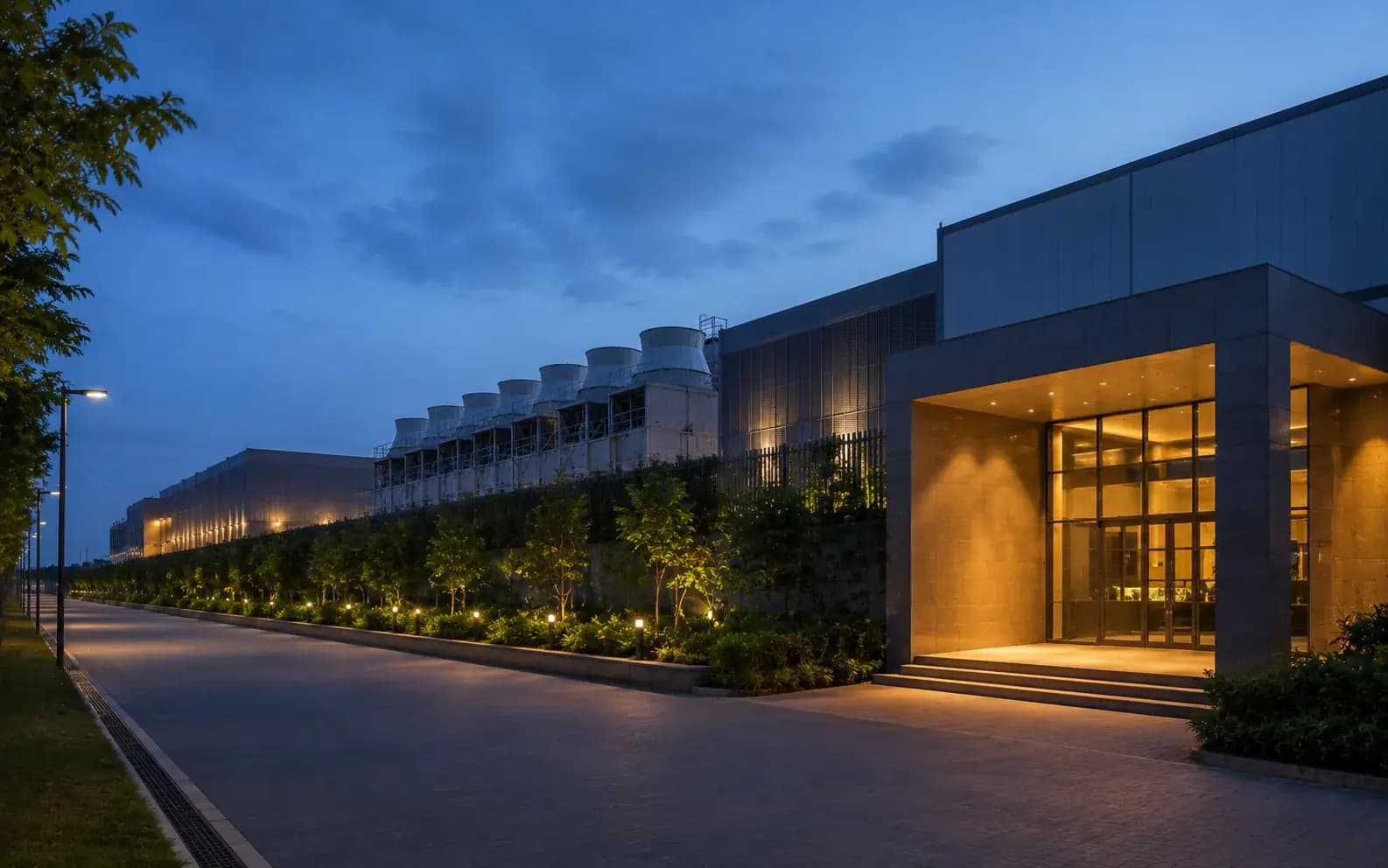
Wildlife Clearance · Data Centres & IT Parks
Wildlife Clearance (SBWL / NBWL) for Data Centres and IT Parks
Data centre and IT park parcels follow power and fibre to creek and coastal edges, which places them inside notified eco-sensitive zones or within the default radius of a protected area, and that requires clearance from the State and National Boards for Wildlife.
Screening view on your project, with the category and route named. No obligation.
What this means for data centres & it parks
Under the Wildlife (Protection) Act 1972, a project inside a national park or sanctuary, or within a notified eco-sensitive zone declared under the Environment (Protection) Act 1986, needs the recommendation of the State Board for Wildlife and then the approval of the Standing Committee of the National Board for Wildlife. Where no ESZ has been notified, the default reference distance from a protected area applies until it is. For this sector the exposure is structural rather than incidental: grid substations, fibre routes and large flat industrial parcels concentrate along creek belts and coastal plains, the Thane Creek and Navi Mumbai corridor being the obvious case, so a site chosen on latency and power economics frequently sits inside a sanctuary's zone of influence.
How KIPL runs it
KIPL prepares the wildlife case with the honest facts of the facility: a continuously lit, continuously running campus with DG testing, cooling-tower plumes and permanent security lighting, adjacent to habitat that is often used by migratory waterbirds. The case has to show what changes at the boundary (lighting spill, noise from DG runs and testing schedules, stormwater and blowdown routing away from the creek, construction-phase silt control) and commit to mitigation the Board can write into conditions. What goes wrong is a proponent treating this as a certificate rather than an appraisal: filing on the EC drawings without a wildlife-specific mitigation package, or starting site works on the strength of a state-level recommendation before the National Board has approved, which puts the whole build at risk.
- WPA 1972
Inside an ESZ or within the default radius
Sites within a notified eco-sensitive zone, or within the default distance of a national park or sanctuary where no ESZ is yet notified, cannot proceed without SBWL recommendation and NBWL approval.
- ESZ Zonal Plan
Zonal Master Plan governs what is permissible
A notified ESZ carries a zonal master plan and a list of prohibited, regulated and permitted activities that constrains built-up area, effluent routing and lighting at the campus boundary.
Locational logic pulls sites to the edge
Power availability, fibre routes and large contiguous parcels sit along creek and coastal belts, so this clearance recurs across the sector rather than being an exception.
What you receive
Written for data centres & it parks, not adapted from a template.
- 01ESZ and protected-area distance screening with the notification and zonal plan applied to the parcel
- 02Wildlife conservation plan addressing lighting spill, DG noise and testing schedules, and stormwater routing
- 03Site-specific proposal for the State Board for Wildlife, with Chief Wildlife Warden coordination
- 04National Board for Wildlife Standing Committee submission and query responses
- 05Habitat and avifaunal baseline appropriate to a creek or wetland-adjoining parcel
- 06Compliance register for the conditions the Board attaches, handed to the operations team
Questions from data centres & it parks
What data centres & it parks ask before appointing us.
Answered against the regulation as it stands, not as a sales pitch. If your situation is not here, ask us directly.
Ask a question →Why do data centres so often need wildlife clearance?
Because of where they can be built. Hyperscale sites need firm grid power, redundant fibre and large flat parcels, and in the Mumbai region those coincide with creek-side and coastal land that lies inside eco-sensitive zones or close to protected areas. The trigger is location under the Wildlife (Protection) Act 1972, not the nature of the IT activity.
What is the sequence: state board or national board first?
The proposal goes through the Chief Wildlife Warden to the State Board for Wildlife, which recommends it, and only then to the Standing Committee of the National Board for Wildlife for approval. Site work should not begin on a state recommendation alone; the National Board approval and its conditions are what permit the project to proceed.
Does an eco-sensitive zone stop a data centre outright?
Not necessarily. An ESZ notification lists prohibited, regulated and permitted activities, and much of what a data centre campus involves falls in the regulated set rather than the prohibited one. What it does is constrain the design (built-up footprint, effluent and stormwater routing, lighting, and often the height and noise profile at the boundary) and those constraints have to be designed in rather than argued away.
How long does NBWL approval take for a campus of this kind?
It runs on the meeting calendar of the State Board and the Standing Committee, not on a fixed clock, and the duration depends on how complete the first submission is, whether a site inspection is called for, and how quickly the Chief Wildlife Warden's report is furnished. A file that answers the habitat and lighting questions on first reading avoids the cycle of deferral that costs the most time.
How does this interact with the Environment Clearance?
They are separate approvals and both are needed. In practice the wildlife route is the longer one and should be started first, because an EC granted for a campus that cannot obtain wildlife clearance is of no use, while conditions imposed by the Board frequently change the layout, lighting and drainage that the EC file describes.
What conditions typically follow for the operating campus?
They commonly address lighting design and spill towards the habitat, noise limits and DG testing hours, prohibition on discharge towards the creek, retention of native vegetation and green belt at the boundary, and periodic reporting. These become live operating obligations for the facilities team, not one-time construction items.
Stage by stage
How wildlife clearance actually runs, step by step.
Also for data centres & it parks
The rest of the environmental brief for this sector.

Relevant proof
MCGM GARDEN DEVELOPMENT- MIYAWAKI PLANTATION
Miyawaki dense forestation across 27 locations in 7 wards using native species, delivered under the municipal greening programme.
- Area
- ~74,000 m²
- Trees
- ≈1,10,000
- CO₂ (est.)
- 2,052 t
Where we do this
Wildlife Clearance for data centres & it parks, city by city.
Other sectors
Who else we run wildlife clearance for.
Next step
Tell us the project, and we will tell you the category and the route.
Screening is the cheapest stage to get right and the most expensive to get wrong. We will say plainly what wildlife clearance your data centres & it parks project needs, and what it does not.





























































Start the conversation