










MPCB Consent · Mining & Minerals
MPCB Consent for Mines, Crushers & Mineral Processing
A mine and its crushing and screening plant sit squarely inside the consent regime under the Air Act 1981 and the Water Act 1974, and the consented quantity granted by the Board becomes a second, independently enforced ceiling on production.
Sector experience, not sector accreditation. KIPL has delivered work in this sector under an approved project coordinator. It is outside our QCI-NABET accredited scope, and we say so before any appointment.
Screening view on your project, with the category and route named. No obligation.
What this means for mining & minerals
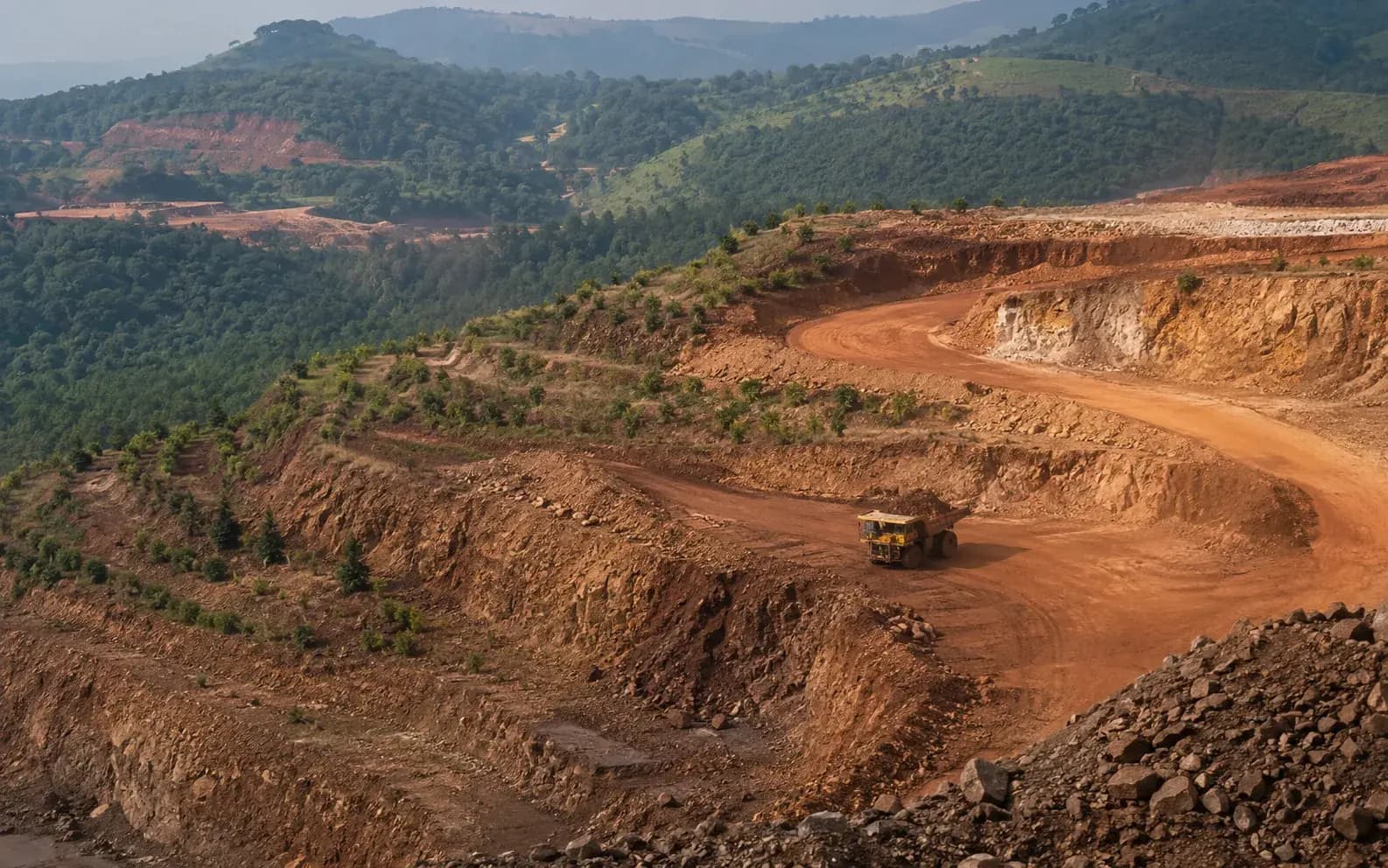
Mining is treated as an air-polluting activity in its own right, and the plant that follows the pit (primary and secondary crushers, screens, conveyors, stockpiles and the loading bay) is what the Board actually categorises and conditions. Consent to Establish precedes development of the lease and the erection of the crushing plant; Consent to Operate precedes despatch. The conditions that bite are specific to mining: a consented production quantity that must match the capacity permitted in the Environment Clearance, because a divergence between the two is the first thing a reconciliation exposes; emission standards and enclosure requirements for crushing and screening, with water sprays at transfer points and stockpiles; siting distances for crushers from habitation and highways under the State's own rules; and, on the water side, mine pit discharge and workshop effluent, which are frequently the forgotten stream. Water pumped out of a pit and released to a nallah is a discharge that needs consent and monitoring, silt loading included, and it is the discharge most often carried out without one.
How KIPL runs it
KIPL prepares mining consent applications so that the numbers in them can be defended against every other document the project has filed: consented quantity against EC capacity and the approved mine plan, water balance covering dust suppression, workshop and dewatering discharge, and an air pollution control scheme that describes the crusher as it will actually be built. Consents are then tracked for renewal on a calendar rather than remembered, because an expired Consent to Operate stops despatch and there is no informal grace. This is experience-led work: KIPL's QCI-NABET accreditation covers sectors 5(f), 5(g), 5(j), 8(a) and 8(b), not item 1(a) mining, and mining assignments are coordinated by a QCI-NABET approved mining Project Coordinator. Two failures recur: a consent obtained for the mine but not for the crusher, which is a separate activity with its own conditions, and a consented quantity set below the clearance capacity so that the mine is in breach of its consent while it is well inside its clearance.
- Air Act 1981
Crushing and screening is a consented activity
Dust from crushers, screens, transfer points, stockpiles and haul roads places the mine and its plant in the consent regime with enclosure, suppression and emission conditions.
- Water Act 1974
Mine water is a discharge
Pit dewatering released to a nallah, workshop effluent and washdown water are discharges requiring consent, quality monitoring and settling before release. This is the stream most often missed.
The consented quantity is a second ceiling
The Board's consented production has to align with the capacity in the Environment Clearance. Where the two differ the lower one governs in practice, and the difference is a standing finding.
What you receive
Written for mining & minerals, not adapted from a template.
- 01Consent to Establish for the lease and the crushing and screening plant
- 02Consent to Operate with consented production reconciled to the EC capacity and the mine plan
- 03Air pollution control scheme for crushers, screens, transfer points and stockpiles
- 04Water balance covering dust suppression, workshop effluent and pit dewatering discharge
- 05Siting and distance compliance for the crushing plant under the applicable State rules
- 06Renewal calendar, amendment applications on capacity change, and Board correspondence handling
Questions from mining & minerals
What mining & minerals ask before appointing us.
Answered against the regulation as it stands, not as a sales pitch. If your situation is not here, ask us directly.
Ask a question →Is KIPL accredited for mining?
No. KIPL's QCI-NABET accreditation covers sectors 5(f), 5(g), 5(j), 8(a) and 8(b); item 1(a) mining is not on the certificate. Consent applications under the Water Act 1974 and the Air Act 1981 are not accredited activities in any case, NABET accreditation governs who may author an EIA report for appraisal. On mining KIPL works from delivered project experience, coordinated by Dr. Pramod Chaudhari, QCI-NABET approved as a Project Coordinator for mining projects.
Does a mine need consent separately from its crusher?
The consent has to cover every activity on the site, and a crushing and screening plant is a distinct activity with its own emission conditions and, in most States, its own siting rules on distance from habitation and highways. A consent obtained for the lease that is silent on the crusher leaves the plant operating without cover, which is a common finding at inspection and at due diligence.
Why must the consented quantity match the EC capacity?
Because both are enforced, independently, by different authorities against the same tonnage. If the consent permits less than the clearance, the mine can be inside its clearance and in breach of its consent at the same time; if it permits more, the consent gives no protection for production beyond the clearance. Aligning the two, and amending both together on any expansion: is the only stable position.
Is pit dewatering discharge covered by the consent?
It should be. Water pumped from the pit and released to a nallah or a water body is a discharge under the Water Act and needs to be consented, settled before release and monitored for silt and quality. It is also the point at which the consent and the groundwater NOC intersect, because the same dewatering is an abstraction question for the Central Ground Water Authority.
What happens when a Consent to Operate expires?
Operation and despatch without a valid Consent to Operate is unlawful, and there is no informal grace period. Renewal applications have to be filed well ahead of expiry, with the monitoring data and compliance evidence the Board will ask for, because a renewal held up for want of data stops the mine as effectively as a refusal.
How is dust actually controlled at a crushing plant?
By enclosure and suppression together: enclosed crusher housings and covered conveyors, water sprays at every transfer point, controlled stockpile heights with wind screens, and metalled, watered internal roads. Haul-road dust outside the plant is handled separately through surfacing, water tankers and speed control, and it is the one that generates village complaints regardless of what the plant is doing.
Stage by stage
How mpcb consent actually runs, step by step.
Also for mining & minerals
The rest of the environmental brief for this sector.
Primary sources
Verify any of this at the source.

Relevant proof
EIA for Synthetic Organic Chemical Industry
CTE/CTO application, ToR application, baseline data collection, EIA report and appraisal before the EAC: Category 5(f), the sector KIPL holds Category A accreditation in.
- Capacity
- 20 → 140 TPM
- 5(f) accredited
- Cat A
Where we do this
MPCB Consent for mining & minerals, city by city.
Other sectors
Who else we run mpcb consent for.
Next step
Tell us the project, and we will tell you the category and the route.
Screening is the cheapest stage to get right and the most expensive to get wrong. We will say plainly what mpcb consent your mining & minerals project needs, and what it does not.





























































Start the conversation