









Miyawaki Urban Dense Forestation · Industrial & Manufacturing
Miyawaki Dense Forestation for MIDC Industrial Plots
On a tight MIDC plot where built-up area, roads and storage leave no room for a conventional green belt, dense native planting reaches far more canopy and countable tree cover per square metre than a single row of avenue trees ever will.
Screening view on your project, with the category and route named. No obligation.
What this means for industrial & manufacturing
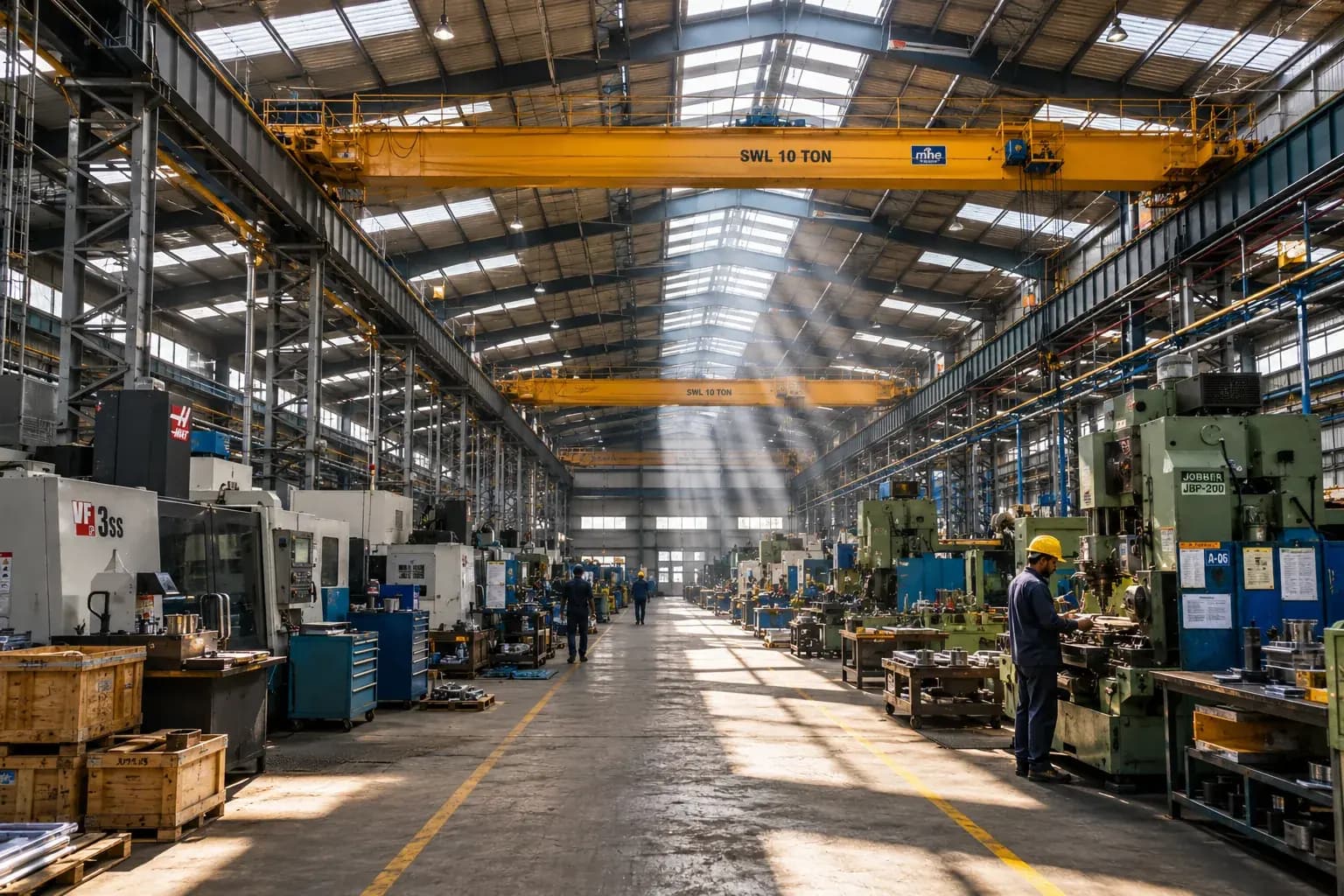
Industrial plots in developed estates are laid out for production. Built-up area, internal roads, parking, utility yards, scrap storage and statutory setbacks take the plot, and the green belt condition in the consent, commonly around a third of the plot area, is then expected from what remains. On a constrained plot that arithmetic frequently does not work with conventional spacing, and the unit ends up reporting a shortfall year after year or planting a token line of trees along the front boundary. Dense native planting changes the arithmetic rather than the condition: soil remediated to depth, multi-layer native species at close spacing, mulched and irrigated through establishment, producing a closed canopy in a few growing seasons on a footprint a conventional layout could not use. It is not a loophole and it does not reduce the area required; it is a way of getting real, countable, surviving tree cover out of small and awkward parcels.
How KIPL runs it
KIPL treats this as a compliance and site-engineering problem. We measure the existing green cover, establish the gap against the condition, and identify parcels that can take a dense block without compromising fire access, vehicle movement, underground services or setback requirements, which on an industrial plot is the real constraint. Soil is investigated and remediated, because compacted estate ground is the commonest cause of failure and no species list survives it. Species come from the district's own native assemblage, layered, and irrigation is drawn from treated STP or ETP water so the block does not compete with process supply and treated water gains a declared use. Survival is counted from planting by block, giving the unit a measured figure for its consent renewal rather than a photograph. What we will not claim is that dense planting substitutes for a peripheral belt where the condition specifies one: on most plots both are needed, and the honest position is to say so.
- CTO condition
The area is fixed; the plot is not
Consent conditions tie green belt to a share of plot area, but built-up area, roads and storage leave conventional planting nowhere to go on a developed industrial plot.
Canopy per square metre
Dense multi-layer native planting produces closed canopy in a few growing seasons on a footprint conventional spacing cannot use, which is what makes constrained plots viable.
Renewal counts survivors
The consent renewal and inspection question is what is standing and over what area, so a method that establishes fast and is counted by block answers it directly.
What you receive
Written for industrial & manufacturing, not adapted from a template.
- 01Green belt gap analysis: existing measured cover against the area the consent or clearance condition requires
- 02Parcel identification within the plot, cleared against fire access, vehicle movement, underground services and setbacks
- 03Soil investigation and remediation specification for compacted estate ground, with amendment type and working depth
- 04District-native species matrix in canopy, sub-canopy, shrub and ground layers at dense spacing
- 05Establishment programme with irrigation from treated STP or ETP water, mulching, weeding and replacement planting
- 06Block-wise survival and canopy record in the format used for consent renewal, Form-V and any EC compliance report
Questions from industrial & manufacturing
What industrial & manufacturing ask before appointing us.
Answered against the regulation as it stands, not as a sales pitch. If your situation is not here, ask us directly.
Ask a question →Will dense planting satisfy our green belt condition?
It contributes real, countable, surviving tree cover and is reported with species, count, area and survival. Whether it satisfies the condition depends on how that condition is written: some specify a peripheral belt of a stated width as well as an area, in which case dense blocks supplement it rather than replace it. The position should be stated in the compliance report rather than left for interpretation.
How much space does a block need?
Considerably less than conventional planting for the same canopy, which is the point, but it needs enough depth for a multi-layer structure to establish rather than a strip a metre wide. On an industrial plot the binding constraints are usually fire access, vehicle turning circles and buried services, so the parcels are identified against the site layout before any species discussion begins.
Why does soil preparation matter so much on an industrial plot?
Because estate ground is typically compacted, often filled, and sometimes contaminated with construction debris, and dense planting depends on roots reaching depth quickly. Planting into unremediated compacted ground is the commonest cause of failure, and it produces the worst possible outcome: a documented planting with a poor survival count at the next renewal.
What water does it need and where does that come from?
Regular irrigation through the establishment years, particularly the first two summers. Treated STP or ETP water is the right source where the treated quality is suitable for land application and the reuse is the one declared in the consent. Settling the water source before planting is essential, because establishment irrigation is not something that can be added later once the block has been lost.
What is the maintenance commitment?
Weeding, mulch replenishment, replacement planting and irrigation through the establishment period, after which a closed-canopy block is largely self-maintaining. That period needs a named owner and a budget line inside the plant, usually in the estate or civil function. Blocks planted for an inspection and then abandoned show up as a survival failure in exactly the record the Board reads.
Can this be done on a plot that is already fully built?
Partially. Where genuinely no parcel is available, the options are narrow and the honest answer is that the shortfall must be reported with the constraint stated, alongside whatever avenue and boundary planting the layout allows. Most plots, on survey, do have unused corners, setback strips and yard edges that a dense block can occupy, and the gap analysis is what finds them.
Stage by stage
How miyawaki urban dense forestation actually runs, step by step.
Also for industrial & manufacturing
The rest of the environmental brief for this sector.

Relevant proof
MCGM GARDEN DEVELOPMENT- MIYAWAKI PLANTATION
Miyawaki dense forestation across 27 locations in 7 wards using native species, delivered under the municipal greening programme.
- Area
- ~74,000 m²
- Trees
- ≈1,10,000
- CO₂ (est.)
- 2,052 t
Where we do this
Miyawaki Urban Dense Forestation for industrial & manufacturing, city by city.
Other sectors
Who else we run miyawaki urban dense forestation for.
Next step
Tell us the project, and we will tell you the category and the route.
Screening is the cheapest stage to get right and the most expensive to get wrong. We will say plainly what miyawaki urban dense forestation your industrial & manufacturing project needs, and what it does not.





























































Start the conversation