










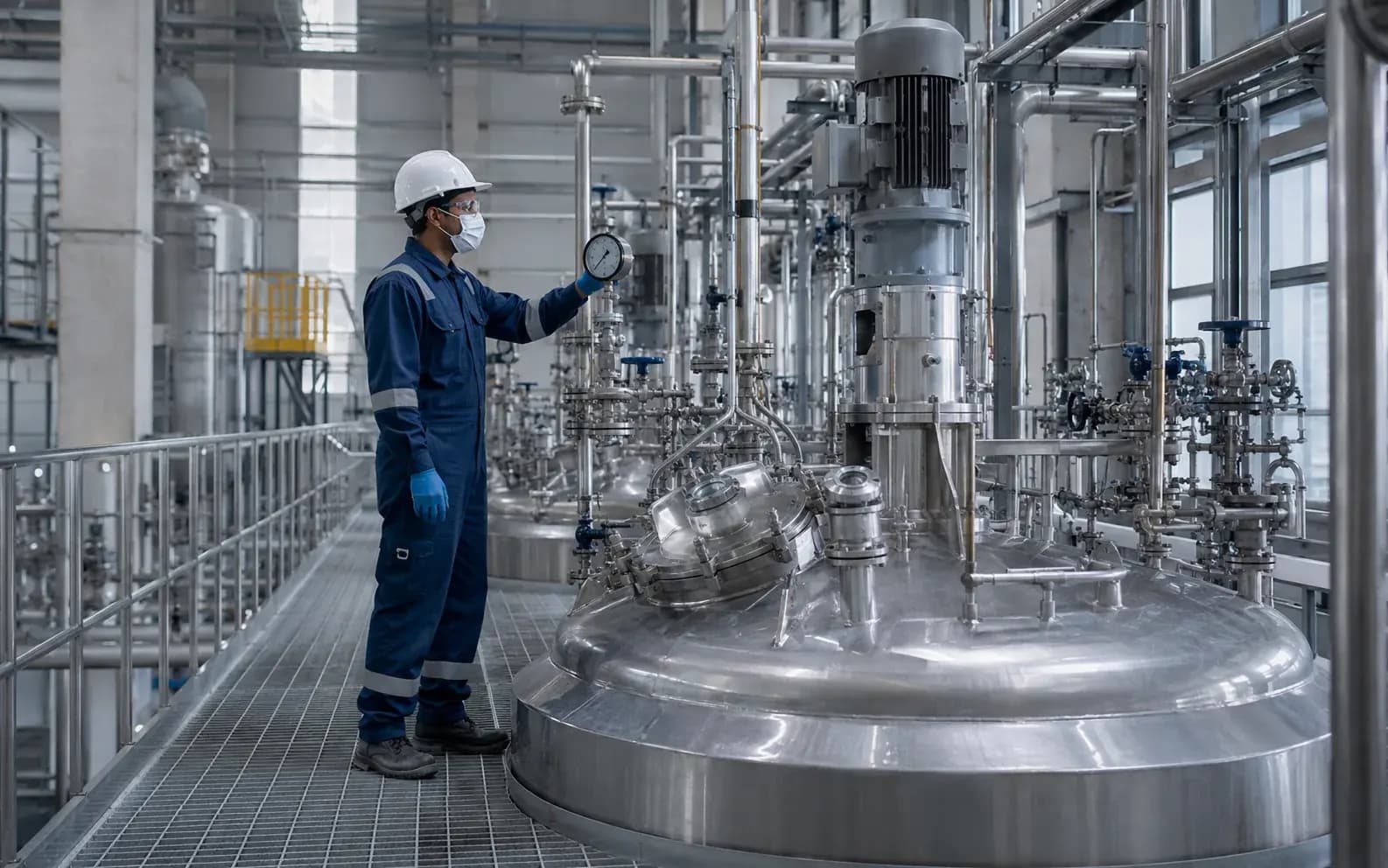
Effluent Treatment Plants · Chemical Industry
Effluent Treatment Plants for the Chemical Industry
For a synthetic organic chemical unit the effluent treatment plant is the part of the file that decides the clearance, because a 5(f) case is only as credible as the train that handles its high-COD, high-TDS streams.
Screening view on your project, with the category and route named. No obligation.
What this means for chemical industry
Chemical effluent does not behave like a single wastewater. A dye intermediate or bulk drug plant produces a small volume of concentrated, high-TDS mother liquor, a larger volume of moderately loaded washings and scrubber blowdown, and a utility stream that is barely contaminated. Treating them as one combined flow is the classic design error: it dilutes the concentrated stream into a volume too large to evaporate economically, loads the biological stage with inhibitory salts and organics it cannot handle, and produces a plant that works on paper and fails on commissioning. Segregation at source, stripping of volatile organics before biological treatment, and a separate high-TDS route to evaporation are what make the numbers work: and what an appraisal committee expects to see set out explicitly.
How KIPL runs it
KIPL designs the ETP from the process mass balance rather than from a nominal flow figure, so the design load matches the products actually consented. Depending on the stream that means chemical oxidation or Fenton treatment ahead of biology, anaerobic and aerobic stages, tertiary filtration with activated carbon or ozone where colour and residual COD have to be removed, and reverse osmosis with multiple-effect evaporation and an agitated thin-film dryer on the reject where zero liquid discharge is directed. For units inside an MIDC estate the target is the CETP's inlet norms, which are enforceable on the member and not merely advisory. What goes wrong otherwise shows up twice: at appraisal, where a thin ETP chapter draws queries the rest of the EIA cannot answer, and after commissioning, where a plant sized on average flow cannot hold the peak that a batch chemical operation produces by nature.
- Water Act 1974
Discharge standards are enforceable numbers
Consent conditions set effluent quality at the outlet, and for the 17 categories that include dye and dye-intermediate manufacture, online continuous effluent monitoring reports those numbers to the Board directly.
- ZLD
Zero liquid discharge where directed
Where TDS is high or no discharge route exists, ZLD becomes a clearance or consent condition, and it is then judged on evaporator and RO operating records rather than on installed capacity.
- CETP
Inlet norms bind the member unit
A unit discharging to an estate CETP must meet the inlet standard its membership is granted on, which means in-house pre-treatment sized to that norm.
What you receive
Written for chemical industry, not adapted from a template.
- 01Stream-wise characterisation and segregation scheme: mother liquor, washings, scrubber blowdown, utility and domestic streams kept apart
- 02ETP process design and hydraulic and mass balance tied to the consented product mix and its worst-case load
- 03Tertiary polishing design for residual COD and colour, and RO with MEE and ATFD where zero liquid discharge is directed
- 04CETP inlet-norm compliance package for units in MIDC estates, including pre-treatment sizing
- 05Sludge quantification and characterisation against the Hazardous and Other Wastes Rules 2016, with the disposal route identified
- 06Construction, commissioning and performance-guarantee support, with the operating records the consent will be audited against
Questions from chemical industry
What chemical industry ask before appointing us.
Answered against the regulation as it stands, not as a sales pitch. If your situation is not here, ask us directly.
Ask a question →Why does segregating streams matter so much in a chemical ETP?
Because concentration decides the treatment route. A small high-TDS mother liquor stream can be evaporated; the same salt load diluted into the whole plant flow cannot be, and it will also inhibit the biological stage. Segregation at source is the difference between an economically operable ZLD train and one that runs at a cost the plant eventually stops paying.
Is zero liquid discharge compulsory for a chemical plant?
It is not a blanket requirement across the sector. It becomes binding where the appraisal committee or the Board directs it for the effluent in question, typically high-TDS streams or sites with no acceptable discharge route. Where it is directed it should be designed for from the start, because retrofitting evaporation onto a combined flow is far more expensive than segregating for it.
Can we discharge to the MIDC CETP instead of building an ETP?
Only within the CETP's inlet norms, which its own consent requires it to enforce on members. In practice a chemical unit still needs primary and usually secondary treatment in-house to reach those norms. The CETP handles the polishing and final discharge; it does not absorb an untreated chemical effluent.
How is ETP sludge from a chemical plant classified?
Sludge from the treatment of effluent arising from chemical manufacture is a hazardous waste under the Hazardous and Other Wastes Rules 2016, and it has to be quantified in the consent, stored in a compliant shed, moved under manifest and sent to an authorised treatment, storage and disposal facility or an authorised co-processor. The disposal route belongs in the design, not in the operating phase.
Our batch operation produces very uneven flow: how is that handled?
Through equalisation sized on the actual batch schedule rather than a daily average, and often through segregated collection of specific campaign effluents that are fed to the plant at a controlled rate. A chemical ETP designed on average flow will be hydraulically and organically shocked by a normal production week.
Does KIPL design the ETP or also build it?
Both. We design from the process mass balance and carry it through construction and commissioning, which matters because the design assumptions and the consent commitments are then held by the same team. It also means the operating records the Board asks for exist in the form they will be audited in.
Stage by stage
How effluent treatment plants actually runs, step by step.
Also for chemical industry
The rest of the environmental brief for this sector.
Primary sources
Verify any of this at the source.
Relevant proof
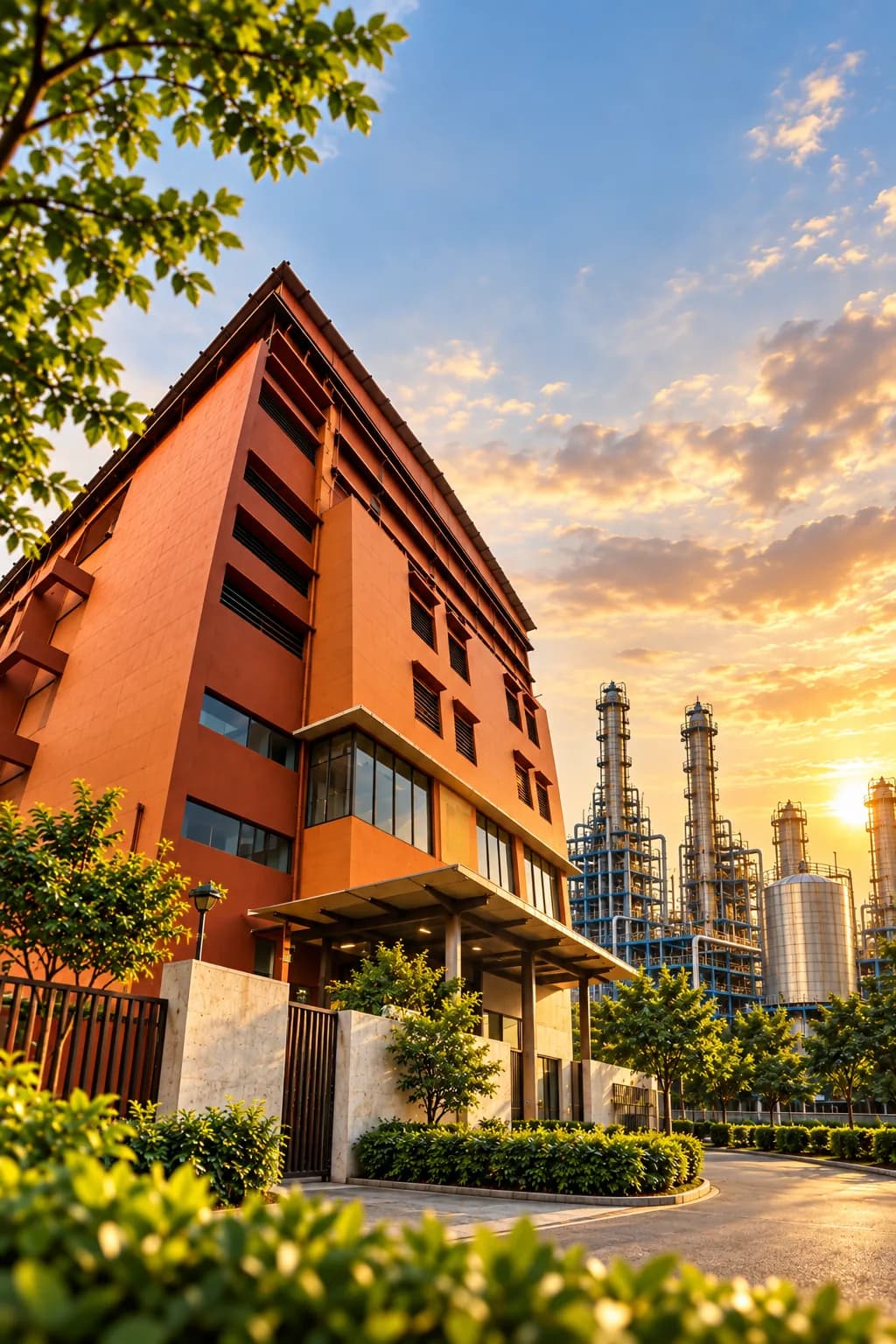
EIA for Synthetic Organic Chemical Industry
CTE/CTO application, ToR application, baseline data collection, EIA report and appraisal before the EAC: Category 5(f), the sector KIPL holds Category A accreditation in.
- Capacity
- 20 → 140 TPM
- 5(f) accredited
- Cat A
Where we do this
Effluent Treatment Plants for chemical industry, city by city.
Other sectors
Who else we run effluent treatment plants for.
Next step
Tell us the project, and we will tell you the category and the route.
Screening is the cheapest stage to get right and the most expensive to get wrong. We will say plainly what effluent treatment plants your chemical industry project needs, and what it does not.





























































Start the conversation