










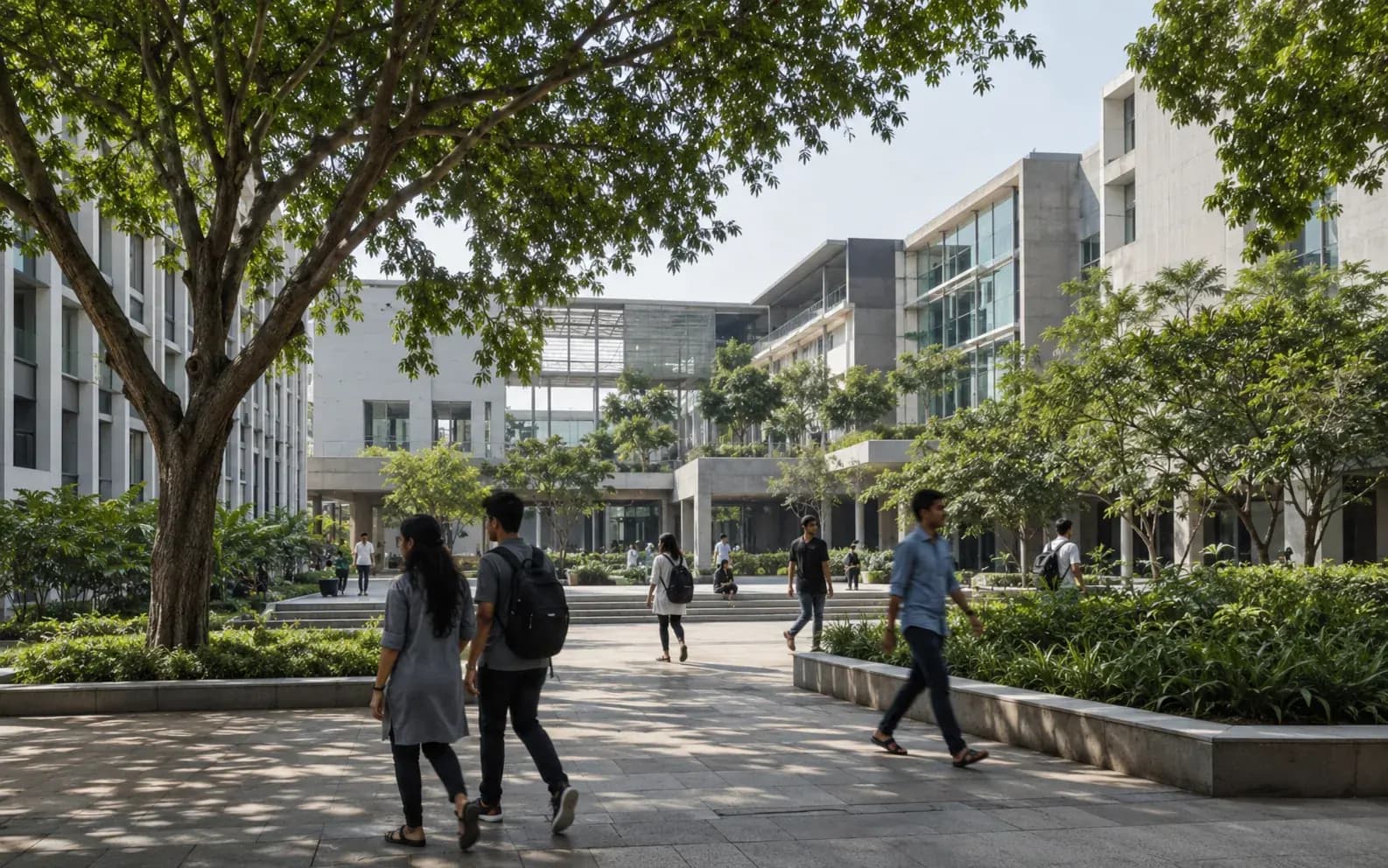
Environment Clearance · Hospitality, Healthcare & Education
Environment Clearance for Hotels, Hospitals and Institutional Campuses
Hotels, hospitals and institutional campuses above the item 8(a) built-up threshold need prior Environment Clearance, and the appraisal turns on occupancy-linked water demand, sewage generation and waste streams rather than on the number of floors or beds.
Screening view on your project, with the category and route named. No obligation.
What this means for hospitality, healthcare & education
Item 8(a) of the Schedule to the EIA Notification 2006 applies to building and construction projects at and above 20,000 sq m of built-up area, with area development and townships falling to item 8(b) at and above 1,50,000 sq m; the file goes to the State Environment Impact Assessment Authority on the recommendation of its SEAC, and item 8 projects are exempt from public consultation. What distinguishes this sector at appraisal is that the building is only half the question. A hotel's water and sewage load follows occupancy and its laundry and kitchen operations; a hospital adds a bio-medical waste stream regulated separately under the Bio-Medical Waste Management Rules 2016 and an effluent that requires disinfection before it reaches the treatment plant; an education campus adds hostel and canteen loads that peak by term. The committee therefore tests the per-capita basis, the STP capacity, the waste segregation scheme and the DG provision, all of which describe operations rather than construction.
How KIPL runs it
KIPL prepares the file on the operating profile the campus will actually have, because these are among the few item 8(a) projects where a building is designed for a process. That means water demand built up from rooms, beds, covers, laundry kilograms and cooling rather than from a flat per-square-metre figure; an STP sized to a 365-day load with the reuse commitment the clearance will require; a bio-medical waste plan naming segregation at source, the storage room, and the common bio-medical waste treatment facility that will receive it; and DG capacity declared for the essential and emergency loads a hospital cannot do without. The usual damage comes from a clearance obtained on an architect's generic occupancy assumptions, followed by an operator who fills the building differently, leaving an undersized STP and a waste room that will not pass an inspection on the day the campus opens.
- 8(a)
Built-up area triggers, occupancy decides the file
The threshold is measured in square metres, but the appraisal is argued on beds, keys, covers and laundry load, because those set water, sewage and waste.
- BMW Rules 2016
Healthcare brings a second regulated stream
A hospital's bio-medical waste is governed by its own rules and must be designed into the building: segregation points, a compliant storage room and CBWTF collection access.
The campus runs every day of the year
Unlike an office, occupancy does not fall at night or at weekends, so treatment and waste systems are sized for a continuous load that inspections will sample.
What you receive
Written for hospitality, healthcare & education, not adapted from a template.
- 01Category screening and built-up area verification against item 8(a) and 8(b)
- 02Form-1, Form-1A and Pre-feasibility Report filed on Parivesh
- 03Occupancy-based water balance built from keys, beds, covers, laundry and cooling loads
- 04STP capacity and treated-water reuse scheme sized for a 365-day load
- 05Bio-medical waste plan (segregation points, storage room, CBWTF linkage) integrated into the drawings
- 06DG capacity, stack and acoustic provision for essential and emergency loads
Questions from hospitality, healthcare & education
What hospitality, healthcare & education ask before appointing us.
Answered against the regulation as it stands, not as a sales pitch. If your situation is not here, ask us directly.
Ask a question →Does a hospital need Environment Clearance, or only consent?
Both may apply but they are different things. Environment Clearance under item 8(a) is triggered by built-up area at and above the threshold, irrespective of bed count, and is required before construction. MPCB consent under the Water Act 1974 and the Air Act 1981 is required regardless of whether the EC threshold is crossed, and covers operation. A small hospital may need consent alone; a large one needs both.
Is bed strength or built-up area the trigger?
Built-up area is the trigger under the Schedule. Bed strength, keys or student numbers do not decide whether a clearance is needed, but they decide how the file is argued, because water demand, sewage generation, waste quantities and DG provision are all derived from them. A measured built-up area figure should be established before anything else.
Is a public hearing required for a hospital or hotel project?
Building and construction projects under item 8 are exempt from public consultation, so no public hearing is held. The consequence is that the file must be self-sufficient: the water balance, STP sizing and waste plan have to answer the committee's questions in writing, since there is no forum in which to explain them.
How is bio-medical waste addressed at the clearance stage?
As a design matter, not just an operational one. The file should show where waste is segregated by colour-coded category at the point of generation, the route it takes through the building without crossing clean areas, a storage room meeting the requirements of the Bio-Medical Waste Management Rules 2016, and the common facility that will collect it. Retrofitting a compliant waste room into a completed hospital is expensive and sometimes impossible.
What water demand figure should be used for a hotel?
One built from the operation: guest rooms by category, restaurant and banquet covers, laundry throughput in kilograms, kitchen, cooling and landscape, with a realistic occupancy assumption. Applying a flat per-square-metre or per-capita norm understates laundry and kitchen loads badly, and the resulting STP is then undersized from the day the hotel opens.
Does an education campus with hostels fall under 8(a) or 8(b)?
It depends on total built-up area and whether the development is an area development or township, which shifts it to item 8(b) at the higher threshold. Phased campuses need care here, because successive blocks accumulate built-up area and a project that began below the threshold can cross it, requiring clearance for the whole rather than for the increment.
Stage by stage
How environment clearance actually runs, step by step.
Also for hospitality, healthcare & education
The rest of the environmental brief for this sector.
Primary sources
Verify any of this at the source.
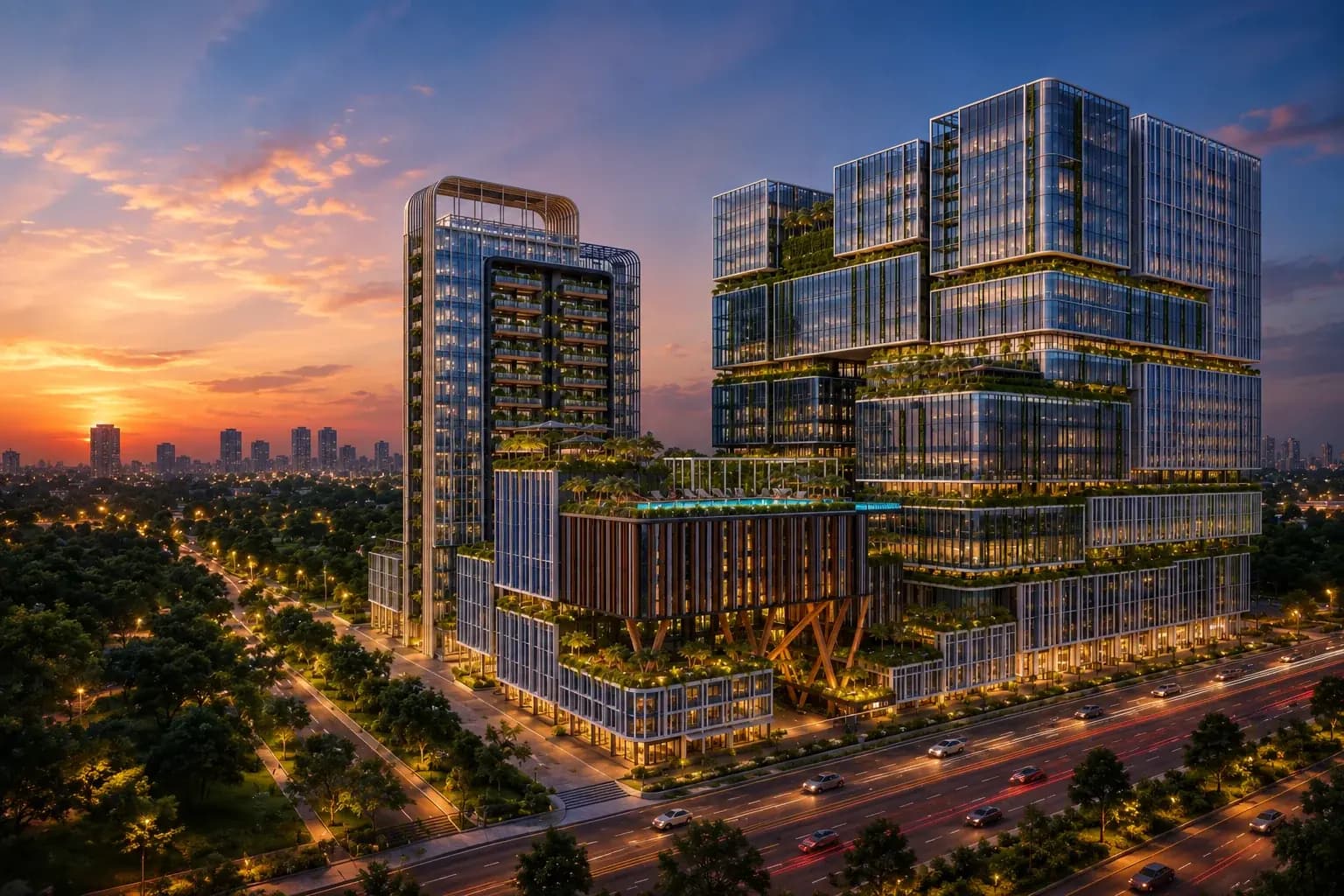
Relevant proof
Cyber Square IT Park, Nerul
Category B1 under Schedule 8(b): EIA and EMP prepared and carried through SEIAA appraisal for the expansion at Nerul.
- Built-up
- 2,85,592.45 m²
- EC granted
- 07.10.2026
Where we do this
Environment Clearance for hospitality, healthcare & education, city by city.
Other sectors
Who else we run environment clearance for.
Next step
Tell us the project, and we will tell you the category and the route.
Screening is the cheapest stage to get right and the most expensive to get wrong. We will say plainly what environment clearance your hospitality, healthcare & education project needs, and what it does not.





























































Start the conversation