










Sustainable Landscaping · Real Estate & Construction
Sustainable Landscaping for Real Estate & Construction: podium and open-space planting that carries the EIA commitments.
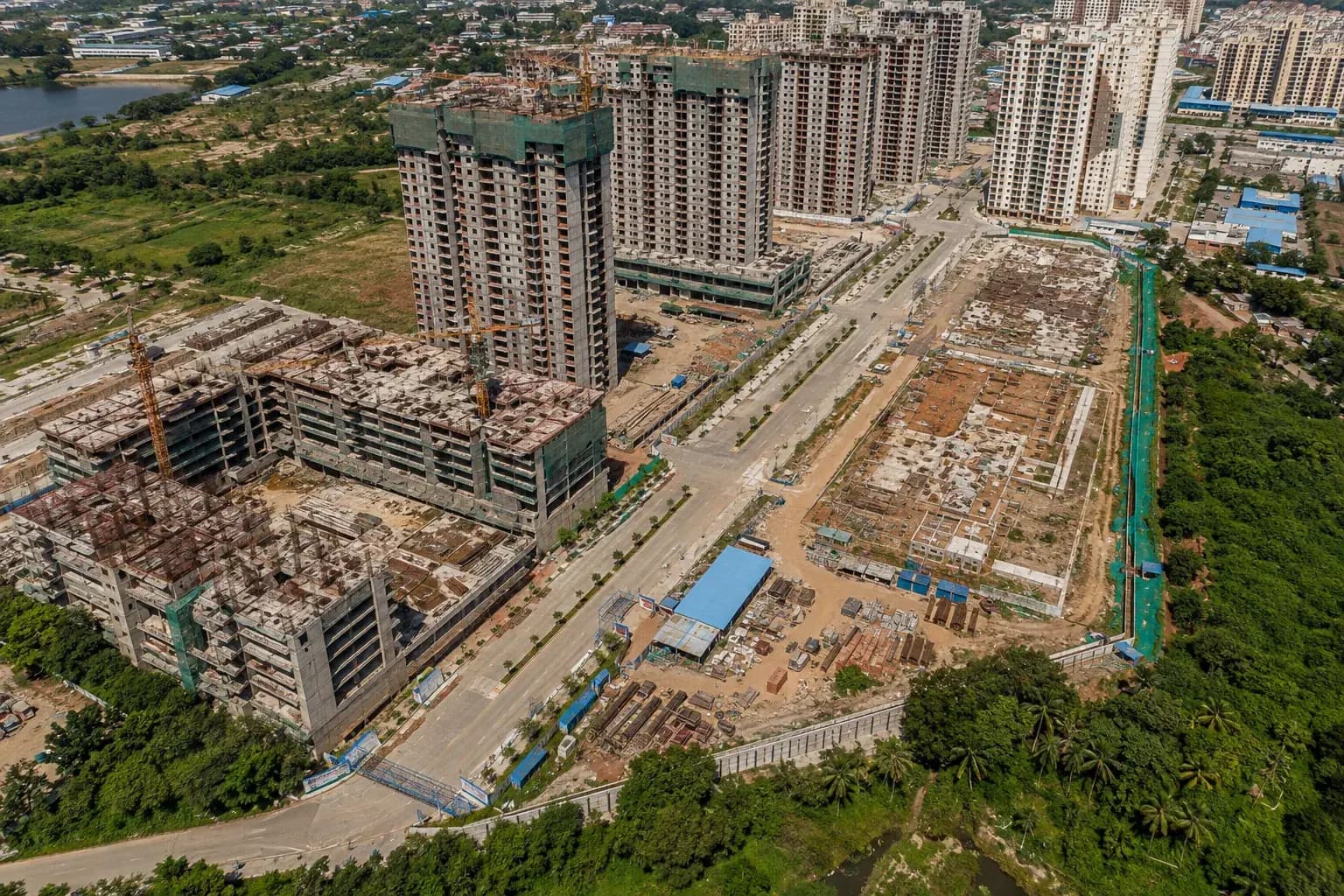
On a building project the landscape is not only the amenity the buyer walks through: it is where the plantation count, the pervious-area proportion and the treated-water reuse committed in the Environment Clearance are physically delivered.
Screening view on your project, with the category and route named. No obligation.
What this means for real estate & construction
A residential project makes several landscape-shaped promises in its clearance file: a number of trees planted and maintained, a proportion of the plot kept pervious or under soft landscape, native and non-invasive species selection, and treated water from the STP used for irrigation instead of potable supply. Those promises are reported half-yearly and looked at again at occupancy stage. They also have to survive the physical reality of an urban development, where most of the plot sits over a basement and the landscape is a podium: shallow soil depth, structural load limits, waterproofing that cannot be compromised, and drainage that has to work in a monsoon on a slab. Landscape designed only as an amenity brief tends to satisfy the render and fail the condition: imported species with unrealistic water demand, planter depths that will not support the tree girth promised, and irrigation plumbed to the potable line because the reuse loop was never brought to the podium.
How KIPL runs it
KIPL designs and delivers the landscape against the clearance conditions and against the structure at the same time: species selected for the microclimate and for the soil depth actually available, planter and soil profiles coordinated with the structural and waterproofing design, an irrigation system fed from the treated-water line with the metering to prove it, and a maintenance regime through the establishment period so that the plantation counted in year one is still alive in year three. We record what is planted, where and when, in a format the half-yearly compliance report can use, because a plantation with no dated evidence is a commitment that cannot be demonstrated.
- 8(a)
Plantation and pervious area are conditions
Tree count, green cover and pervious-area commitments in the EIA become clearance conditions, evidenced half-yearly and examined at occupancy stage. The landscape drawing is where they are either delivered or lost.
Treated water has to reach the planting
Reuse of STP-treated water for irrigation is committed in the clearance and the consent. It only happens if the reuse line is routed to the podium and the open spaces during construction, with metering to evidence it.
Podium landscape is a structural problem
Soil depth, load, waterproofing and slab drainage constrain what can actually be planted over a basement. Species and tree sizes have to be chosen against that reality, not against a render.
What you receive
Written for real estate & construction, not adapted from a template.
- 01Planting palette of native and climate-appropriate species selected for podium soil depth and microclimate
- 02Tree count and pervious-area schedule reconciled to the commitments in the EIA and the clearance conditions
- 03Planter, soil profile and drainage design coordinated with the structural and waterproofing drawings
- 04Irrigation design fed from the STP treated-water line, with metering to evidence reuse
- 05Establishment-period maintenance regime and survival monitoring
- 06Dated planting and survival records formatted for the EC half-yearly compliance report
Questions from real estate & construction
What real estate & construction ask before appointing us.
Answered against the regulation as it stands, not as a sales pitch. If your situation is not here, ask us directly.
Ask a question →Why is landscaping treated as a compliance item on a housing project?
Because the clearance conditions include tree numbers, green cover, species and pervious area, and treated-water reuse for irrigation. Those are reported half-yearly and reviewed at occupancy stage. The landscape package is simply where those commitments physically land.
Can we plant the committed trees on a podium over the basement?
Some of them, depending on soil depth, structural load capacity and the species chosen. Large-canopy trees need depth and weight allowance that a shallow podium cannot always provide, which is why the tree schedule and the structural design have to be reconciled early rather than discovered at planting.
Do we have to irrigate with treated water?
Where reuse for landscape is committed in the clearance and the consent, yes, and it needs the treated-water line routed to the irrigation network and metered so the reuse can be evidenced. Retrofitting that line after the landscape is built is disruptive and expensive.
What counts as native or appropriate species selection?
Species suited to the local climate and soil, non-invasive, with water demand the project can meet from its reuse supply, and with growth habits appropriate to the space. Beyond the compliance argument, this is what determines whether the landscape looks the way it was sold in its third summer without heroic maintenance.
How long do we have to maintain the plantation?
Through the establishment period at minimum, and in practice until handover, with survival evidenced. Plantation counted in the first compliance report and dead by the third is a compliance problem, so the maintenance contract and the reporting calendar should be set up together.
How does this relate to the tree NOC and compensatory plantation?
Directly. Compensatory plantation required by the Tree Authority under the 1975 Act often lands in the same landscape, and it has to be identifiable as such. We keep one planting record that separately identifies compensatory planting, EC-committed plantation and amenity planting, so neither authority is being shown the same tree twice.
Stage by stage
How sustainable landscaping actually runs, step by step.
Also for real estate & construction
The rest of the environmental brief for this sector.
Relevant proof
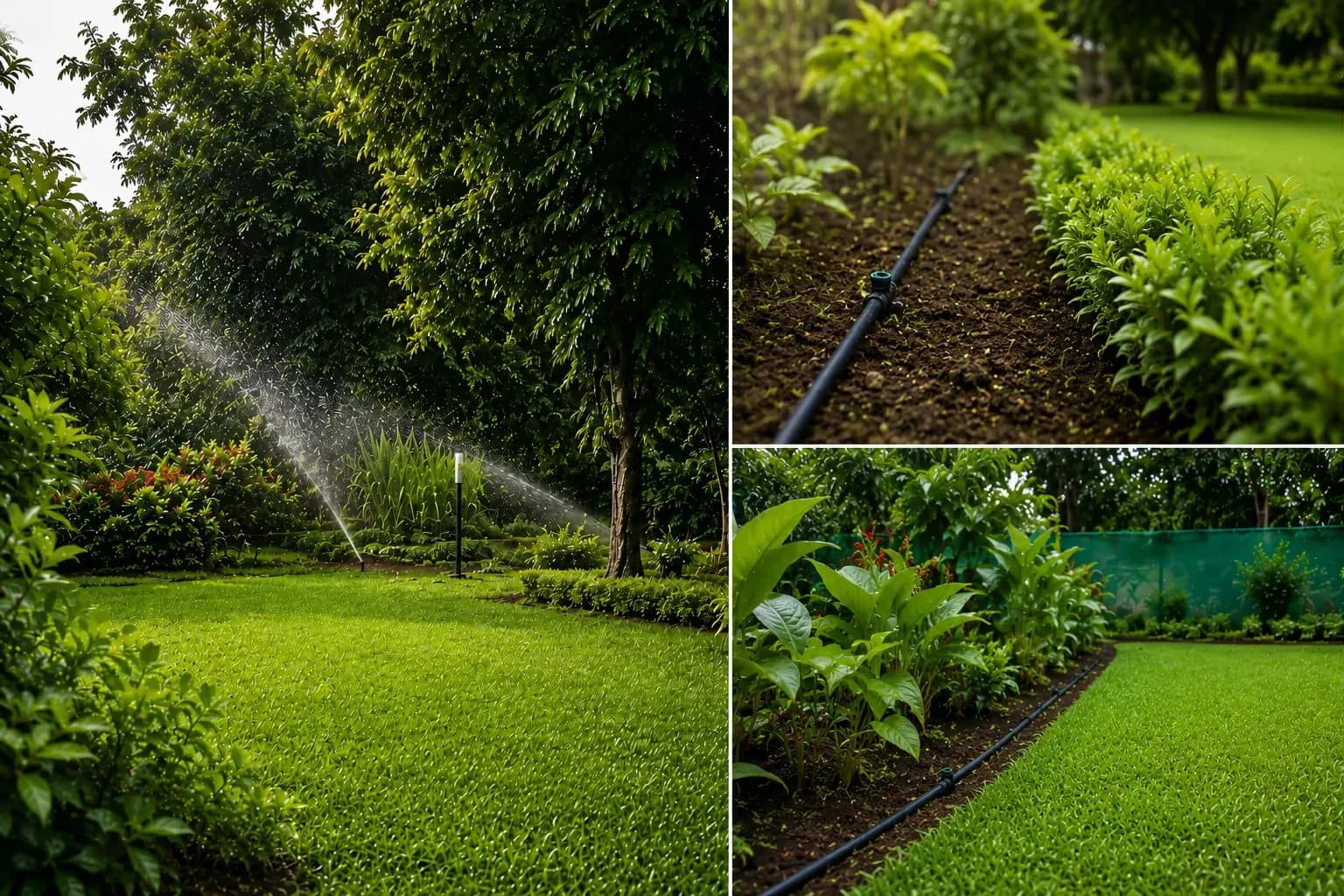
IRRIGATION WORK AT TCS BANYAN PARK
Design and execution of an efficient drip-irrigation network across ~10,000 m² of landscape and plantation zones: pipeline, network and testing, completed in 45 days.
- Area
- ~10,000 m²
- Delivery
- 45 days
Where we do this
Sustainable Landscaping for real estate & construction, city by city.
Other sectors
Who else we run sustainable landscaping for.
Next step
Tell us the project, and we will tell you the category and the route.
Screening is the cheapest stage to get right and the most expensive to get wrong. We will say plainly what sustainable landscaping your real estate & construction project needs, and what it does not.





























































Start the conversation