










Irrigation systems: delivering the right water to the right plants, and proving it.
An irrigation system is designed from the water available and the plants being watered: zoning, hydraulics and filtration first, automation afterwards.
What it is
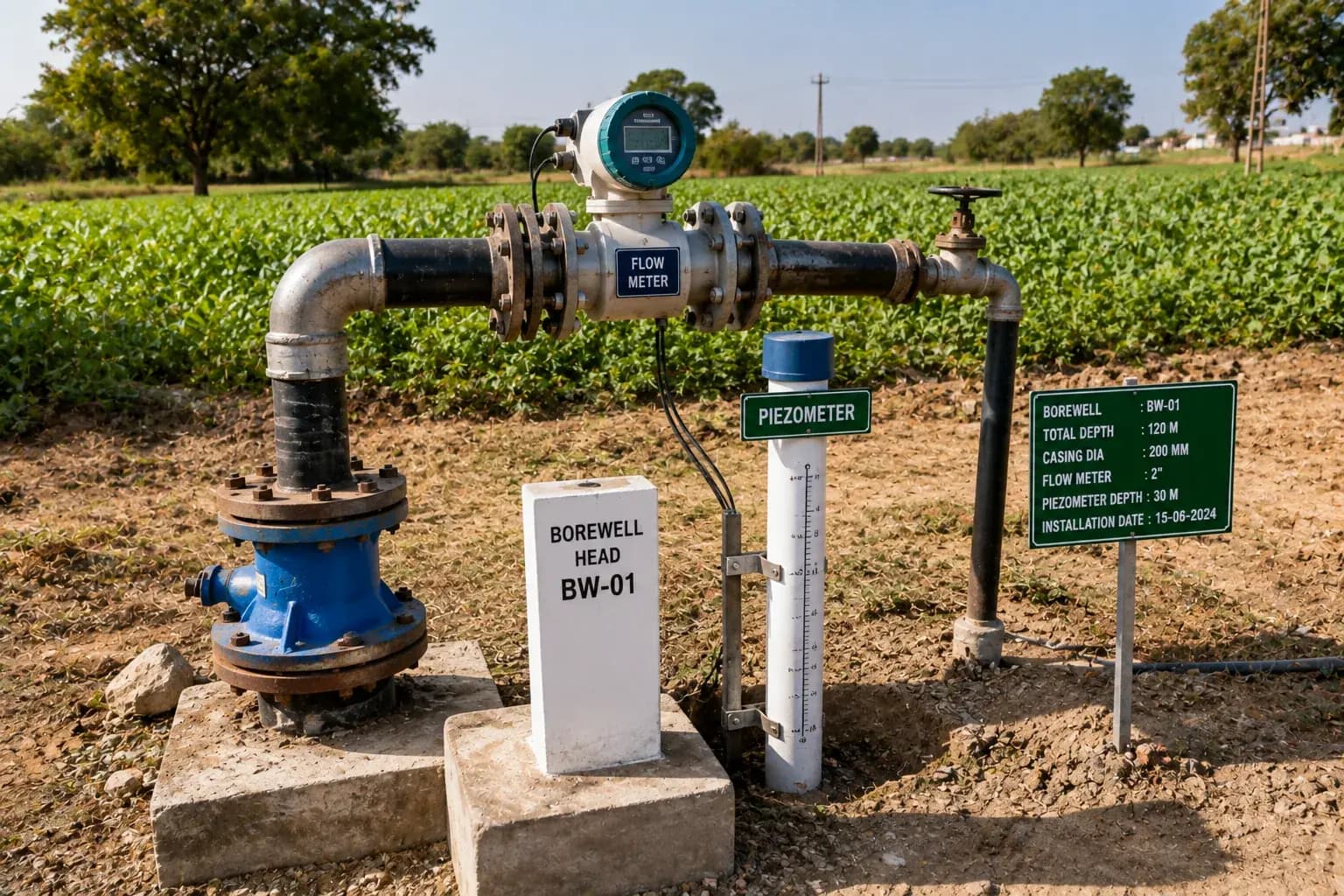
Design starts with the source: how much water, of what quality, at what pressure and for how many hours. Plants are then grouped into hydrozones by water demand, and each zone is given the delivery method that suits it (drip for shrub beds and trees, sprinklers or rotors for lawn, micro-sprays where appropriate) with pipe sizing, pressure and flow worked out rather than assumed. Filtration is mandatory on any drip system, and doubly so on treated water.
KIPL designs, installs and commissions irrigation with pressure testing before backfill, zone-wise controllers set to season, and an as-built drawing the maintenance team can actually use. Where treated effluent or STP water is the source, the water quality is checked against irrigation suitability, since sustained irrigation with unsuitable water damages soil structure and planting over a season or two.
What you get
The deliverables, in hand.
- Authority
- Hydrozone design · hydraulic sizing · irrigation water-quality check
- Typical timeline
- Installed with hardscape; commissioning in days
- Source assessment: quantity, quality, pressure and available hours
- Hydrozoning of the landscape by water demand
- Drip, sprinkler and micro-spray layout with hydraulic calculations
- Filtration, valves, controller and automation specification
- Installation, pressure testing and zone-wise commissioning
- As-built drawings, operating schedule and maintenance instructions
Straight answers
Irrigation & Water Management: common questions.
01What is hydrozoning and why does it matter?
Hydrozoning groups plants with similar water requirements onto the same irrigation zone, so each zone can be run for the time its plants need. Mixing lawn and drought-tolerant shrubs on one zone guarantees that one group is overwatered and the other is not, the most common and most wasteful design error in landscape irrigation.
02Is drip better than sprinklers?
For shrub beds, hedges and trees, drip delivers water at the root zone with much less evaporative loss and is generally preferable. Lawn needs overhead coverage, so sprinklers or rotors are appropriate there. Most landscapes need both, on separate zones, rather than one system throughout.
03Can treated wastewater be used for irrigation?
Frequently yes, and it is often the intended reuse route on campuses and industrial sites. The treated water must be checked for suitability (particularly salinity, sodium and residual solids) and monitored over time, and the system needs adequate filtration, since suspended solids block emitters quickly.
04How often should a landscape be irrigated?
It depends on season, soil, species and establishment stage rather than on a fixed schedule. Deeper and less frequent watering encourages deeper rooting than daily light watering. Controllers should be reset seasonally, and monsoon shut-off is one of the simplest and most neglected water savings available.
05Why do drip systems block?
Suspended solids, algal growth and mineral or biological deposits in the emitters, almost always where filtration is inadequate or unmaintained. A drip system needs filtration sized correctly, cleaned on schedule, plus periodic flushing of laterals. Blockage is a maintenance failure much more often than a product failure.
06Should irrigation be automated?
Automation makes seasonal scheduling and zone control practical and prevents the most common manual failures, and it pays for itself on any reasonably sized landscape. It does not remove the need for inspection: a controller will faithfully run a broken zone, so periodic physical checks stay part of the regime.
Within Sustainable Landscaping
Part of the whole route, the other components.
Relevant proof
Where this stage has already been delivered.
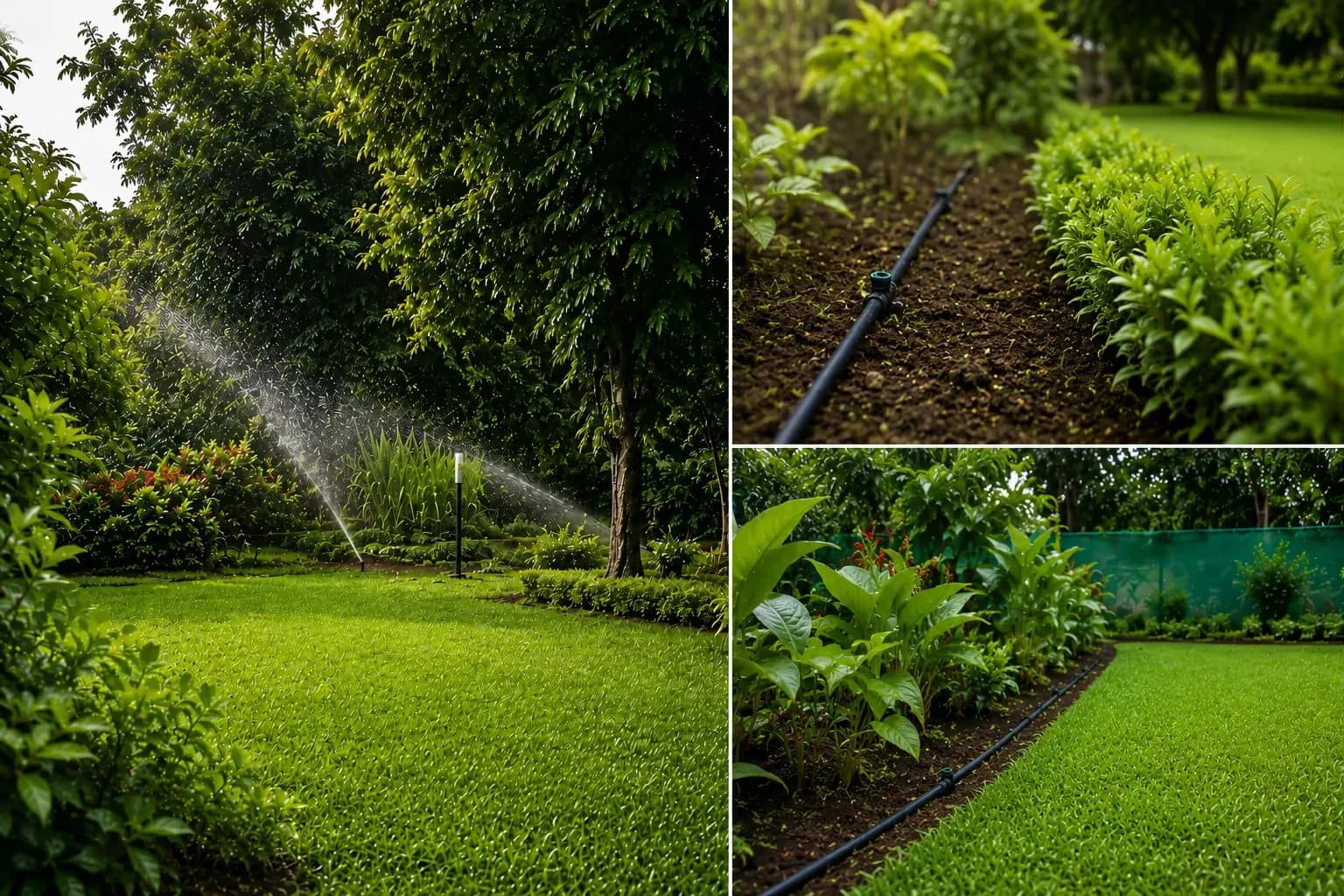
TCS, Banyan Park · Mumbai
IRRIGATION WORK AT TCS BANYAN PARK
Design and execution of an efficient drip-irrigation network across ~10,000 m² of landscape and plantation zones: pipeline, network and testing, completed in 45 days.
Where we do this
Sustainable Landscaping on the ground.
The authority, the timeline and the local ground differ by city. These pages set out how sustainable landscaping actually runs in each.
Featured projects
Work that carries its own evidence.
Our expertise
One team across the whole environmental brief.
Irrigation & Water Management is one stage of one practice. Most projects need several, and the commitments made at clearance are the ones we build and maintain.
Who we do this for
Sustainable Landscaping reads differently by industry.
- 01
Corporate CampusesCore
Campus softscape, hardscape and irrigation are the brand made physical, and are expected to run on treated water rather than fresh.
Sustainable Landscaping for Corporate Campuses - 02
Real Estate & Construction
Podium and open-space landscaping carries the plantation and pervious-area commitments made in the EIA, not just the amenity brief.
Sustainable Landscaping for Real Estate & Construction - 03
Townships & Area Development
Softscape, irrigation and water-sensitive hardscape are how the township's treated-water reuse and runoff commitments are actually realised.
Sustainable Landscaping for Townships & Area Development - 04
Hospitality, Healthcare & Education
Campus landscape is both the amenity the guest or patient experiences and the pervious-area and plantation commitment in the clearance.
Sustainable Landscaping for Hospitality, Healthcare & Education - 05
Municipal Corporations
Public realm landscaping has to survive footfall, water scarcity and a maintenance budget set years before, which drives species choice.
Sustainable Landscaping for Municipal Corporations
Trusted by
The organisations this work is done for.





In the press