










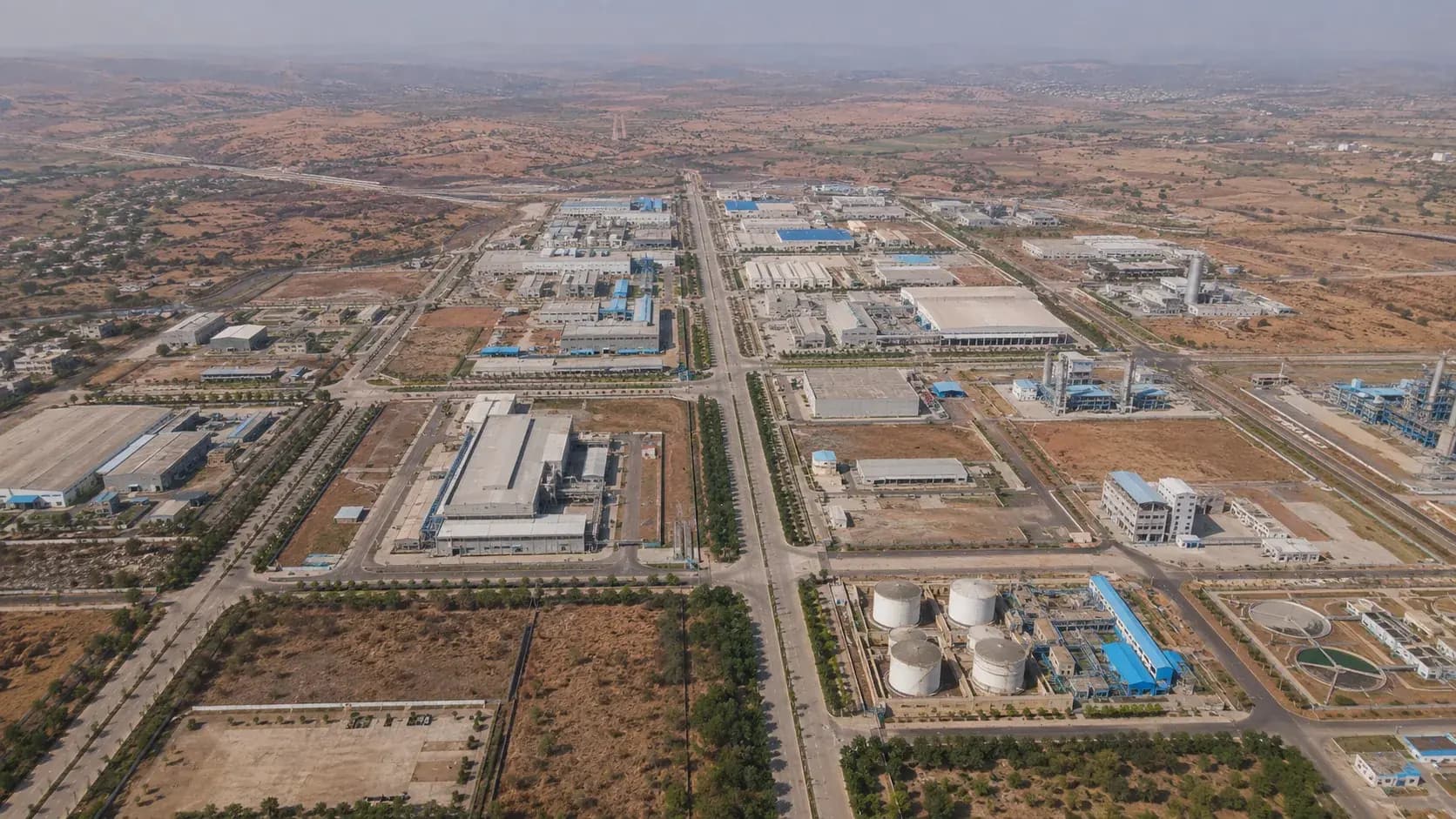
Sustainable Landscaping · Townships & Area Development
Sustainable Landscaping for Townships & Area Development: how the reuse and runoff commitments are actually realised.
In a township the landscape is where two of the clearance's most consequential commitments physically happen: the treated water from the STPs is consumed by irrigation, and the storm water the settlement generates is either retained on site or exported to a neighbour.
Screening view on your project, with the category and route named. No obligation.
What this means for townships & area development
An 8(b) water balance normally assumes that a substantial volume of treated sewage is reused, and landscape irrigation across a township's belts, parks, avenues and sector open spaces is the largest single consumer of it. That makes the irrigation network a piece of environmental infrastructure: if the reuse main does not reach the planting, the treated water is discharged and fresh water is drawn instead, and the balance the clearance was granted on fails quietly. The same logic applies to runoff. A township converts a large area of permeable ground into roads, roofs and paving, and the assessment credits the layout with retaining and infiltrating a share of what falls on it. That credit is realised in the landscape (swales along road edges, permeable paving in low-traffic areas, retention in the open spaces, planting on slopes to slow and hold flow) or it is not realised at all, in which case the runoff lands on adjoining agricultural land and becomes somebody else's problem, and then the township's.
How KIPL runs it
KIPL designs township landscape as water infrastructure with an amenity function, not the other way round: species selected for the microclimate and for the water they will actually receive, irrigation zoned and metered off the treated-water main, water-sensitive hardscape and swales integrated with the road and drainage design, and maintenance specified for the capability the township management body will realistically have. We keep the plantation, pervious-area and reuse records in a form the half-yearly compliance report can use. The failure mode is an ornamental palette specified by an architect against a render, irrigated from the potable line because the reuse main was deferred, on a layout where every square metre outside the plots was paved for ease of maintenance.
- 8(b)
Reuse is a clearance commitment with a volume attached
The township water balance assumes a stated reuse of treated water, and landscape irrigation is its largest consumer. If the reuse main does not reach the planting, the balance the clearance rests on does not hold.
Runoff is retained in the landscape or exported
The assessment credits the layout with retaining and infiltrating a share of storm water. Swales, permeable surfaces, retention in open space and slope planting are where that credit is either delivered or lost to the adjoining land.
Maintenance capability is a design constraint
The landscape will be maintained by a township management contract for decades. Species, irrigation and hardscape have to be chosen for that level of care, not for a launch photograph.
What you receive
Written for townships & area development, not adapted from a template.
- 01Township planting palette of native and climate-appropriate species zoned by microclimate and water availability
- 02Irrigation network fed from the treated-water reuse main, zoned and metered to evidence the reuse volume
- 03Water-sensitive design (swales, permeable paving, retention in open space and slope planting) integrated with roads and drainage
- 04Pervious-area schedule reconciled to the commitments in the 8(b) clearance
- 05Phased landscape delivery aligned to sector handover, with establishment-period maintenance
- 06Plantation, pervious-area and reuse-volume records formatted for the half-yearly compliance report
Questions from townships & area development
What townships & area development ask before appointing us.
Answered against the regulation as it stands, not as a sales pitch. If your situation is not here, ask us directly.
Ask a question →Why is landscape treated as infrastructure on a township?
Because it consumes the treated water the clearance assumes will be reused, and because it is where storm-water retention and infiltration physically happen. Both are commitments in the 8(b) file with numbers attached, and both fail if the landscape is designed only as amenity.
What happens if the treated-water main does not reach the landscape?
The township irrigates from fresh water and discharges treated water instead, which breaks the approved water balance, increases the groundwater or municipal draw, and shows up in the half-yearly report as a reuse volume well below what was committed. The main has to be laid with the phase infrastructure.
How is storm water handled in a township landscape?
Through swales along road edges, permeable surfaces where traffic allows, retention within open spaces, and planting that slows and holds flow on slopes, all designed with the road and drainage layout rather than applied afterwards. A township that paves everything exports its runoff to adjoining land.
Which species suit a township landscape?
Native and climate-appropriate species matched to the microclimate of each zone and to the water they will actually receive, with growth habits and maintenance needs suited to a facility management contract. An ornamental palette that needs constant attention degrades within a few seasons of handover.
How does the landscape connect to the green belt and parks?
They are parts of one committed green network. The belt buffers the boundary, the parks carry the recreational open-space obligation, the avenue and sector planting connect them, and the pervious-area and plantation numbers are counted across all of it. Designing them separately is how the totals stop adding up.
How is landscape delivery evidenced for compliance?
With area planted, species, pervious area and irrigation reuse volumes, recorded against the committed map and dated, half-year by half-year. Metering on the reuse line is what turns a claimed reuse commitment into a demonstrated one.
Stage by stage
How sustainable landscaping actually runs, step by step.
Also for townships & area development
The rest of the environmental brief for this sector.
Relevant proof
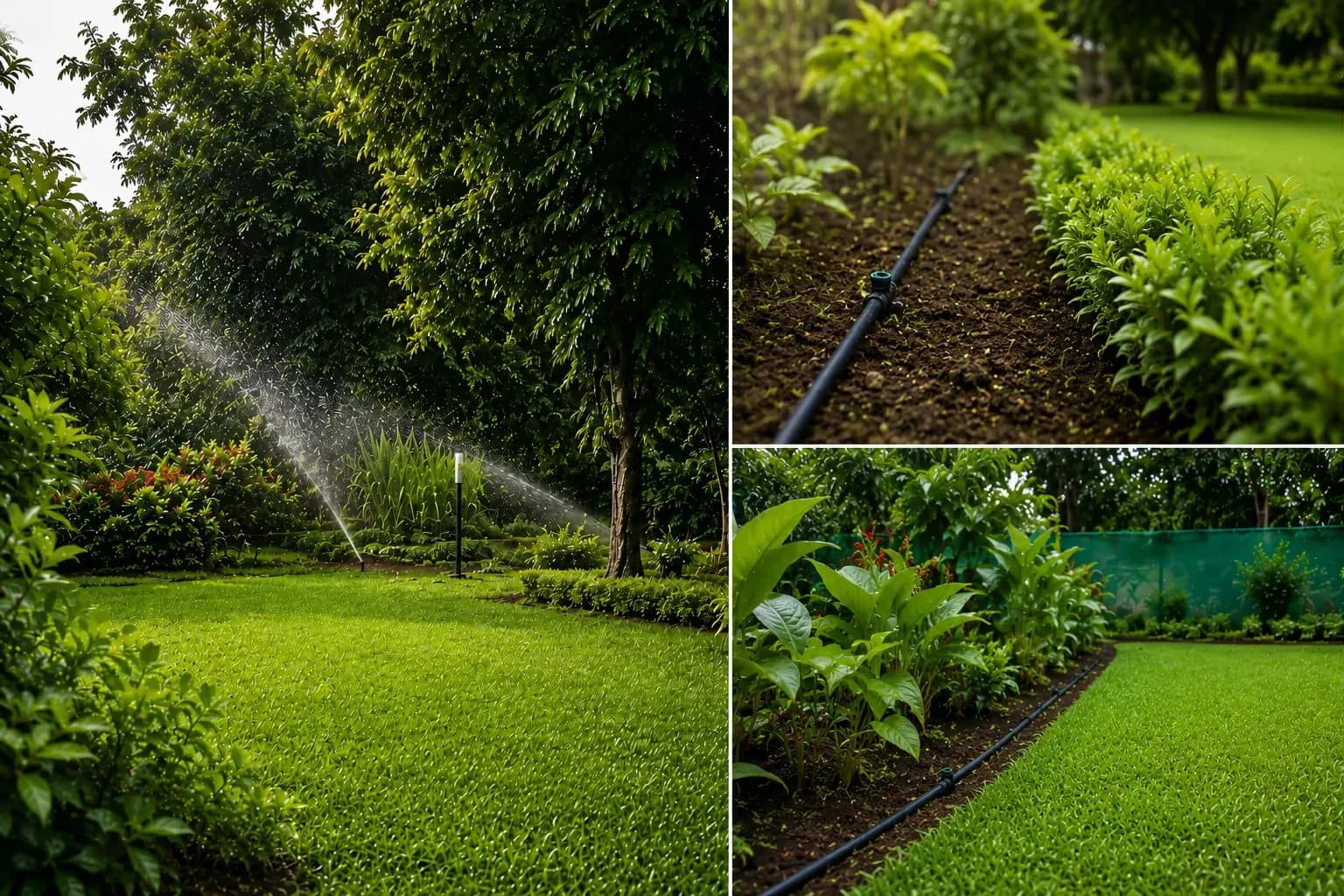
IRRIGATION WORK AT TCS BANYAN PARK
Design and execution of an efficient drip-irrigation network across ~10,000 m² of landscape and plantation zones: pipeline, network and testing, completed in 45 days.
- Area
- ~10,000 m²
- Delivery
- 45 days
Where we do this
Sustainable Landscaping for townships & area development, city by city.
Other sectors
Who else we run sustainable landscaping for.
Next step
Tell us the project, and we will tell you the category and the route.
Screening is the cheapest stage to get right and the most expensive to get wrong. We will say plainly what sustainable landscaping your townships & area development project needs, and what it does not.





























































Start the conversation