










Sustainable Landscaping · Municipal Corporations
Sustainable Landscaping for Municipal Corporations
Public realm landscaping in a city is designed against three constraints a private client does not face: uncontrolled footfall, an uncertain water supply, and a maintenance budget fixed years before the plants need it.
Screening view on your project, with the category and route named. No obligation.
What this means for municipal corporations
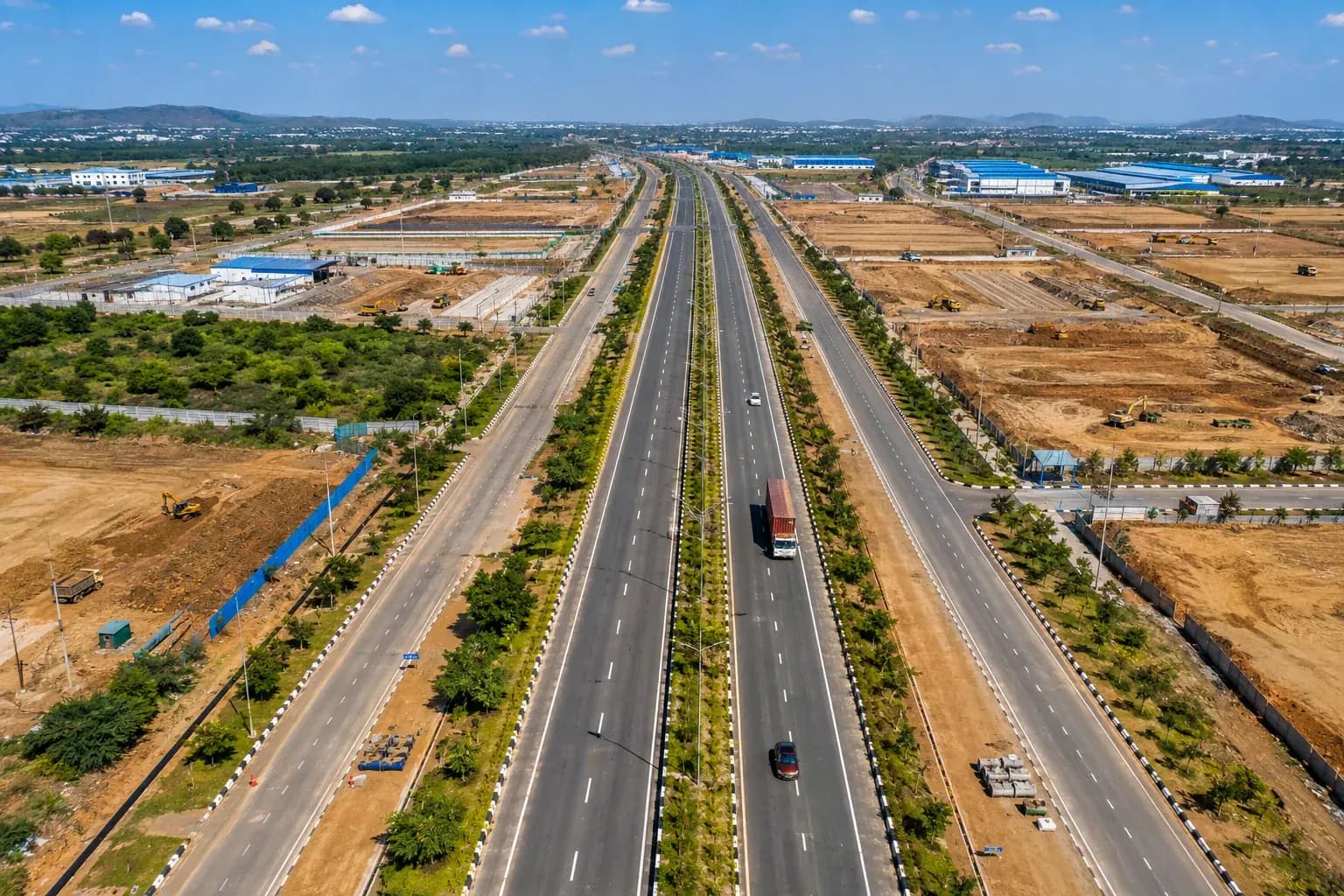
Municipal landscaping covers medians, footpaths, traffic islands, station forecourts, lake margins and the ground around civic buildings. These are high-pressure sites with no gate: they take trampling, parking, dumping and vandalism, and they are watered by whatever tanker or line the ward can spare in April. The maintenance provision is set at sanction and does not rise when the palette turns out to need weekly replacement. Design that ignores those three facts produces a public realm that looks correct for one season and then becomes a recurring complaint.
How KIPL runs it
KIPL specifies public realm planting from a native and naturalised palette selected for the local water regime and for the level of care that will realistically be available, with soil volume and drainage treated as the primary design decisions rather than the finishes. We also state the recurring cost of the design at the point where the corporation can still change it, at sanction: because the recurring cost, not the capital cost, is what the standing committee sees every year afterwards.
The maintenance budget is fixed before the plants arrive
Recurring provision is set at sanction stage. A palette that needs frequent replacement commits the corporation to an expense it did not budget and cannot easily raise.
Water availability, not design intent, governs survival
Summer supply to public planting is the first thing curtailed in a water-stressed year. Species and irrigation have to be chosen for the worst supply the ward can guarantee, not the average.
- Trees Act 1975
Existing trees in the public realm
Street and median works routinely affect standing trees, which brings the Tree Authority into the approval chain and adds compensatory planting obligations to the scope.
What you receive
Written for municipal corporations, not adapted from a template.
- 01Site-by-site assessment of footfall, exposure, soil volume and assured water availability
- 02Native and naturalised species palette with defined replacement rates and recurring cost
- 03Soil volume, profile and sub-surface drainage specification for constrained urban sites
- 04Irrigation design matched to the supply the ward can actually guarantee, including treated-water feed where available
- 05Maintenance regime written as a measurable standard for the O&M contract
- 06Recurring cost statement presented at sanction stage, not after execution
Questions from municipal corporations
What municipal corporations ask before appointing us.
Answered against the regulation as it stands, not as a sales pitch. If your situation is not here, ask us directly.
Ask a question →Why does municipal median and footpath planting fail so consistently?
Three reasons repeat: insufficient soil volume in a paved corridor, no assured summer water, and species chosen for appearance rather than for the exposure of the site. Each is fixed at design stage and none can be fixed by the maintenance contractor afterwards.
Should the corporation specify native species?
For public realm work, mostly yes, on practical grounds rather than ideological ones. Native and naturalised species matched to the local rainfall and soil survive on less intervention, which directly reduces the recurring maintenance provision. Ornamental exotics have a place in enclosed, tended gardens where care is assured.
How much soil volume does a street tree actually need?
More than typical street sections provide, which is why trees in paved corridors stagnate or fail. The workable answer on a constrained site is engineered soil volume extended under the paving with root paths and sub-surface drainage, specified as an item in the BOQ. Without it, the planting pit is a container and the tree behaves accordingly.
Can treated sewage or recycled water be used for public landscaping?
Yes, and for public realm planting it is often the most reliable summer source. It requires consistent treated quality for the intended use, a separately marked non-potable line, and monitoring records. Where an STP is within reach, designing this in at the start is considerably cheaper than retrofitting.
How should the recurring cost be presented for sanction?
As an annual figure per site attached to the design, covering replacement rate, water, labour and periodic renewal. Corporations routinely sanction capital works whose recurring implication was never quantified, and then find the maintenance provision inadequate every year afterwards. Stating it before sanction is what allows a design choice to be made rather than inherited.
What about sites that face persistent encroachment or dumping?
Design has to acknowledge it. On such sites, dense planting, level changes and hardy species perform better than open lawn and ornamental beds, which invite exactly the use the corporation is trying to prevent. Where the underlying problem is access or waste collection, landscaping alone will not solve it and should not be sanctioned as if it will.
Stage by stage
How sustainable landscaping actually runs, step by step.
Also for municipal corporations
The rest of the environmental brief for this sector.
Relevant proof
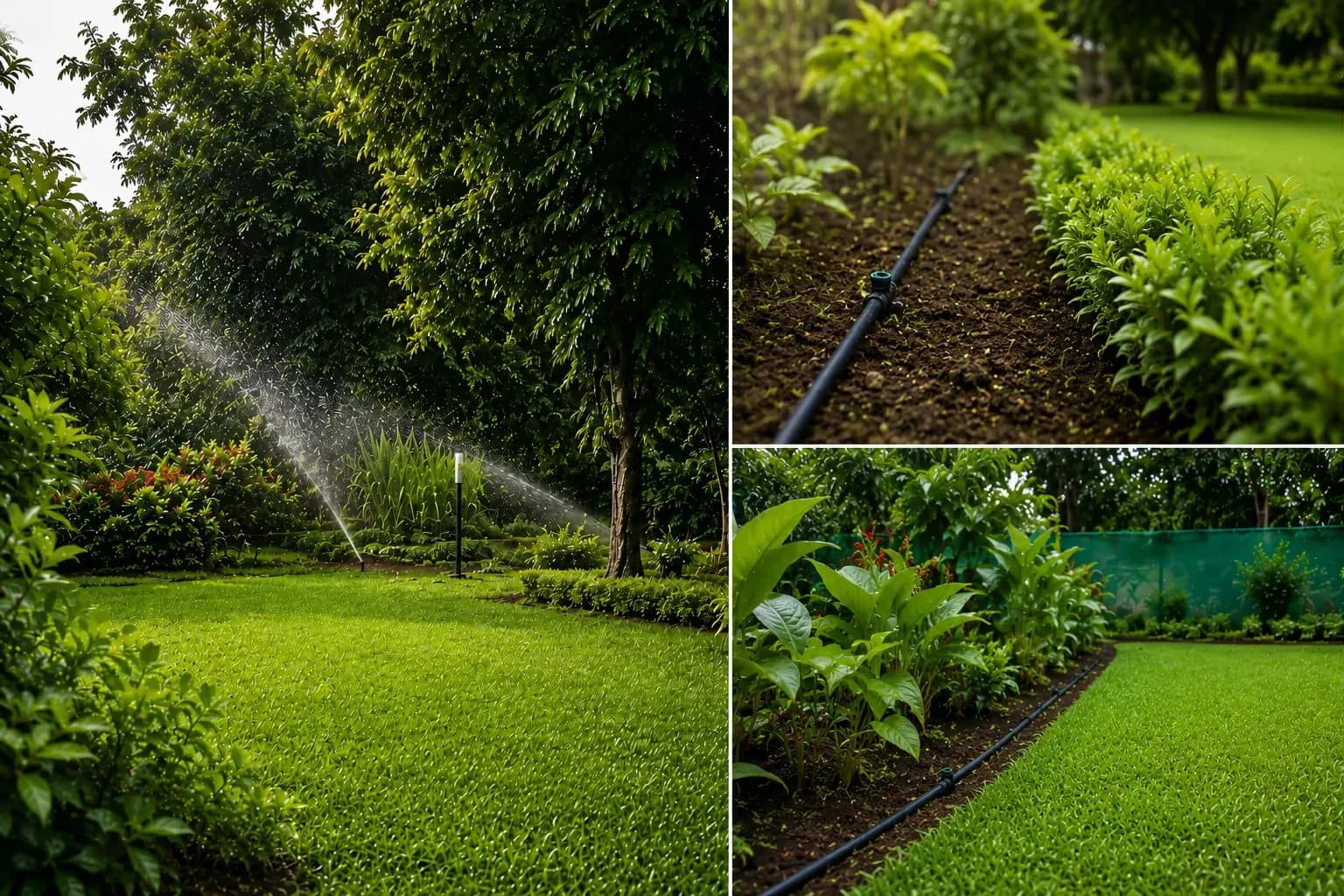
IRRIGATION WORK AT TCS BANYAN PARK
Design and execution of an efficient drip-irrigation network across ~10,000 m² of landscape and plantation zones: pipeline, network and testing, completed in 45 days.
- Area
- ~10,000 m²
- Delivery
- 45 days
Where we do this
Sustainable Landscaping for municipal corporations, city by city.
Other sectors
Who else we run sustainable landscaping for.
Next step
Tell us the project, and we will tell you the category and the route.
Screening is the cheapest stage to get right and the most expensive to get wrong. We will say plainly what sustainable landscaping your municipal corporations project needs, and what it does not.





























































Start the conversation