










Sustainable Landscaping · Corporate Campuses
Sustainable Landscaping for Corporate Campuses
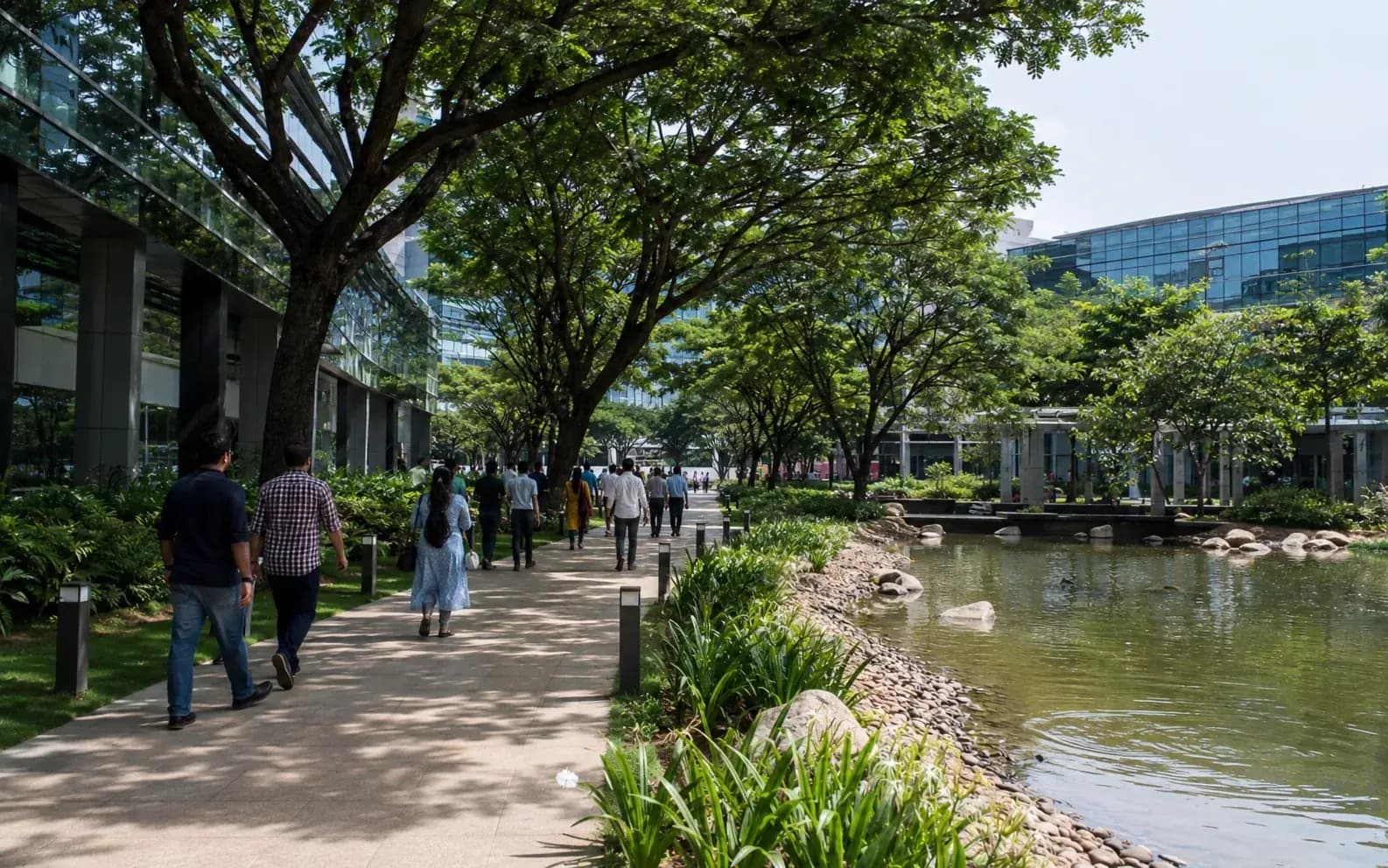
Campus landscape is the brand made physical, and it is now expected to run on treated water from the campus STP rather than on fresh water an estate team has to account for.
Screening view on your project, with the category and route named. No obligation.
What this means for corporate campuses
For a facilities or estate head, landscape has quietly become a reported line. Water consumption is disclosed, and the split between fresh and recycled water is examined; a campus that irrigates lawns with municipal or borewell water while claiming water stewardship has a discrepancy in its own report. At the same time, landscape is what visitors and employees actually see, so the answer cannot be to let it fail. The practical question for an estate team is how to hold appearance while shifting the irrigation source, reducing demand, and producing consumption data they can defend.
How KIPL runs it
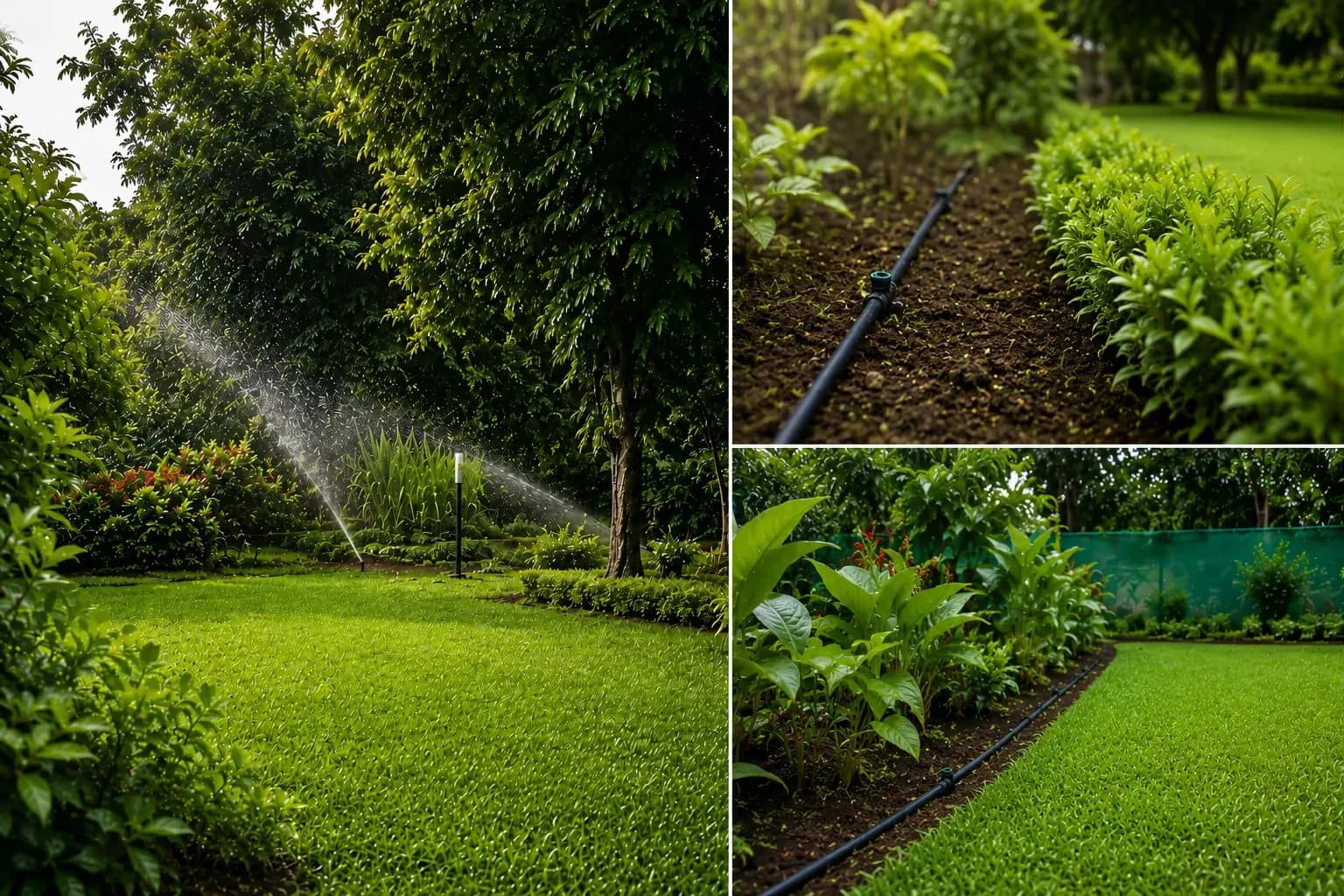
KIPL designs campus landscape around what the site can supply: planting palette matched to treated-water quality and to the microclimate of each zone, hardscape and permeable surface decisions taken for runoff rather than only for appearance, and irrigation designed to deliver measured water to the root zone rather than to the air. KIPL executed a drip irrigation network across approximately 10,000 square metres of landscape and plantation zones at TCS Banyan Park in Mumbai, completing pipeline, network and testing in 45 days. The recurring problem on campuses is a landscape inherited from a launch-day design (high-water lawn, ornamental species that will not tolerate treated water, and sprinkler irrigation with no metering) which no amount of operating discipline can make efficient.
Fresh versus recycled water is disclosed
Group water reporting distinguishes fresh water drawn from recycled water used, and campus irrigation is usually the largest discretionary consumer on the estate.
Treated effluent constrains the palette
STP-treated water has a quality profile that some ornamental species will not tolerate, so the planting palette has to be chosen for the water the campus actually produces.
- IGBC / LEED
Rating credits sit in the landscape
Water-efficient landscaping, outdoor water use reduction and heat island measures are scored credits in green building ratings for existing buildings.
What you receive
Written for corporate campuses, not adapted from a template.
- 01Zone-wise landscape water demand assessment against treated water availability from the campus STP
- 02Planting palette selected for treated-water tolerance, microclimate and maintenance load
- 03Drip and micro-irrigation network design with zoning, metering and control
- 04Hardscape, permeable surface and stormwater treatment decisions taken for runoff and heat, not appearance alone
- 05Irrigation execution, pressure testing and commissioning with as-built network records
- 06Consumption metering and reporting format feeding the estate's water disclosure
Questions from corporate campuses
What corporate campuses ask before appointing us.
Answered against the regulation as it stands, not as a sales pitch. If your situation is not here, ask us directly.
Ask a question →Can the whole campus landscape run on treated sewage water?
Usually most of it can, subject to the STP producing water of consistent quality and to the storage and distribution being in place. The constraint is normally not treatment capacity but the absence of a separate irrigation network and storage, so treated water is discharged while fresh water is drawn for irrigation on the same site.
Will treated water damage the planting?
It depends on the quality achieved and the species chosen. Treated effluent typically carries higher dissolved salts than fresh water, which some ornamental species will not tolerate over time while many native and hardy species will. The answer is to select the palette for the water available and to monitor soil condition, rather than to abandon reuse.
What data does the estate team get from the irrigation system?
Zone-wise metered consumption, which is what allows landscape water use to be reported separately from building use and compared against the treated water produced. Without zone metering, campus water reporting becomes an estimate that assurance processes will question.
How much water does drip irrigation actually save?
It depends on what it replaces, on the planting type and on how the system is scheduled, so a single figure is misleading. The reliable statement is that delivering measured water to the root zone eliminates the evaporation and overspray losses inherent in sprinkler and hose irrigation, and that metering makes the saving visible instead of assumed.
Does landscaping contribute to a green building rating?
Yes. Outdoor water use reduction, water-efficient landscaping, heat island reduction and site vegetation are scored under IGBC and LEED rating systems, including those applicable to existing buildings in operation. The evidence required is consumption data and specification records, which is another reason to meter.
Can existing campus landscape be converted rather than replaced?
Usually in stages. High-water lawn areas that serve no functional purpose are the first candidates for conversion, retrofitting irrigation zone by zone is straightforward, and species replacement can follow the natural replacement cycle. Wholesale replacement is rarely necessary and is disruptive to a working campus.
Stage by stage
How sustainable landscaping actually runs, step by step.
Also for corporate campuses
The rest of the environmental brief for this sector.
Relevant proof
IRRIGATION WORK AT TCS BANYAN PARK
Design and execution of an efficient drip-irrigation network across ~10,000 m² of landscape and plantation zones: pipeline, network and testing, completed in 45 days.
- Area
- ~10,000 m²
- Delivery
- 45 days
Where we do this
Sustainable Landscaping for corporate campuses, city by city.
Other sectors
Who else we run sustainable landscaping for.
Next step
Tell us the project, and we will tell you the category and the route.
Screening is the cheapest stage to get right and the most expensive to get wrong. We will say plainly what sustainable landscaping your corporate campuses project needs, and what it does not.





























































Start the conversation