









CGWA Groundwater NOC · Real Estate & Construction
CGWA Groundwater NOC for Real Estate & Construction: the borewell approval behind construction water and flushing supply.
A development that draws groundwater (for curing and construction water during the build, or for flushing and landscape supply after occupancy) needs a No Objection Certificate for abstraction from the Central Ground Water Authority, applied for on the Bhu-Neer portal.
Screening view on your project, with the category and route named. No obligation.
What this means for real estate & construction
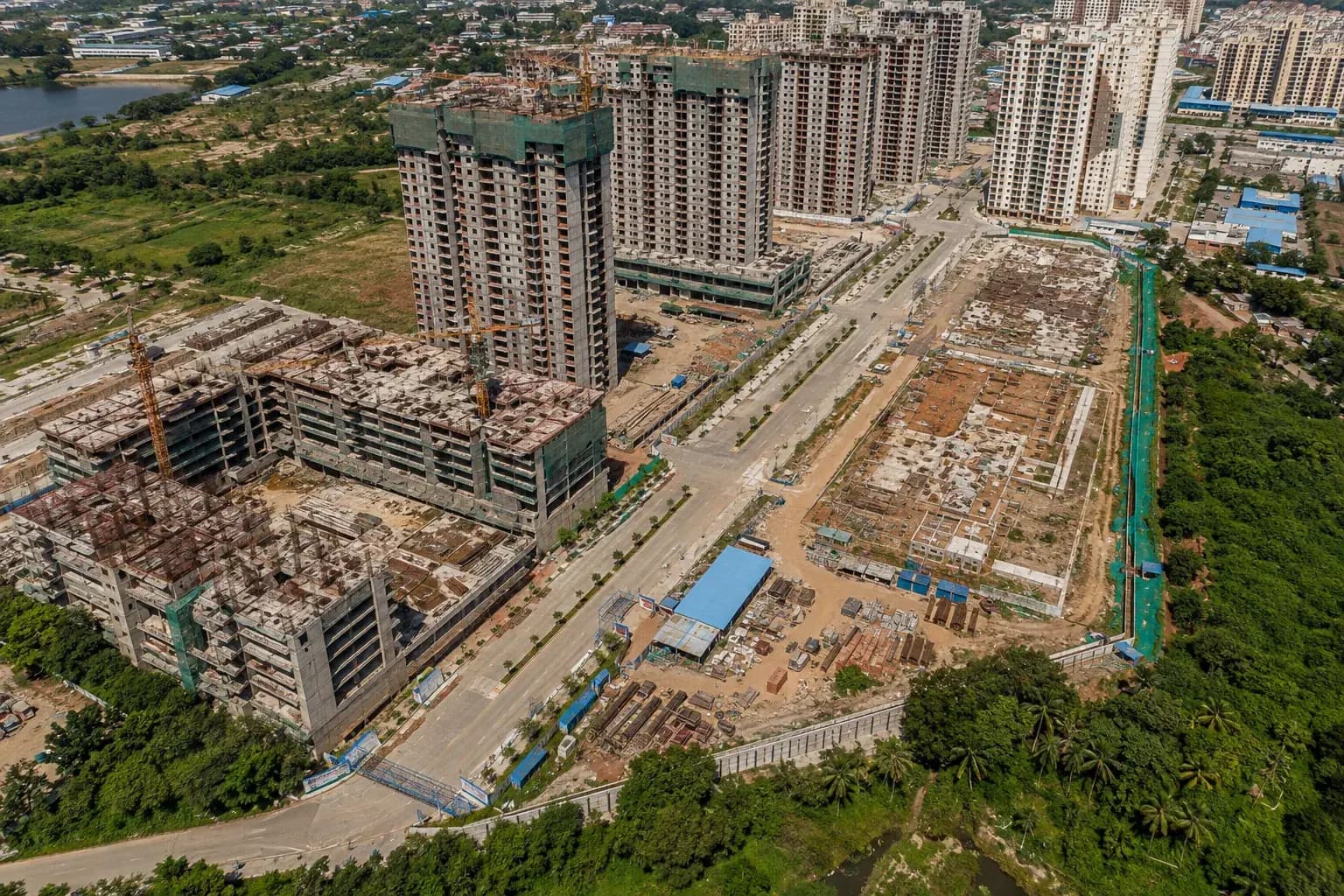
Construction is water-hungry long before the building is occupied: curing, batching, dust suppression and labour-camp supply are all real abstraction, and on most sites they are met from a borewell rather than a tanker contract that nobody wants to price for two years. Groundwater abstraction is regulated by the CGWA under the Environment (Protection) Act 1986, and the terms depend on how the assessment unit, the taluka or block: has been categorised: safe, semi-critical, critical or over-exploited. A great deal of the Mumbai Metropolitan Region, the Pune belt and the Nashik corridor sits in units where abstraction is restricted rather than routine, and the application has to justify the quantum against a defensible water balance and commit to recharge. In Maharashtra the CGWA framework sits alongside the state regime under the Maharashtra Groundwater (Development and Management) Act 2009 and the GSDA, so a developer is answering to more than one authority on the same borewell.
How KIPL runs it
KIPL builds the groundwater case as an engineering document, not a form: a hydrogeological assessment of the site, a construction-phase demand estimate that survives scrutiny, an operational-phase demand that is honest about how much flushing and landscape load will actually be met from ground rather than from municipal supply, and a recharge and rainwater harvesting proposal proportionate to the draw. The failure mode in this sector is a project that sinks a borewell first and applies later, and then finds that its EC water balance, its MPCB consent and its NOC application each state a different demand figure. We make those three documents agree before any of them is filed.
- CGWA
Abstraction needs an NOC, and the block category sets the terms
Groundwater withdrawal for construction and for operational supply requires a CGWA NOC applied for on the Bhu-Neer portal. Where the assessment unit is semi-critical, critical or over-exploited, the quantum is scrutinised and recharge obligations are heavier.
- MGWA 2009
The state regime applies as well
In Maharashtra the Maharashtra Groundwater (Development and Management) Act 2009 and the GSDA govern well construction and abstraction alongside the central framework, so a single borewell can attract two sets of conditions.
The EC water balance has to match the NOC
The construction and occupancy water demand declared to the SEIAA, to MPCB and to the CGWA must be the same numbers. Three inconsistent water balances is one of the fastest ways to lose credibility across all three files.
What you receive
Written for real estate & construction, not adapted from a template.
- 01Hydrogeological assessment of the site and the assessment unit category
- 02Construction-phase water demand (curing, batching, dust suppression, labour camp) with the abstraction component isolated
- 03Operational-phase water balance separating municipal supply, groundwater draw and treated-water reuse for flushing and landscape
- 04Rainwater harvesting and artificial recharge proposal sized against the proposed draw
- 05CGWA NOC application on the Bhu-Neer portal and response to queries
- 06Reconciliation of the water figures across the EC file, the MPCB consent and the NOC
Questions from real estate & construction
What real estate & construction ask before appointing us.
Answered against the regulation as it stands, not as a sales pitch. If your situation is not here, ask us directly.
Ask a question →Do we need a CGWA NOC just for construction water?
If the construction water is drawn from a borewell, yes, abstraction during the build is abstraction. Projects that treat construction-phase groundwater as informal because it is temporary are the ones that get caught, because a two-year build is not a temporary draw by any measure the authority uses.
Our taluka is over-exploited. Is an NOC still possible?
It depends on the category, the quantum sought and the strength of the case, and the answer cannot be promised in advance. What can be done is to reduce the ask honestly (maximise treated-water reuse for flushing and landscape, commit real recharge, and show municipal supply carrying the load it can carry) so the abstraction actually applied for is the residual, not the total demand.
Does the NOC cover the building after occupancy too?
The operational phase is a separate demand with a separate justification. Post-occupancy draw for flushing, landscape and common-area use has to be stated on its own footing, and it is assessed against how much of that load your STP reuse is designed to carry. A project that reuses treated water properly asks for less groundwater and gets a cleaner answer.
Where is the application filed now?
On the CGWA's Bhu-Neer portal, which carries the NOC application, the supporting hydrogeological documentation and the subsequent compliance reporting. The portal is the record, so the quality of what is uploaded is the quality of the case.
What does the NOC oblige us to do afterwards?
Typically to meter the abstraction, to report it, to build and maintain the recharge structures committed to, and to stay within the sanctioned quantum. These are live conditions, and they intersect with the half-yearly EC compliance report, where the same water figures appear again.
Can we avoid the NOC by buying tanker water?
If no groundwater is abstracted on site, the CGWA NOC for abstraction is not the applicable instrument: but the water balance still has to close, and a tanker-dependent construction programme is a commercial and reputational exposure of its own. Most developers find it cheaper to make the groundwater case properly than to price two years of tankers.
Stage by stage
How cgwa groundwater noc actually runs, step by step.
Also for real estate & construction
The rest of the environmental brief for this sector.
Primary sources
Verify any of this at the source.

Relevant proof
NAMAMI GANGE PROGRAMME
Environmental & Social Impact Assessment and EHS reporting for existing and proposed sewage treatment plants on the Ganga.
- Largest existing STP
- 130 MLD
- Assessed
- 5 plants
Where we do this
CGWA Groundwater NOC for real estate & construction, city by city.
Other sectors
Who else we run cgwa groundwater noc for.
Next step
Tell us the project, and we will tell you the category and the route.
Screening is the cheapest stage to get right and the most expensive to get wrong. We will say plainly what cgwa groundwater noc your real estate & construction project needs, and what it does not.





























































Start the conversation