










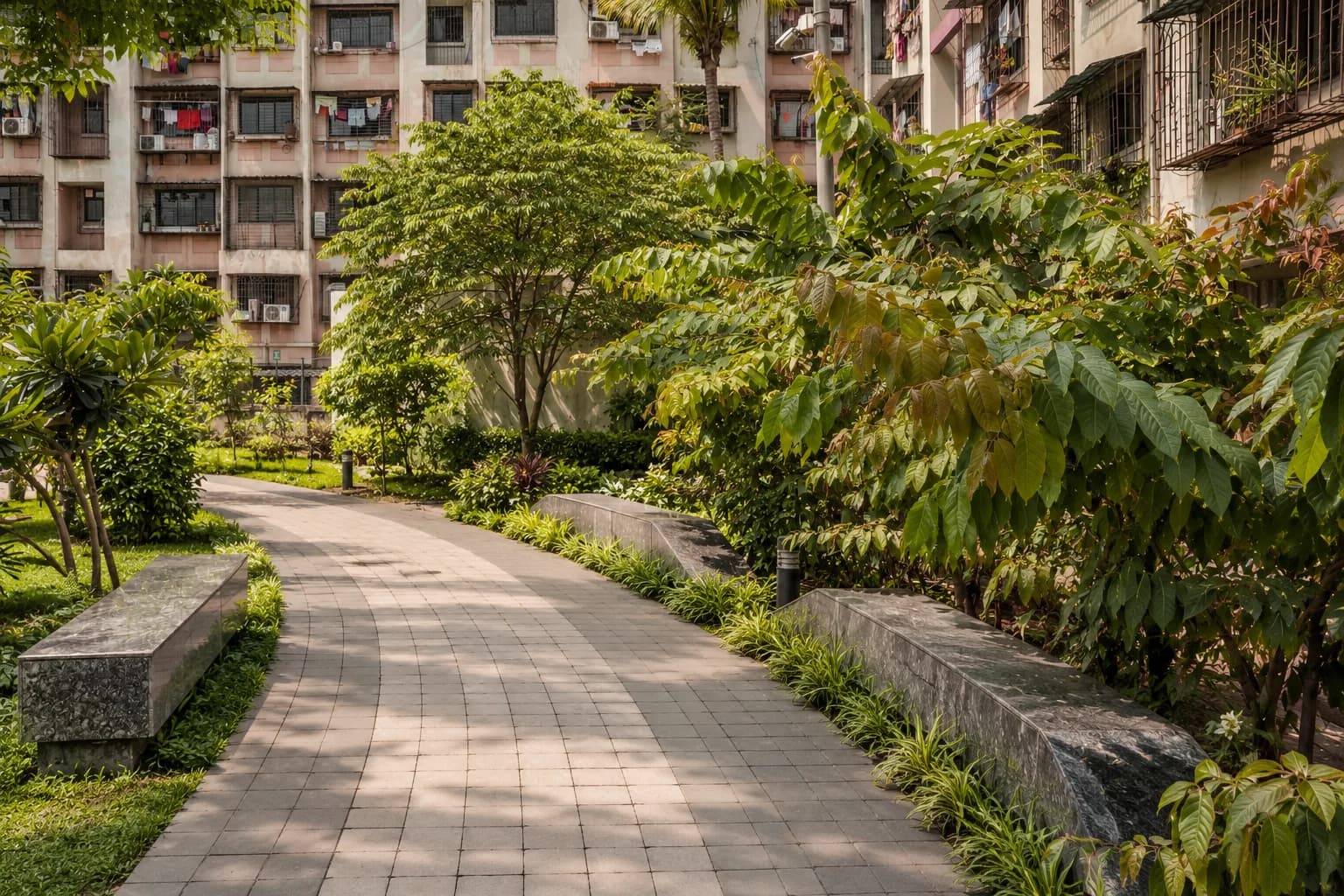
Landscape lighting: lighting a garden for use and safety without washing it out.
Landscape lighting has three jobs (safe movement, safe surveillance, and selective emphasis) and doing all three needs restraint rather than more fittings.
What it is
Good landscape lighting is layered: low-level illumination along paths, steps and level changes for safe movement; general lighting where surveillance and security require it; and controlled accent lighting on trees, water and features. Beam angle, mounting height, shielding and colour temperature carry more of the result than fitting count, and glare from badly aimed fixtures defeats both safety and effect.
KIPL designs the lighting scheme with its electrical and maintenance reality settled: cable routes laid before paving, correctly IP-rated and earthed fittings for wet locations, junctions in accessible positions, and controls that let zones be switched or dimmed by time. Spill onto neighbours and upward light into the night sky are limited deliberately, and roosting and nesting areas are left unlit where a site has ecological value.
What you get
The deliverables, in hand.
- Authority
- Layered lighting design · IP-rated outdoor installation practice
- Typical timeline
- Conduiting with hardscape; installation in weeks
- Lighting design across path, area, accent and feature layers
- Fixture schedule with optics, IP rating, wattage and colour temperature
- Cable routing, conduiting and earthing layout coordinated with hardscape
- Control and zoning scheme with timers or sensors
- Installation, aiming and commissioning on site
- Operation and maintenance instructions
Straight answers
Landscape Lighting: common questions.
01What does landscape lighting need to achieve?
Safe movement along paths, steps and level changes; adequate light where security and supervision require it; and controlled emphasis on selected trees, water and features. Anything beyond that generally adds glare, energy cost and maintenance rather than quality.
02Why do garden lighting installations fail early?
Usually water and earthing. Fittings without the right IP rating for their location, junctions buried in inaccessible positions, cable damaged during later planting or excavation, and inadequate earthing are the recurring causes. Most of it is decided by the installation detail, not the fitting brand.
03When should cabling be laid?
Before paving and planting, in conduit, with draw wires and accessible junction points. Retrofitting lighting through a finished landscape means cutting paving and trenching through beds, at several times the cost and with permanent scarring of the surfaces.
04Does lighting affect wildlife?
Yes. Artificial light at night disturbs birds, bats and insects, and heavy uplighting into tree canopies affects roosting. On sites with ecological value, lighting is kept low, warm, shielded and time-controlled, and sensitive areas such as water edges and dense canopy are deliberately left dark.
05What colour temperature suits a garden?
Warmer light, generally in the lower colour-temperature range, reads better on foliage, bark and stone and is less disruptive at night than cool white. Cooler light is sometimes used for security areas. Mixing colour temperatures across one visual field is a common and visually jarring mistake.
06Is solar lighting a practical option?
For path and bollard lighting on sites with genuine sun exposure and modest performance expectations, it can work and it removes cabling. Battery life, monsoon and winter performance, shading from the very trees being lit, and replacement cost should be assessed honestly before it is adopted across a whole scheme.
Within Sustainable Landscaping
Part of the whole route, the other components.
Relevant proof
Where this stage has already been delivered.
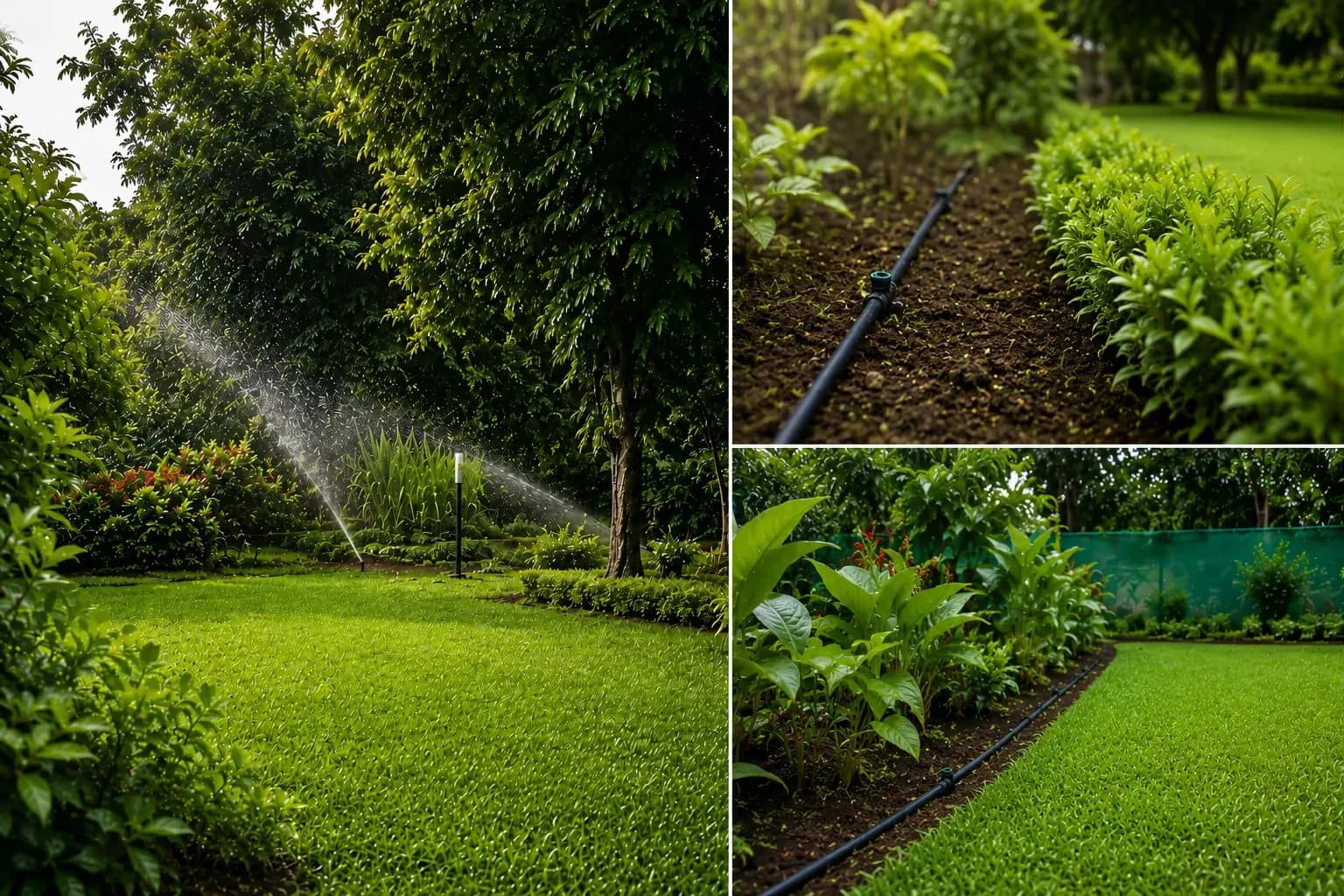
TCS, Banyan Park · Mumbai
IRRIGATION WORK AT TCS BANYAN PARK
Design and execution of an efficient drip-irrigation network across ~10,000 m² of landscape and plantation zones: pipeline, network and testing, completed in 45 days.
Where we do this
Sustainable Landscaping on the ground.
The authority, the timeline and the local ground differ by city. These pages set out how sustainable landscaping actually runs in each.
Featured projects
Work that carries its own evidence.
Our expertise
One team across the whole environmental brief.
Landscape Lighting is one stage of one practice. Most projects need several, and the commitments made at clearance are the ones we build and maintain.
Who we do this for
Sustainable Landscaping reads differently by industry.
- 01
Corporate CampusesCore
Campus softscape, hardscape and irrigation are the brand made physical, and are expected to run on treated water rather than fresh.
Sustainable Landscaping for Corporate Campuses - 02
Real Estate & Construction
Podium and open-space landscaping carries the plantation and pervious-area commitments made in the EIA, not just the amenity brief.
Sustainable Landscaping for Real Estate & Construction - 03
Townships & Area Development
Softscape, irrigation and water-sensitive hardscape are how the township's treated-water reuse and runoff commitments are actually realised.
Sustainable Landscaping for Townships & Area Development - 04
Hospitality, Healthcare & Education
Campus landscape is both the amenity the guest or patient experiences and the pervious-area and plantation commitment in the clearance.
Sustainable Landscaping for Hospitality, Healthcare & Education - 05
Municipal Corporations
Public realm landscaping has to survive footfall, water scarcity and a maintenance budget set years before, which drives species choice.
Sustainable Landscaping for Municipal Corporations
Trusted by
The organisations this work is done for.





In the press